 Skip to content
Last updated on February 16th, 2026 at 02:58 pm
The post-pandemic era has permanently changed how businesses operate, making remote work a standard practice in 2025. Efficient communication systems are now essential to maintain collaboration and productivity. Cloud Communication has emerged as a scalable, reliable, and cost-effective solution for remote teams.
The evolution of Business Phone Solution technology has made it easier for employees to work remotely. One such communication technology is Cloud Communication which provides 24/7 connectivity and flexibility to remote workers.It had proven to be a game-changer during the pandemic when most employees were working from home. Moreover, even after the pandemic subsided, cloud telephony continued to be a manna from heaven for remote employees. In this post, we will therefore explore the various benefits of cloud telephony for remote employees in the post-pandemic world.
Table of contents
- What’s the Main Benefit of Cloud Communication Software for Remote Workers?
- What is the Most Efficient Office Setup for Maximum Productivity?
- How to Overcome Remote Communication Hurdles?
- How Does Cloud Telephony Compare to Traditional Telephony?
- How Does Cloud Telephony Differ from Traditional Telephony?
- What are the Key Components of Cloud Telephony?
- What are the Benefits of Cloud Telephony for Remote Employees?
- Frequently Asked Questions
What’s the Main Benefit of Cloud Communication Software for Remote Workers?
The main benefit lies in seamless connectivity — with FreJun, remote employees can effortlessly make, receive, and manage calls from anywhere. Moreover, by using internet-based systems, teams stay connected in real time, thereby ensuring consistent productivity. In addition, this setup keeps customer service operations smooth and uninterrupted, even when team members are spread across multiple locations. Consequently, businesses can maintain high efficiency and collaboration across their remote workforce.
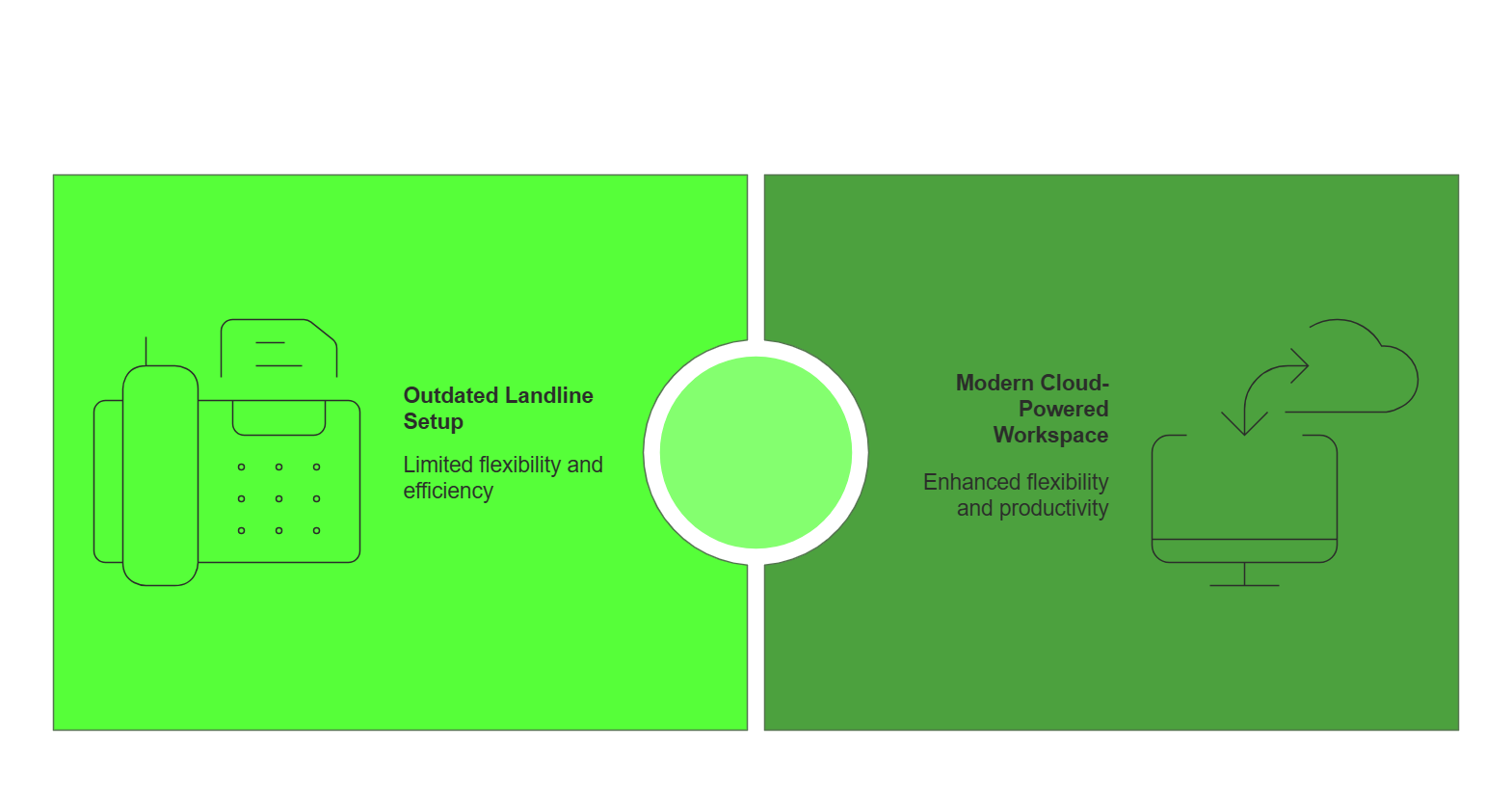
What is the Most Efficient Office Setup for Maximum Productivity?
How to Overcome Remote Communication Hurdles?
Remote and distributed teams often encounter serious communication roadblocks, which can significantly impact productivity and collaboration. For instance, issues like scattered communication tools, inconsistent call quality, and limited visibility into team activity can create major operational friction. Fortunately, cloud telephony offers modern, scalable solutions to address these challenges head-on. By centralizing communication and enabling real-time connectivity, it helps teams stay aligned and responsive. Consequently, cloud telephony has become a must-have for hybrid and remote-first organizations that are striving to maintain efficiency and customer satisfaction in a distributed work environment. Moreover, it ensures seamless collaboration across all locations, enhancing overall operational effectiveness.
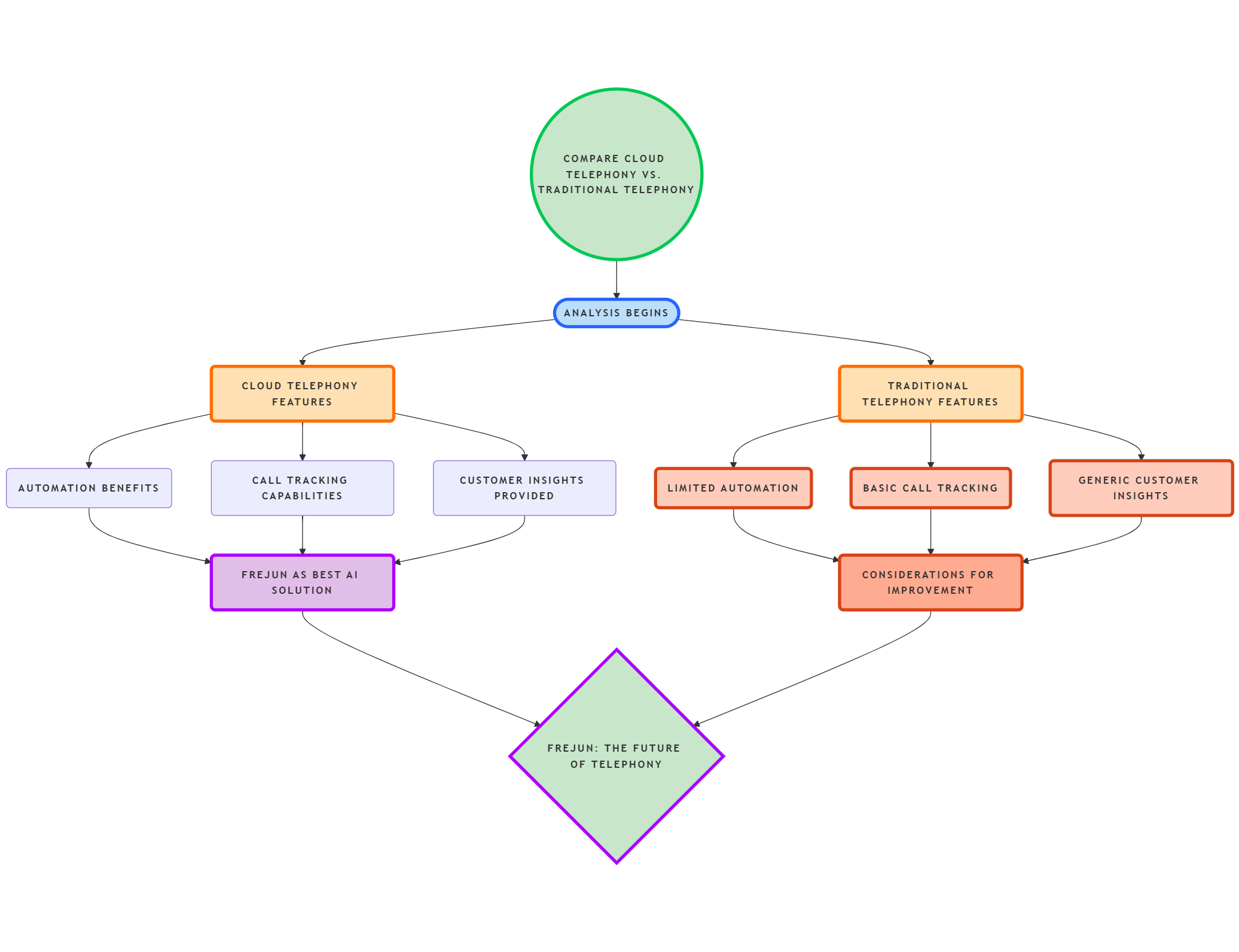
How Does Cloud Telephony Compare to Traditional Telephony?
| Feature | Cloud Telephony | Traditional Telephony |
|---|---|---|
| Connection Type | Internet-based ✅ | Physical phone lines ❌ |
| Remote Access | ✅ Accessible from anywhere | ❌ Limited to office phones |
| Call Management | ✅ Auto-dialer, logging, routing | ❌ Manual and limited |
| Scalability | ✅ Easily scalable | ❌ Requires hardware upgrades |
| Cost Efficiency | ✅ Lower maintenance & setup costs | ❌ High installation & maintenance costs |
| Integration | ✅ Works with CRM & business tools | ❌ Limited or none |
| Reliability | ✅ Works across locations & time zones | ❌ Dependent on local infrastructure |
What are the Common Communication Challenges for Remote Teams?
- Scattered communication channels (e.g., personal mobiles, unmanaged tools)
- Missed or dropped calls due to unreliable internet or poor routing
- Lack of visibility into call activity, agent performance, or customer interactions
- Inconsistent caller experience across locations or time zones
- Difficulty onboarding new agents remotely
How Cloud Telephony Solves Them:
- Unified Communication System: Centralizes all business calls in one cloud-based platform
- Global Accessibility: Team members can make and receive calls from anywhere using virtual numbers
- Real-Time Analytics & Monitoring: Track call performance, durations, and resolution rates
- CRM and Tool Integration: Syncs with tools your team already uses, creating seamless workflows
- Quick Onboarding & Scaling: Add users or departments in minutes with minimal tech overhead
Pros & Cons of Cloud Telephony
Pros:
- ✅ Easy integration with CRM and business tools
- ✅ Supports remote work from any location
- ✅ Automates call logging, routing, and reporting
- ✅ Scalable to match team growth without hardware upgrades
- ✅ Cost-effective with lower setup and maintenance costs
- ✅ Reliable across multiple locations and time zones
Cons:
- ❌ Requires stable internet connectivity
- ❌ Initial setup may need IT assistance
- ❌ Dependence on third-party service providers
- ❌ Advanced features may require subscription upgrades
How Does Cloud Telephony Differ from Traditional Telephony?
What are the Key Components of Cloud Telephony?
| Component | Description |
| Virtual Numbers | Enables calls from anywhere |
| AI Call Routing | Smartly directs calls |
| CRM Integration | Connects with business tools |
| Analytics & Reports | Provides call insights |
| Security Features | Ensures data protection |
What are the Benefits of Cloud Telephony for Remote Employees?
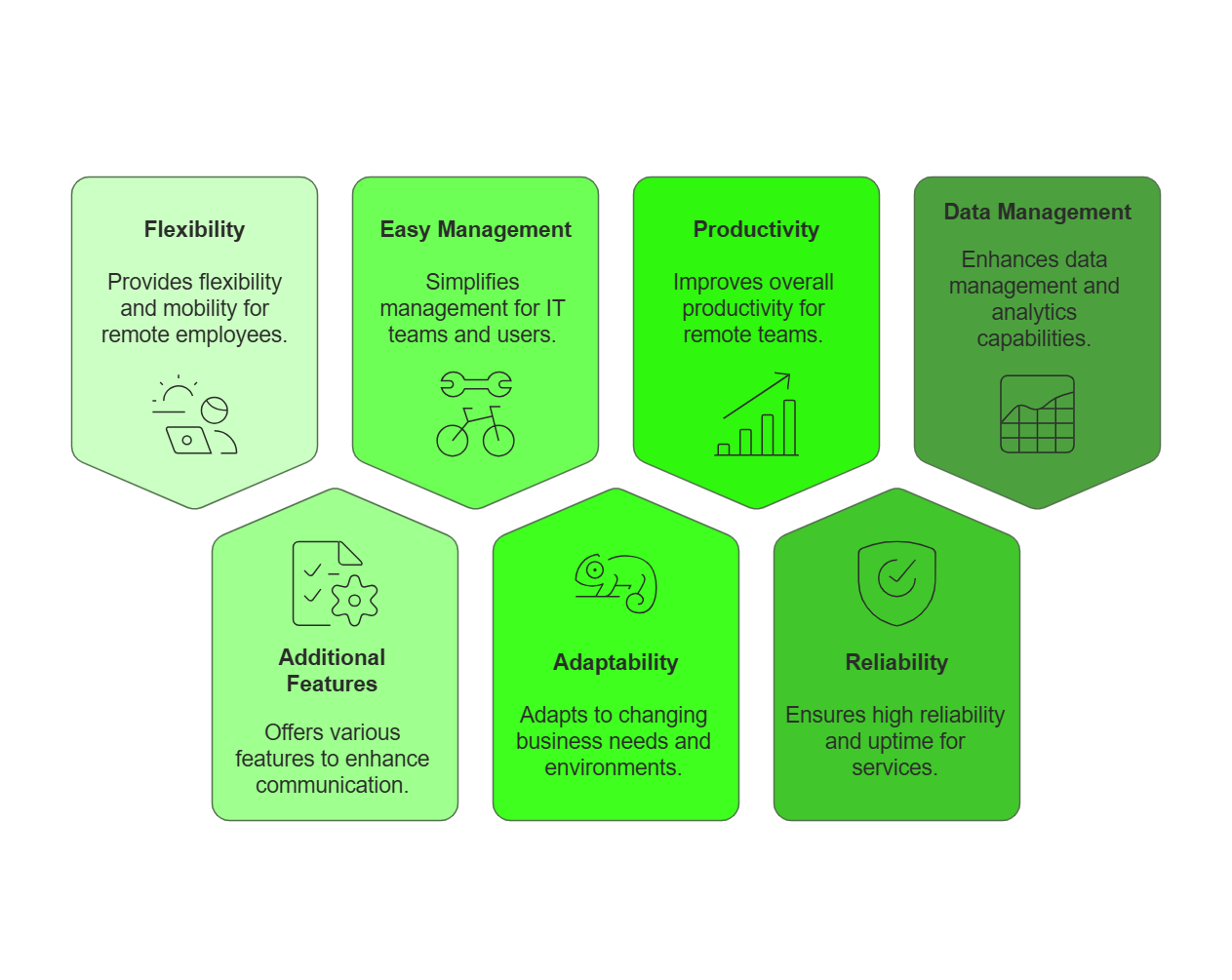
These are some of the benefits of Cloud Telephony for Remote Employees:
1. Provides Flexibility and Mobility
Every business aims to provide a flexible working environment to its employees, and the latter also expects the same. Cloud telephony gives complete freedom to the business and its employees to work from any remote location, at any time. Both in-office and remote employees have access to the same cloud telephony features.
Since you do not tie employees to a desk phone like in the traditional landline calling system, they can use any device connected to the cloud — such as a mobile phone, a desk phone, a computer, and so on — to initiate calls. As a result, they can make their work completely mobile. Moreover, by using this technology, employees gain full flexibility and mobility, which in turn enhances productivity and convenience across the organization. Additionally, this approach supports remote work and hybrid setups, allowing teams to stay connected seamlessly from anywhere.
2. Offers Additional Features
Cloud telephony provides several features that can make remote working easier for everyone in your business. It offers auto-attendant, IVR, call forwarding, virtual phone number, call recording, and daily call analytics. All the business calls are made using a virtual number and not the team member’s mobile number. This way, they can keep their professional and personal life separate.
3. Easy to Manage
It is easy to manage the cloud telephony system as it does not require any hardware or a traditional landline setup to commence. It is affordable and gets installed quickly. New features can be added easily by the service provider. It gets easily updated, and all your employees, including the remote workers, can use the new feature.
Cloud telephony provides team leaders with daily call analytics, which helps them measure and monitor the performance of the employees operating remotely. This way, the team leaders can have more control over the business communication process. Moreover, they can easily determine which part of the process is working efficiently and which isn’t.
4. Adapts to Changing Needs
Businesses need to scale up to survive in this highly competitive market. Changing the way you operate can be a very time-consuming and expensive process. During such situations, you need a solution that is flexible to your needs. In this post-pandemic world, businesses are expanding like before, and the number of employees working remotely is also increasing at a rapid rate.
In such a scenario, cloud telephony proves to be of utmost benefit. It adapts to the changing needs of both the business and the employees. It provides seamless scaling up of the business. The company can add new users easily, and all they have to do is plug in their devices, and they are good to go.
5. Improves Productivity
With cloud telephony, the employees get complete freedom to work from any remote location. A flexible working environment creates a smooth employee experience and motivates them to work harder. Moreover, the time-consuming and tedious calling tasks get streamlined using cloud telephony. It saves their time and allows them to focus on other tasks. Hence, increases their efficiency and productivity.
You can carry out remote work only if the communication channels are effective. There should be seamless connectivity between the company and its employees, and a lack of communication between the company and the employees can affect business operations. Cloud telephony helps bridge the communication gap and builds a healthy relationship between the employer and the employees.
6. Reliability and Uptime
One of the key concerns for remote workers is the reliability of communication tools. With traditional phone systems, outages or disruptions can occur due to network issues or equipment failures. Cloud telephony systems offer high reliability and redundancy—even if one server fails, calls are automatically routed to backup servers, ensuring there’s minimal disruption to communication.
7. Better Data Management and Analytics
In 2025, data-driven decision-making is a critical part of business strategy. Cloud telephony platforms provide valuable analytics on call volumes, response times, customer interactions, and employee performance. By using this data, businesses can gain insights into how remote employees are interacting with customers, identify bottlenecks, and make informed decisions to improve processes and services.
For remote teams, this data can be accessed from anywhere, allowing managers to track and analyze performance without being physically present in the office. This leads to better decision-making, optimized workflows, and higher levels of service across the organization.
Ensure your remote employees are always connected and productive. Schedule a Free Demo of FreJun’s Cloud Telephony today!
Conclusion
As remote work continues to thrive in the post-pandemic era, cloud telephony has become an essential tool for businesses aiming to maintain seamless communication, enhance employee productivity, and improve customer service. With its flexibility, cost-effectiveness, and scalability, cloud telephony empowers remote employees to work efficiently from anywhere while staying connected to the company and its customers. For businesses looking to stay competitive in the evolving remote work environment, adopting cloud telephony is no longer just an option—it’s a necessity for success.
Cloud telephony has emerged as a game-changer for remote employees, ensuring seamless communication, cost savings, and enhanced productivity. As businesses continue adapting to the post-pandemic era, choosing a reliable cloud telephony provider like FreJun can be the key to efficient and hassle-free operations.
By leveraging AI-driven automation, robust security, and effortless integration, FreJun stands out as the best cloud telephony solution for remote teams in 2025. Invest in cloud telephony today and empower your workforce for a future-ready communication experience!
FreJun’s cloud telephony system offers several features to make your business communication process more efficient and remote working smoothly.
You can try FreJun for 2 days for free and see if it’s the right fit for your business.
Further Reading: How Cloud Telephony Systems Will Help Shape the Future of Businesses?
Frequently Asked Questions
FreJun’s cloud telephony gives remote teams access to features like virtual numbers, IVR, call routing, and analytics all through a browser-based dashboard or mobile device, keeping them connected and productive.
Yes. FreJun stores call data securely in the cloud, so team members can access logs, listen to recordings, and monitor performance from any location, at any time.
With centralized dashboards, shared call notes, CRM integrations, and real-time analytics, FreJun enables remote teams to collaborate better and stay updated on customer interactions.
All that’s needed is an internet-enabled device a laptop, smartphone, or desktop. No specialized hardware or office setup is required.
Definitely. With FreJun, there’s no need for landlines, PBX systems, or office infrastructure. You pay only for what you use, making it a cost-effective solution for remote operations.
FreJun ensures all data is encrypted and stored securely in the cloud. Access controls and activity logs help maintain transparency and security even with distributed teams.
Yes. FreJun provides detailed call analytics, response times, call duration, and other metrics to help track productivity and performance of remote staff effectively.
Cloud telephony is an internet-based phone system that allows businesses to make, receive, and manage calls without traditional hardware, providing flexibility for remote teams.
Unlike traditional systems that rely on physical phone lines, cloud telephony uses the internet, offering features like call logging, auto-dialers, and remote access.
Yes, cloud telephony enables seamless communication, real-time collaboration, and efficient call management, helping remote teams stay productive.
I appreciate your skills and style in elaborating on the topic. It bound the reader for long. I have liked everything that I have read in the article so far. Really nice content! https://growrk.com/guides/remote-resources/remote-employee-returning-equipment