 Skip to content

Last updated on February 16th, 2026 at 02:58 pm
In 2025, modern businesses are increasingly turning to cloud telephony. This powerful technology streamlines sales communication, automates customer interactions, and optimizes lead conversion. Cloud telephony offers a cost-effective, scalable, and AI-driven approach, designed to maximize every sales opportunity. With features like automated follow-ups, robust CRM integration, and real-time analytics, sales teams can operate with unmatched efficiency, significantly enhancing the customer experience.
Cloud telephony transforms sales by streamlining communication, enhancing call tracking, and boosting team efficiency. Perfect for sales teams looking to scale without overhead.
- ✅ Automates calling and logging for sales efficiency
- ✅ Provides real-time call analytics and insights
- ✅ Integrates seamlessly with CRMs for better lead management
- ✅ Reduces missed calls and improves customer experience
Schedule a demo to see in action
Table of contents
- What is Cloud Telephony?
- Sales Team Efficiency Comparison
- What are the Key Cloud Telephony Features for Sales Teams?
- How AI-Powered Cloud Telephony Enhances Lead Conversion
- What are the Benefits of Cloud Telephony for the Sales Team?
- Which Industries Can Benefit Most from Cloud Telephony?
- How Can Businesses Successfully Implement Cloud Telephony?
- How to Solve Sales Communication Challenges with Cloud Telephony
- Frequently Asked Questions
What is Cloud Telephony?
In 2025, businesses are operating in an intensely competitive market where customer experience and seamless communication play pivotal roles in driving sales. Traditional phone systems no longer meet the needs of modern businesses, especially those aiming to scale rapidly. This is where cloud telephony steps in as a game-changing solution.
Cloud telephony provides businesses with advanced features, cost savings, and flexibility, making it a vital tool for boosting sales and improving customer interactions. Let’s explore how cloud telephony can help your business achieve higher sales figures in 2025.
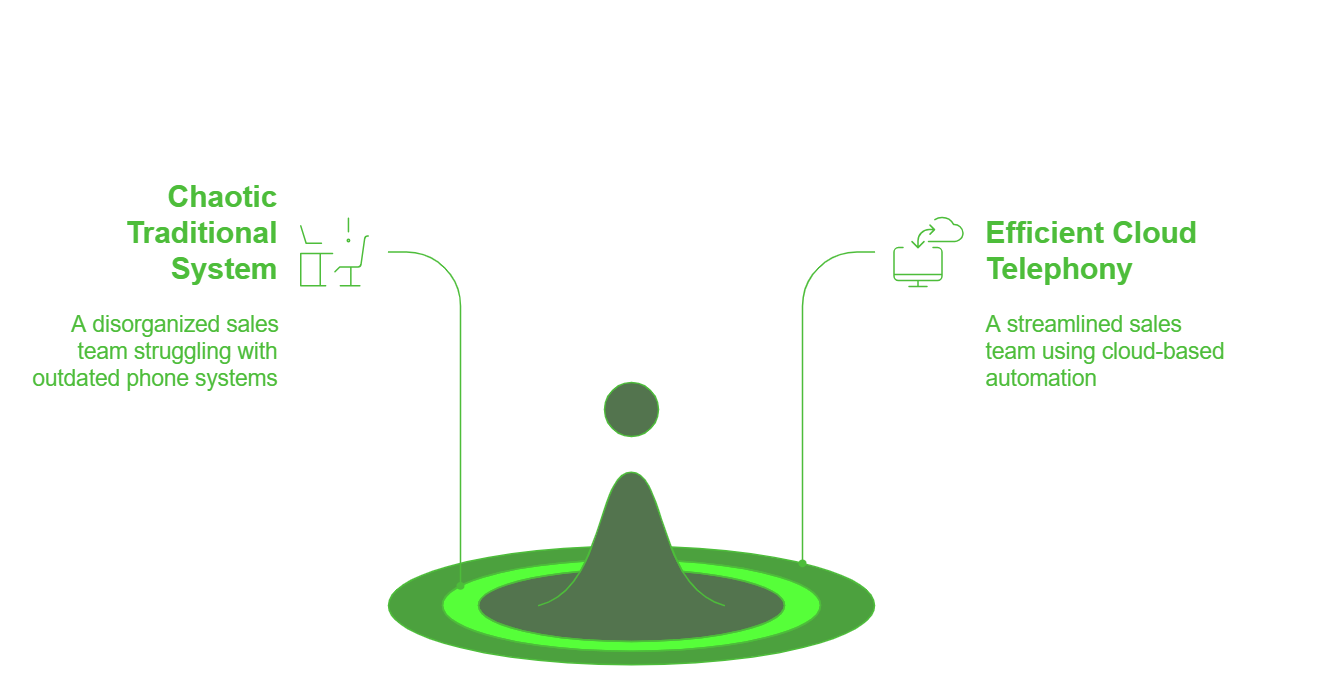
Sales Team Efficiency Comparison
What are the Key Cloud Telephony Features for Sales Teams?
| Cloud Telephony Feature | Benefit | Impact on Sales |
| Virtual Numbers | Maintain privacy and easily manage calls. | Improved customer trust and lead conversion. |
| Interactive Voice Response (IVR) | Automates call routing to the right department. | Faster query resolution and customer satisfaction. |
| Call Analytics | Provides insights into call duration, and frequency. | Better sales strategy and performance tracking. |
| Click-to-Call Integration | Enables instant calls from websites or apps. | Increased lead engagement and quick responses. |
| CRM Integration | Syncs call data with customer relationship tools. | Personalized communication and lead nurturing. |
| Call Recording and Monitoring | Ensures quality and consistency in sales calls. | Improved training and higher closure rates. |
| Scalable Infrastructure | Handle high call volumes during campaigns. | No missed opportunities during peak periods. |
| Global Reach | Connect with customers worldwide at low costs. | Expand market reach and close international deals. |
| 24/7 Availability | Automated handling of after-hours inquiries. | Never lose a potential lead due to unavailability. |
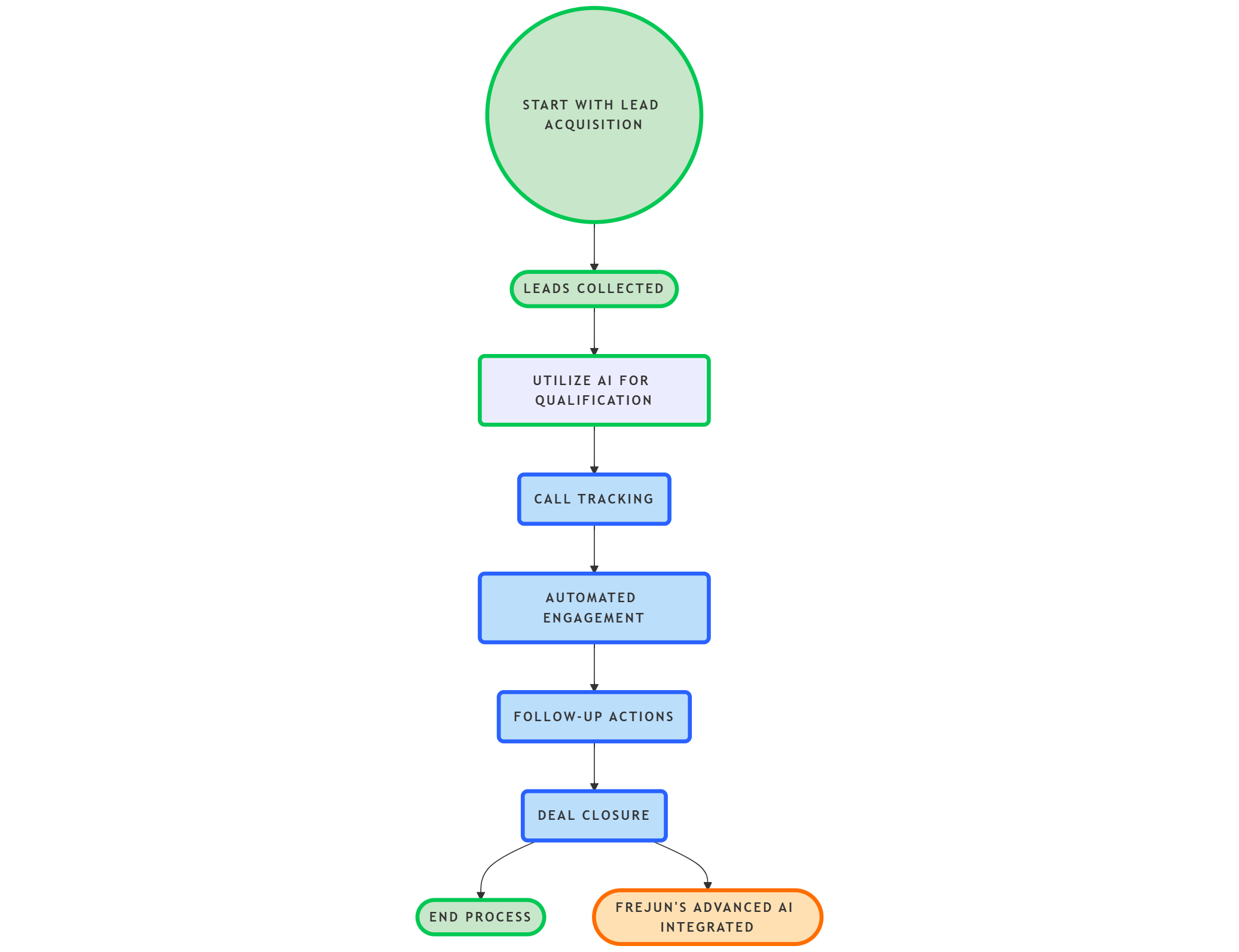
How AI-Powered Cloud Telephony Enhances Lead Conversion
What are the Benefits of Cloud Telephony for the Sales Team?
These are the benefits of Cloud Telephony for the Sales Team:
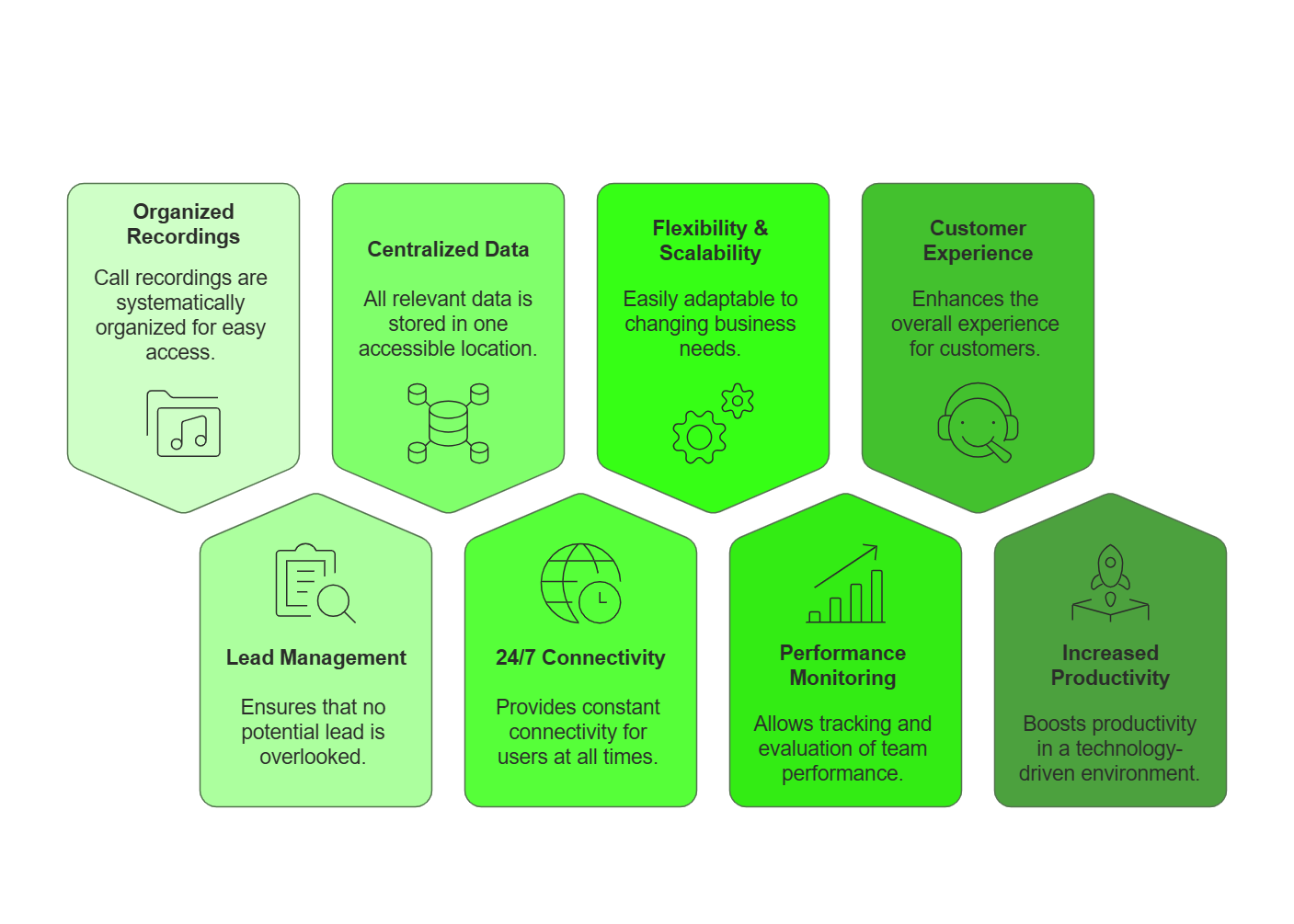
1. Organized Call Recordings
It offers a call recording feature to record all incoming and outgoing calls. These recordings can be easily accessed and reviewed later in case of any doubt or confusion. All customer needs and suggestions can be recorded using this feature. I think the conversation with the potential customers can be tailored accordingly in the future. A proposal created based on the customer’s requirements helps you attract more prospects and thus improves the sales stats. It helps you generate more leads and close deals faster. With remote and hybrid work models firmly established in 2025, sales teams require tools that ensure uninterrupted connectivity regardless of location. Cloud telephony enables sales reps to make and receive calls from anywhere using smartphones, laptops, or tablets, fostering flexibility and responsiveness in a highly competitive sales environment.
Moreover, the call recordings can be used to train the new sales staff. They can listen to the recorded calls and find out where the mistakes have occurred and not repeat them in the future.
2. Never Miss a Lead
Missing a call means missing a lead. Cloud phones help you keep track of all incoming & outgoing calls and notify you of missed calls. The sales team can then follow up on the missed ones using Click-the o-Call and Auto-Dial feature to avoid delay. The sales staff can act swiftly only if they get the information of all missed calls. Any delay can result in the customer switching to the competitor’s product.
3. All Data in One Place
Cloud-based phone system keeps track of all interactions with customers and potential customers and logs them in a single place. It offers integration with various CRM (Customer Relationship Management) platforms and allows you to make and log calls within your system. It saves the team time as they don’t have to rotate between different applications to make calls. This way, the salespeople can have all the information they need on their dashboard while making or answering calls.
4. Offers 24/7 Connectivity
It provides the business with virtual numbers to connect with the customers in a specific market. A virtual number represents the entire business and gives it a professional touch. The company can assign separate local virtual numbers to its sales team and help them stay connected to the customers 24/7. The customers want the salespeople to be highly responsive and answer their queries as quickly as possible. This round-the-clock availability builds customer trust and increases the business’s credibility. Moreover, the prospects are more likely to answer calls from a local number than an unfamiliar one. This helps in generating more leads and multiplies sales.
5. Provides Easy Flexibility and Scalability
It provides Flexibility to the sales representatives to work remotely using their mobile phones. All they need is a stable broadband connection and the login details, and they are good to go. They have access to all the cloud telephony features no matter where they are present. A flexible working environment increases the team’s productivity and helps them work more efficiently. Cloud telephony makes scaling up super smooth and simple. Moreover, it allows the managers to add new team members easily without any hassle.
6. Monitor Your Team’s Performance
It provides detailed call analytics to the managers that give them insights into the team’s activity even if the team’s operating remotely. These daily reports can be used to monitor and measure the sales team’s performance. The managers can easily find which part of the sales process is working and which can be improved. Thus, increasing the productivity and efficiency of the team.
7. Creates Smooth Customer Experience
The sales team is the direct link between the company’s product or service and its customers. Cloud-based phone system helps in creating a smooth customer experience. It makes the interaction effortless and friendlier. Its Interactive Voice Response (IVR) feature routes the caller to the right sales agent based on their response and helps them resolve their queries. Sometimes the callers get their queries resolved without even having to talk to the sales agent directly. It saves the time of both the caller and the sales representative. It also makes the customer feel valued builds their trust, and increases the chances of conversion.
Customer experience remains a top priority in 2025, as it directly impacts brand loyalty and sales growth. Features like IVR (Interactive Voice Response), call routing, and real-time support ensure prospects and customers are attended to promptly and professionally, creating positive impressions and fostering trust.
A cloud-based phone system streamlines the sales calls and provides flexibility to the salespeople. It shortens the sales cycle and helps provide a smooth customer journey. It is the most efficient way to automate your sales calls. Cloud telephony can highly benefit the sales department and serve as an important conversion tool.
8. Increased Productivity in a Tech-Driven Era
With numerous tools available in 2025, productivity-enhancing solutions are essential for high-performing sales teams. Click-to-call, call transfers, and automated workflows help sales reps save time and focus on closing deals, ensuring better use of resources and higher productivity.
Don’t let outdated communication hold back your sales growth. Discover How FreJun Transforms Sales Conversations.
Which Industries Can Benefit Most from Cloud Telephony?
Cloud telephony is versatile and can help a wide range of industries improve communication, enhance customer experience, and boost sales.
Key Industries & Use Cases:
- Sales & SaaS Companies:
Automate outbound calls, track leads, and integrate seamlessly with CRMs for faster conversions. - E-commerce & Retail:
Manage customer inquiries, reduce missed calls, and offer quick support to increase sales. - Finance & Banking:
Ensure secure, traceable calls for client interactions, compliance, and account management. - Healthcare:
Streamline appointment scheduling, patient follow-ups, and teleconsultation support. - Education & Online Learning:
Facilitate admissions calls, virtual counseling, and student support efficiently. - Real Estate:
Track property inquiries, schedule site visits, and nurture leads with automated follow-ups. - Hospitality & Travel:
Enhance bookings, customer support, and real-time assistance for travelers.
Takeaway: Any industry that relies on frequent communication with clients, leads, or internal teams can benefit from cloud telephony.
How Can Businesses Successfully Implement Cloud Telephony?
Implementing cloud telephony effectively requires planning, training, and the right integration strategy.
Step-by-Step Implementation:
- Assess Business Needs:
Identify communication pain points, call volume, and CRM integration requirements. - Choose the Right Provider:
Select a cloud telephony service with features like call analytics, IVR, CRM integration, and scalability. - Integrate with Existing Tools:
Connect your telephony system with CRM, helpdesk, or sales platforms for seamless workflow. - Train Your Team:
Conduct training sessions to ensure employees can efficiently use call logging, automated follow-ups, and analytics dashboards. - Test & Optimize:
Run a pilot, monitor call quality, track metrics like missed calls, average handling time, and sales conversions. - Scale Gradually:
Expand system use across teams while optimizing processes based on analytics insights. - Monitor ROI:
Continuously track KPIs such as lead conversion, call resolution rate, and customer satisfaction.
Pro Tip: Use automation features like auto-dialers, call routing, and call recording to maximize efficiency from day one.
How to Solve Sales Communication Challenges with Cloud Telephony
Sales teams thrive on speed, precision, and timely follow-ups—but traditional phone systems often slow them down. Here’s how cloud telephony directly addresses the most common pain points in sales communication:
Common Sales Communication Challenges:
- Manual Dialing wastes time and reduces outreach efficiency
- Missed follow-ups due to lack of call reminders or tracking
- No visibility into call performance, making it hard to coach or optimize
- Geographical limitations when connecting with leads across regions
- Disconnected workflows between calling tools and CRMs
Cloud Telephony Solutions for Sales Teams:
- Auto-Dialers & Click-to-Call: Automate outbound calling and save hours every week
- Call Logs & Reminders: Ensure timely follow-ups with complete call histories and notifications
- Real-Time Analytics & Recordings: Monitor agent performance and refine pitches with data
- Virtual Numbers: Reach global prospects with local presence, no physical office required
- CRM Integration: Sync every call with platforms like Salesforce, Zoho, or HubSpot for a seamless workflow
Conclusion: Cloud Telephony in 2025
In 2025, cloud telephony is more than just a communication tool—it’s a strategic enabler for sales teams navigating the complexities of a digital-first, customer-centric world. Its ability to streamline communication, provide actionable insights, and enhance customer experiences makes it indispensable for businesses looking to outperform the competition.
By investing in cloud telephony, your business can not only meet the demands of the modern sales landscape but also thrive in the ever-changing global market. Don’t just adapt to 2025 – lead the way with smarter, more efficient communication solutions.
FreJun‘s cloud telephony system offers several features to automate your sales calls and make your sales team more efficient. You can try FreJun for 7 days for free and see if it’s the right fit for your business.
Further Reading – How Cloud Telephony Systems Will Help Shape the Future of Businesses?
Frequently Asked Questions
Cloud telephony allows sales teams to make, receive, and track calls from any location using internet-enabled devices. This flexibility increases call volume, reduces downtime, and helps reps focus on closing more deals.
Platforms like FreJun integrates with CRMs and auto-logs every call, making lead tracking seamless. Reps can access previous call recordings, notes, and lead status all in one dashboard improving follow-ups and conversions.
FreJun’s IVR routes incoming sales calls to the right rep or team instantly, reducing wait time and improving the customer’s first impression leading to better engagement and faster conversions.
Absolutely. Cloud telephony empowers sales reps to work from anywhere while staying fully connected to prospects, leads, and managers through FreJun’s centralized communication platform.
Call recordings help sales leaders analyze pitch effectiveness, identify objections, and train new reps based on real conversations boosting overall team performance.
Yes. Platform like FreJun supports call automation features like auto-dialers, follow-up scheduling, and bulk call campaigns allowing your team to connect with more leads in less time.
Definitely. FreJun’s scalable platform allows you to add new reps, numbers, or locations with ease making it ideal for fast-growing sales teams aiming to scale efficiently.
High-quality VoIP connections are reliable with stable internet, often better than legacy lines.
Yes, real-time call analytics and reporting help measure sales performance.
Connectivity issues and initial setup/training are the main challenges.