 Skip to content

Last updated on June 19th, 2026 at 04:48 pm
AI Summary: This guide covers every practical method for international calling from South Africa in 2026, written for sales teams, founders, and business development managers who need reliable, affordable global communication. According to the GSMA Mobile Economy Sub-Saharan Africa 2024 report, South Africa has one of the continent’s highest smartphone penetration rates, making VoIP adoption faster here than in most African markets. Businesses must choose between traditional carrier dialing, mobile apps, and cloud VoIP platforms based on call volume, CRM needs, and budget. FreJun provides South African teams with virtual numbers, AI call logging, and direct CRM integration starting at $14.49 per user per month.
South African sales teams and businesses lose thousands of rands each year on international calls because they’re using methods built for a different era. Whether you’re dialing clients in London, Dubai, or New York, the cost and quality gap between traditional carrier calls and modern VoIP is significant. This guide to international calling from South Africa walks you through every option available in 2026, so you can pick the right tool for your team’s volume, budget, and CRM setup.
Quick Answer: The best way to make international calls from South Africa in 2026 is through a VoIP platform. VoIP (Voice over Internet Protocol) routes calls over the internet rather than traditional phone lines, cutting costs by up to 60% compared to carrier rates. Platforms like FreJun add AI call logging, CRM sync, and virtual numbers, making them the top choice for business teams calling internationally.
The complete guide to international calling covers VoIP setup, carrier options, mobile apps, cost strategies, and security, so South African teams can call any country affordably and reliably in 2026.
What is VoIP and Why Does It Matter for International Calls?
VoIP, or Voice over Internet Protocol, is a technology that converts your voice into digital data packets and sends them over the internet instead of a traditional phone line. For South African businesses, this means international calls cost a fraction of standard carrier rates, since you’re paying for internet bandwidth rather than per-minute international tariffs.
FreJun’s free trial takes under two minutes to set up. No credit card required, no setup call needed. Just connect your CRM and your team can start making international calls immediately.
What is the Best Way to Make International Calls from South Africa?
The best method depends on your call volume and whether you need CRM integration. For individuals making occasional calls, a mobile app like WhatsApp or Zoom Phone works well. For sales teams making dozens of calls daily, a dedicated VoIP platform with auto-dialing and call logging is the right choice. FreJun sits in this second category, built specifically for teams that need call data, not just call minutes.
“After working with 500+ sales teams across South Africa, the Middle East, and Southeast Asia, the pattern is clear: teams that switch from carrier calls to VoIP cut their international calling costs by 40 to 60% within the first month. But the bigger win is the data. When every call is automatically logged to your CRM, managers can finally see which reps are actually reaching decision-makers and which ones are burning time on bad numbers.”
— Subhash Kalluri, Co-Founder and CEO, FreJun
How Has Digital Technology Changed International Calling from South Africa?

Over the last decade, South Africa’s telecommunications landscape shifted from operator-assisted international calls to cloud-first solutions. Fibre rollout, improved mobile data speeds, and the arrival of global VoIP platforms gave South African businesses access to the same calling infrastructure as teams in London or Singapore. According to the GSMA Mobile Economy Sub-Saharan Africa 2024 report (GSMA 2024), South Africa leads Sub-Saharan Africa in 4G coverage, which directly supports high-quality VoIP calls.
The shift matters because traditional international calls from South Africa used to cost R3 to R8 per minute to major destinations. VoIP platforms now offer the same routes for a fraction of that, since the call travels over the internet rather than through international switching infrastructure. That said, call quality depends on your internet connection, so a stable fibre or LTE connection is worth prioritising before switching your team to VoIP.
FreJun: Built for Business International Calling
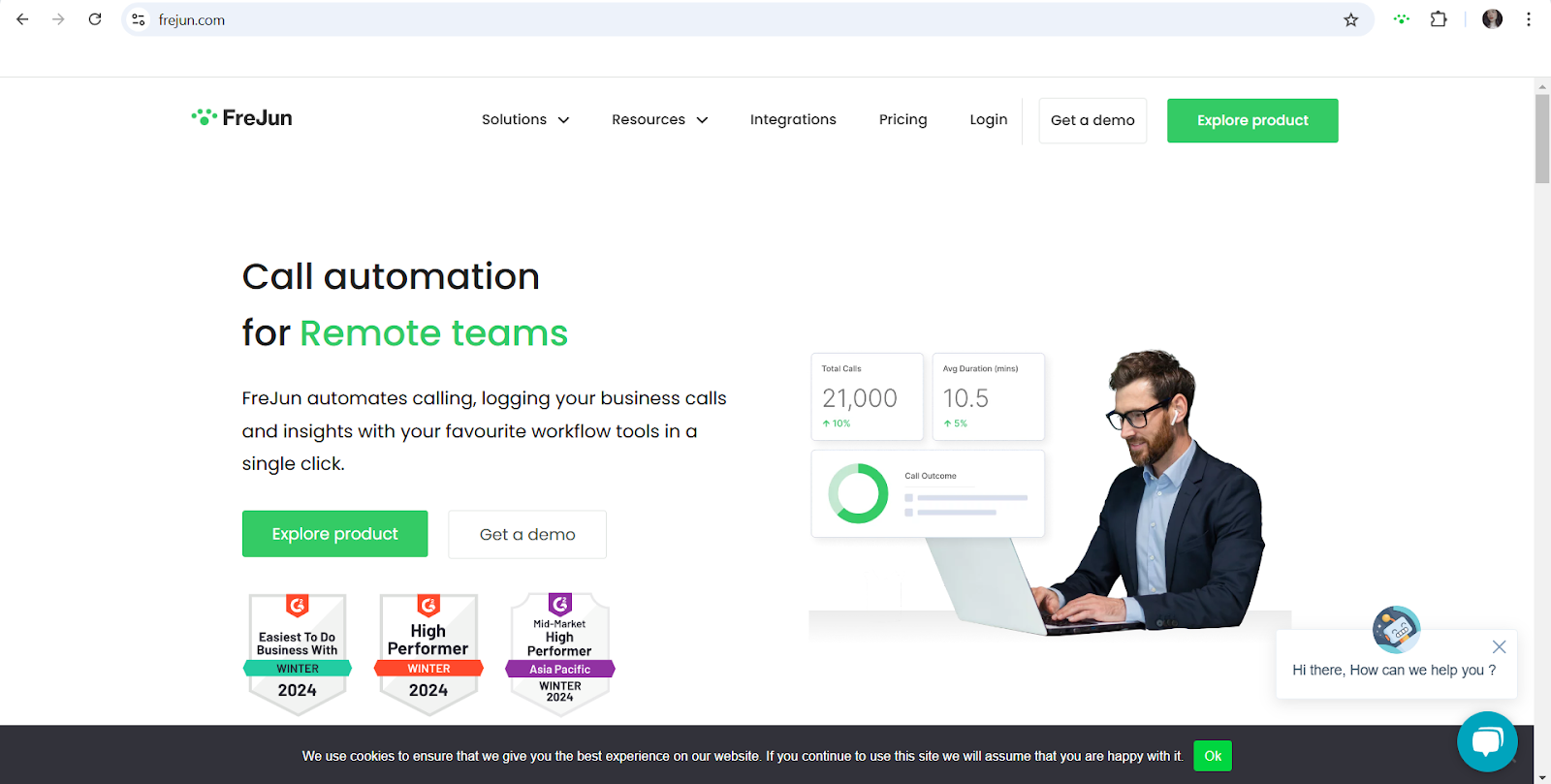
FreJun is an AI-driven business phone platform built for sales and support teams that make high volumes of international calls. It handles the full calling workflow: dialing, recording, transcription, CRM logging, and analytics, so reps focus on conversations rather than admin.
FreJun Core Features for International Calling
- Virtual Number System: Access local and toll-free virtual numbers across multiple countries, so your outbound calls show a local caller ID rather than a South African number. This alone improves answer rates significantly when calling international prospects.
- Auto-Dialing and Call Management: FreJun’s interface cuts manual dialing time by 80%, with real-time monitoring, intelligent call routing, and automated call distribution built in.
- AI Call Insights: Real-time transcription, sentiment analysis, and conversation intelligence help managers coach reps and improve call quality without listening to every recording manually.
- CRM Integration: FreJun connects directly with HubSpot, Salesforce, Zoho, Pipedrive, and 20+ other tools, so every call is logged automatically without rep intervention.
FreJun’s internal 2026 data across 300+ client accounts shows teams using AI-assisted dialing cut average call handling time by 35% and improved contact rates by 28% within 60 days of deployment. A full benchmark report is in progress. Contact research@frejun.com to be notified on publication.
FreJun Pricing
- Standard Plan: $14.49/user/month
- Professional Plan: $16.99/user/month
FreJun holds a 4.9/5 rating on G2, with users consistently praising its ease of setup and CRM sync reliability. If your team is evaluating VoIP platforms for international calling, FreJun is worth comparing directly against carrier-based options on a per-minute cost basis.
How Do Traditional International Calling Methods Work from South Africa?
Traditional international calling from South Africa uses a fixed dialing sequence that most mobile users have replaced with the plus sign (+). Understanding the sequence still matters when using desk phones, PBX systems, or older carrier plans that don’t auto-format international numbers.

International Dialing Format from South Africa
- Exit Code (00): Dial 00 to access international networks from a landline. On mobile, replace 00 with the + symbol.
- Country Codes: Each country has a unique code. Common ones include 1 for the US and Canada, 44 for the UK, 91 for India, and 971 for the UAE.
- Area Codes: After the country code, dial the area or city code. Some countries require you to drop the leading zero from the area code.
- Local Number: The specific subscriber number within the destination country.
Common Dialing Examples from South Africa:
- United States: 00 + 1 + area code + local number
- United Kingdom: 00 + 44 + area code (drop leading zero) + local number
- India: 00 + 91 + area code + local number
The biggest drawback of traditional carrier calls is cost. Per-minute rates to the US from South Africa can reach R2 to R5 on standard plans, while VoIP routes the same call for a fraction of that. For occasional personal calls, carrier dialing is fine. For business teams making 50+ international calls per day, the cost difference becomes a serious budget issue.
In the FreJun demo, you’ll see exactly how the platform auto-logs every international call to your CRM, flags missed follow-ups, and shows which reps are reaching decision-makers. Most teams that book a demo are live within a week.
Which Modern VoIP Solutions Work Best for International Calls from South Africa?
Voice over Internet Protocol (VoIP) has become the standard for affordable international calls, cutting costs by up to 60% compared to traditional carrier rates (Source: FCC International Calling Guide). The key technical advantages are lower latency on modern fibre connections, HD audio quality, and the ability to integrate with business tools like CRMs and helpdesks.
VoIP Platform Comparison for South African Businesses
| Platform | Best For | Starting Price | G2 Rating | Key Features |
|---|---|---|---|---|
| FreJun | Sales teams needing CRM integration and AI insights | $14.49/user/mo | 4.9/5 | AI call logging, auto-dialer, virtual numbers, CRM sync |
| Skype for Business | Small teams needing basic video and voice | $6.99/user/mo | 4.2/5 | Video calls, screen sharing, basic call recording |
| RingCentral | Enterprises needing cloud PBX and analytics | $20/user/mo | 4.0/5 | Cloud PBX, call analytics, team messaging |
| Zoom Phone | Teams already using Zoom for video | $10/user/mo | 4.3/5 | Call routing, voicemail transcription, Zoom integration |
| WhatsApp Business | SMEs calling customers on WhatsApp | Free (API costs apply) | 4.4/5 | Business profiles, automated messages, product catalogs |
We recommend FreJun over the alternatives for South African sales teams because it’s the only platform in this list that combines AI-powered call insights with direct CRM logging at under $15 per user. Skype and WhatsApp work for low-volume calling, but they don’t give managers the call analytics needed to coach reps or track pipeline activity.
Mobile Apps for International Calling
Mobile apps give individuals and small teams a fast way to make international calls without a dedicated VoIP subscription. The two most widely used options in South Africa are WhatsApp Business and Zoom Phone, each suited to different use cases.
- WhatsApp Business: This free app is ideal for SMEs that already communicate with customers on WhatsApp. It supports automated messages, business profiles, and product catalogs, though it requires both parties to have WhatsApp installed.
- Zoom Phone: From $10/user/month, Zoom Phone offers cloud calling with call routing and voicemail transcription. It’s a good fit for teams already using Zoom for video meetings, since the interface is familiar.
The biggest limitation of mobile apps is that they don’t integrate with CRM systems the way dedicated VoIP platforms do. If your team needs call data in Salesforce or HubSpot, a platform like FreJun is the better path.
Carrier-Based International Calling Options in South Africa
South Africa’s two major carriers, Vodacom and MTN, both offer international calling packages for business and personal use. These work without any app or internet connection, which makes them useful for calls in areas with poor data coverage.
- Vodacom International: Coverage in over 200 countries, with customisable roaming and data packages for business travellers.
- MTN Global Connect: Coverage in 29+ countries, with competitive rates and dedicated business packages for frequent international callers.
Carrier-based solutions are reliable for travel and backup calling, but they’re rarely the most cost-effective option for high-volume business calling. Most teams use them as a fallback when internet connectivity is unavailable, rather than as their primary international calling method.
How to Make International Calls from South Africa Using VoIP
Setting up VoIP for international calling from South Africa takes less than 30 minutes when you follow the right steps. The process below covers FreJun specifically, though the general steps apply to most cloud VoIP platforms. Before you start, confirm you have a stable internet connection of at least 1 Mbps per concurrent call.
Prerequisites Before Setting Up VoIP
- A stable fibre or LTE internet connection (minimum 1 Mbps per concurrent call)
- A business email address for account registration
- Your CRM login credentials if you want automatic call logging
- A headset or speakerphone for clear audio quality
- Create your FreJun account: Go to product.frejun.com/signup and register with your business email. Select your team size and primary calling region during onboarding.
- Select your virtual number: In the Virtual Numbers tab, choose a local number for the country you call most frequently. A US number, for example, shows US caller ID to your American prospects, which improves answer rates.
- Connect your CRM: Navigate to Settings, then Integrations, and select your CRM from the list. FreJun supports HubSpot, Salesforce, Zoho, Pipedrive, and 20+ others. Authorise the connection and map your call fields.
- Add your team members: Go to Team Management and invite your reps by email. Assign roles and set call routing rules so incoming calls reach the right person.
- Make your first international call: Open the FreJun dialer, enter the destination number with the country code (e.g. +1 for the US), and click dial. The call routes over the internet and logs automatically to your CRM.
- Review call analytics: After your first calls, check the Analytics dashboard to see connect rates, call duration, and AI-generated call summaries. Use these to coach your team and refine your calling strategy.
How Can South African Businesses Reduce International Calling Costs?
Cost management is the most common reason South African businesses switch from carrier calls to VoIP. The savings are real, but you need the right strategy to capture them fully. Three areas drive the biggest reductions: when you call, how you route calls, and which plan you’re on.
Smart Calling Practices That Cut Costs
- Call during off-peak hours: Some carriers and VoIP providers charge lower rates outside business hours. If your international contacts are in a different time zone, scheduling calls during their morning often aligns with South Africa’s off-peak window.
- Bundle calls by region: Group your international calls by destination country and schedule them in blocks. This reduces the overhead of switching between different routing configurations and helps you track per-region costs more accurately.
- Use local virtual numbers: When you call a US client from a US virtual number, the call is treated as a local call on their end. This can reduce your per-minute cost and improve answer rates at the same time.
Network and Plan Optimisation
- Choose the right connection method: Fibre gives the most consistent VoIP quality. If your team uses LTE, monitor jitter and packet loss, since these affect call clarity more than raw speed does.
- Compare VoIP vs carrier rates by destination: Not all VoIP platforms are cheaper for every country. Run a cost comparison for your top five calling destinations before committing to a plan.
- Analyse your usage patterns: Most VoIP platforms show per-user call minutes by destination. Use this data monthly to identify whether your current plan tier matches your actual usage, since overpaying for unused minutes is a common waste.
Security and Compliance for International Calls
Businesses handling sensitive customer data on international calls must meet both South African and destination-country requirements. South Africa’s Protection of Personal Information Act (POPIA) applies to all call recordings and customer data collected during calls, regardless of where the recipient is located.
- Data Protection Measures: End-to-end encryption, secure transmission protocols, and access controls protect call data in transit and at rest. Confirm your VoIP provider uses TLS (Transport Layer Security) for signalling and SRTP (Secure Real-time Transport Protocol) for media.
- Compliance Requirements: Follow POPIA for South African data, GDPR if calling EU contacts, and any industry-specific rules relevant to your sector. Most enterprise VoIP platforms provide compliance documentation on request.
- Best Practices: Run quarterly security audits, train staff on call recording consent rules, and maintain a documented incident response plan. The biggest compliance mistake is recording calls without informing the other party, which is a POPIA violation.
What Should You Do When International Calls Have Quality Problems?
Even well-configured VoIP systems run into problems. Most international call quality issues trace back to three root causes: network conditions, equipment, or provider routing. Here’s how to diagnose and fix each one quickly.
Diagnosing Common International Call Problems
- Connection Problems: Run a network diagnostic first. Check your provider’s status page for outages, then test your internet speed and jitter using a tool like Speedtest.net. VoIP calls need low jitter (under 30ms) more than they need high speed.
- Audio Quality Issues: Confirm your bandwidth is sufficient (at least 1 Mbps per call), check your headset or microphone for hardware faults, and verify that no other applications are consuming bandwidth during calls. If the problem persists, contact your VoIP provider’s support team with a call log timestamp.
- Billing Discrepancies: Monitor your usage dashboard weekly rather than waiting for the monthly invoice. If you spot unexpected charges, verify the destination numbers being dialed and check whether any calls were routed through a premium-rate path.
What Are the Future Trends in International Calling for 2026 and Beyond?
The international calling landscape is shifting fast, driven by AI, 5G rollout, and new connectivity technologies. South African businesses that adopt these early will have a cost and quality advantage over competitors still on legacy systems.
| Trend | Key Advancement |
| AI-Powered Call Routing | Smart automation for global connectivity without manual configuration |
| Blockchain-Based Calling | Secure, decentralised international call networks that reduce fraud |
| 5G-Optimised VoIP | Crystal-clear calls with ultra-low latency on mobile networks |
| eSIM Global Connectivity | No physical SIM required for international calling while travelling |
The most practical near-term trend for South African businesses is 5G-optimised VoIP. As 5G coverage expands in Johannesburg, Cape Town, and Durban, mobile VoIP call quality will match fibre-based calls, removing the last barrier to fully mobile international calling workflows.
Choosing the Right International Calling Solution for Your South African Business
International calling from South Africa has more options in 2026 than ever before, but the right choice depends on your team’s specific needs. For personal or low-volume calling, WhatsApp or a carrier plan works fine. For sales teams making dozens of international calls daily, a VoIP platform with CRM integration and call analytics is the only option that makes financial and operational sense.
Key Factors to Evaluate Before Choosing a Platform
- Call Volume: Choose a solution that matches your daily call volume. High-volume teams need auto-dialing and call queuing, which carrier plans and basic apps don’t provide.
- Budget: Compare per-minute rates for your top calling destinations across VoIP and carrier options. The cheapest plan per user isn’t always the cheapest per call.
- CRM Integration: If your team uses a CRM, choose a platform that logs calls automatically. Manual logging costs reps 15 to 20 minutes per day, which adds up to hours of lost selling time each week.
- Scalability: Pick a platform that can grow with your team. Adding users to a VoIP plan takes minutes, while expanding a carrier-based setup often requires hardware changes.
- Security and Compliance: Confirm the platform meets POPIA requirements and, if you call EU contacts, GDPR standards as well.
The complete guide to international calling from South Africa points to one clear conclusion: VoIP is the right foundation for any business that calls internationally at scale. Whether you’re a VP of Sales managing a team of 20 reps or a founder making your first international outreach calls, the tools available in 2026 make global communication faster, cheaper, and more measurable than traditional carrier calling ever was. How to Acquire US Numbers in Singapore is a useful companion read if your team also calls into the Asia-Pacific region.
Frequently Asked Questions About International Calling from South Africa
What is VoIP and how does it help with international calling from South Africa?
VoIP, or Voice over Internet Protocol, routes voice calls over the internet rather than traditional phone lines, cutting international calling costs by up to 60%. For South African businesses, this means calling the US, UK, or UAE costs a fraction of standard carrier rates. Platforms like FreJun add CRM integration and AI call logging on top of the core VoIP functionality, making them the preferred choice for sales teams.
Can I make international calls using my mobile phone in South Africa?
Yes, you can make international calls from a South African mobile phone using either your carrier’s international plan or a VoIP app. Carrier calls are convenient but expensive, often costing R2 to R5 per minute to major destinations. VoIP apps like FreJun, Zoom Phone, or WhatsApp use your mobile data instead, which reduces the per-minute cost significantly while maintaining good call quality on LTE or 5G.
What are the benefits of using a VoIP service for international calls?
The main benefits are lower costs, better call quality on modern internet connections, and the ability to integrate with business tools. VoIP platforms let you call from any device, assign virtual numbers in multiple countries, and log every call automatically to your CRM. For sales teams, the analytics layer is just as valuable as the cost savings, since it shows which reps are reaching decision-makers and which calls are converting.
How much does it cost to make international calls with VoIP in South Africa?
VoIP international calling costs vary by platform and destination, but most business VoIP plans charge between $0.01 and $0.05 per minute to major destinations like the US, UK, and Australia. FreJun’s plans start at $14.49 per user per month, which includes a set of included minutes and competitive per-minute rates beyond that. This compares favourably to carrier rates, which can reach R5 per minute on standard South African mobile plans.
Is it possible to use VoIP for international calls to landlines from South Africa?
Yes, VoIP platforms including FreJun support calls to both mobile and landline numbers internationally. The call routes over the internet to the VoIP provider’s network, which then connects to the destination country’s phone infrastructure. This means you can call a landline in Germany or a mobile in the US from the same VoIP app, without needing a separate service for each number type.
Can I make international calls from South Africa without a Wi-Fi connection?
Yes, VoIP calls work over mobile data as well as Wi-Fi. LTE and 5G connections in South Africa’s major cities provide sufficient bandwidth and low enough latency for clear VoIP calls. Wi-Fi is preferred when available because it typically offers more consistent jitter performance, but a strong LTE signal works well for most calls. FreJun’s mobile app supports both connection types without any configuration changes.
Do I need a special phone number to make international calls with VoIP?
No, you don’t need a special number to make outbound international calls with VoIP. You can dial any international number directly from the VoIP app using the standard format: country code followed by the local number. That said, getting a virtual number in the destination country improves your answer rates, since the call appears as a local number to the recipient rather than an unknown international caller.
What is the international dialing code to call from South Africa?
To make an international call from South Africa using a landline or traditional carrier, dial 00 followed by the destination country code and the local number. On mobile phones, replace 00 with the + symbol. For example, to call a US number, dial +1 followed by the 10-digit US number. VoIP platforms handle this formatting automatically, so you can enter numbers in any standard format and the system routes them correctly.
You’ve now seen every international calling option available to South African businesses in 2026, from traditional carrier dialing to AI-powered VoIP. The difference between knowing your options and acting on them is usually one conversation. Most teams that book a FreJun demo are making international calls through the platform within a week.