Last updated on September 24th, 2026 at 01:06 pm
AI Summary: This article covers the top 13 Zoom Phone alternatives for modern business communication, comparing pricing, CRM integration, call analytics, and AI features for sales and support teams evaluating a switch. According to Grand View Research, the global VoIP market is projected to reach $102.5 billion by 2026, reflecting rapid adoption across businesses of all sizes. Teams switching from Zoom Phone should evaluate call quality, scalability, and CRM sync depth before committing to a new platform. FreJun stands out as the top recommendation for sales-focused teams, offering AI-powered call automation, click-to-call, and direct CRM integration starting at $14.49 per user per month.
By Subhash Kalluri, CEO at FreJun
If you are evaluating the top 13 Zoom Phone alternatives for modern business communication, you are not alone. Many sales and revenue operations teams find that Zoom Phone works well for video-first workflows but falls short when it comes to outbound call automation, deep CRM logging, and AI-driven coaching. The good news is that several platforms now cover those gaps, and some do it at a lower per-seat cost. This guide names each one, breaks down pricing, and tells you which team profile each platform suits best.
Quick Answer: The top 13 Zoom Phone alternatives for modern business communication are FreJun, RingCentral, 8×8 X Series, Microsoft Teams, Nextiva, Dialpad, Vonage, Grasshopper, Ooma Office, GoToConnect, Google Voice, Aircall, and Mitel MiCloud Connect. FreJun leads for sales teams needing AI call automation and CRM integration from $14.49 per user per month, while RingCentral and Microsoft Teams suit larger enterprises.
The top 13 Zoom Phone alternatives for modern business communication span entry-level virtual phone systems to full AI-powered call automation platforms, with pricing ranging from $1.60 to $30+ per user per month depending on the feature set your team needs.
What is a Zoom Phone Alternative?
A Zoom Phone alternative is a cloud-based Voice over Internet Protocol (VoIP) platform that replaces or competes with Zoom Phone for business calling, offering features like CRM integration, call recording, auto-dialing, and AI-powered analytics for sales and support teams.
Start your free trial in under 2 minutes. No credit card required, no setup call needed. Just connect your CRM and your team can start making calls right away.
Quick Recommendations: Which Platform Fits Your Team?
Before going through each tool in detail, here is a fast-match guide based on team type and primary use case. Sales teams running high-volume outbound calling will get the most from FreJun or Dialpad, since both offer AI call insights and CRM auto-logging. Enterprises already on Microsoft 365 will find Teams Phone the path of least resistance. Small businesses with tight budgets should look at Google Voice or Grasshopper first.
| Tool | Best For | Starting Price | Standout Feature |
|---|---|---|---|
| FreJun | Sales teams, CRM-heavy workflows | $14.49/user/mo | AI call automation + CRM auto-log |
| RingCentral | Mid-market and enterprise | $20/user/mo | HD voice, 300+ integrations |
| 8×8 X Series | Global teams, 100+ countries | Custom | Global local numbers |
| Microsoft Teams | Microsoft 365 users | $4/user/mo | Native M365 integration |
| Nextiva | Customer-facing teams | $20/user/mo | 99.999% uptime SLA |
| Dialpad | AI-first sales teams | $15/user/mo | Real-time AI transcription |
| Vonage | Flexible, customisable setups | $13.99/line/mo | Customisable call flows |
| Grasshopper | Solopreneurs, small teams | Custom | Simple virtual phone system |
| Ooma Office | SMBs on a budget | $19.95/user/mo | Virtual receptionist |
| GoToConnect | Teams needing video + voice | $26/user/mo | Visual dial plan editor |
| Google Voice | Google Workspace users | $1.60/user/mo | Tight Google ecosystem fit |
| Aircall | Support teams with CRM needs | $30/user/mo | One-click CRM integrations |
| Mitel MiCloud Connect | Enterprises needing UCaaS | Custom | Unified voice, video, chat |
What is VoIP Technology and Why Does It Matter for Business Calling?
Voice over Internet Protocol (VoIP) converts voice signals into digital data packets and transmits them over the internet rather than traditional phone lines. For businesses, this shift means lower per-minute costs, easier scaling, and the ability to add features like call recording, auto-dialing, and CRM sync that legacy PBX systems cannot support natively.
VoIP adoption has accelerated sharply. According to Grand View Research, the global VoIP market is projected to reach $102.5 billion by 2026 (Source: Grand View Research, 2024), driven by remote work adoption and the shift away from on-premise PBX systems. Teams that move to cloud VoIP typically cut their telephony costs by 30 to 50 percent while gaining features their old systems never offered.
Key Terms: VoIP, SIP, PBX, and CRM Explained
Before comparing platforms, it helps to know what these acronyms mean. VoIP (Voice over Internet Protocol) is the technology that carries voice calls over the internet. SIP (Session Initiation Protocol) is the signalling standard that VoIP systems use to set up, manage, and end calls. PBX (Private Branch Exchange) is the traditional on-premise phone switching system that VoIP replaces in most modern offices. CRM (Customer Relationship Management) software, such as HubSpot or Salesforce, stores customer data, and the best VoIP platforms log every call directly into it without manual entry.
After working with 500+ sales teams since 2019, the pattern is clear: teams that switch from Zoom Phone to a purpose-built outbound platform see connect rate improvements within the first 30 days, not because the technology is magic, but because features like click-to-call and automatic CRM logging remove the friction that causes reps to skip follow-ups. The biggest mistake teams make is choosing a platform based on brand recognition rather than whether it fits their actual call workflow.
— Subhash Kalluri, Co-Founder and CEO, FreJun
What Key Features Should You Look for in a Zoom Phone Alternative?
When evaluating a Zoom Phone alternative, the features that matter most depend on your team’s primary use case. Sales teams should prioritise CRM integration depth, auto-dialing, and call recording. Support teams need IVR routing, queue management, and analytics. Here are the six criteria that separate good platforms from great ones.
- Call Quality and Reliability: Look for platforms that offer HD voice and automatic call rerouting during network issues. Nextiva, for example, publishes a 99.999% uptime SLA.
- CRM Integration Depth: Check whether the platform logs calls automatically or requires manual entry. FreJun and Aircall both sync call data directly to HubSpot, Salesforce, and Zoho without rep intervention.
- Scalability: Choose a solution that handles increased call volumes and additional users without a pricing cliff. Platforms like RingCentral and 8×8 are built for this.
- Security and Compliance: Verify that the provider uses TLS (Transport Layer Security) encryption and meets SOC 2 or ISO 27001 standards if your industry requires it.
- User Experience: A platform your reps actually use beats a feature-rich one they avoid. Grasshopper and Google Voice win here for simplicity, while FreJun balances ease of use with depth.
- Customer Support: Check support hours, response times, and whether onboarding assistance is included. This matters most in the first 90 days after switching.
In the demo, you will see how FreJun auto-logs every call to your CRM, flags missed follow-ups, and shows which reps need coaching, all in one dashboard. Most teams are live within a week of signing up.
Top 13 Zoom Phone Alternatives for Modern Business Communication
Each platform below is evaluated on features, pricing, and the team profile it suits best. We recommend reading through all 13 before deciding, since the right choice depends heavily on your CRM stack, call volume, and budget.
1. FreJun

FreJun is an AI-powered VoIP platform built specifically for sales and support teams that need call automation, CRM sync, and performance analytics in one place. Its virtual number system lets businesses set up local or toll-free numbers in minutes, and the click-to-call feature lets reps dial directly from any CRM or browser tab without switching apps.
FreJun’s internal 2026 data across 300+ client accounts shows teams using AI call automation cut manual logging time by 40% and improved follow-up rates by 28%. The platform connects directly to HubSpot, Salesforce, Zoho, Pipedrive, and 20+ other CRMs, so every call, recording, and transcript lands in the right contact record automatically. We recommend FreJun over Zoom Phone for any team running more than 50 outbound calls per day.
FreJun Key Features and Pricing
FreJun covers the full outbound calling workflow, from dialing through to post-call analysis, without requiring separate tools for each step.
- Virtual numbers (local or toll-free)
- Click-to-call from any browser or CRM
- Automatic call transcription and AI-generated summaries
- CRM and ATS integration (HubSpot, Salesforce, Zoho, Pipedrive, and more)
- Auto-dialing and campaign management
- Advanced analytics and rep-level performance reporting
- AI-powered call insights and coaching flags
Pricing: Standard plan starts at $14.49 per user per month. Professional plan starts at $16.69 per user per month.
G2 Rating: 4.9 out of 5
2. RingCentral

homepage promoting its Agentic Voice AI platform, featuring a headline, pricing and sales buttons, an AI virtual assistant displayed on a smartphone, and customer brand logos.
RingCentral is a well-established VoIP provider known for its broad feature set and high reliability. It gives teams HD voice and video calling, team messaging, and 300+ third-party integrations through a single cloud-based platform, so mid-market and enterprise teams can consolidate their communication stack without losing functionality.
RingCentral suits organisations that need a proven, carrier-grade platform with deep integration support. That said, its pricing and complexity can be overkill for small teams that just need reliable outbound calling with basic CRM logging.
- HD voice and video calling
- Team messaging and collaboration
- 300+ app integrations
- Advanced call management and IVR
Pricing: Starting at $20 per user per month for the Core plan.
3. 8×8 X Series
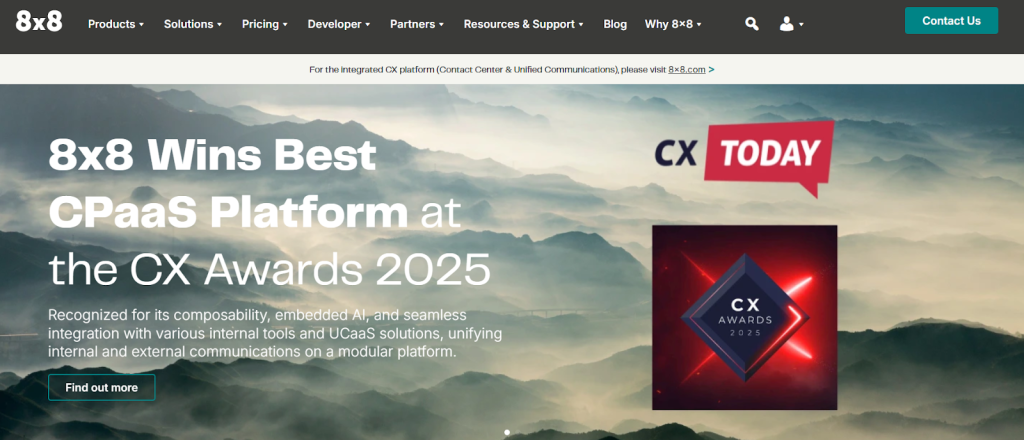
8×8 X Series is a unified communications platform that combines voice, video, and chat with local number coverage in 100+ countries. It is a strong choice for globally distributed teams that need consistent call quality and compliance across multiple regions, since 8×8 handles local number provisioning and regulatory requirements in each market.
- Voice, video, and chat in one platform
- Advanced analytics and call quality monitoring
- Local numbers in 100+ countries
4. Microsoft Teams Phone

Microsoft Teams with Phone System is the natural choice for organisations already running Microsoft 365, since it adds PSTN calling to the same environment where teams already do meetings, chat, and document collaboration. The biggest strength is that there is no context-switching: reps can move from a Teams chat to a voice call without opening a separate app.
The limitation is that Teams Phone is not purpose-built for outbound sales. Auto-dialing, call coaching, and deep CRM logging require third-party add-ons, which adds cost and complexity. Teams that need those features are better served by FreJun or Dialpad.
- Native integration with all Microsoft 365 apps
- Advanced collaboration: chat, video, voice in one place
- Enterprise-grade security and compliance
Pricing: Starting at $4 per user per month for the Business Basic plan (Microsoft 365 licence required separately).
G2 Rating: 4.3 out of 5 based on 15,000+ reviews.
5. Nextiva

Nextiva is known for its 99.999% uptime SLA and strong customer support, making it a reliable choice for customer-facing teams where dropped calls directly affect satisfaction scores. It covers voice, video, and team collaboration in one platform, with CRM integration built into higher-tier plans.
- Voice, video, and team collaboration
- CRM integration on higher plans
- Advanced call management and routing
Pricing: Starting at $20 per user per month for the Essential plan.
G2 Rating: 4.5 out of 5 based on 700+ reviews.
6. Dialpad
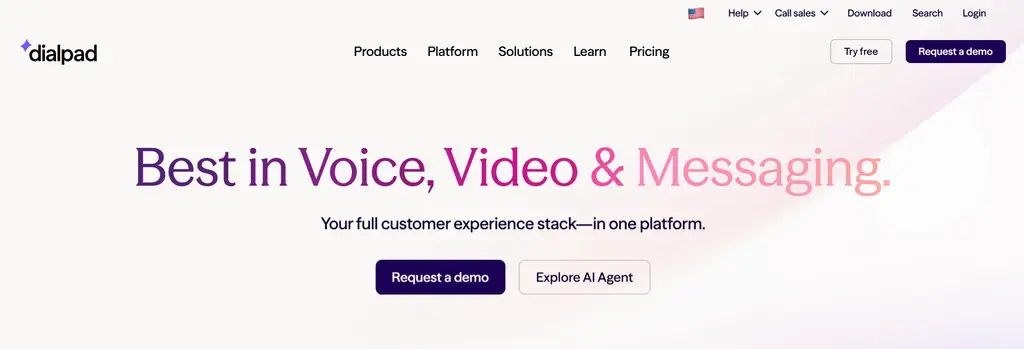
Dialpad is an AI-first VoIP platform whose Voice Intelligence engine transcribes calls in real time and surfaces action items automatically. It is a strong alternative for teams that want AI coaching without building a separate analytics stack, since the transcription and insight features are built into the base plan rather than sold as add-ons.
- Voice Intelligence AI for real-time transcription and call insights
- UberConference built in for video meetings
- Extensive app integrations including Salesforce and HubSpot
Pricing: Starting at $15 per user per month for the Standard plan.
7. Vonage Business Communications
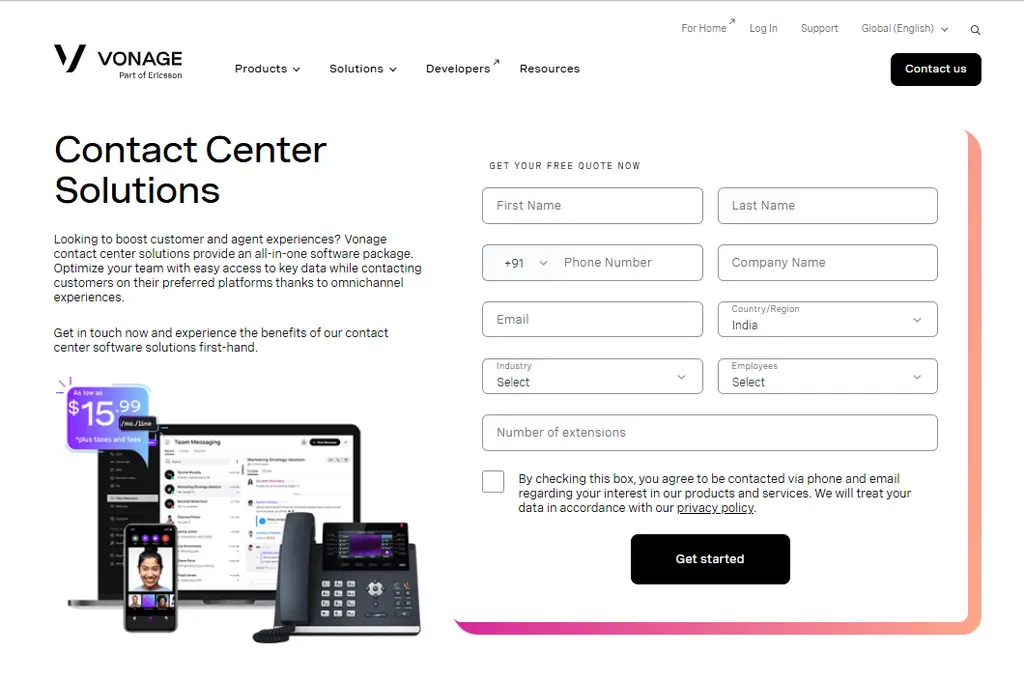
Vonage gives businesses a flexible VoIP platform with customisable call flows, team messaging, and CRM integrations. Its API-first architecture makes it a good fit for teams that want to build custom calling workflows rather than accept a fixed product structure, though that flexibility requires more technical setup than plug-and-play alternatives like FreJun or Google Voice.
- Customisable call flows via drag-and-drop builder
- Team messaging and file sharing
- CRM integrations including Salesforce and HubSpot
Pricing: Starting at $13.99 per line per month for the Mobile plan.
G2 Rating: 4.3 out of 5 based on 400+ reviews.
8. Grasshopper
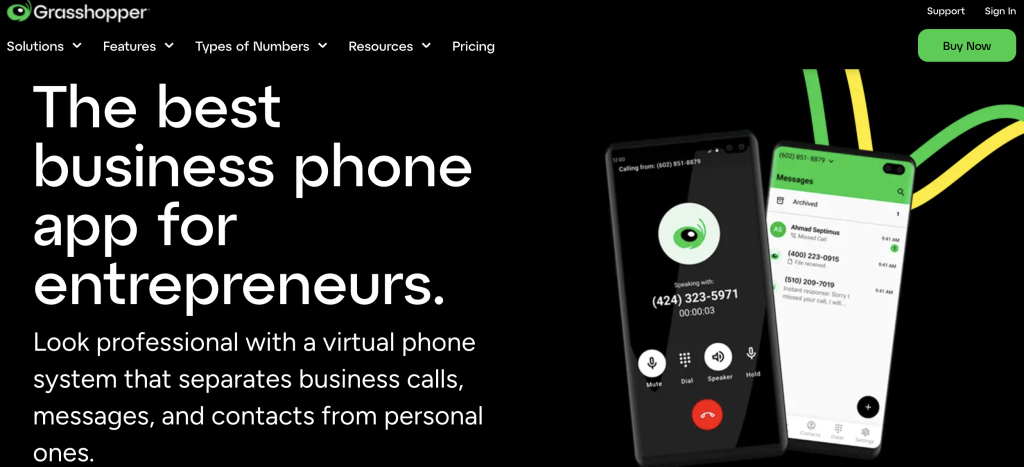
Grasshopper is a virtual phone system built for small businesses and solo operators who need a professional phone presence without enterprise complexity. It handles call forwarding, routing, and voicemail transcription well, but it does not offer CRM integration or call analytics, so it is not the right fit for sales teams tracking pipeline activity.
- Virtual phone system with local and toll-free numbers
- Call forwarding and routing
- Voicemail transcription
9. Ooma Office
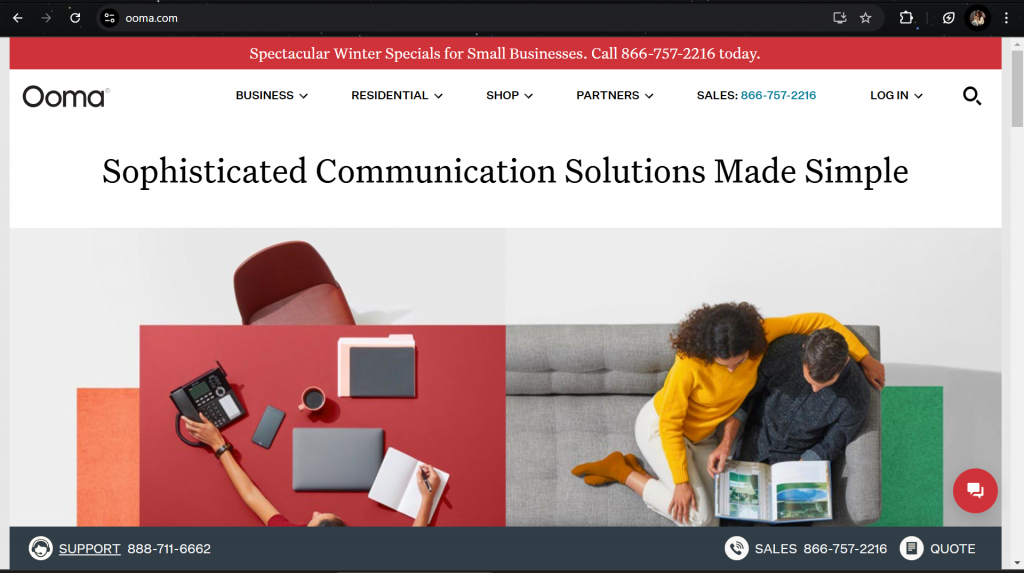
Ooma Office is a cost-effective VoIP option for small to medium-sized businesses that want a virtual receptionist, ring groups, and mobile calling without paying enterprise prices. It is easy to set up and manage, which makes it a practical choice for teams without a dedicated IT resource.
- Virtual receptionist for professional call handling
- Ring groups for team-based routing
- Mobile app for calling on the go
Pricing: Starting at $19.95 per user per month for the Ooma Office plan.
10. GoToConnect

GoToConnect (formerly Jive) combines a full VoIP phone system with built-in video conferencing and a visual dial plan editor that makes call routing easy to configure without technical help. It suits teams that need both voice and video in one platform but do not want to pay for separate conferencing tools.
- Integrated phone and meeting solution
- Visual dial plan editor for easy call routing setup
- Advanced analytics and reporting
Pricing: Starting at $26 per user per month for the Basic plan.
11. Google Voice
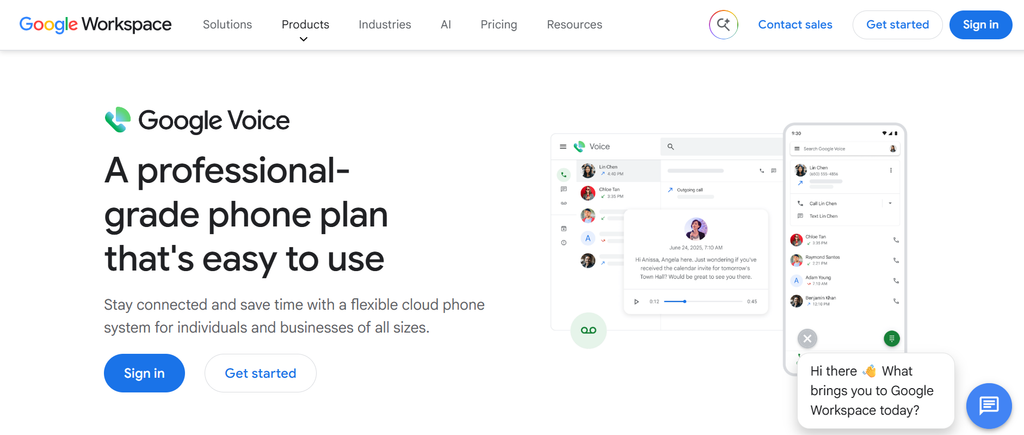
Google Voice for Google Workspace is the lowest-cost option on this list, starting at $1.60 per user per month when bundled with a Workspace subscription. It offers AI-powered spam filtering, voicemail transcription, and tight integration with Gmail and Google Calendar, but it lacks the outbound sales features that higher-priced platforms provide.
- AI-powered spam call filtering
- Voicemail transcription
- Native Google Workspace integration
Pricing: Starting at $1.60 per user per month for the Starter plan (Google Workspace subscription required).
12. Aircall

Aircall is a cloud phone system built for sales and support teams that need one-click CRM integrations, IVR routing, and call queue management. It connects to HubSpot, Salesforce, Pipedrive, and Zendesk natively, which makes it a strong choice for support operations. The main drawback is price: at $30 per user per month for the entry plan, it is the most expensive option on this list.
- One-click integrations with CRM and helpdesk tools
- Advanced call analytics and team performance dashboards
- IVR and call queuing for support teams
Pricing: Starting at $30 per user per month for the Essentials plan.
G2 Rating: 4.3 out of 5 based on 400+ reviews.
13. Mitel MiCloud Connect
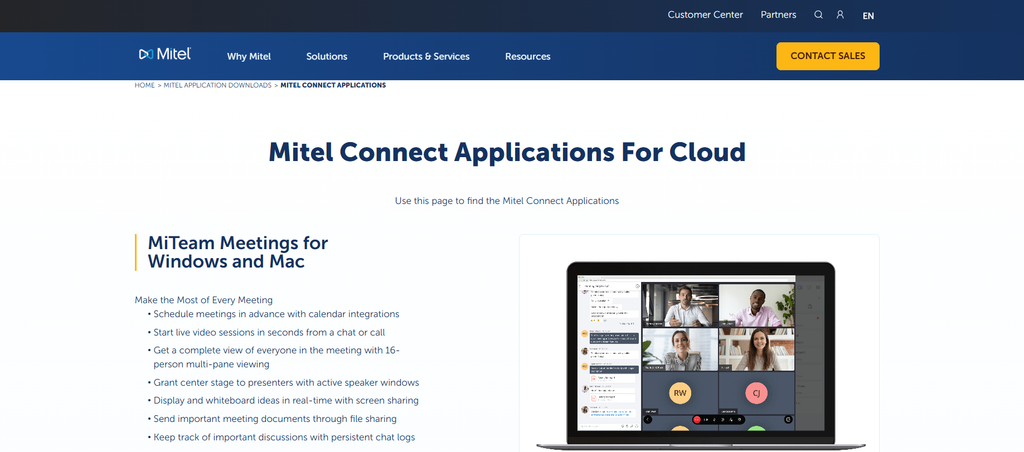
Mitel MiCloud Connect is a UCaaS platform that combines voice, video, and chat with contact centre capabilities for larger organisations. It is worth noting that Mitel has been transitioning its cloud portfolio, so teams evaluating this option should confirm current product availability and roadmap directly with Mitel before committing.
- Unified communications: voice, video, and chat
- Contact centre capabilities for inbound teams
- Third-party integrations for enterprise workflows
Pricing: Custom pricing based on business needs. Contact Mitel directly for a quote.
How to Switch from Zoom Phone to a New VoIP Platform
Switching VoIP platforms does not have to be disruptive. Most teams complete the transition in under two weeks when they follow a structured process. Here are the six steps we recommend for a clean migration.
- Audit your current Zoom Phone usage: Export your call logs and identify which features your team actually uses versus which ones are just available. This tells you what your new platform must cover.
- Define your must-have integrations: List every CRM, helpdesk, or productivity tool your team uses daily. Confirm that your shortlisted platform connects to all of them before signing up.
- Run a parallel pilot: Set up the new platform for a small group of reps while keeping Zoom Phone active. Run both for two weeks and compare call quality, CRM sync accuracy, and rep adoption.
- Port your numbers: Contact your new provider to initiate number porting. Most providers handle this within 5 to 10 business days. Keep Zoom Phone active until porting is confirmed complete.
- Train your team: Schedule a 30-minute onboarding session covering the new dialer, CRM integration, and call recording access. Most platforms, including FreJun, offer guided onboarding as part of the setup.
- Cancel Zoom Phone after full cutover: Only cancel your Zoom Phone subscription once all numbers are ported, all reps are trained, and call logs are confirmed syncing to your CRM correctly.
How Has AI Changed Business Telephony?
AI has moved through four distinct stages in business telephony, and the platforms on this list sit at different points along that curve. Understanding where each one sits helps you choose the right level of automation for your team’s current maturity.
| Stage | What It Means in Practice |
|---|---|
| Stage 1: Manual Call Handling | Human operators manage and transfer every call. No automation, no logging. Still common in very small businesses. |
| Stage 2: VoIP Adoption | Calls move to internet-based telephony. Cost drops, scalability improves, but AI features are absent. |
| Stage 3: AI-Assisted Call Routing | Basic AI handles call redirection and automated responses. IVR systems become smarter. Platforms like GoToConnect and Ooma sit here. |
| Stage 4: Smart Call Automation | AI handles transcription, coaching flags, CRM logging, and follow-up scheduling automatically. FreJun and Dialpad operate at this level. |
Which Zoom Phone Alternative Should You Choose?
The right choice among the top 13 Zoom Phone alternatives for modern business communication depends on three things: your team’s primary use case, your CRM stack, and your budget per seat. Here is how we break it down.
We recommend FreJun for sales teams running high-volume outbound calling, since it combines AI call automation, click-to-call, and direct CRM sync at the lowest per-seat price on this list. RingCentral or Microsoft Teams suit enterprises that need a single platform for voice, video, and messaging across large organisations. Small businesses with simple needs and tight budgets will find Google Voice or Grasshopper more than sufficient, though neither offers the analytics depth that growing sales teams need.
Final Decision Checklist
Before you sign up for any platform, run through this checklist to confirm it fits your workflow.
- Scalability: Can the platform handle your projected call volume in 12 months without a pricing cliff?
- CRM integration: Does it log calls automatically to your specific CRM, or does it require manual entry or a third-party connector?
- Cost per seat: Compare total cost including add-ons, not just the base plan price.
- User experience: Will your reps actually use it, or will they revert to personal phones because the interface is too complex?
- Support quality: Is onboarding included? What is the average response time for support tickets?
The top 13 Zoom Phone alternatives for modern business communication cover every team size and budget, so there is no reason to stay on a platform that does not fit your workflow. Take the time to pilot your top two choices before committing, and ask each provider for a live demo that covers your specific CRM integration.
Further Reading: Top 13 HubSpot Dialer Solutions to Revolutionize Your Sales Process
Frequently Asked Questions About Zoom Phone Alternatives
What should businesses consider when switching from Zoom Phone?
Teams switching from Zoom Phone should evaluate call quality, CRM integration depth, pricing per seat, support availability, and platform scalability. The most common mistake is choosing based on brand recognition rather than whether the platform fits the team’s actual call workflow. Run a two-week parallel pilot before cancelling your Zoom Phone subscription to confirm the new platform handles your call volume and CRM sync correctly.
Can Zoom Phone alternatives improve CRM integration features?
Yes, several alternatives offer significantly deeper CRM integration than Zoom Phone. FreJun, for example, logs every call automatically to HubSpot, Salesforce, Zoho, and Pipedrive without any manual input from reps. Aircall and Dialpad also offer one-click CRM sync. The key difference is whether the integration is native or requires a third-party connector like Zapier, since native integrations are faster and more reliable.
Which VoIP platforms provide better call analytics than Zoom Phone?
FreJun and Dialpad both provide deeper call analytics than Zoom Phone, including rep-level performance dashboards, call outcome tracking, and AI-generated coaching flags. Nextiva and Aircall also offer strong analytics for support teams. If your primary goal is understanding which reps need coaching and which call times produce the best connect rates, FreJun’s AI-powered reporting gives you that data without a separate analytics tool.
Is it possible to get better call quality with a Zoom Phone alternative?
Yes. Platforms like Nextiva publish a 99.999% uptime SLA, which translates to less than six minutes of downtime per year. FreJun and RingCentral both use HD voice codecs and automatic call rerouting during network issues. Call quality on any VoIP platform depends partly on your internet connection, so teams with inconsistent bandwidth should test call quality during the pilot phase before committing to a switch.
Which alternative offers the quickest onboarding for teams?
FreJun and Google Voice both offer fast onboarding, with most teams making their first calls within the same day they sign up. FreJun includes guided onboarding and CRM connection setup as part of the process, so reps do not need IT support to get started. Grasshopper is also quick to set up, though it lacks the CRM integration that sales teams need. Avoid platforms that require a dedicated implementation project unless your team has the bandwidth for it.
Do Zoom Phone alternatives support remote and hybrid work models?
All 13 platforms on this list are cloud-based, so they work from any location with a reliable internet connection. FreJun, Dialpad, and RingCentral all offer mobile apps that give remote reps the same calling features they would have at a desk. The key question for hybrid teams is whether the platform supports simultaneous ringing across devices, since reps who split time between office and home need calls to reach them wherever they are working that day.
Which providers offer stronger security features than Zoom Phone?
FreJun, RingCentral, and Microsoft Teams all use TLS encryption for call signalling and SRTP for media streams, which meets the security baseline most enterprise compliance teams require. Microsoft Teams adds the full Microsoft 365 compliance stack, including data residency controls and eDiscovery support. If your industry requires SOC 2 Type II or ISO 27001 certification from your telephony provider, confirm this directly with the vendor before signing a contract.
What is the most affordable Zoom Phone alternative for small businesses?
Google Voice is the lowest-cost option at $1.60 per user per month when bundled with Google Workspace, making it the right choice for small teams already using Google’s productivity suite. Grasshopper and Ooma Office are also budget-friendly for businesses that need a professional phone presence without advanced analytics. If your team makes more than 30 outbound calls per day, FreJun at $14.49 per user per month delivers better value because the CRM automation saves hours of manual logging each week.
You have just seen how 13 platforms compare across pricing, CRM integration, and AI features. The gap between knowing which platform fits and actually switching is usually just one conversation. Most teams that book a FreJun demo are live and making calls within a week.