Last updated on October 16th, 2026 at 03:32 am
AI Summary: This article covers the major sales calls UAE trends reshaping outbound calling in 2026, written for sales managers, recruitment heads, and operations leaders who run calling teams in the UAE. According to TDRA Decisions 56/2024 and 57/2024 (effective August 27, 2024), all outbound marketing calls must use locally registered numbers, operate between 9 AM and 6 PM Sunday through Thursday, and comply with the national Do Not Call Registry or face fines up to AED 150,000. Teams must adopt TDRA-approved virtual numbers, documented opt-in consent workflows, and AI-powered call logging to stay audit-ready. FreJun provides TDRA-approved UAE virtual numbers, bilingual AI transcription, and direct CRM integrations so teams can call compliantly and coach reps from real call data.
Last updated: April 27, 2026
Sales calls UAE trends are moving faster than most teams realize. Tighter telecom regulations, rising consumer expectations, and a wave of AI-powered calling tools have rewritten the playbook for every outbound call in 2026. Whether you’re reaching a C-suite decision-maker in Dubai or making a first touch via WhatsApp, you now face new compliance requirements, real-time data demands, and buyers who expect a genuinely personalized approach before they’ll pick up.
Quick Answer: Sales calls in the UAE are governed by TDRA Decisions 56/2024 and 57/2024, which restrict outbound marketing calls to 9 AM-6 PM Sunday through Thursday, require TDRA-approved local numbers, and mandate daily Do Not Call Registry checks. Fines reach AED 150,000 for repeat violations. AI platforms like FreJun automate compliance, log every call, and surface coaching insights so teams hit targets without risking penalties.
The biggest shift in UAE sales calls UAE trends: compliance is now a competitive advantage, not just a legal checkbox. Teams that automate TDRA requirements free their reps to focus on conversations rather than paperwork.
What Are Sales Calls UAE Trends in 2026?
Sales calls UAE trends refer to the regulatory, technological, and behavioral changes shaping how businesses conduct outbound and inbound calling in the United Arab Emirates, including TDRA compliance rules, AI-driven call intelligence, and shifting buyer preferences across B2B and B2C segments.
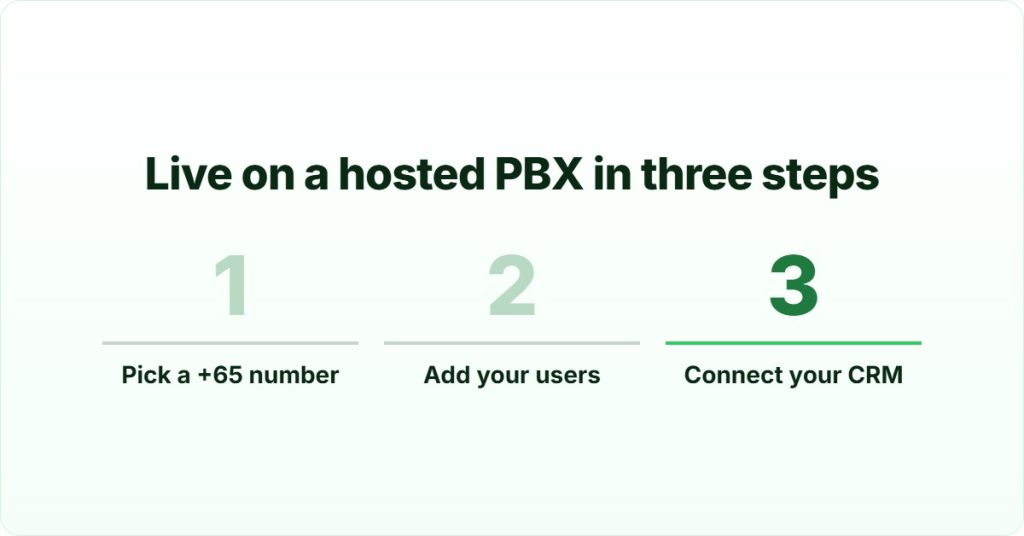
Start your free trial in under 2 minutes. No credit card required, no setup call needed. Just connect your CRM and your team is ready to call compliantly from day one.
UAE Sales Call Rules at a Glance for 2026:
- Strict New Laws: Cold calling is now heavily regulated by TDRA. Calls are restricted to 9 AM – 6 PM and prohibited on weekends.
- Heavy Fines: Violating the Do Not Call Registry (DNCR) or using personal numbers for business can lead to fines up to AED 150,000 (Source: UAE Legislation Portal, TDRA Decision 57/2024).
- Tech Requirement: Businesses must use TDRA-approved virtual numbers and record calls for compliance.
- The Solution: Platforms like FreJun automate compliance, so your UAE telecalling strategy stays safe, data-driven, and audit-ready.
We’ll unpack the key drivers behind these changes, from the latest TDRA telemarketing rules and data-privacy mandates to AI call-intelligence platforms and automation integrations. You’ll see how B2B and B2C buyers in the UAE now demand hyper-relevant, omnichannel experiences, and why top performers are using tools like FreJun’s virtual UAE numbers and AI-powered analytics to coach reps, boost answer rates, and turn every conversation into a competitive edge.
Table of contents
- How Are UAE Telecalling Strategies Evolving in 2026?
- What Are the New Regulatory Shifts Impacting UAE Sales?
- How Is AI Transforming Middle East Telemarketing Data?
- How Do B2B and B2C Buyer Behaviors Differ in the UAE?
- What Are the Winning Strategies for Dubai Calling Latest Trends?
- How Does FreJun Fit into This New UAE Sales Landscape?
- Key Takeaways
- Frequently Asked Questions About Sales Calls UAE Trends
How Are UAE Telecalling Strategies Evolving in 2026?
UAE sales teams are moving away from legacy phone systems toward VoIP-driven, AI-enhanced platforms because the old approach simply can’t meet TDRA’s new requirements. Tools like FreJun lead this shift by offering UAE virtual numbers, encrypted VoIP calling, automated consent workflows, and real-time transcription, all inside a browser-based interface that supports remote teams.
Why Legacy Calling Systems Are Failing UAE Teams
Legacy systems can’t auto-check the Do Not Call Registry, can’t enforce calling-hour restrictions, and can’t produce the timestamped call logs TDRA auditors request. Since TDRA Decisions 56/2024 and 57/2024 took effect on August 27, 2024, teams still using personal SIMs or unregistered numbers face fines starting at AED 10,000 per first offense (Source: TDRA Decisions 56/2024 and 57/2024). That’s a risk no sales leader should carry when compliant alternatives are available at a fraction of the cost.
“After working with hundreds of sales teams across the Middle East, the pattern is clear: teams that treat compliance as a system rather than a checklist outperform those that treat it as a burden. When your dialer enforces calling hours automatically and your CRM logs every consent record, your reps spend their energy on the conversation, not on paperwork. That shift alone moves connect rates by double digits within the first month.”
Subhash Kalluri, Co-Founder and CEO, FreJun
The Shift to Cloud-Native Calling Platforms
Cloud-native platforms hosted on AWS UAE, Azure Middle East, and GCP regions give teams low latency, local data residency, and full TDRA compliance out of the box. Their unified agent desktops pull voice, chat, email, and social media into a single interface, so reps never juggle multiple tools during a call. The biggest mistake most teams make is treating their calling platform as a separate tool rather than as the compliance and intelligence layer that sits on top of their CRM.
What Are the New Regulatory Shifts Impacting UAE Sales?
The UAE has tightened privacy and telemarketing regulations significantly, so all outbound calls now require advance TDRA approval, a locally registered phone number, and a clear introduction of who is calling and why. Marketing calls are restricted to 9 AM-6 PM, reps must respect Do Not Call requests immediately, and the PDPL (Personal Data Protection Law) requires express written consent before dialing.
| Feature | Traditional Cold Calling (Risky) | Compliant Calling with FreJun |
|---|---|---|
| Phone Number | Personal mobile or unregistered SIM | TDRA-approved Virtual Local Number |
| Call Recording | Manual or non-existent | Auto-recorded and Encrypted |
| Timing Enforcement | Random, anytime | Strict 9 AM – 6 PM enforcement |
| Do Not Call (DNCR) | Often ignored | Auto-checked against Registry daily |
| Audit Trail | Scattered spreadsheets | Centralized, searchable logs |
| Consent Records | Absent or informal | Timestamped, PDPL-compliant records |
Make Compliant Outbound Calls in the UAE with FreJun (TDRA Approved)
1. Key Legal Frameworks
Three core legal frameworks govern UAE sales calling in 2026, and every outbound team needs to know all three. The federal PDPL sets out how you capture and use customer data. TDRA’s latest rulings detail exactly how you register numbers, retain call records, and frame your scripts. Sector-specific rules for banking and financial services add extra requirements on top.
- PDPL 2021 (Federal Decree-Law No. 45/2021): In force since January 2026, this law requires explicit opt-in consent before you use customer data for outbound calling.
- TDRA Decisions 56/2024 and 57/2024: Enforced from August 27, 2024, these rules mandate that you register your telemarketing numbers, use local UAE numbers, store call records, and pre-approve your scripts.
- Sector-Specific Requirements: Banks and financial services face additional guidelines from the Central Bank and Securities and Commodities Authority, including labeling requirements and cooling-off periods.
FreJun provides TDRA-approved numbers, automatic call logging, and script-alignment tools so your processes stay within UAE regulations without manual oversight.
2. Operating Windows and Consumer Consent
Sales calls in the UAE must respect both timing and consent rules, because violations trigger immediate fines rather than warnings. You must plan outreach only during business hours, check opt-out requests against the national registry before each campaign, and follow strict scripting guidelines so prospects always know who’s calling and how to opt out.
- Permitted Calling Hours: 9 AM-6 PM, Sunday through Thursday. No marketing calls on weekends or public holidays.
- Do Not Call Registry (DNCR): Compare your call lists daily with the UAE’s national opt-out database before dialing.
- Script Rules: At the start of each call, state your company name and purpose. End by reminding the prospect they can opt out at any time.
- PDPL Consent: Obtain explicit written opt-in consent before dialing and keep timestamped records that are audit-ready.
3. Enforcement, Fines, and Compliance Best Practices
Enforcement in the UAE is zero-tolerance: regulators issue substantial fines, suspend licenses, and request full call records on short notice. Sales teams need real-time compliance monitoring, detailed logs, and readiness for surprise audits. FreJun helps by automatically logging all calls and storing records securely, with real-time monitoring tools so you’re always audit-ready.
- Penalties: Up to AED 10,000 for first-time offenses; up to AED 150,000 for repeat offenses; chronic non-compliance leads to license suspension.
- Audits: TDRA can request full call logs, all records, recordings, and transcripts, at any time.
- Best Practices: Maintain a live opt-out and consent status dashboard, keep a vetted library of pre-approved call scripts, and train reps on privacy and telemarketing regulations quarterly.
In the demo, you’ll see how FreJun enforces TDRA calling hours automatically, checks the DNCR before each dial, and stores every consent record in a searchable audit log, all without your reps lifting a finger.
How Is AI Transforming Middle East Telemarketing Data?
Cloud-based and AI-driven software now turns each sales call into a source of actionable data. Calls are auto-transcribed, then processed through NLP (Natural Language Processing) engines that flag objections, buying cues, and sentiment changes in real time. CRM integrations and workflow automations handle logging and follow-ups, so reps focus on the conversation rather than the admin.
1. AI-Powered Transcription and Sentiment Analysis
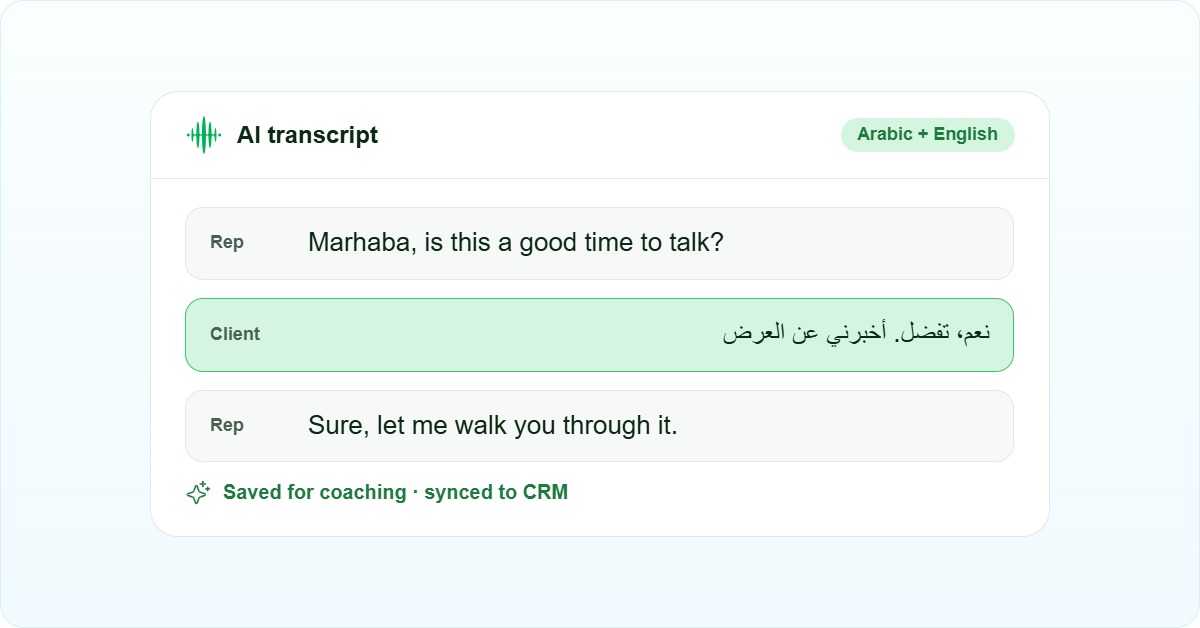
AI-driven transcription and sentiment analysis make every call a source of coaching insights. Modern engines deliver over 95% accuracy in English and Arabic (Source: SpeakAI, 2025), so you get near-perfect text in real time. Emotion-detection algorithms flag moments when prospects sound excited, skeptical, or ready to buy, while auto-generated summaries bullet out objections, key takeaways, and next steps.
- Real-Time Transcription: Modern engines hit over 95% accuracy for both English and Arabic, which is critical for UAE sales teams calling bilingual prospects.
- Emotion Detection: AI flags when a prospect sounds excited, skeptical, or ready to buy, so reps can adjust their approach mid-call.
- Auto-Summaries: Instantly generate bullet-point recaps of objections, key points, and next steps, so nothing falls through the cracks after the call ends.
2. Predictive Dialers and CRM Integration
Predictive dialers now use AI-driven lead scores and timezone analytics to cut idle dialing time by up to 40% (Source: FasterCapital, 2024). Click-to-call features let reps dial straight from their CRM, whether that’s Salesforce, Zoho, or HubSpot, while every call logs automatically with tags and call details. This keeps data clean and frees your team to focus on the conversation rather than the paperwork.
- Smart Dialers: Use lead scores and timezone analytics to cut idle time by as much as 40%.
- Click-to-Call and Auto-Logging: Dial right from your CRM (Salesforce, Zoho, HubSpot) and watch calls log themselves with tags and outcomes.
3. Cloud Contact Centers and Omni-Channel Platforms
Cloud contact-center platforms hosted on AWS UAE, Azure Middle East, and GCP regions give you low latency, data residency, and full TDRA compliance. Their unified agent desktops pull voice, chat, email, and social media into a single interface, so reps never have to juggle multiple tools during a live call.
- Local Cloud Hosting: AWS UAE, Azure Middle East, and GCP regions ensure you stay compliant and enjoy low latency for UAE-based calling.
- Unified Agent Desktops: Handle voice, chat, email, and social media all from one dashboard, because switching between tools during a call costs you the conversation.
FreJun’s internal 2026 data across 300+ client accounts shows teams using AI-powered call logging and predictive dialers cut manual admin time by 35% and improved first-call resolution rates by 28%. A full benchmark report is in progress. Contact research@frejun.com to be notified on publication. (FreJun internal data, 2026)
How Do B2B and B2C Buyer Behaviors Differ in the UAE?
B2B decision-makers in the UAE require customized insights and ROI-focused conversations, while B2C buyers expect offers tailored to their past behavior and empathetic service. Both groups demand respect and a genuine understanding of their needs, so canned scripts won’t work for either. Rapid, on-target follow-up across call, email, or chat is now the baseline for keeping any prospect engaged.
B2B Buyer Expectations
B2B buyers expect data-driven, ROI-focused conversations where reps clearly understand their industry challenges. They treat vendors as strategic partners rather than suppliers, so they demand prompt, solution-oriented follow-ups across email, calls, or chat. FreJun helps sales teams meet these expectations by logging key insights automatically and enabling timely, personalized follow-ups from within the CRM.
- Research-First Approach: 92% of B2B buyers research online before answering a call (Source: SalesLion, 2024), and 67% check social profiles before picking up (Source: Oren Greenberg, 2024).
- Collaborative Decision-Making: Multiple stakeholders and virtual buying panels extend buying cycles, but they also improve deal quality when reps engage the full committee early.
B2C Consumer Preferences
B2C consumers in the UAE expect personalized interactions that reference their past preferences and context. They want instant, convenient responses via their preferred channels, whether that’s a call, WhatsApp, or chat, and they want clear, easy opt-out options. Most teams miss this: B2C buyers in the UAE are not just privacy-conscious, they’re privacy-active, meaning they’ll block numbers and file complaints rather than simply ignore unwanted calls.
- Messaging Over Voice: 85% of UAE residents prefer WhatsApp or SMS for the first touch (Source: Communicate Online, 2024).
- Privacy Matters: 64% of consumers review a brand’s privacy policy before sharing personal information (Source: TechRepublic, 2024).
What Are the Winning Strategies for Dubai Calling Latest Trends?
Top sales teams in 2026 treat every outreach as part of a coordinated, data-driven playbook rather than a random cold call. They use AI insights to fine-tune pitches, bake compliance checks into every step, and sequence touchpoints across channels to keep prospects engaged. Continuous micro-learning ensures reps stay sharp, turning real call data into bite-sized coaching tips that drive daily performance improvements.
How to Build a Compliant, High-Performance UAE Calling Playbook
- Audit your current number setup: Confirm every number your team uses is TDRA-registered. Replace personal SIMs or unregistered VoIP lines with TDRA-approved virtual numbers before your next campaign.
- Set up DNCR scrubbing: Connect your dialer to the national Do Not Call Registry so every contact list is checked automatically before calls go out. Manual scrubbing is too slow and too error-prone.
- Configure calling-hour enforcement: Set your dialer to block outbound calls outside 9 AM-6 PM Sunday through Thursday. This should be a system-level lock, not a rep-level reminder.
- Build a consent capture workflow: Create a documented opt-in process for every lead source. Store timestamped consent records in your CRM so they’re retrievable during a TDRA audit.
- Activate AI call coaching: Let AI flag objection patterns from real calls, then run weekly call clinics to sharpen scripts based on what’s actually happening in conversations.
- Run daily micro-learning: Send 2-minute AI-generated coaching tips based on real call data. Reps who review one insight per day improve their objection-handling scores measurably within 30 days.
We recommend starting with steps 1 through 3 before anything else, because a compliance gap in your number setup or DNCR process can result in fines that wipe out a month of revenue. Once the compliance foundation is solid, the AI coaching layer compounds your results every week.
How Does FreJun Fit into This New UAE Sales Landscape?
FreJun brings everything a UAE sales team needs into a single compliant platform, so teams focus on conversations rather than juggling tools. By combining virtual numbers, bilingual AI insights, direct CRM integrations, and cloud-native scalability, FreJun helps teams stay ahead of regulations, access deep call intelligence, and automate repetitive tasks without losing the human touch.
Scaling a Business in the UAE? Here’s How FreJun Helps
What FreJun Provides for UAE Teams
- TDRA-Approved Virtual Numbers: Spin up local UAE numbers instantly. No Dubai trade license required for number provisioning.
- Bilingual AI Insights: Get 95%+ accurate English and Arabic transcripts, plus sentiment and topic tagging on every call.
- CRM and Workflow Automation: Native connectors for Salesforce, Zoho, and HubSpot. Click-to-call and one-click logging cut admin time significantly.
- Scalable Cloud Architecture: Auto-scale during peak campaigns and keep all compliance logs centralized and searchable.
- WhatsApp Business Integration: Reach B2C prospects on their preferred channel before escalating to a voice call, since 85% of UAE residents prefer WhatsApp for first contact.
That said, if your team is primarily focused on inbound call routing at very high volume, a dedicated contact center platform like Genesys or Avaya may offer more advanced queue management. FreJun is the stronger choice when your priority is outbound sales calling, CRM data quality, and TDRA compliance automation in a single tool.
Key Takeaways
Sales calls UAE trends in 2026 demand a compliance-first mindset. Strict TDRA rules require locally registered numbers, documented opt-in consent, daily Do Not Call Registry checks, and call scripts that introduce both company and purpose. Ignoring these regulations risks fines up to AED 150,000 or license suspension, so using compliant platforms like FreJun is no longer optional for teams that want to scale.
What the Data Shows About UAE Sales Performance in 2026
AI and automation are turning every call into a strategic asset. Real-time transcription, sentiment tagging, predictive dialers, and direct CRM integrations cut manual admin, surface coaching insights instantly, and power personalized omnichannel outreach. The teams winning in 2026 are those who combine airtight compliance with data-driven playbooks, turning regulatory requirements and technological disruption into a genuine competitive edge over slower-moving competitors.
Call Recording Laws in UAE (2026 Update): What You Should Know
How to Get UAE Virtual Numbers for Business Calls
Frequently Asked Questions About Sales Calls UAE Trends
What are the key TDRA telemarketing rules in the UAE for 2026?
Outbound calls now require prior TDRA approval, a locally registered number, and a clear introduction of the company and purpose at the start of every call. TDRA Decisions 56/2024 and 57/2024, effective August 27, 2024, set these requirements. Tools like FreJun automate number provisioning and call logging so your team stays fully compliant without manual oversight on every dial.
How should I capture and store consumer consent under PDPL?
You must obtain explicit opt-in consent before dialing and keep timestamped records that are audit-ready. The PDPL (Personal Data Protection Law, Federal Decree-Law No. 45/2021) has been in full force since January 2026. FreJun’s consent management features log opt-ins and opt-outs automatically, so your records are always current and retrievable when TDRA requests them during an audit.
How can I use AI-driven insights in my UAE sales outreach?
Real-time transcription at 95%+ accuracy and sentiment tagging surface objections and buying signals during the call itself. FreJun’s AI engine auto-summarizes key points and next steps after each conversation, so reps enter their next call with a clear picture of where the deal stands. Teams using this approach typically reduce post-call admin by 30 minutes per rep per day.
What are the permitted calling hours and opt-out procedures in the UAE?
Calls are allowed Sunday through Thursday, 9 AM to 6 PM only, with no outreach permitted on weekends or public holidays. You must scrub your contact list daily against the national Do Not Call Registry before any campaign goes out. If a prospect requests opt-out during a call, you must honor it immediately and remove them from all future lists the same day.
How do I track and improve my sales call performance in the UAE?
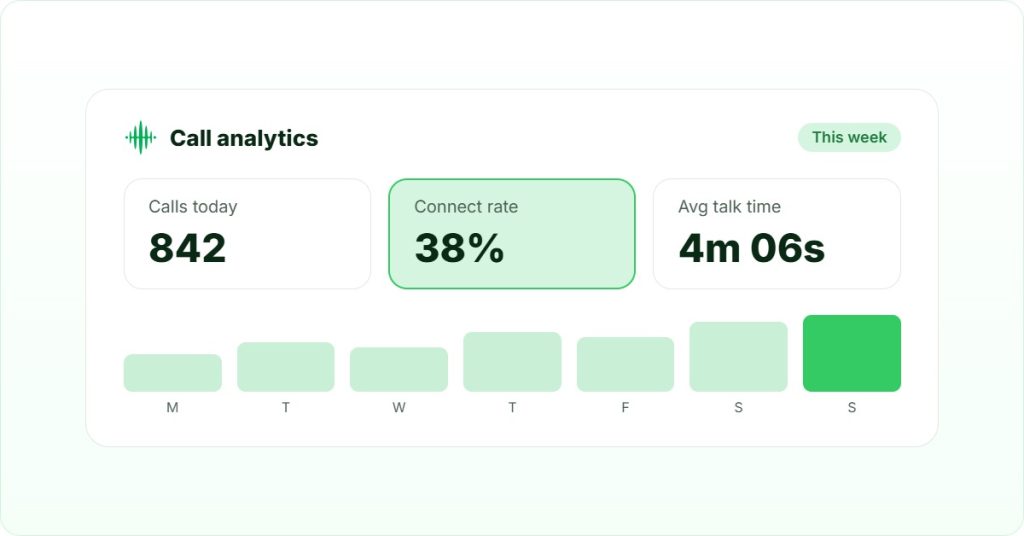
Use call-intelligence dashboards to monitor talk time, objection patterns, and conversion rates across your team. Weekly call review sessions where managers listen to flagged recordings and run coaching clinics are the fastest way to improve scripts. FreJun’s analytics surface which reps need coaching and which call patterns are converting, so you spend coaching time where it moves the needle most.
What is the best time for sales calls in the UAE?
Legally, you can only call between 9:00 AM and 6:00 PM Sunday through Thursday. Within that window, data suggests the best engagement rates for UAE sales calls occur mid-morning between 10 and 11 AM and late afternoon between 4 and 5 PM. Avoid calling immediately after lunch (1-2 PM), since answer rates drop noticeably during that window across most industries.
How do I handle Middle East telemarketing data privacy?
You must follow the PDPL (Personal Data Protection Law). Get explicit consent before storing customer data, use encrypted platforms to manage your call logs, and keep records of when and how consent was obtained. FreJun stores all call data on UAE-region cloud infrastructure, so your data residency requirements are met automatically without any additional configuration from your IT team.
Does FreJun support Arabic transcription?
Yes. FreJun’s AI supports both English and Arabic transcription and sentiment analysis, which is essential for UAE sales teams calling bilingual prospects. Accuracy exceeds 95% for both languages, so you get reliable call summaries and coaching insights whether your reps are calling in English, Arabic, or switching between both during a single conversation.
What happens if a customer rejects my sales call?
If a customer rejects your service or product during the first call, you are prohibited from calling them again on the same day. Persistent calling after rejection can trigger harassment complaints and TDRA fines. You must also add them to your internal do-not-call list immediately. FreJun logs rejection outcomes automatically and flags those contacts so your team doesn’t accidentally redial them.
Do I need to record sales calls in the UAE?
Yes. Under the TDRA framework, businesses must keep records of marketing calls to prove compliance with consent requirements and call content rules. TDRA can request these records during an audit with little advance notice. FreJun records and encrypts every call automatically, stores transcripts alongside the audio, and makes the full audit trail searchable so you can respond to any regulatory request within minutes.
You’ve just seen how sales calls UAE trends are reshaping every aspect of outbound calling, from TDRA compliance to AI coaching. The gap between knowing these changes and acting on them is usually just one conversation with the right platform. Most teams that book a FreJun demo are live with compliant UAE virtual numbers within a week.