Last updated on November 13th, 2026 at 05:50 pm
Quick Answer: A smart call system is a cloud-based telephony platform that routes incoming calls automatically, logs every interaction to a CRM, and surfaces real-time analytics on agent performance and call outcomes. For UAE businesses, it replaces manual dialling and disconnected call records with a single workflow that connects sales and support teams to their customer data on every call.
AI Summary: A smart call system combines intelligent call routing, CRM integration, automated follow-ups and real-time analytics into one cloud-based platform. This article explains how each component works, what fails when they are absent, how to implement the system in four structured steps, and how cloud-based smart call systems compare to traditional PBX setups for UAE businesses.
Table of contents
- What Is a Smart Call System and How Does It Drive Business Growth in the UAE?
- What Are the Key Features of a Smart Call System?
- What Are the Benefits of Using a Smart Call System for Businesses in the UAE?
- What Is the Implementation Process for a Smart Call System in the UAE?
- How Does a Smart Call System in the UAE Compare with Traditional Call Systems?
- Key Takeaways
- Final Thoughts
- FAQs
What Is a Smart Call System and How Does It Drive Business Growth in the UAE?
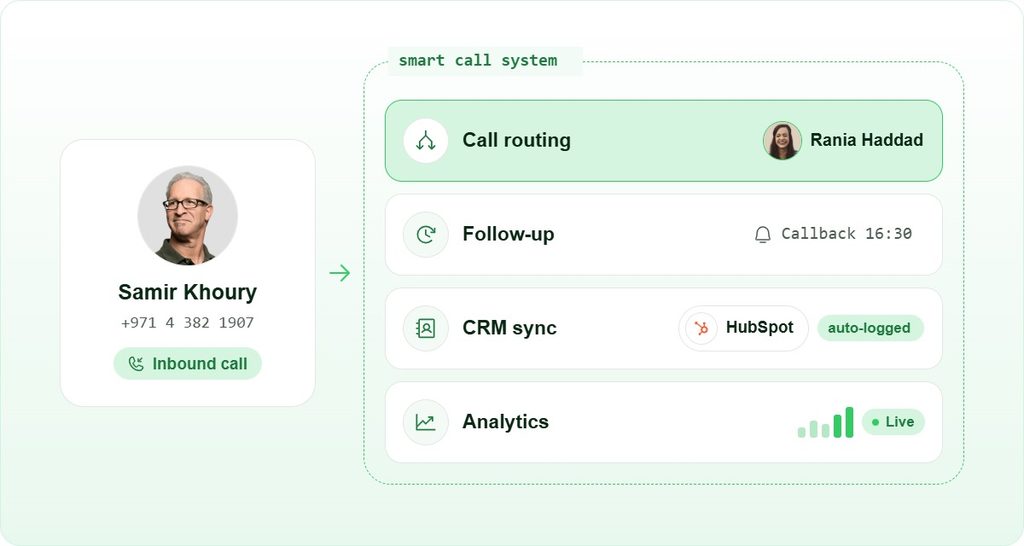
A smart call system is a cloud-based telephony platform. It automates call routing, records every interaction, and syncs call data with a CRM (Customer Relationship Management) system. It also provides real-time analytics on call volume, agent performance, and customer engagement.
UAE businesses that rely on manual dialling and spreadsheet-based call logs face a growing operational challenge. As call volumes increase, gaps between calls, CRM updates, and follow-up tasks become harder to manage. Hiring more staff alone cannot solve this problem. Instead, a smart call system automates handoffs at every stage of a customer interaction.
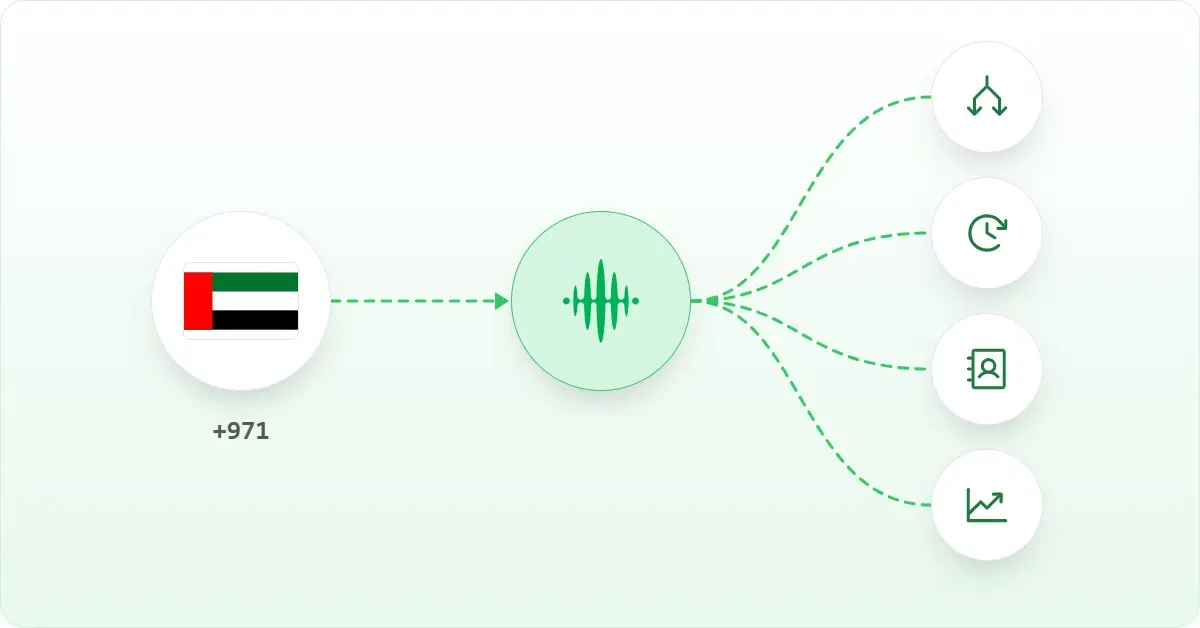
The system works through four connected layers. First, intelligent call routing directs inbound calls to the right agent or department. It follows predefined rules, reduces wait times, and connects customers with the right person.
Second, automated follow-ups schedule reminders and callbacks after each call. Consequently, reps don’t lose leads because they forget to plan the next step.
Third, CRM integration automatically saves call records, duration, and outcomes in the CRM. This gives managers a complete interaction history without requiring reps to enter details manually.
Finally, real-time analytics track call volume, response times, and agent performance as calls happen. Therefore, managers can monitor activity immediately instead of waiting for next-day reports.
When these four layers work together, smart call systems help businesses improve customer satisfaction without increasing headcount. The benefits are clear: fewer missed calls, faster responses, and up-to-date CRM records. Moreover, these improvements support revenue growth. Leads that receive quick responses and consistent follow-ups are more likely to convert than those that teams overlook.
Businesses using UAE VoIP numbers gain another advantage. VoIP (Voice over Internet Protocol) infrastructure allows a smart call system in the United Arab Emirates (UAE) to scale across offices, remote agents, and international lines. Unlike traditional PBX (Private Branch Exchange) systems, it does not require additional physical hardware for every expansion. This flexibility matters in the UAE’s fast-moving market, where sales teams can double in size within a quarter.
What Are the Key Features of a Smart Call System?
A smart call system’s value depends entirely on which features are present and how tightly they connect to each other. Three capabilities determine whether the system actually changes how a team works, or simply replaces one phone interface with another.
A smart call system in United Arab Emirates (UAE) that automates repetitive tasks frees agents to focus on conversations rather than administration. But automation alone is not enough: the system also needs to surface the right information at the right moment and connect every call to the broader workflow.
1. Click-to-Call Integration
With click-to-call, agents can initiate calls directly from their CRM or browser dashboard. They simply click a contact record instead of dialling manually. This offers two key benefits. First, it eliminates manual dialling time and reduces errors. Second, it opens the CRM record before the call begins. As a result, reps can review contact history, previous call notes, and deal stages before speaking to customers. This helps them start every conversation with better context. Moreover, this feature benefits high-volume outbound teams in the UAE, where reps may contact dozens of prospects in a single session.
2. Advanced IVR Routing
IVR (Interactive Voice Response) routing is the mechanism that handles inbound calls before a human agent picks up. A basic IVR presents a menu and transfers the call. An advanced IVR uses caller data, time of day, agent availability and skill-based rules to route the call to the most appropriate agent, not just the next available one. The difference matters because a caller who reaches an agent with the wrong specialisation is likely to be transferred again, which increases handle time and frustrates the customer. When IVR routing is configured correctly, first-call resolution rates rise because the right agent answers the first time.
The trade-off is configuration complexity. A poorly designed IVR tree, with too many menu levels or unclear options, pushes callers to abandon before reaching an agent. We recommend keeping IVR menus to two levels maximum and reviewing drop-off rates monthly to catch dead ends early.
3. Real-Time Call Analytics
Real-time analytics give managers a live view of call volume, agent availability, average handle time, and queue depth. Unlike end-of-day reports, these insights help managers identify problems as they happen and take immediate action.
Furthermore, real-time call summaries in the UAE capture key conversation details automatically. This allows managers to review discussions without listening to entire recordings.
These insights also support workflow optimisation. For example, managers can identify agents who handle the longest calls, IVR paths that generate the most transfers, and hours with the highest abandonment rates. Consequently, they can pinpoint operational issues and make targeted improvements using actual performance data.
What Are the Benefits of Using a Smart Call System for Businesses in the UAE?
The benefits of a smart call system in the United Arab Emirates (UAE) are most visible in three operational areas: sales conversion, customer experience and team efficiency. Each benefit has a specific mechanism behind it, and understanding that mechanism helps you decide whether the investment is justified for your team’s current situation.
Improved Sales Conversion
Enhanced Sales Conversion comes from two mechanisms working together. Intelligent routing ensures that inbound leads reach a sales agent quickly, rather than waiting in a queue or being missed entirely. Automated follow-up sequences ensure that outbound leads receive a callback even when a rep is occupied. The combination reduces the window between a lead’s first contact and a rep’s first response, which is the period where most leads go cold. For teams exploring affordable call software options for Dubai, this speed-to-contact improvement is often the clearest return on investment.
Better Customer Experience
Customers who reach the right agent on the first attempt, without being transferred or asked to repeat their details, have a fundamentally different experience than those who navigate a broken IVR or wait on hold. Smart call systems improve this by combining skill-based routing with CRM data: the agent who answers already knows the caller’s history, so the conversation can start with context rather than re-qualification. This is particularly relevant in the UAE, where business relationships often span multiple languages and time zones, and where a poor call experience can end a relationship that took months to build.
Operational Efficiency Through CRM Integration
Manual call logging is one of the most consistent sources of CRM data decay. When agents are responsible for entering call outcomes, notes and follow-up tasks after each call, the quality of that data degrades under volume pressure. A smart call system that writes call records automatically removes that dependency. Research published on ResearchGate examining CRM systems and their impact on SME performance found that CRM adoption is associated with measurable improvements in operational outcomes for small and medium enterprises. The mechanism is consistent with what teams report in practice: when call data flows into the CRM automatically, managers can trust the pipeline view, and agents spend more time on calls rather than on post-call administration.
What Is the Implementation Process for a Smart Call System in the UAE?
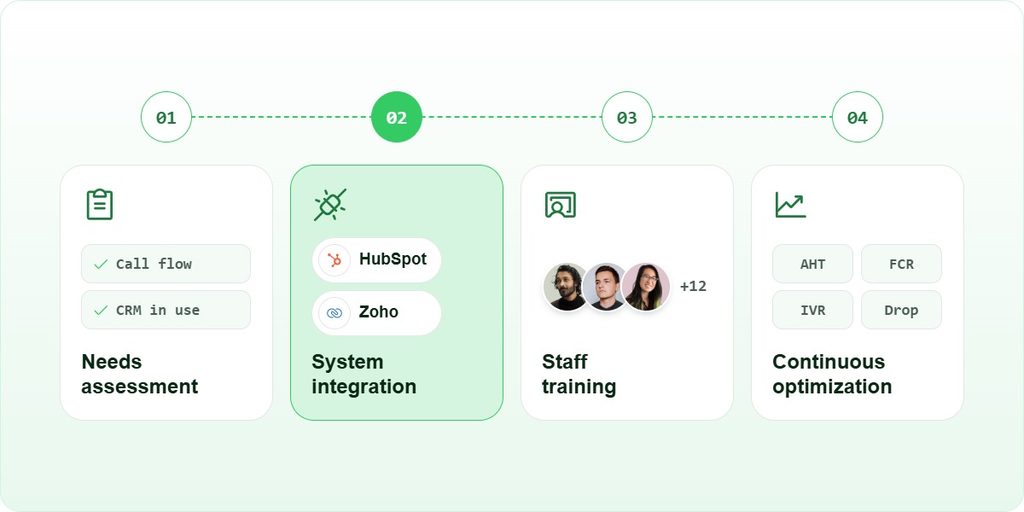
Implementing a smart call system in the UAE follows four structured steps. Each step has a specific decision point that determines whether the next step succeeds. Skipping the assessment phase is the most common reason implementations stall at integration.
Step 1: Needs Assessment
Before selecting a platform, map your current call workflow: where calls originate, which teams handle them, how outcomes are recorded and where leads are lost. The goal is to identify the specific gaps a smart call system needs to close, rather than buying features you will not use. For UAE businesses, this assessment should also confirm which CRM platforms are in use, since integration compatibility is the most common technical blocker. If your team handles fewer than twenty calls per day and has no CRM, a full smart call system may be more infrastructure than the current volume justifies. A basic VoIP setup with manual logging may be the right starting point.
Step 2: System Integration
CRM and call center integration is the technical core of the implementation. The connection between the calling platform and the CRM determines whether call records, outcomes and follow-up tasks flow automatically or require manual entry. A well-configured integration means that every call is logged, every outcome is tagged and every scheduled callback appears in the CRM without agent intervention. Poor integration, by contrast, creates a system where agents work in two tools simultaneously, which increases error rates and reduces adoption. Choosing a platform with native connectors for your existing tools reduces the integration risk significantly compared to custom API builds.
Step 3: Staff Training
A smart call system that agents do not use correctly produces worse data than a simple manual process, because the errors are harder to spot. Training should cover three areas: how to initiate and receive calls within the platform, how to tag call outcomes correctly so analytics are meaningful, and how to use the CRM view during a live call. Thorough onboarding and training assistance at this stage prevents the most common post-launch problem: agents reverting to their previous tools because the new system feels unfamiliar under pressure.
Step 4: Continuous Optimization
The analytics a smart call system generates are only useful if someone reviews them and acts on the findings. Set a monthly review cadence covering call abandonment rates, average handle time, first-call resolution and IVR drop-off points. Each metric points to a specific fix: high abandonment suggests queue depth or IVR complexity problems; long handle times suggest agent skill gaps or missing CRM context; low first-call resolution suggests routing rules that send calls to the wrong team. Teams that increase sales efficiency through this process treat the analytics dashboard as an operational tool, not a reporting formality.
How Does a Smart Call System in the UAE Compare with Traditional Call Systems?
Traditional PBX systems and smart call systems serve different operational needs. Understanding where each one breaks down helps you choose the right tool for your current stage, rather than over-investing in capabilities you do not yet need.
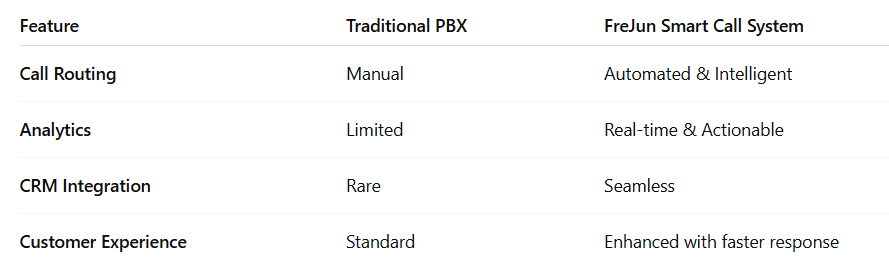
| Capability | Traditional PBX | Smart Call System |
|---|---|---|
| Call routing | Manual transfer or basic hunt groups | Skill-based, time-based and data-driven routing rules |
| CRM data entry | Manual, after the call | Automatic logging during and after the call |
| Analytics | End-of-day or weekly reports | Real-time dashboards with per-agent and per-queue metrics |
| Scalability | Hardware-limited; adding lines requires physical installation | Cloud-based; new users added via software configuration |
| Follow-up automation | Not available; relies on agent memory or calendar | Automated callbacks and reminders triggered by call outcome |
| When it is the right choice | Low call volume, stable team size, no CRM in use | Growing call volume, CRM-dependent workflows, distributed teams |
The key failure mode of a traditional PBX under growth conditions is data fragmentation. Calls happen, but the outcomes live in agent notebooks, email threads and memory rather than in a system that managers can query. Growth and customer satisfaction both suffer when a business cannot manage leads effectively or track performance across the team.
That said, a traditional PBX is not always the wrong answer. If your team makes fewer than thirty calls per day, has no CRM and operates from a single fixed location, the overhead of configuring and maintaining a smart call system may outweigh the benefit. The honest recommendation is to match the tool to the actual call volume and workflow complexity, not to the aspirational one.
Key Takeaways
A smart call system’s value comes from the connection between its components, not from any single feature. Call routing reduces missed calls. CRM integration keeps data current. Real-time analytics make problems visible before they compound. Automated follow-ups close the gap between a call ending and the next contact attempt.
For UAE businesses specifically, the cloud-based architecture of a smart call system matters because it removes the hardware dependency that limits traditional PBX scaling. New agents, new office locations and new VoIP numbers can be added through software configuration rather than physical installation. That flexibility is a practical advantage in a market where team sizes and office footprints change quickly.
- A smart call system in the UAE reduces missed calls and shortens response times by automating routing and follow-up workflows.
- CRM integration is the feature that determines whether call data is actually usable for pipeline management and performance review.
- Traditional PBX systems remain adequate for low-volume, single-location teams with no CRM dependency. Smart call systems become the right choice when call volume grows, teams distribute or CRM data quality becomes a business problem.
Final Thoughts
Traditional phone systems break down under growth pressure in a predictable way: call volume rises, agents cannot keep up with manual logging, the CRM falls out of sync, and managers lose visibility into what is actually happening on the phones. The smart call system addresses each of those failure points through automation rather than additional headcount.
For UAE businesses, the decision to adopt a smart call system is most straightforward when call volume is growing, the team is distributed across locations or time zones, and CRM data quality is already a recognised problem. In those conditions, the four-step implementation process outlined above, starting with a genuine needs assessment rather than a platform selection, gives the best chance of a deployment that agents actually use. Scaling a business in the UAE through better call operations requires the right infrastructure, but also the discipline to configure it correctly and review the analytics it produces.
The smart call system category continues to develop, with real-time AI analysis of call content becoming more common alongside the routing and logging capabilities that have been standard for several years. Teams that build the operational discipline around the current generation of tools will be better positioned to use those newer capabilities when they are ready to adopt them.
Frequently Asked Questions
General Questions
A smart call system is a cloud-based telephony platform that combines automated call routing, CRM integration, call recording and real-time analytics. It replaces manual dialling and disconnected call logs with a single workflow that connects every call to the customer record and the team’s performance data.
Automated call routing directs each inbound call to the right agent immediately, based on skill, availability and caller data, rather than transferring it through a queue. The result is that callers reach a qualified agent faster, and agents spend less time on calls that fall outside their area of responsibility.
Most cloud-based smart call systems connect to major CRM platforms including Salesforce, HubSpot, Zoho and Pipedrive through native integrations. The integration writes call records, duration and outcome directly to the CRM contact record, so agents do not need to log calls manually after each conversation.
Implementation and Use Cases
Automating post-call logging and follow-up scheduling reduces the time agents spend on administrative tasks after each call. That time saving compounds across a team: fewer hours on data entry means more hours available for calls. The cost reduction is indirect but consistent, because it comes from removing low-value work rather than cutting headcount.
Small businesses benefit most when call volume is growing faster than the team can handle manually, or when CRM data quality is already a problem. If a team makes fewer than twenty calls per day from a single location with no CRM, a basic VoIP setup may be sufficient. The smart call system becomes the right choice when routing, logging and follow-up automation would each save meaningful time.