Last updated on November 17th, 2026 at 04:51 pm
Quick Answer: SIP trunking services are internet-based voice connections that replace traditional PSTN (Public Switched Telephone Network) phone lines by carrying calls over a data network using the Session Initiation Protocol (SIP). Businesses connect their IP-PBX (Private Branch Exchange) to a provider’s network and can scale channels up or down without physical infrastructure. Providers such as Jio Business support configurations ranging from 10 to 5,000 simultaneous calls on a single link.
AI Summary: SIP trunking services are VoIP-based voice connections that replace physical phone lines, covering inbound, outbound, enterprise-grade, and global call types. This article explains how each service type works, how to calculate the number of channels your business needs, what goes wrong during deployment, and which provider criteria actually matter. The final section covers the trade-offs that make SIP trunking the wrong choice for some teams.
Table of contents
- What Are SIP Trunking Services and How Do They Improve Business Communication?
- What Types of SIP Trunking Services Do Businesses Commonly Use?
- What Are the Key Benefits of Using SIP Trunking Services for Modern Businesses?
- How Should Companies Choose the Right SIP Trunk Provider?
- What Makes FreJun a Trusted SIP Trunk Provider for Businesses?
- Pros and Cons of SIP Trunking Services
- Key Takeaways
- Final Thoughts
- FAQs
What Are SIP Trunking Services and How Do They Improve Business Communication?
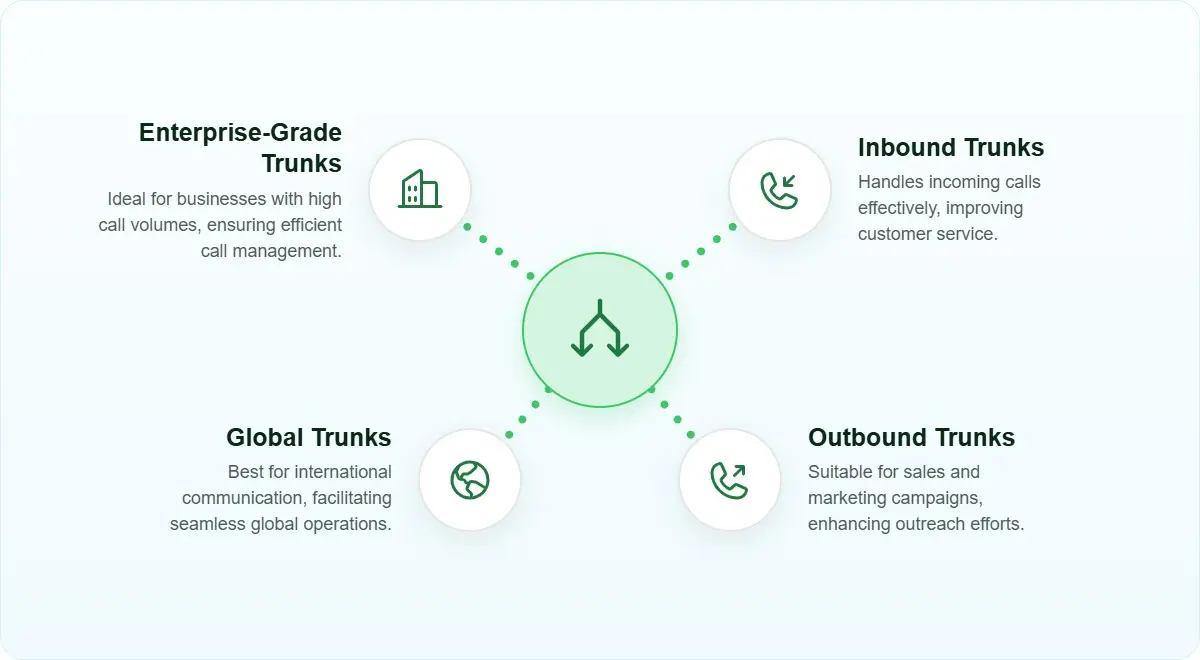
SIP trunking is a VoIP (Voice over Internet Protocol) technology and streaming media service that Internet Telephony Service Providers (ITSPs) use to deliver telephone services to businesses over an IP network. Instead of running copper lines into a building, a business connects its IP-PBX to the provider’s network over a broadband or dedicated data link. The SIP protocol handles call setup, routing and teardown, while the voice itself travels as compressed audio packets.
What Is SIP Trunking, Exactly?
A SIP trunk is a virtual phone line. One trunk can carry multiple simultaneous calls, because each call occupies one channel rather than one physical wire. The number of channels you provision determines how many calls your team can handle at the same time. When call volume drops, you release channels. When it spikes, you add them, usually within minutes through a provider portal rather than through a field engineer visit.
This is the core operational difference from a traditional PRI (Primary Rate Interface) or PSTN line. A PRI delivers a fixed number of channels, typically 23 or 30 depending on the standard, and adding capacity means ordering a new physical circuit. SIP trunking removes that constraint. Businesses can scale from a handful of channels to thousands on the same data connection, which is why providers like Jio Business support configurations from 10 to 5,000 simultaneous calls over a single IP link.
How SIP Trunking Improves Day-to-Day Communication
The practical improvement shows up in three places. First, call capacity becomes elastic: a contact centre running a seasonal marketing campaign can double its outbound channels for six weeks and then scale back, paying only for what it used. Second, geography stops being a constraint: virtual numbers from multiple regions can all terminate on the same trunk, so a team in Bengaluru can present a Mumbai, Delhi or international caller ID without separate lines in each city. Third, the trunk connects directly to the CRM and call management stack, so call data flows into records automatically rather than being logged manually after the fact.
Enterprise-grade trunks handle large call volumes, global trunks support international connectivity, outbound trunks serve sales and support teams making outgoing calls, and inbound trunks manage incoming call queues. Each type is covered in the section below.
What Types of SIP Trunking Services Do Businesses Commonly Use?
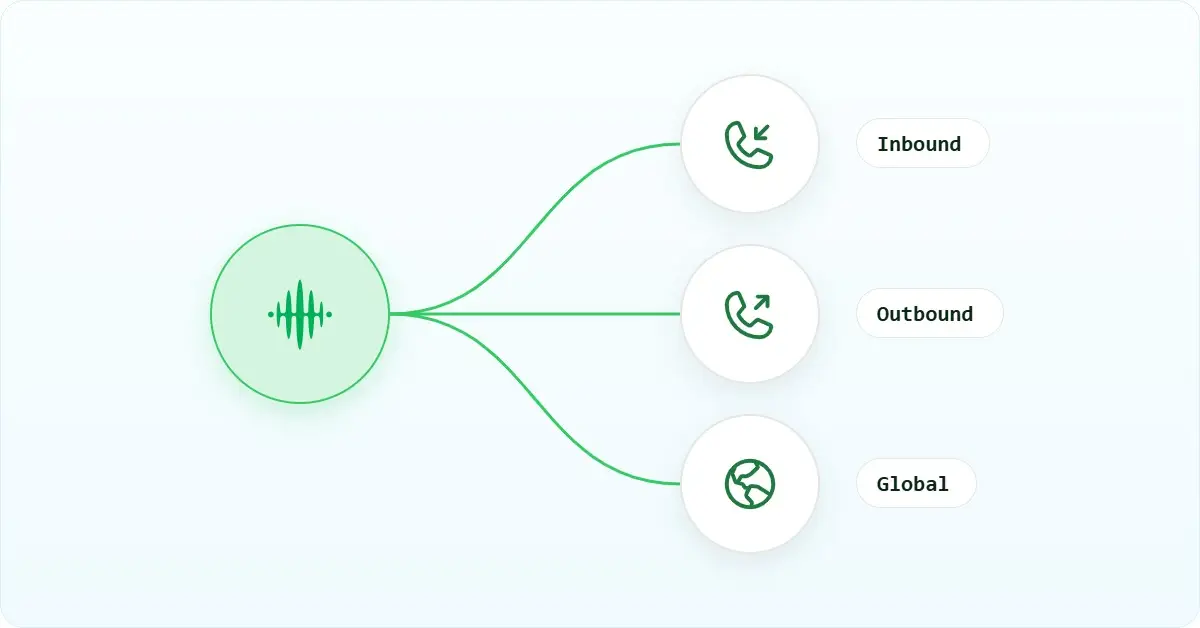
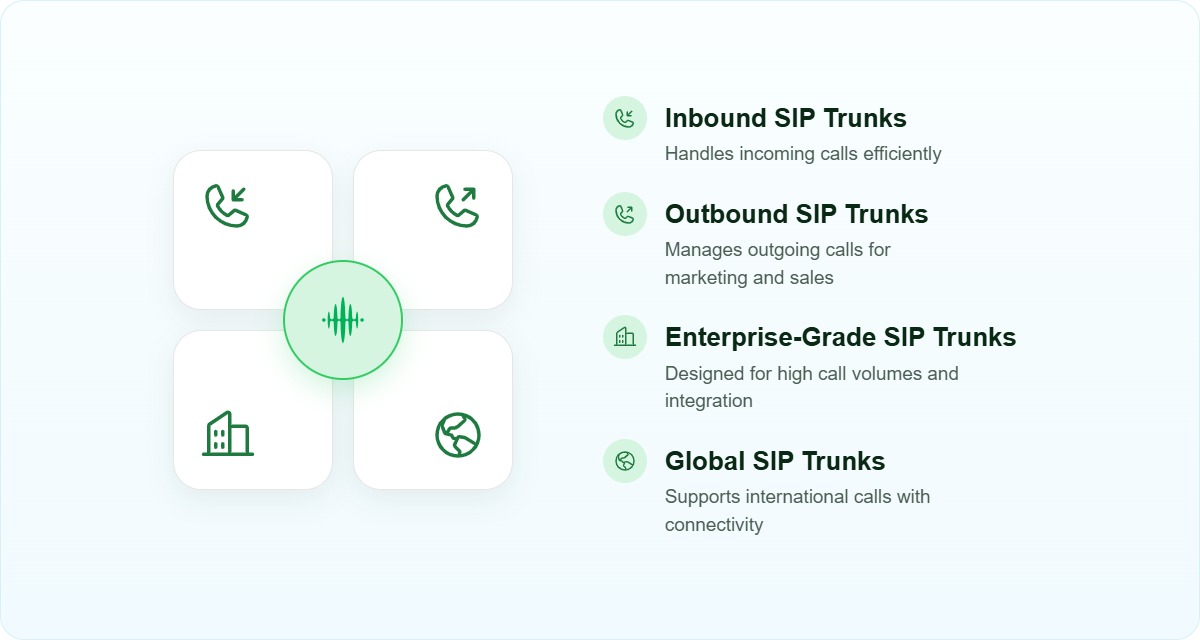
SIP trunking services split into four categories based on call direction, scale and geographic scope. Understanding which type fits your operation prevents over-provisioning and avoids the common mistake of buying enterprise-grade capacity for a team that only needs basic inbound handling.
1. Inbound SIP Trunk Services
Inbound SIP trunks receive calls from the public telephone network and route them to the right agent, queue or IVR (Interactive Voice Response) menu inside your system. They suit contact centres, support desks and any business where incoming call volume is the primary load.
The key capabilities that make inbound trunks useful in practice are virtual numbers across multiple regions, automatic call routing based on time, skill or queue depth, and CRM integration with click-to-call so agents see the caller’s record before they answer. Without those integrations, inbound trunks deliver calls but not context, and agents spend the first 30 seconds of every call asking questions the CRM already knows.
2. Outbound SIP Trunk Services
Outbound SIP trunks originate calls from your system to external numbers. Sales teams, collections teams and customer success teams are the primary users, since their work is driven by call lists rather than incoming queues.
The practical value of outbound trunks comes from three things: the ability to present a local or verified caller ID rather than an unknown number, bulk calling capacity so multiple agents can dial simultaneously without competing for channels, and call analytics that show connect rates, talk time and outcome by rep or campaign. Without analytics, outbound calling is a volume exercise with no feedback loop. With them, a team can identify which time windows, which caller IDs and which scripts produce the best results and adjust accordingly.
3. Enterprise-Grade SIP Trunks
Enterprise-grade SIP trunks are designed for organisations with high concurrent call volumes, strict uptime requirements and complex integration needs. The defining characteristics are redundant carrier paths so a single network failure does not drop calls, SLA-backed uptime commitments, and deep CRM integrations that log every call automatically.
Where enterprise trunks differ from standard trunks is in failover behaviour. A standard trunk that loses its primary carrier path drops calls in progress. An enterprise trunk fails over to a secondary path, often within seconds, so the caller experiences a brief pause rather than a disconnection. This matters most for businesses where a dropped call means a lost transaction, a missed support escalation or a compliance gap in a recorded interaction.
The trade-off is complexity. Enterprise trunks require more configuration, more coordination with your IT team, and more careful capacity planning. They are the right choice when call continuity is a business-critical requirement, not when a team simply wants more channels.
4. Global SIP Trunk Solutions
Global SIP trunks connect your system to the telephone networks of multiple countries through a single provider relationship. Instead of negotiating separate carrier agreements in each market, you provision international numbers and routes through one platform.
The practical benefit is consistency: one billing relationship, one support contact, one configuration interface. The risk is that call quality on international routes varies by destination and by the carrier relationships your provider maintains in each country. Before committing to a global trunk provider, test call quality to your specific destination countries during peak hours, not just in a demo environment. Quality that looks fine at 9 AM on a Tuesday may degrade when carrier routes are congested at midday.
Global trunks also connect to international CRMs, so a rep in Dubai calling a prospect in Singapore can have the call logged against the right CRM record without manual intervention. This is where international communication through SIP trunks delivers its clearest operational advantage over traditional international calling plans.
What Are the Key Benefits of Using SIP Trunking Services for Modern Businesses?
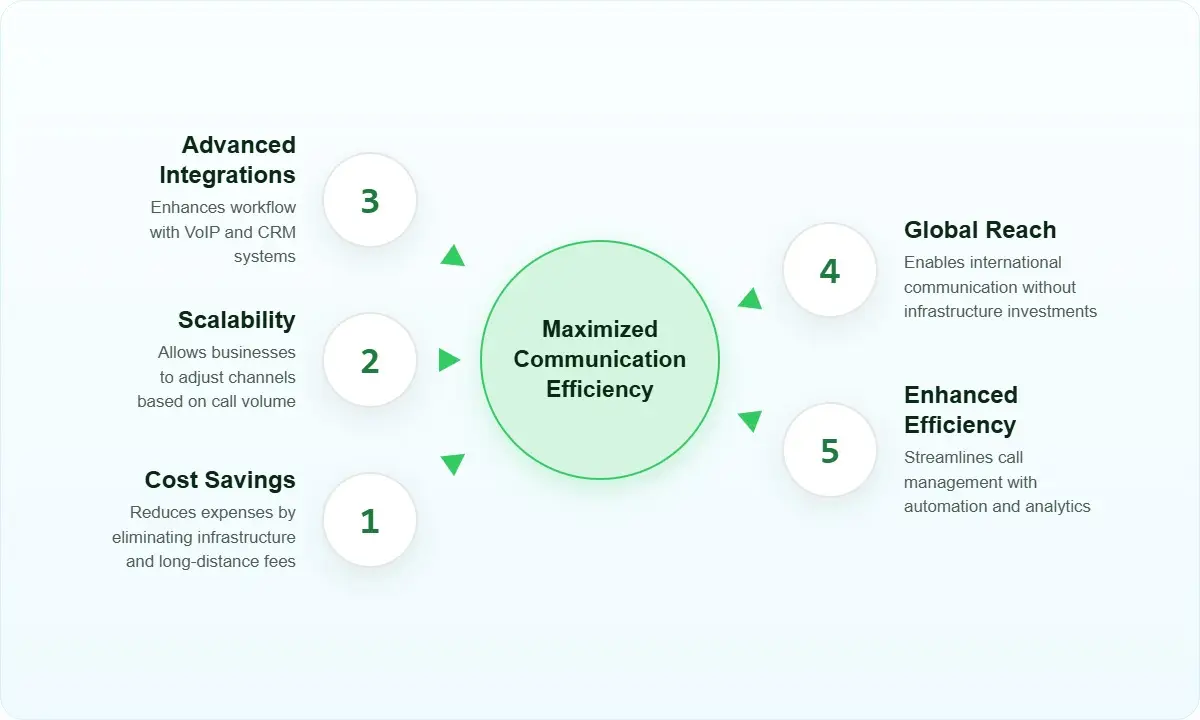
SIP trunking services deliver five concrete operational benefits, but each one comes with a condition that determines whether you actually realise it. Understanding the mechanism behind each benefit helps you avoid the common mistake of expecting the benefit without meeting the condition.
Cost Reduction
SIP trunking removes the per-line rental cost of PSTN circuits and typically reduces long-distance and international call rates because calls travel over IP networks rather than through traditional carrier switching. The savings are real, but they depend on your current baseline. A business already on a competitive VoIP plan may see modest savings. A business still paying for legacy PRI circuits or ISDN lines will see a much larger reduction, because it is eliminating both the circuit rental and the per-minute long-distance charges simultaneously.
On-Demand Scalability
Channels can be added or removed through a provider portal, usually without a service call or a waiting period. This matters most for businesses with seasonal or campaign-driven call volumes. A team running a two-week outbound campaign can provision extra channels for that period and release them immediately after, paying only for what it used. The condition is that your provider actually supports on-demand provisioning rather than requiring a contract amendment for each change.
CRM and VoIP Integration
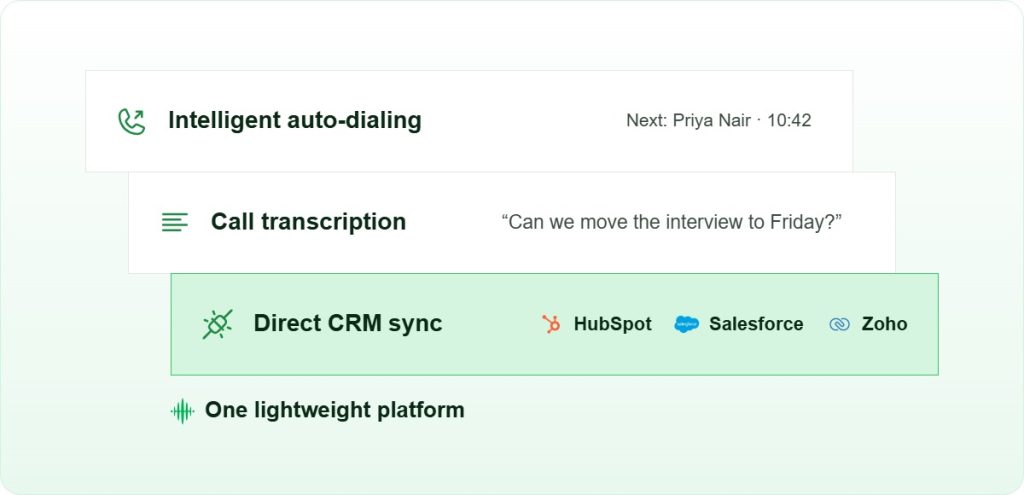
Advanced integrations with CRM systems mean calls are logged automatically, caller records appear before the agent answers, and call recordings attach to the right contact. This removes the manual logging step that causes CRM data to go stale. The condition is that your SIP trunk provider supports the specific CRM your team uses. A trunk that integrates with Salesforce but not with Zoho or HubSpot is not a universal solution.
Global Reach Without Separate Infrastructure
Global reach through SIP trunking means a distributed team can present local numbers in each market without maintaining separate phone systems in each country. A support team in India can handle calls for customers in the UAE, Singapore and the UK from a single platform. The condition is that your provider has genuine carrier relationships in those countries, not just resold routes that add latency and reduce quality.
Operational Efficiency Through Automation
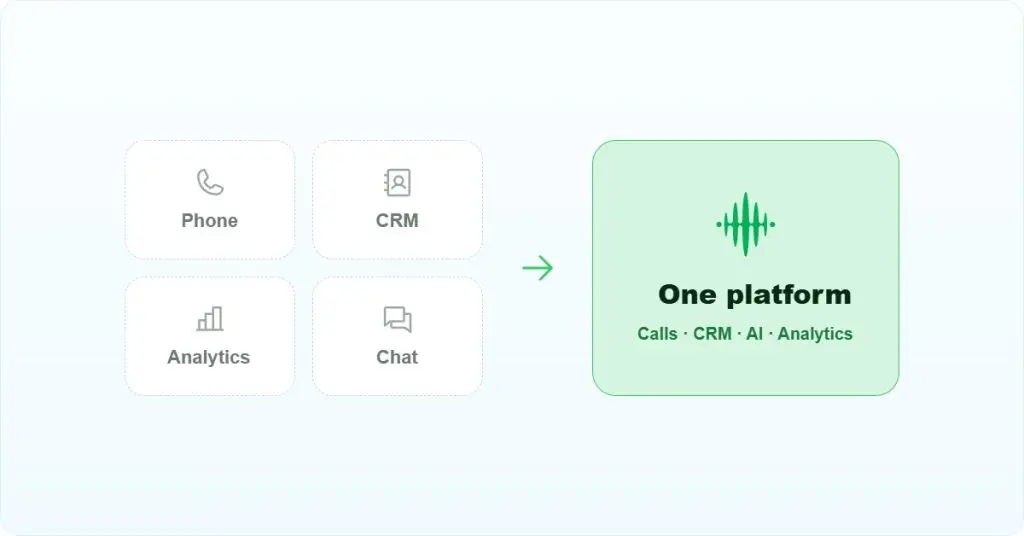
Call routing, IVR menus, call recording and analytics all run on the same platform as the trunk itself. This means a manager can see call volume, average handle time and missed call rates in one dashboard rather than pulling data from separate systems. The efficiency gain is real when the platform is configured correctly. It disappears when IVR menus are poorly designed, routing rules are not maintained, or analytics are not reviewed. The platform provides the capability; the team has to use it to increase productivity.
How Should Companies Choose the Right SIP Trunk Provider?
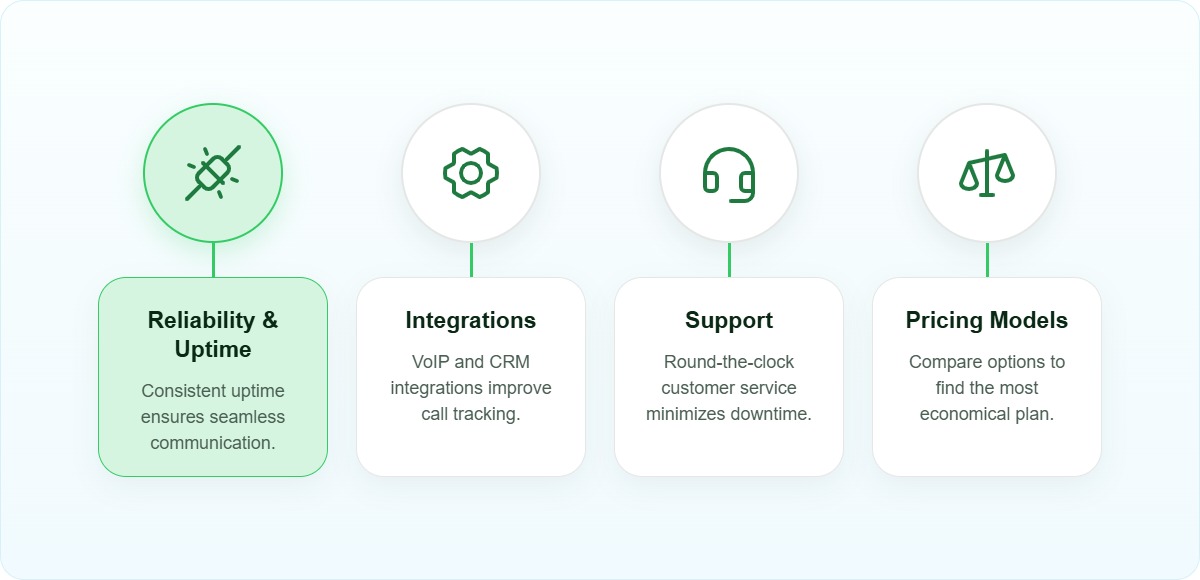
Choosing a SIP trunk provider is a decision that affects call quality, CRM data integrity and compliance posture for years. The criteria below are the ones that separate providers that work reliably in production from those that look good in a demo.
Uptime and Redundancy
Ask specifically how the provider handles carrier path failure. A provider with a single upstream carrier will drop calls when that carrier has an outage. A provider with multiple upstream carriers and automatic failover will reroute calls in progress to a secondary path. For teams where call continuity is critical, this is the most important criterion. Uptime guarantees in an SLA are only meaningful if the provider has the infrastructure to back them up, so ask for the architecture, not just the number.
CRM and VoIP Integration Depth
Confirm that the provider supports your specific CRM, not just a generic API. A native connector logs calls, recordings and outcomes automatically. A generic API requires custom development to achieve the same result, which adds cost and maintenance overhead. Check whether the integration supports bidirectional data flow: calls logged in the phone system should appear in the CRM, and CRM contact data should appear in the phone system before the call connects. For a deeper look at how VoIP and CRM systems connect, the guide linked here covers the mechanics in detail.
Support Coverage
For teams operating across time zones, support availability matters more than support quality in a single time zone. A provider with business-hours support in one region will leave a team in another region without help during their peak calling hours. Ask specifically about support hours for your region and the typical response time for a call-quality incident, since a degraded trunk affects every call until the issue is resolved.
Pricing Model Fit
SIP trunk pricing typically follows one of three models: per-channel subscription, per-minute usage, or a hybrid. Per-channel works well for teams with predictable, high-volume calling because the cost per call is lower at scale. Per-minute works better for teams with variable or low call volumes because you pay only for what you use. The wrong model for your usage pattern will cost more than the right one, regardless of the headline rate. Compare models against your actual call volume data, not against an estimated average.
For a detailed comparison of providers serving the Indian market specifically, the FreJun’s Top 11 SIP Trunk Providers in India guide covers setup requirements, coverage and integration depth for each option.
How to Size Your Channel Count
The number of SIP channels you need equals the maximum number of calls your team handles simultaneously, not the total number of calls per day. A team of 20 agents who each spend 50% of their time on calls needs roughly 10 channels at peak, not 20. The standard approach is to look at your peak concurrent call volume from your existing phone system’s call logs, add a 20% buffer for unexpected spikes, and provision that number. If you have no existing data, start with one channel per agent who will be actively calling and adjust after the first month of live usage. Under-provisioning causes calls to fail with a busy signal. Over-provisioning wastes budget on idle capacity.
What Makes FreJun a Trusted SIP Trunk Provider for Businesses?
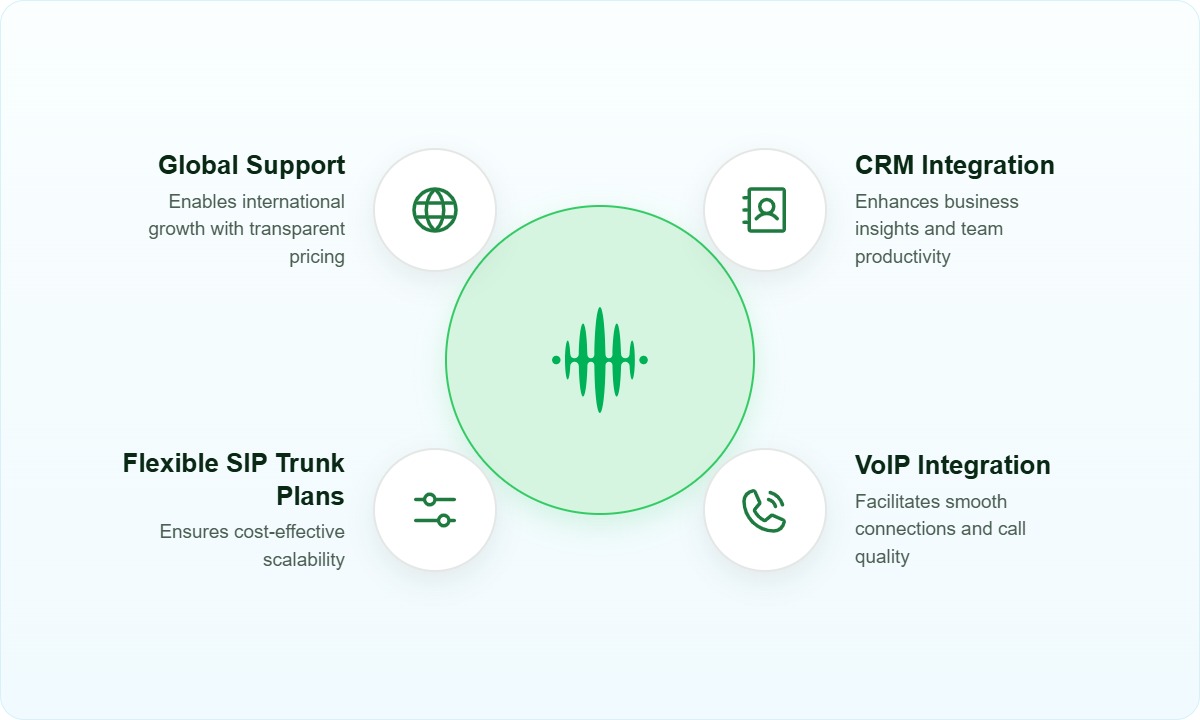
FreJun’s SIP trunking offering is built around four capabilities that matter most to sales and support teams: CRM call logging, two-way VoIP calling, flexible channel provisioning, and international number support. Each is worth examining on its own terms rather than as a marketing claim.
Automatic CRM Call Logging
The CRM integration logs every call automatically: duration, outcome, recording and notes attach to the contact record without the rep doing anything manually. This matters because manual logging is the step that most often gets skipped, especially at the end of a busy calling session. When it gets skipped, the CRM goes stale and pipeline reporting becomes unreliable. Automatic logging removes that failure point.
Two-Way VoIP Calling Quality
FreJun supports two-way VoIP calling with audio quality that depends on the underlying network connection. This is an honest constraint of any SIP trunk provider: call quality is a function of the internet connection at both ends, not just the provider’s infrastructure. Teams on shared or congested networks will experience quality issues regardless of which provider they use. The practical recommendation is to test call quality on your actual office or remote network before committing to a provider, not in a controlled demo environment.
Flexible Channel Provisioning
Channels scale with call volume, so teams do not pay for idle capacity during low-volume periods. This is the right model for businesses with variable calling patterns, but it requires active management: if you do not review your channel usage regularly, you may be paying for channels you no longer need or running short during a campaign spike. The provisioning flexibility is only valuable if someone on the team is responsible for monitoring it.
International Number Support and Transparent Pricing
FreJun provides international numbers and publishes its pricing openly. The transparent pricing page shows current rates without requiring a sales conversation first. For teams evaluating multiple providers, this makes direct cost comparison straightforward. The honest limitation is that FreJun, like any provider, has stronger carrier relationships in some markets than others. Teams calling primarily within India and the UAE will find coverage strong. Teams with heavy calling requirements in less common markets should verify coverage for those specific destinations before committing.
Pros and Cons of SIP Trunking Services
SIP trunking is not the right choice for every business. The table below covers the real trade-offs, including the conditions under which SIP trunking is the wrong decision.
| Feature | Pros | Cons |
|---|---|---|
| Installation | Quick deployment, no physical lines | Requires stable internet |
| Cost | Significant savings vs PSTN | May require bandwidth upgrade |
| Scalability | Add/remove channels instantly | Complex for very small teams |
| Integrations | CRM, VoIP, automation support | Needs technical setup |
| Global Use | Single provider for multiple countries | Price variations by region |
When SIP Trunking Is Not the Right Choice
SIP trunking depends entirely on internet connectivity. A business in a location with unreliable broadband, frequent outages or high packet loss will have worse call quality on SIP than on a traditional PSTN line, because PSTN does not share bandwidth with other applications. If your office internet goes down, your SIP trunks go down with it. A traditional PRI line keeps working during an internet outage.
For very small teams making fewer than a few dozen calls per day, the setup complexity and monthly channel costs may not justify the savings over a simple hosted VoIP plan or even a mobile-based solution. SIP trunking delivers its best value at scale. Below a certain volume threshold, simpler alternatives are cheaper and easier to manage. We’d recommend evaluating a cloud telephony provider for small businesses first if your team has fewer than five concurrent callers.
Key Takeaways
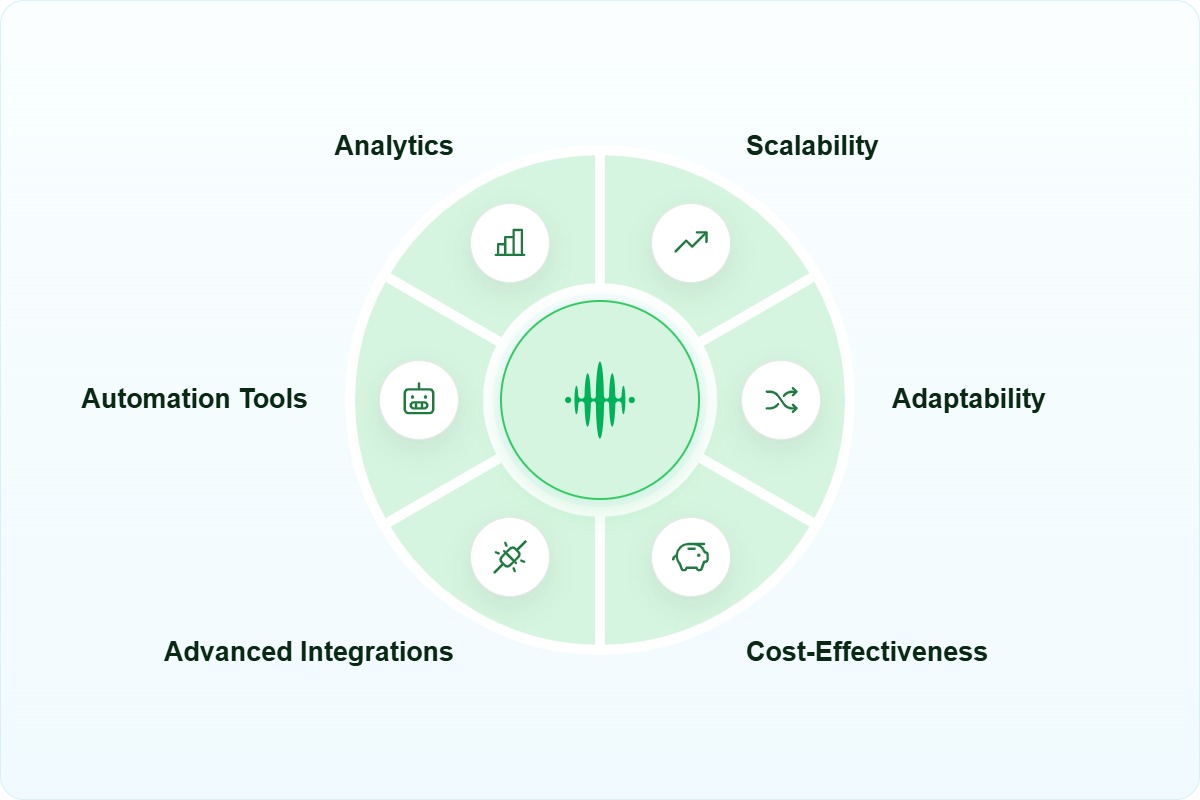
- SIP trunking services replace physical phone lines with internet-based voice channels that scale on demand.
- The four main types, inbound, outbound, enterprise-grade and global, serve different operational needs and should be matched to your actual call patterns.
- Channel count should be sized to peak concurrent call volume, not total daily call volume, with a 20% buffer for spikes.
- The benefits of SIP trunking, cost savings, scalability, CRM integration and global reach, each depend on a specific condition being met. Meeting the condition is the work; the trunk is the tool.
- SIP trunking is the wrong choice when internet connectivity is unreliable or when call volume is too low to justify the setup complexity.
- Provider selection should focus on failover architecture, CRM integration depth, support coverage for your time zone, and pricing model fit for your usage pattern.
To understand how SIP differs from standard VoIP and which approach suits different business models, the FreJun’s SIP vs VoIP guide covers the technical and commercial differences in detail. For teams evaluating SIP trunking services specifically, the criteria above give you a framework to compare providers on the factors that affect production performance rather than demo quality.
Final Thoughts
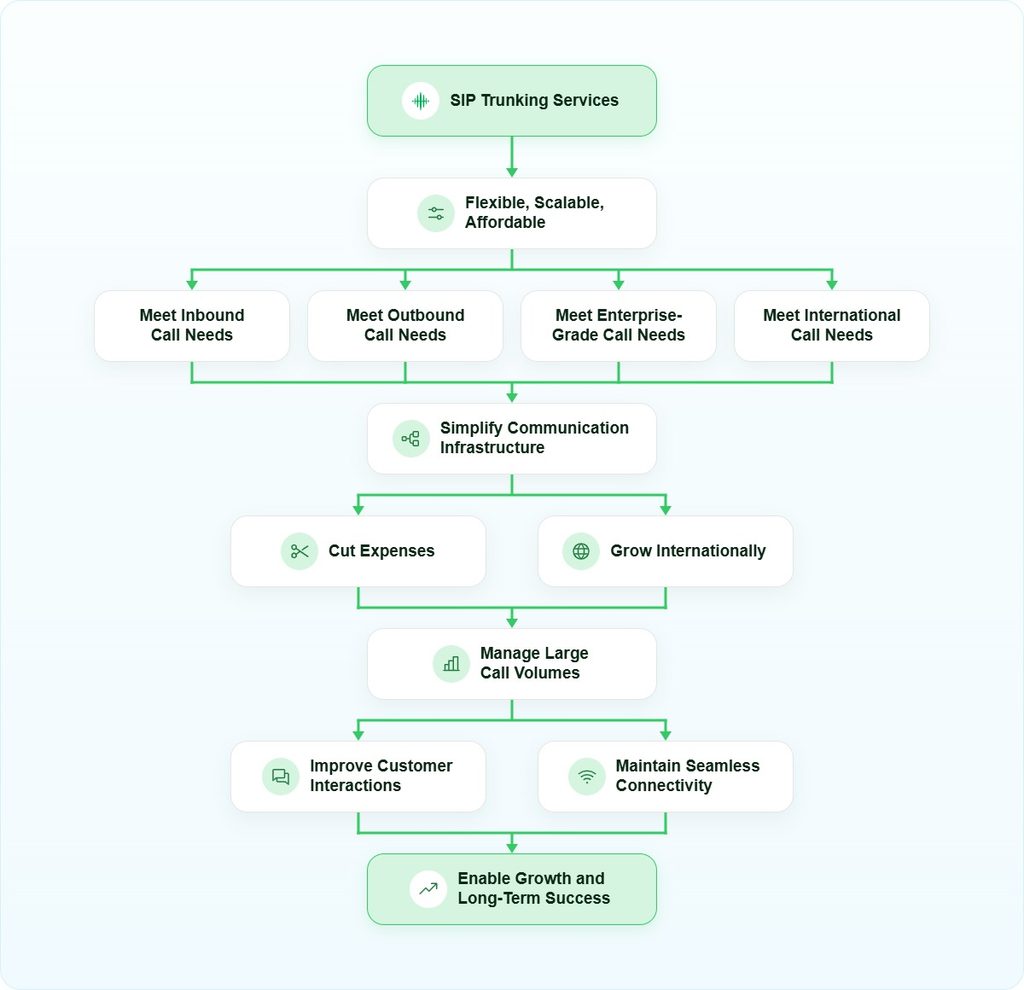
SIP trunking services are now a standard part of business communication infrastructure for teams that make and receive calls at any meaningful volume. They replace physical lines with internet-based channels, connect directly to CRM and analytics platforms, and scale without the lead times or costs of traditional circuit provisioning.
The decision to adopt SIP trunking is straightforward for most businesses with reliable internet and more than a handful of concurrent callers. The harder decisions are which type of trunk fits your call pattern, how many channels to provision, which provider has the right carrier coverage for your markets, and whether your internet infrastructure can support the quality your team needs. Those are the questions this guide is designed to help you answer.
For teams in Kuwait and the broader Gulf region also evaluating their inbound call handling, the guide on Inside Kuwait Support Teams: How Smart IVR Software Improves First Contact Resolution covers how IVR sits on top of SIP infrastructure to improve first-contact outcomes.
Frequently Asked Questions
Setup and Coverage
The four main types are inbound, outbound, enterprise-grade and global. Inbound trunks handle incoming call queues. Outbound trunks serve sales and support teams making calls. Enterprise-grade trunks add redundancy and SLA-backed uptime for high-volume operations. Global trunks connect to multiple country networks through a single provider, removing the need for separate carrier agreements in each market.
Yes, most SIP trunk providers support CRM integration, but the depth varies. A native connector logs calls, recordings and outcomes automatically without any manual step. A generic API connection achieves the same result but requires custom development. Before choosing a provider, confirm it supports your specific CRM, whether Salesforce, HubSpot, Zoho or another platform, rather than assuming a generic integration will cover your workflow.
Quality depends on the carrier relationships your provider maintains in each destination country. A provider with direct interconnects in your target markets will deliver better quality than one reselling routes through intermediaries. Before committing, test call quality to your specific destination countries during peak hours. Quality that looks acceptable in a demo environment may degrade when carrier routes are congested during business hours.
Sizing, Security and Number Porting
Size your channels to your peak concurrent call volume, not your total daily call count. If your team of 20 agents each spend roughly half their time on calls, you need around 10 channels at peak, plus a 20% buffer for unexpected spikes. If you have no historical data, start with one channel per actively calling agent and review usage after the first month. Under-provisioning causes calls to fail with a busy signal; over-provisioning wastes budget on idle capacity.
SIP trunking can be secured, but it is not secure by default. The two main protections are TLS (Transport Layer Security) for signalling, which encrypts the call setup process, and SRTP (Secure Real-time Transport Protocol) for the audio stream itself. Without both, calls can be intercepted on the network. A session border controller (SBC) at the network edge adds a further layer by filtering malformed SIP traffic and blocking unauthorised registration attempts. Ask your provider which of these are enabled by default and which require configuration.
Yes, number porting is supported by most SIP trunk providers. The process transfers your existing numbers to the new provider so callers reach you on the same numbers they already have. Porting timelines vary by country and by the losing carrier’s processes. In India, domestic number porting typically takes several business days. International number porting can take longer. Confirm porting support for your specific numbers before signing a contract, since not all providers can port numbers from all originating carriers.
SIP trunking typically reduces communication costs compared to traditional PSTN or PRI circuits by eliminating per-line rental fees and reducing long-distance call rates. The size of the saving depends on your current baseline. Businesses still paying for legacy ISDN or PRI lines will see the largest reductions. Businesses already on competitive hosted VoIP plans may see more modest savings. The right comparison is your current total cost per call, including line rental, against the projected cost on a SIP trunk at your actual call volume.