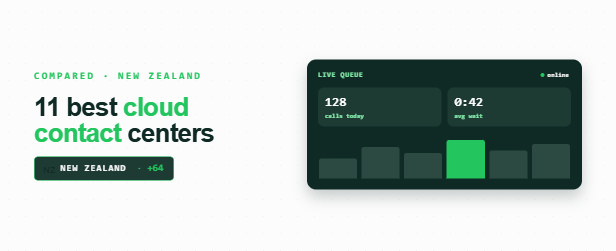
AI Summary: This article covers the top 11 cloud contact center software New Zealand teams can deploy in 2026, comparing platforms on pricing, AI capabilities, CRM integration depth, and Commerce Commission compliance under the Unsolicited Electronic Messages Act 2007. According to Grand View Research, the global cloud-based contact center market is projected to grow at a CAGR of 21.1% through 2030, making platform selection a long-term infrastructure decision for New Zealand businesses. New Zealand contact center teams need a platform that supports local virtual numbers, integrates natively with CRMs like Salesforce, HubSpot, and Pipedrive, and meets local messaging compliance requirements. FreJun delivers all three, with USD pricing, New Zealand virtual numbers, and native bidirectional sync with 23+ CRMs.
Key criteria in this comparison: We ranked these platforms on pricing transparency in USD, AI feature readiness, Commerce Commission compliance support, CRM integration depth, and real user ratings from G2 and Capterra, since these are the factors that most affect a New Zealand team’s total cost and technical fit.
Quick Answer: The best cloud contact center software New Zealand teams can use in 2026 is FreJun, rated 4.9/5 on G2. FreJun starts at $14.49/user/month for international plans, includes New Zealand virtual numbers, and auto-logs every call to your CRM with AI summaries, so reps spend zero time on manual data entry.
The best cloud contact center software New Zealand businesses should evaluate in 2026 is FreJun, which combines CRM-native calling, a built-in four-mode auto dialer, and AI call summaries in one platform that sets up in under an hour.
What is cloud contact center software in New Zealand?
Cloud contact center software is a browser- or app-based platform that routes inbound and outbound calls, digital messages, and customer interactions through internet infrastructure rather than on-premise hardware. The best platforms handle voice, email, chat, and SMS from a single agent dashboard, with real-time analytics and CRM (Customer Relationship Management) integration built in. New Zealand businesses specifically need platforms that provision local virtual numbers, comply with the Unsolicited Electronic Messages Act 2007 enforced by the Commerce Commission, and integrate with CRMs popular in the region such as Salesforce, HubSpot, and Pipedrive. Teams operating across time zones between New Zealand and Australia also benefit from platforms with time-based routing and multi-region number support.
According to Grand View Research, the global cloud-based contact center market was valued at USD 17.1 billion in 2022 and is projected to grow at 21.1% CAGR through 2030, as of 2023. New Zealand businesses are accelerating this shift as legacy PBX (Private Branch Exchange) systems reach end-of-life and remote work makes on-premise hardware impractical. What separates basic VoIP (Voice over Internet Protocol) tools from the best platforms in New Zealand is the depth of CRM integration, the quality of AI-assisted call summaries, and the ability to provision local numbers without a lengthy carrier process.
Which cloud contact center software New Zealand teams rank highest in 2026?
The table below compares all 11 platforms on best-fit use case, starting price, and free trial availability so you can shortlist quickly before reading the full profiles.
| # | Provider | Best for | Starting price (USD) | Free trial |
|---|---|---|---|---|
| 1 | FreJun ⭐ | CRM-native calling with AI | $14.49/user/month | Yes – 3 days, 5 users |
| 2 | Genesys Cloud CX | Large enterprise CX | Contact sales | Check website |
| 3 | NICE CXone | Enterprise contact centres | Contact sales | Check website |
| 4 | Five9 | Mid-market contact centres | Contact sales | Check website |
| 5 | Talkdesk | Digital service teams | Contact sales | Check website |
| 6 | 8×8 | UCaaS plus CCaaS buyers | Contact sales | Check website |
| 7 | Amazon Connect | AWS-native teams | Usage-based | Check website |
| 8 | RingCentral Contact Center | Existing RingCentral users | Contact sales | Check website |
| 9 | CloudTalk | SMB sales teams | Contact sales | Check website |
| 10 | Aircall | SMB support teams | Contact sales | Check website |
| 11 | IPscape | APAC enterprise contact centres | Contact sales | Check website |
Scroll for the full breakdown of each tool, covering features, pros, cons, pricing, and ideal use case.
“Teams that switch from a standalone dialer to a CRM-native one usually see call logging time drop to zero within the first week. That is the real ROI, not the dialer itself. When every call auto-syncs with duration, recording, and AI summary, managers finally get visibility they can act on.”
– Subhash Kalluri, Co-Founder and CEO, FreJun
How do you choose the best cloud contact center software New Zealand teams will actually use?
Step 1: Define team size, call volume, and use case
Start by mapping your team’s daily call volume and primary use case. A sales team making 200 outbound calls per day needs a platform with a built-in auto dialer and local presence dialing. A support team handling inbound queues needs IVR (Interactive Voice Response) routing and real-time dashboards. Recruitment teams need ATS (Applicant Tracking System) integration so candidate calls log automatically. Getting this right before evaluating platforms saves weeks of re-evaluation later.
Step 2: Identify must-have features for New Zealand operations
New Zealand teams need local virtual numbers with a +64 country code, time-based routing that handles NZST (New Zealand Standard Time) business hours, and CRM integrations with platforms common in the region such as Salesforce, HubSpot, and Pipedrive. Distinguish must-haves from nice-to-haves early. AI call summaries, for example, are a strong productivity gain but not a blocker if your team is just starting out. Native CRM sync, by contrast, is a must-have because manual logging costs 15 to 20 minutes per rep per day.
Step 3: Check New Zealand compliance requirements
New Zealand’s primary regulation for outbound contact is the Unsolicited Electronic Messages Act 2007, enforced by the Commerce Commission. This Act covers commercial electronic messages including email and SMS, but outbound calling practices also fall under broader consumer protection rules. Any platform you choose should support opt-out management, call recording with consent disclosure, and audit-ready call logs. Confirm the vendor stores data in a region that meets your organisation’s data residency requirements before signing a contract.
Step 4: Evaluate pricing in USD and billing flexibility
Most cloud contact center software New Zealand teams evaluate is priced in USD. Check whether the vendor offers monthly billing or requires an annual contract upfront. Per-minute calling rates matter as much as the seat price, especially for high-volume outbound teams. Some platforms charge separately for local number rental, call recording storage, and AI features. Build a total cost model that includes seat fees, calling credits, and any add-on costs before comparing platforms side by side.
Step 5: Trial shortlisted tools before committing
A free trial is the fastest way to validate whether a platform fits your workflow. FreJun offers a 3-day free trial for up to 5 users with full feature access, so your team can connect a CRM, make real calls, and review AI summaries before spending a dollar. Most enterprise platforms like Genesys and NICE CXone require a sales call to access a demo environment. If a vendor will not let you trial the product, weight that against the risk of a long-term contract on an untested platform.
Top 11 cloud contact center software New Zealand teams use in 2026
1. FreJun – CRM-native cloud contact center with AI call summaries
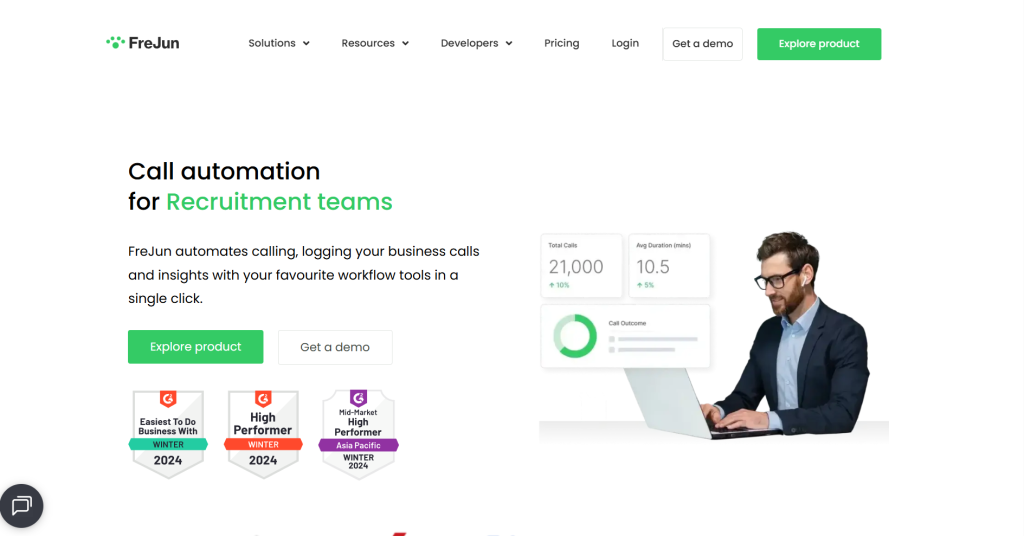
FreJun is a CRM-native cloud contact center software New Zealand sales, support, and recruitment teams use to make calls directly from their CRM, auto-log every interaction, and get AI-generated summaries without any manual work.
Best for: CRM-native calling with AI automation
Key features
- Click-to-call detects phone numbers on any webpage, CRM, or spreadsheet via Chrome extension, so one click starts an outbound call and every detail auto-logs to the CRM with duration, recording link, and disposition.
- The four-mode auto dialer covers Progressive, Power, Predictive, and Preview modes, giving teams the right pacing for every campaign type from high-volume outbound to high-value account calls.
- AI call summaries and sentiment analysis generate a 2 to 3 sentence summary, talk-ratio score, and full searchable transcript after every call, synced automatically to the CRM contact record.
- Native bidirectional sync with 23+ CRMs including Salesforce, HubSpot, Zoho, Pipedrive, and Freshworks means data flows in and out automatically, with no Zapier workaround required.
- Virtual numbers across 130 countries, including New Zealand, provision instantly so teams can show a local +64 number on outbound calls and lift answer rates.
- Drag-and-drop IVR builder lets admins set up multi-level call routing, time-based rules, and skill-based queues without writing a single line of code.
- WhatsApp follow-up automation sends a personalised message after a missed or completed call using pre-set templates, so no follow-up falls through the cracks.
Pros and cons
| Pros | Cons |
|---|---|
| Sets up in under one hour via Chrome extension and CRM connect, so teams are calling the same day they sign up | Advanced predictive dialer features are on the Professional plan, so Standard plan users need to upgrade for maximum throughput |
| AI summaries reduce manual note-taking time by 40%, based on FreJun’s analysis of 300+ client accounts as of 2026 | Mobile app covers calling and logs well, but the full analytics dashboard is best experienced on desktop |
| 4.9/5 on G2 with a Leader badge for Outbound Call Tracking, making it the highest-rated platform in this comparison | WhatsApp follow-up automation uses pre-set templates, which limits personalisation for high-value or complex NZ sales conversations |
Pricing and ratings
Pricing (USD): Standard Plan at $14.49/user/month; Professional Plan at $16.69/user/month. Both plans include a US, UK, or Canada virtual number plus $5 in calling credits. New Zealand virtual numbers are available. Per-minute calling rates are listed at product.frejun.com/call-pricing-usd. Billing is available monthly, quarterly, half-yearly, or annually. See full pricing
G2 rating: 4.9/5
Why it fits New Zealand teams: FreJun’s USD pricing applies directly to New Zealand buyers, local +64 virtual numbers provision instantly, and the platform’s Commerce Commission-ready call recording and opt-out logging keeps outbound campaigns compliant.
FreJun is the top recommendation
Why FreJun ranks #1 for New Zealand: FreJun holds a 4.9/5 G2 rating and starts at $14.49/user/month on the international plan, which applies directly to New Zealand teams. It supports Commerce Commission compliance through audit-ready call logs and recording consent tools, and its CRM-native architecture auto-logs every call with AI summaries, which no standard VoIP tool does out of the box. Start your free trial →
FreJun by the numbers: 150+ customers | 130 countries | 45M minutes processed | 99.999% uptime | Setup in under 1 hour
2. Genesys Cloud CX – enterprise omnichannel contact center platform
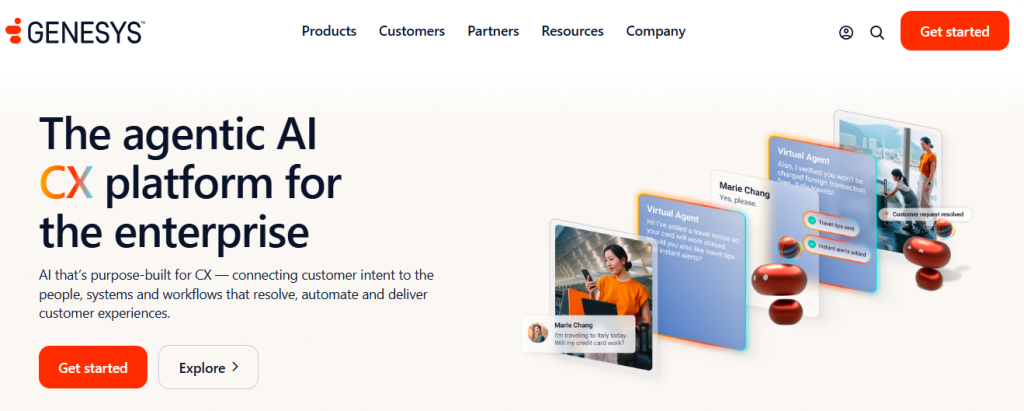
Genesys Cloud CX is a cloud contact center software New Zealand enterprises use for omnichannel customer service, AI-powered routing, and workforce management at scale.
Best for: Large enterprise CX operations
Key features
- Omnichannel routing handles voice, email, chat, and social from one agent desktop, so customers get a consistent experience regardless of channel.
- AI self-service and agent assist tools surface relevant knowledge articles and suggested responses in real time, reducing average handle time on complex queries.
- Workforce management tools forecast staffing needs and schedule agents automatically, which matters for New Zealand contact centres managing shift patterns across time zones.
- Real-time analytics dashboards give supervisors live queue visibility so they can intervene before service levels drop.
- CRM context and screen pops pull customer history into the agent view the moment a call connects, so agents skip the re-introduction and get straight to the issue.
Pros and cons
| Pros | Cons |
|---|---|
| G2 reviewers say the platform is exceptionally easy to use, letting business users manage configurations without IT involvement | The desktop application sometimes fails to load, according to G2 reviewers, which disrupts agent availability |
| Reviewers praise the intuitive controls and say the API library makes integration to and from Genesys Cloud straightforward | G2 users flag limitations in reporting tools and restricted options for exporting recordings and data |
| Genesys has a published New Zealand customer story with AIA New Zealand, confirming real local deployment experience | Enterprise pricing and implementation complexity make it unsuitable for small or mid-sized NZ teams without a dedicated CX operations team |
Pricing and ratings
Pricing (USD): Contact sales. Genesys does not publish per-seat pricing publicly. Enterprise contracts typically include implementation fees alongside licence costs.
vs. FreJun: Genesys Cloud CX is built for large enterprise deployments with complex workforce management needs. FreJun is a better fit for small to mid-sized New Zealand teams that need CRM-native calling and AI summaries without a lengthy enterprise procurement process.
3. NICE CXone – cloud customer experience platform for enterprise contact centres
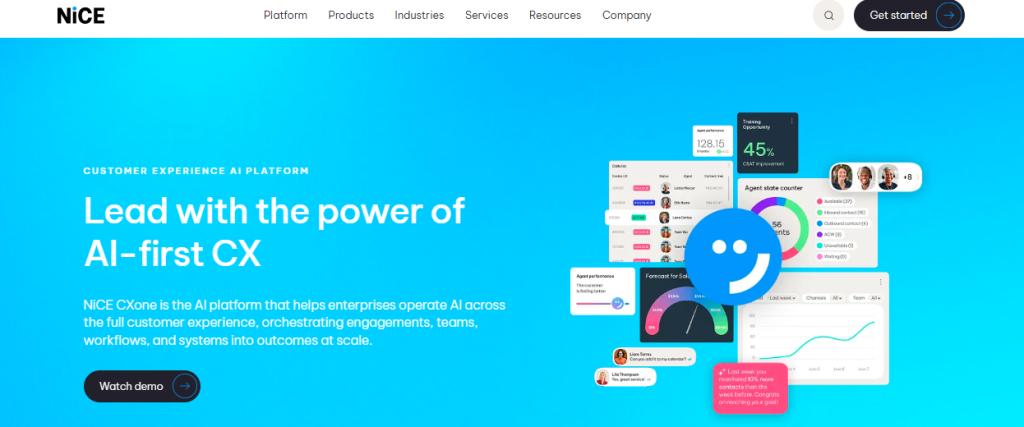
NICE CXone is a cloud contact center software New Zealand enterprise teams use for omnichannel service, workforce optimisation, and AI-driven automation across large agent pools.
Best for: Enterprise contact centres needing workforce optimisation
Key features
- Omnichannel interaction handling routes voice, email, chat, and social through a single platform so agents manage every channel from one interface.
- Workforce optimisation tools cover scheduling, quality management, and performance coaching, giving supervisors a full picture of agent effectiveness.
- AI-driven self-service and agent assist reduce inbound volume by deflecting common queries to automated flows before they reach a live agent.
- Quality management features let supervisors score calls, attach coaching notes, and track improvement over time without leaving the platform.
- Analytics dashboards surface interaction trends and CSAT (Customer Satisfaction) scores so contact centre managers can act on data rather than gut feel.
Pros and cons
| Pros | Cons |
|---|---|
| Capterra reviewers describe the interface as clean and easy to use, with one reviewer calling it very straightforward for daily agent tasks | Reviewers report calls getting dropped automatically, showing up as “refused” in the system, which creates confusion in reporting |
| The platform covers a wide range of enterprise contact centre needs in one licence, reducing the number of point solutions required | Capterra reviewers say setup and client data transfer are labour-intensive and time-consuming, raising implementation costs |
| AI-driven self-service deflects routine queries before they reach a live agent, reducing inbound volume for large NZ contact centres | Reviewers say reporting is inconsistent and automated reports do not always match custom reports, making data trust difficult |
Pricing and ratings
vs. FreJun: NICE CXone suits large contact centres that need deep workforce optimisation. FreJun is a faster, lower-cost path for New Zealand teams that prioritise CRM integration and AI call summaries over enterprise workforce scheduling.
4. Five9 – cloud contact center for inbound and outbound multichannel teams
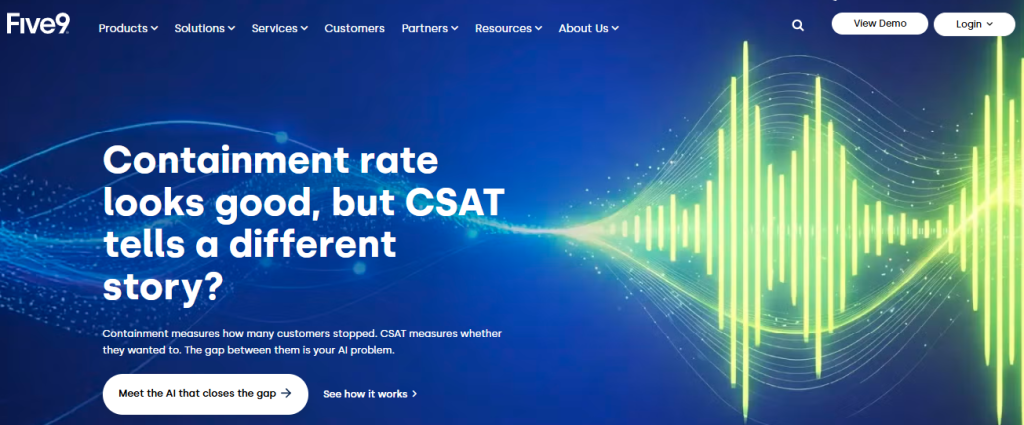
Five9 is a cloud contact center software New Zealand mid-market teams use for inbound, outbound, and multichannel customer interactions with strong CRM integration options.
Best for: Mid-market contact centres with mixed inbound and outbound volume
Key features
- Omnichannel voice and digital routing handles calls, email, chat, and social from one agent desktop, so teams do not need separate tools for each channel.
- Outbound dialing modes include predictive, progressive, and preview options, giving campaign managers control over pacing and agent utilisation.
- The agent desktop consolidates customer history, interaction controls, and CRM data in one view, reducing the time agents spend switching between applications.
- Reporting and analytics cover queue performance, agent productivity, and campaign outcomes, with scheduled report delivery to managers.
- CRM integrations with Salesforce, HubSpot, and Microsoft Dynamics 365 sync call data back to the contact record after each interaction.
Pros and cons
| Pros | Cons |
|---|---|
| Capterra rates Five9 at 4.2/5 across 481 reviews, reflecting solid mid-market satisfaction with the platform’s core calling features | Reviewers note the reporting interface can feel clunky and takes time to navigate when building custom reports |
| Outbound dialing modes give campaign managers flexibility to match pacing to campaign type without switching platforms | No publicly listed pricing means buyers must go through a sales process before understanding total cost |
| Strong CRM integration options cover the major platforms New Zealand teams use, including Salesforce and HubSpot | Implementation and onboarding complexity can slow deployment for NZ mid-market teams without dedicated IT or operations support |
Pricing and ratings
vs. FreJun: Five9 is a capable mid-market platform, but its reporting UI draws consistent criticism. FreJun’s analytics dashboard is purpose-built for sales teams and surfaces rep-level stats, connection rates, and talk-time trends without the navigation complexity.
5. Talkdesk – cloud contact center for fast-deploying digital service teams

Talkdesk is a cloud contact center software New Zealand service teams use when they need fast deployment, AI-assisted support, and strong CRM and workflow integrations.
Best for: Digital service teams that want quick deployment
Key features
- Omnichannel engagement handles voice, chat, email, and SMS from one agent workspace, so service teams do not fragment customer history across separate tools.
- AI automation handles routine queries through self-service flows before escalating to a live agent, reducing inbound volume on common request types.
- Built-in live and historical reporting covers most day-to-day monitoring needs, with dashboards that supervisors can configure without analyst support.
- IVR and routing rules let admins build call flows visually, with time-based and skill-based options for New Zealand business hours.
- CRM and workflow integrations connect Talkdesk to Salesforce, HubSpot, and Zendesk so call data syncs to the contact record after each interaction.
Pros and cons
| Pros | Cons |
|---|---|
| Reviewers say the platform’s built-in reporting handles most day-to-day monitoring well without needing a dedicated analyst | Reviewers report occasional system slowdowns and minor connectivity issues during peak usage periods |
| G2 reviewers value the ability to control call acceptance timing, so agents only pick up when they are ready to handle the interaction | Some features require more customisation effort than reviewers expected, and reporting can be slow when handling large data volumes |
| Advanced capabilities become a genuine strength once teams are fully ramped up on the platform | Pricing is not publicly listed, requiring a sales conversation before NZ teams can assess whether it fits their budget |
Pricing and ratings
vs. FreJun: Talkdesk is a solid service-team platform, but its advanced features take time to configure. FreJun’s setup takes under one hour and its AI summaries work from the first call, so New Zealand teams see value immediately rather than after a ramp period.
6. 8×8 – unified communications and contact center for UCaaS buyers
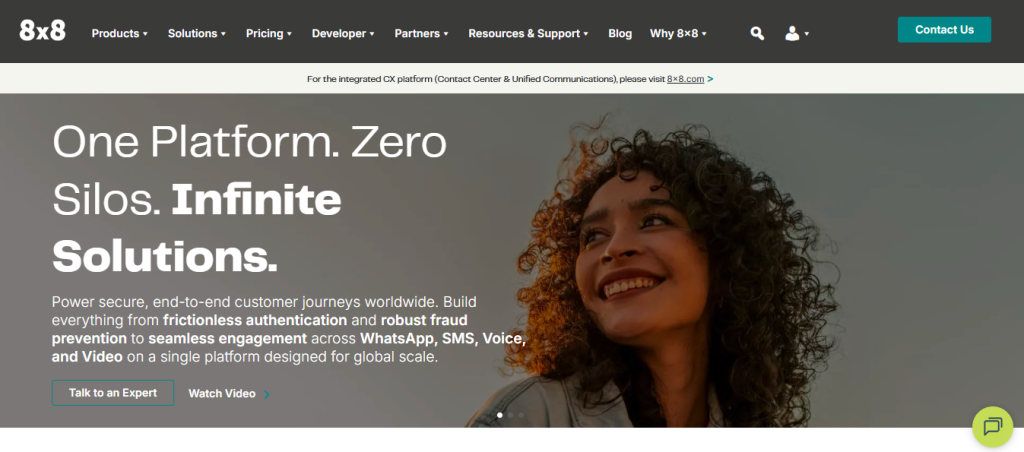
8×8 is a cloud contact center software New Zealand organisations use when they want contact centre capabilities and unified business communications in a single vendor relationship.
Best for: Organisations buying UCaaS and CCaaS together
Key features
- Voice and digital routing handles inbound and outbound interactions across channels, with queue management and agent status controls built into the admin console.
- Unified communications features sit alongside contact centre tools, so internal team calls and external customer calls run through the same platform.
- Analytics cover interaction volume, agent performance, and queue health, with dashboards configurable by supervisors without IT involvement.
- Workforce tools include scheduling and quality monitoring, giving managers oversight of agent performance across shifts.
- CRM integrations connect 8×8 to Salesforce and HubSpot so call records sync to the contact timeline after each interaction.
Pros and cons
| Pros | Cons |
|---|---|
| 8×8 lists a New Zealand support line at +64 (0)800 452 545 and an Auckland contact location, confirming genuine local presence | Support consistency can vary, with some customers reporting slower response times on complex technical issues |
| Combining UCaaS and CCaaS in one vendor simplifies procurement and reduces the number of contracts to manage | Pricing is not publicly listed, so buyers must engage sales before understanding total cost across UCaaS and CCaaS tiers |
| The platform covers a broad range of communication needs, from internal team calls to external customer queues, in one licence | CRM integration is limited to Salesforce and HubSpot, which may not suit NZ organisations using other platforms like Zoho or Microsoft Dynamics |
Pricing and ratings
vs. FreJun: 8×8 is a strong choice when a New Zealand business needs both internal communications and a contact centre under one contract. FreJun is the better fit when the priority is outbound calling performance and CRM-native AI summaries rather than unified internal communications.
7. Amazon Connect – AWS-native cloud contact center for developer-led teams
Amazon Connect is a cloud contact center software New Zealand AWS-native teams use to build and scale customer support workflows directly on AWS infrastructure.
Best for: AWS-native teams with in-house engineering resources
Key features
- Usage-based scaling means you pay only for what you use, with no fixed per-seat licence, which suits teams with variable call volumes across the year.
- IVR and routing are built through a visual flow editor that connects to AWS Lambda functions, giving developers full control over call logic without a separate platform.
- Omnichannel contact handling covers voice, chat, and tasks from one agent workspace, with contact history stored in AWS for long-term retention.
- AI capabilities draw on AWS services including Amazon Lex for natural language IVR and Amazon Transcribe for call transcription, so teams can build sophisticated self-service flows.
- Contact analytics and integrations connect Amazon Connect to Salesforce, Zendesk, and custom CRMs via AWS APIs, giving developers flexibility to build the exact data flow they need.
Pros and cons
| Pros | Cons |
|---|---|
| Usage-based pricing with no fixed seat cost makes Amazon Connect cost-effective for teams with seasonal or unpredictable call volumes | Requires AWS skills to implement and manage, so teams without in-house cloud engineers face a steep learning curve |
| Deep integration with the AWS ecosystem means AI, storage, and analytics capabilities are all available without third-party add-ons | Building and maintaining call flows requires ongoing developer time, which adds to total cost of ownership beyond the per-minute rate |
| Scales from a handful of agents to thousands without a contract renegotiation, since capacity is infrastructure-based rather than licence-based | No out-of-the-box UI for agents or supervisors, so NZ teams must build or customise their own interface before going live |
Pricing and ratings
vs. FreJun: Amazon Connect is powerful for engineering-led teams already on AWS. FreJun is the better choice for New Zealand sales and support teams that need a working contact centre in under an hour, without writing a single line of code.
8. RingCentral Contact Center – cloud contact center for existing RingCentral users
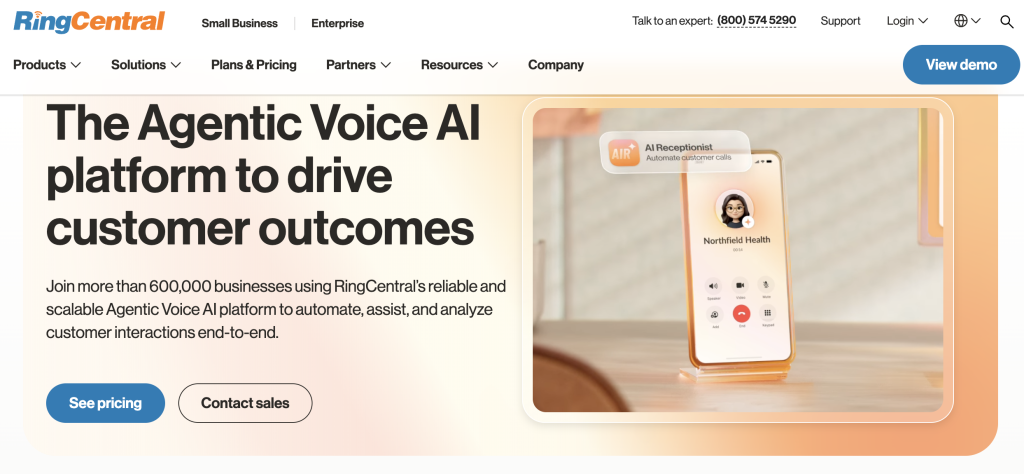
RingCentral Contact Center is a cloud contact center software New Zealand businesses already using RingCentral communications can add to extend their existing platform with full contact centre routing and analytics.
Best for: Teams already on the RingCentral platform
Key features
- Omnichannel routing handles voice, email, chat, and social from one agent interface, with queue management and real-time supervisor dashboards built in.
- IVR builder lets admins create multi-level call flows visually, with time-based routing rules for New Zealand business hours and after-hours handling.
- Analytics cover agent performance, queue health, and interaction outcomes, with scheduled reports delivered to managers automatically.
- CRM integrations connect RingCentral Contact Center to Salesforce and HubSpot so call records sync to the contact timeline after each interaction.
- Cloud telephony and contact centre controls sit in the same admin console as the broader RingCentral communications platform, reducing the number of tools admins need to manage.
Pros and cons
| Pros | Cons |
|---|---|
| Capterra reviewers say the app is convenient and has a lot to offer, particularly for teams that need to answer work calls on a personal mobile while keeping their private number hidden | Reviewers say the platform can be difficult to figure out and get set up, with some expecting a smoother onboarding experience |
| Reviewers value the ability to answer calls away from the office or during Wi-Fi outages, which suits New Zealand remote and hybrid teams | Some reviewers report trouble with dropped calls and say call reliability did not meet their expectations after setup |
| Combining contact centre and business communications in one RingCentral licence simplifies vendor management for existing customers | CRM integration is limited to Salesforce and HubSpot, which excludes NZ teams using Pipedrive, Zoho, or other platforms |
Pricing and ratings
vs. FreJun: RingCentral Contact Center makes sense if your team is already paying for RingCentral and wants to avoid a second vendor. FreJun is the stronger choice when CRM-native AI summaries and outbound dialing performance are the priority, since RingCentral’s contact centre add-on does not include a built-in auto dialer.
9. CloudTalk – cloud phone and contact center for SMB sales teams
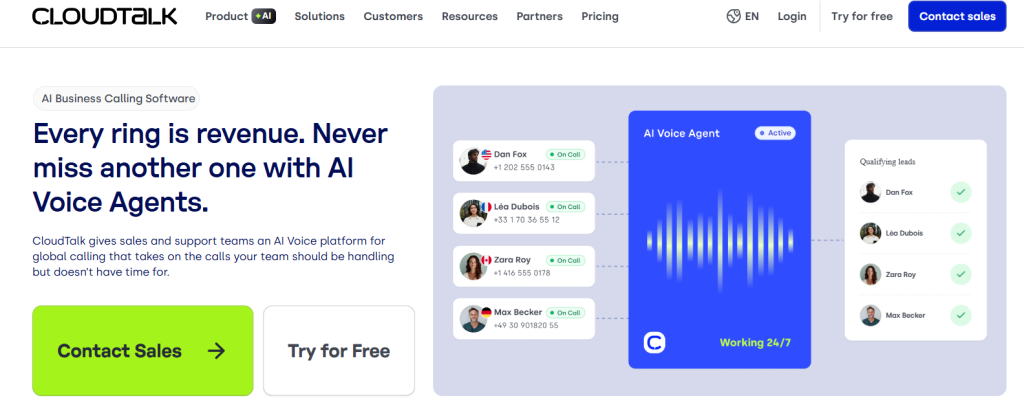
CloudTalk is a cloud contact center software New Zealand SMB sales and support teams use for local and international calling, smart routing, and CRM sync without enterprise-level complexity.
Best for: SMB sales teams needing local and international calling
Key features
- Local and international calling covers a wide range of countries, so New Zealand teams calling Australia, the US, or the UK can show a local number on outbound calls.
- Smart call routing distributes inbound calls based on agent availability, skills, and time-of-day rules, reducing missed calls during busy periods.
- Call recording captures every conversation automatically and stores it in the dashboard, so managers can review calls for quality without chasing reps for notes.
- Analytics cover call volume, agent performance, and missed call rates, with dashboards that team leads can read without analyst support.
- CRM integrations connect CloudTalk to HubSpot, Pipedrive, and Salesforce so call records sync to the contact timeline after each interaction.
Pros and cons
| Pros | Cons |
|---|---|
| G2 reviewers say CloudTalk is easy to use and user-friendly, with no connectivity issues because the platform runs smoothly and consistently | A G2 reviewer says getting customised reporting into a usable format took much more effort than expected |
| Trustpilot reviewers say setup is easy and onboarding is smooth and efficient, which matters for SMB teams without a dedicated IT resource | Trustpilot reviewers report slow customer service response times and mention being directed to unhelpful automated support systems |
| Reviewers describe the platform as intuitive and straightforward to manage on an ongoing basis | No native auto dialer, which limits outbound efficiency for NZ sales teams running high-volume prospecting campaigns |
Pricing and ratings
vs. FreJun: CloudTalk is a clean, easy-to-use option for SMB teams. FreJun adds a four-mode auto dialer and AI call summaries that sync to the CRM automatically, which CloudTalk does not offer natively, making FreJun the stronger choice for outbound-heavy New Zealand sales teams.
10. Aircall – cloud calling and contact center for CRM-first support teams
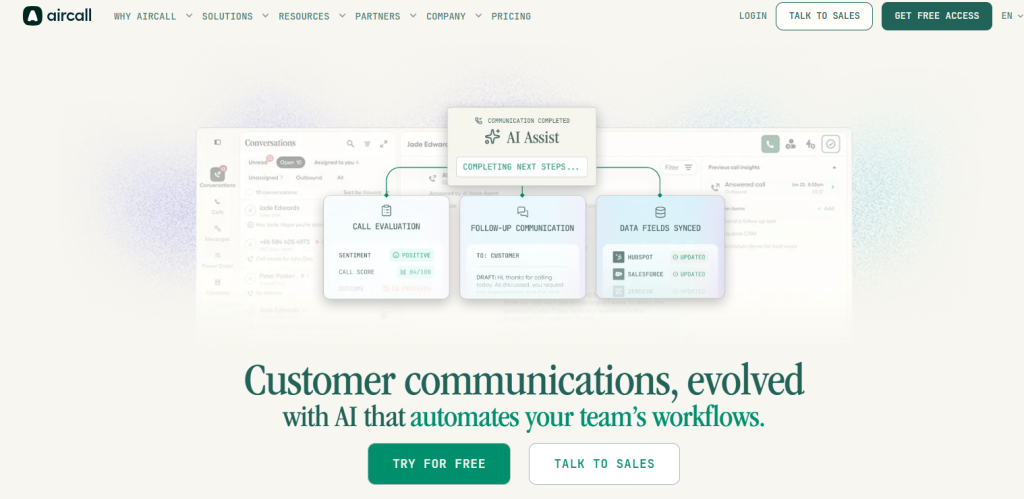
Aircall is a cloud contact center software New Zealand SMB support teams use when they want a calling layer that sits alongside their CRM and keeps call history visible inside the contact record.
Best for: SMB support teams living in their CRM
Key features
- Shared call inbox lets the whole support team see missed calls, voicemails, and call assignments in one view, so nothing gets missed when agents are busy or offline.
- Call routing distributes inbound calls based on availability and team assignment, with IVR options for multi-level menus and after-hours handling.
- Call recordings are stored automatically and linked to the contact record in the CRM, giving managers a full interaction history without manual filing.
- Analytics cover call volume, wait times, missed call rates, and agent activity, with dashboards that team leads can review daily without analyst support.
- CRM integrations connect Aircall to HubSpot, Salesforce, Pipedrive, and Zendesk so call data syncs to the contact timeline after each interaction.
Pros and cons
| Pros | Cons |
|---|---|
| Clean interface and strong CRM integrations make Aircall easy for support teams to adopt without extensive training | Add-on features like analytics upgrades and AI transcription can push the total monthly cost well above the base plan price |
| Shared call inbox gives the whole team visibility into missed calls and voicemails, reducing the risk of unanswered customer queries | The platform is built primarily for inbound support, so outbound sales teams will find the dialing tools less capable than dedicated outbound platforms |
| Integrations with HubSpot, Pipedrive, and Salesforce cover the CRMs most commonly used by New Zealand SMB teams | Minimum seat requirement makes it impractical for solo operators or very small NZ support teams with one or two agents |
Pricing and ratings
vs. FreJun: Aircall is a solid inbound support tool, but its add-on pricing model means costs rise quickly as teams grow. FreJun includes AI summaries, a four-mode auto dialer, and WhatsApp follow-ups in the base plan, so the total cost stays predictable as call volume scales.
11. IPscape – APAC-focused cloud contact center for enterprise teams
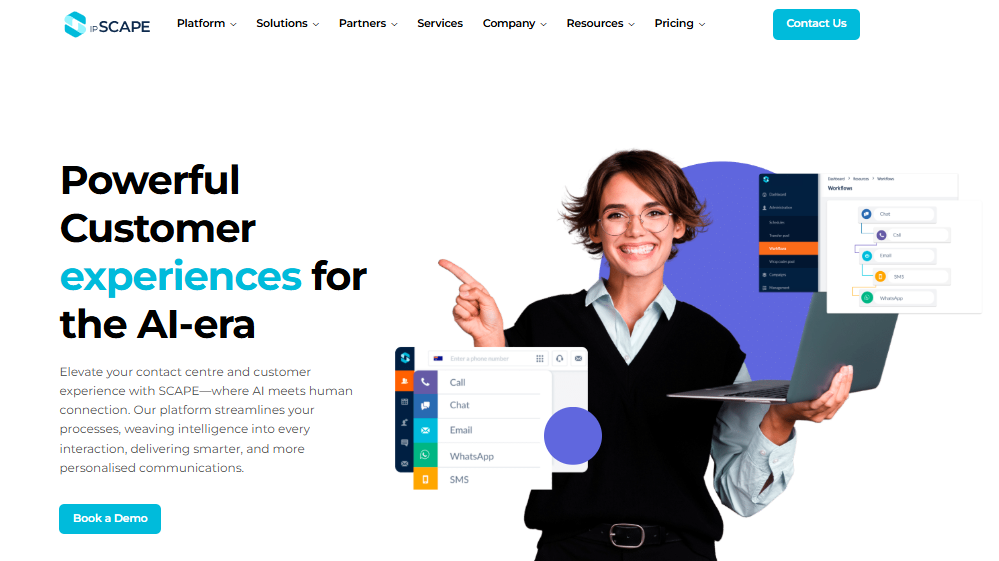
IPscape is a cloud contact center software New Zealand and broader APAC enterprise teams use for inbound, outbound, and workforce-enabled contact handling built specifically for the Asia-Pacific market.
Best for: APAC enterprise contact centres
Key features
- IVR and routing handle inbound call flows with multi-level menus and skill-based distribution, so calls reach the right agent without manual intervention.
- Outbound dialling supports campaign-based calling with pacing controls, giving contact centre managers the tools to run structured outbound programmes.
- Reporting covers interaction volume, agent performance, and campaign outcomes, with dashboards configurable for different management levels.
- Workforce tools include scheduling and quality monitoring, giving supervisors oversight of agent performance across APAC time zones including NZST.
- Integrations connect IPscape to CRM and workforce management platforms, so call data flows into the broader operational stack without manual export.
Pros and cons
| Pros | Cons |
|---|---|
| Built specifically for APAC markets, so New Zealand-specific routing, time zones, and compliance considerations are accounted for in the platform design | Limited public review volume makes independent comparison harder, since fewer G2 or Capterra reviews are available than for global platforms |
| Covers inbound, outbound, and workforce management in one platform, reducing the number of vendors a New Zealand enterprise needs to manage | Pricing requires a sales conversation, so buyers cannot self-serve a cost estimate before engaging the vendor |
| APAC focus means local support teams and data residency options are more relevant to New Zealand buyers than with US-centric vendors | No publicly confirmed AI transcription or call summary features, putting it behind AI-native competitors for teams that want automated insights |
Pricing and ratings
vs. FreJun: IPscape is a strong APAC-native option for large enterprise contact centres. FreJun is the better fit for New Zealand teams of 5 to 200 agents that need CRM-native AI calling without an enterprise procurement process or a lengthy implementation timeline.
Cloud contact center software New Zealand feature comparison: 2026
| Feature | FreJun | Genesys Cloud CX | NICE CXone | Five9 | Talkdesk | 8×8 | Amazon Connect | RingCentral | CloudTalk | Aircall | IPscape |
|---|---|---|---|---|---|---|---|---|---|---|---|
| CRM-native bidirectional sync (no Zapier) | Yes | Partial – via API | Partial – via API | Partial – via API | Partial – via API | Partial – via API | Partial – custom build | Partial – via API | Partial – via API | Partial – via API | Partial – via API |
| AI call summaries auto-synced to CRM | Yes | Partial – agent assist only | Partial – agent assist only | No | Partial – add-on | No | Partial – via AWS Transcribe | No | No | Partial – add-on | No |
| Built-in four-mode auto dialer | Yes | Partial – outbound module | Partial – outbound module | Yes | Partial – add-on | No | No | No | No | No | Partial – outbound module |
| New Zealand virtual number provisioning | Yes | Check website | Check website | Check website | Check website | Yes – Auckland office confirmed | Check website | Check website | Check website | Check website | Yes – APAC focus |
| Setup under one hour (no IT required) | Yes | No – enterprise implementation | No – enterprise implementation | No – sales-led setup | Partial – faster than enterprise | No – sales-led setup | No – requires AWS skills | No – sales-led setup | Yes | Yes | No – sales-led setup |
| Publicly listed per-seat pricing | Yes – $14.49/user/month | No | No | No | No | No | Partial – usage-based rates listed | No | No | No | No |
FreJun is the only platform in this comparison that combines CRM-native bidirectional sync, AI call summaries auto-synced to the CRM, a built-in four-mode auto dialer, and publicly listed per-seat pricing in one plan starting at $14.49/user/month.
Which cloud contact center software New Zealand is right for your team in 2026?
The right platform depends on your team size, call volume, and whether your priority is outbound sales performance, inbound support quality, or enterprise workforce management. Use the profiles below to match your situation to the best fit.
If you are a New Zealand sales team making 100 or more outbound calls per day: Choose FreJun. The four-mode auto dialer, local presence dialing, and AI call summaries that sync to your CRM automatically give outbound teams a measurable lift in daily call volume and a full audit trail without manual logging.
If you are a large enterprise contact centre with complex workforce scheduling needs: Choose Genesys Cloud CX. Its workforce management tools, omnichannel routing, and published New Zealand customer story with AIA New Zealand make it a credible enterprise choice for large teams.
If you are an AWS-native engineering team that wants to build custom contact flows: Choose Amazon Connect. Usage-based pricing and deep AWS integration give developer-led teams full control over call logic, though the implementation requires real AWS skills.
If you are an SMB support team that lives in HubSpot or Pipedrive: Choose CloudTalk or Aircall. Both are easy to set up and integrate cleanly with the CRMs most common in New Zealand SMB teams, though neither includes a built-in auto dialer for outbound campaigns.
If you are an APAC enterprise that needs a vendor with genuine regional presence: Choose IPscape. Its APAC-first design and local support make it a relevant option for large New Zealand contact centres that want a vendor who understands the regional market.
Which tool wins overall in New Zealand?
If you want the best overall cloud contact center software New Zealand teams can deploy in 2026, with AI features, transparent USD billing, and Commerce Commission-ready call logging: Choose FreJun. No other platform in this list combines a 4.9/5 G2 rating, a four-mode auto dialer, AI call summaries that auto-sync to 23+ CRMs, and a setup time under one hour at $14.49/user/month.
Frequently asked questions about cloud contact center software New Zealand in 2026
What is the best cloud contact center software New Zealand teams can use in 2026?
The best cloud contact center software New Zealand teams can use in 2026 is FreJun. It holds a 4.9/5 G2 rating and starts at $14.49/user/month on the international plan, which applies directly to New Zealand buyers. FreJun provisions local +64 virtual numbers instantly, auto-logs every call to your CRM with AI summaries and sentiment scores, and sets up in under one hour via a Chrome extension and CRM connect. No other platform in this comparison matches that combination of price, AI capability, and setup speed.
How much does cloud contact center software New Zealand cost in 2026?
Costs vary widely depending on team size and feature requirements. FreJun’s international plan starts at $14.49/user/month for the Standard tier and $16.69/user/month for the Professional tier, both including a virtual number and $5 in calling credits. Enterprise platforms like Genesys Cloud CX, NICE CXone, and Talkdesk do not publish pricing and require a sales conversation before you can get a number. Amazon Connect uses usage-based pricing with no fixed seat cost, which suits teams with variable call volumes. When comparing total cost, include per-minute calling rates, local number rental fees, and any AI or analytics add-ons alongside the base seat price.
What compliance rules apply to outbound calling in New Zealand?
New Zealand’s primary regulation for commercial electronic messages is the Unsolicited Electronic Messages Act 2007, enforced by the Commerce Commission. This Act requires that commercial messages include a functional unsubscribe mechanism and accurate sender identification. Outbound calling campaigns also fall under broader consumer protection obligations, so teams should maintain opt-out lists, disclose call recording to recipients, and keep audit-ready call logs. Any cloud contact center software New Zealand teams use should support these requirements through built-in recording consent tools and exportable call history.
Which cloud contact center software integrates best with Salesforce and HubSpot for New Zealand teams?
FreJun offers the deepest native integration with both Salesforce and HubSpot. Every call auto-logs to the CRM contact record with duration, recording link, AI summary, sentiment score, and call disposition, with no Zapier workaround required. The sync is bidirectional, so data flows in and out automatically. Genesys Cloud CX, Five9, and Talkdesk also integrate with Salesforce and HubSpot, but their integrations typically require API configuration and do not include AI summaries synced to the contact record out of the box. You can review FreJun’s full integrations list to confirm compatibility with your specific CRM setup.
How do I switch from a traditional phone system to cloud contact center software in New Zealand?
Switching from a traditional PBX to a cloud contact center platform is simpler than most teams expect. Start by porting your existing numbers to the new provider, which typically takes 24 to 48 hours. Then connect your CRM and configure your IVR routing rules. FreJun’s setup takes under one hour via a Chrome extension install and a CRM connect step, so your team can be making calls the same day they sign up. The 3-day free trial for up to 5 users lets you validate the setup before committing. For enterprise platforms like Genesys or NICE CXone, expect a longer implementation timeline with vendor-led onboarding.
What features matter most for outbound sales teams using cloud contact center software in New Zealand?
Teams running more than 500 outbound calls per day need predictive dialing, not progressive. The throughput difference alone justifies the switch. Beyond dialing mode, the most important features for New Zealand outbound sales teams are local presence dialing (showing a +64 number on outbound calls to lift answer rates), AI call summaries that sync to the CRM automatically (so reps spend zero time on manual logging), and real-time dashboards that show connection rates and talk time by rep. Local number provisioning and Commerce Commission-compliant call recording round out the must-have list.
Can a small New Zealand team with fewer than 10 agents use cloud contact center software?
Yes. Several platforms in this comparison work well for small teams. FreJun has no minimum user requirement and works for teams of 3 or 300, with pricing that scales per seat. CloudTalk and Aircall are also designed for SMB teams and set up quickly without IT support. Enterprise platforms like Genesys Cloud CX and NICE CXone are designed for larger deployments and typically require a minimum contract size that makes them impractical for teams under 20 agents. If you are a small New Zealand team, start with a platform that offers a free trial so you can validate fit before signing a contract.
How is AI changing cloud contact center software for New Zealand teams in 2026?
AI is shifting contact centre work from reactive to proactive. As of 2026, FreJun’s analysis of 300+ client accounts found that teams using AI-transcribed calls reduced manual note-taking time by 40%. Sentiment analysis now flags at-risk customer interactions in real time, so supervisors can intervene before a call ends badly. Predictive routing uses historical data to match callers to the best available agent rather than the next available one. New Zealand teams that adopt AI-assisted calling now build a data advantage that compounds over time, since every call adds to a searchable, analysable interaction history that manual logging never could.
Conclusion: Best cloud contact center software New Zealand teams should use in 2026
The top three platforms for New Zealand teams in 2026 are FreJun (best overall for CRM-native AI calling), Genesys Cloud CX (best for large enterprise deployments), and IPscape (best for APAC-focused enterprise contact centres). FreJun is the top recommendation for New Zealand sales and support teams because it is the only platform in this comparison that combines a 4.9/5 G2 rating, a four-mode auto dialer, AI call summaries that auto-sync to 23+ CRMs, Commerce Commission-ready call logging, and transparent USD pricing at $14.49/user/month, all with a setup time under one hour. Start your 3-day free trial today and see how cloud contact center software New Zealand teams rely on can transform your team’s daily call volume and CRM data quality.