Last updated on November 13th, 2026 at 11:18 am
Quick Answer: CEIPAL International Calling Integrations are VoIP (Voice over Internet Protocol) tools that connect directly to the CEIPAL ATS (Applicant Tracking System), letting recruiters dial international candidates from inside a candidate profile, log calls automatically, and record conversations without switching platforms. The seven most-used options for Indian teams are FreJun, RingCentral, Vonage, Twilio, Zoom Phone, Cisco Webex Calling, and VoIP Office, each suited to different team sizes and workflow needs.
AI Summary: CEIPAL International Calling Integrations cover seven VoIP platforms that Indian recruitment and staffing teams use to place and log international calls from inside the CEIPAL ATS. This article explains what makes a VoIP integration work well with CEIPAL, walks through each of the seven tools on the same criteria, and identifies the scenarios where each one is the stronger choice.
Table of contents
- Why International Calling is Crucial for CEIPAL Users in India
- What Makes a Great VoIP Integration for CEIPAL?
- What Are the Best CEIPAL International Calling Integrations for Indian Teams?
- Which Features Should You Look for in CEIPAL VoIP Integrations?
- What Are the Pros and Cons of CEIPAL International Calling Integrations?
- How Can Different Industries Benefit from CEIPAL Calling Integrations?
- Final Thoughts
- FAQs
Why International Calling is Crucial for CEIPAL Users in India
Indian recruitment teams using CEIPAL often contact candidates and clients across time zones. A recruiter filling a technology role might call a developer in Dubai in the morning. Later, they may discuss terms with an HR manager in New York. Before the day ends, they might follow up with a candidate in the UK.
Without an integrated calling tool, recruiters must switch between dialers. They also need to write call notes and copy them into candidate records.
International VoIP integration directly within CEIPAL eliminates these extra steps. Recruiters can click a number on a candidate’s profile and connect the call directly. The system then logs the call outcome automatically. Recruiters no longer need to switch tabs or enter notes manually. They also reduce the risk of missing call records.
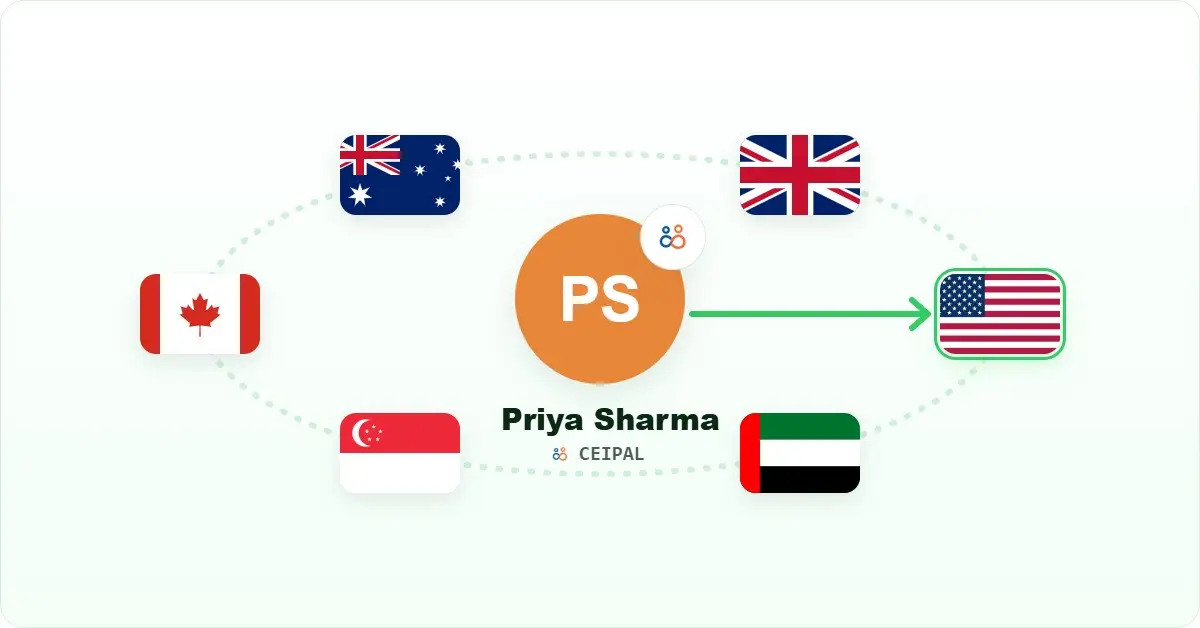
Virtual numbers offer another advantage. Candidates in the US may ignore calls from unfamiliar Indian numbers. A local US virtual number makes the call appear familiar. This can improve answer rates and help recruiters connect with more candidates.
Using a local virtual number for each destination country can make a real difference. It also supports faster and clearer communication, making it a valuable part of an international recruitment setup.
Beyond connect rates, every logged call becomes a data point. Managers can see which recruiters are making calls, how long those calls last, and which candidates have been contacted. That visibility is difficult to achieve when calling happens outside the ATS on personal phones or separate dialers.
What Makes a Great VoIP Integration for CEIPAL?
Not every VoIP tool that claims CEIPAL compatibility delivers the same depth of integration. Some connect at a surface level, providing a dial button but no automatic logging. Others sync call data fully, attaching recordings and outcomes to the correct candidate record without any manual step. Before choosing a tool, it helps to know which four criteria actually separate a useful integration from a shallow one.
1. Ease of integration
Ease of integration affects how quickly your team can start using the tool and how much IT support you need. The best options connect through a Chrome extension or a native CEIPAL marketplace connector. Recruiters can then start making calls in under an hour. Tools that rely on middleware like Zapier or require custom API development take longer to set up. They also increase maintenance work. For most Indian staffing agencies, a plug-and-play connector offers the simplest starting point.
2. Global number support
Global number support means the ability to purchase and assign local virtual numbers in the countries where your candidates and clients are based. For Indian teams, the most common destinations are the UAE, the US, the UK, and parts of Europe. A tool that covers only a handful of countries forces your team to use Indian numbers for all outbound calls, which reduces answer rates in markets where unfamiliar country codes are routinely ignored.
3. AI-enabled features
AI-enabled features in a calling tool typically include automatic transcription, call summaries, and sentiment analysis. Transcription converts the spoken conversation into searchable text, so a hiring manager can review what was discussed without listening to a full recording. Call summaries extract the key points automatically, cutting post-call note-taking to near zero. Sentiment analysis flags calls where a candidate seemed disengaged or a client raised a concern, so managers can follow up on the right conversations first.
4. Reporting and security
Reporting and security matter because recruitment calls often involve personal data: candidate contact details, salary expectations, and employment history. A VoIP tool used by Indian teams should comply with relevant data protection frameworks, and we have to keep secure and compliant communication at the centre of any tool evaluation. On the reporting side, dashboards that show call volume, duration, and outcome per recruiter give managers the data they need to coach their teams and spot workflow gaps.
What Are the Best CEIPAL International Calling Integrations for Indian Teams?
The seven tools below represent the most-used CEIPAL International Calling Integrations for teams based in India. Each is assessed on the same four criteria: integration depth, global number coverage, AI features, and reporting. The comparison table gives you a side-by-side view before the detailed sections.
| Provider | Best For | Key Features | Setup Effort | Pricing & Free Trial |
|---|---|---|---|---|
| FreJun | Indian staffing teams needing ATS-native calling with AI logging | Click-to-call from CEIPAL, auto call logging, AI transcription, virtual numbers | Chrome extension or native connector, no code required | Check pricing & trial |
| RingCentral | Enterprises needing unified voice, video and messaging | Advanced call routing, IVR, AI noise cancellation, Salesforce and Teams integration | Cloud platform, admin configuration required | Check pricing & trial |
| Vonage | Teams wanting unified voice, SMS and video in one platform | Advanced IVR, AI-driven call analysis, CRM connectors, multi-channel messaging | Cloud platform, admin configuration required | Check pricing & trial |
| Twilio | Developer teams building custom telephony workflows | Programmable voice and SMS APIs, global PSTN, multi-country numbers | REST API, developer build required | Check pricing & trial |
| Zoom Phone | Teams already using Zoom Meetings who want unified voice | PSTN global coverage, voicemail transcription, call recording, Zoom Meetings integration | Admin setup within existing Zoom account | Check pricing & trial |
| Cisco Webex Calling | Enterprises with strict security and compliance requirements | End-to-end encryption, HD voice, Webex Teams collaboration, global PSTN | Enterprise admin deployment, IT involvement needed | Check pricing & trial |
| VoIP Office | Small to mid-size agencies needing flexible, scalable calling | Virtual numbers, call forwarding, real-time analytics, multi-device support | Cloud setup, vendor-assisted onboarding available | Check pricing & trial |
1. FreJun

FreJun connects to CEIPAL through a Chrome extension or a native connector, letting recruiters dial directly from a candidate profile without leaving the ATS. Every call is logged automatically: the recording, the duration, and any notes attach to the correct candidate record the moment the call ends. There is no manual step between the conversation and the CRM entry.
The AI layer sits on top of the calling infrastructure. After each call, FreJun generates a transcript and a summary, so a hiring manager reviewing a candidate file can read what was discussed rather than listening to a recording. AI-powered call analysis also surfaces conversation trends and flags calls that may need a follow-up, which helps team leads prioritise their coaching time.
Key Features:
- Click-to-Call directly from CEIPAL candidate profiles
- Automatic call logging: recordings, duration and outcomes sync to CEIPAL without manual input
- AI transcription and summaries: every call is transcribed and summarised for quick review
- Auto Dialer for high-volume outbound calling without manual dialling
- Virtual numbers across UAE, US, UK and other key markets for better answer rates
- Performance dashboards: call volume, duration and recruiter-level metrics in one view
See How FreJun Integrates with Leading CRMs
Discover How FreJun’s Call Recording Works
When FreJun is not the right fit: Teams that need a full unified communications suite with video conferencing, team chat and telephony under one enterprise licence will find that FreJun focuses specifically on calling and CRM automation. For those teams, RingCentral or Cisco Webex Calling covers a broader communications footprint.
2. RingCentral
RingCentral is a cloud communications platform that combines VoIP calling, video meetings and team messaging in a single product. Its CEIPAL integration, documented on RingCentral’s own integration page, enables call campaigns and voicemail drops directly from the ATS. Recruiters can place and receive calls without leaving CEIPAL, and call data syncs back to candidate records.
RingCentral suits enterprises that want a single vendor for all communications. Because it also integrates with Microsoft Teams and Salesforce, teams that already use those platforms can consolidate their communication stack. However, for a small Indian staffing agency that only needs calling and logging inside CEIPAL, RingCentral’s broader feature set adds cost and configuration complexity that may not be necessary.
Key Features:
- Advanced call routing and IVR (Interactive Voice Response) capabilities
- AI-based noise cancellation for clearer call quality
- VoIP, video meetings and team messaging on one platform
When RingCentral is the stronger choice: Enterprises with 50 or more seats that need video conferencing, team messaging and telephony under one contract, especially those already running Microsoft Teams or Salesforce, will get more value from RingCentral’s unified platform than from a calling-only tool.
3. Vonage

Vonage provides a cloud-based VoIP system with voice, SMS and video in one platform. For CEIPAL users, Vonage connects the ATS to a full communications layer, so recruiters can handle calls, send text messages and run video interviews without leaving their workflow. Vonage also integrates with popular CRMs, which matters for staffing agencies that run CEIPAL alongside a separate sales CRM.
The AI-driven call analysis features in Vonage help teams understand conversation patterns over time, though the depth of AI insight is generally less granular than tools built specifically for recruitment workflows. Vonage is a reasonable choice for agencies that want multi-channel communication, specifically voice plus SMS plus video, from a single vendor.
Key Features:
- Advanced IVR and call routing options
- Unified communication across voice, messaging and video
- AI-driven call analysis and insights
4. Twilio
Twilio is a programmable communications platform built around APIs (Application Programming Interfaces). Unlike the other tools in this list, Twilio does not provide a ready-made CEIPAL integration out of the box. Instead, a developer uses Twilio’s voice, SMS and video APIs to build a custom calling workflow that connects to CEIPAL. That flexibility is Twilio’s main advantage: you can design exactly the call flow, logging behaviour and data structure your team needs.
The trade-off is that Twilio requires ongoing developer involvement. Every change to the call flow, every new country number, and every new logging rule needs a code change. For staffing agencies without an in-house engineering team, that dependency makes Twilio a poor fit. But for technology companies or large enterprises with dedicated developers, Twilio’s global reach and multi-country connectivity make it a powerful foundation.
Why Twilio Works:
- Programmable APIs for voice, SMS and video
- Global reach with multi-country connectivity and localised phone numbers
- Multi-channel communication via chat, WhatsApp and email
5. Zoom Phone

Zoom Phone extends the Zoom platform into business telephony. Teams that already use Zoom Meetings for video interviews can add Zoom Phone to get VoIP calling, voicemail transcription and call recording without adopting a separate vendor. The CEIPAL connection for Zoom Phone is documented on CEIPAL’s video conferencing integrations page, which covers how the ATS connects to Cisco Webex and Microsoft Teams for video, with Zoom Phone extending that to voice.
Zoom Phone’s global PSTN (Public Switched Telephone Network) coverage supports international calling from India to most major markets. The main limitation is that Zoom Phone works best when your team is already embedded in the Zoom ecosystem. If your agency does not use Zoom Meetings, the value of Zoom Phone over a dedicated calling tool is less clear.
Key Features:
- Enterprise-grade PSTN connectivity with global reach
- Voicemail transcription and call recording for documentation
- Tight integration with Zoom Meetings for unified voice and video
6. Cisco Webex Calling
Cisco Webex Calling is the enterprise telephony layer within the Webex suite. CEIPAL’s own documentation confirms the ATS integrates with Cisco Webex for video conferencing, and Webex Calling extends that to voice. The platform’s primary differentiator is security: end-to-end encryption, enterprise-grade compliance controls, and a track record in regulated industries make it the preferred choice for staffing agencies serving healthcare, finance or government clients.
Webex Calling is not the simplest tool to deploy. It requires IT involvement for initial setup and ongoing administration. For a fast-moving Indian staffing agency that needs to be operational quickly, that setup overhead is a real cost. But for an enterprise with strict data handling requirements, the security architecture justifies the investment.
Key Features:
- End-to-end encryption and enterprise-grade compliance controls
- HD voice and video with global PSTN connectivity
- Integration with Webex Teams for collaboration alongside calling
7. VOIP Office
The VoIP Office offers a cloud-based business phone system for small agencies and large enterprises. It includes virtual numbers, call forwarding, real-time analytics and multi-device support. Recruiters can take calls on desktops, mobiles or softphones, depending on their work setup. Its flexible plans also suit agencies with seasonal or project-based call volumes.
VoIP Office’s CEIPAL connection enables automated call tracking and CRM syncing, so call records flow into the ATS without manual entry. The platform is a practical option for agencies that want a reliable, configurable calling tool without the enterprise complexity of Cisco Webex or the developer dependency of Twilio.
Key Features:
- Cloud-based phone system with virtual numbers and call forwarding
- Real-time call analytics and tracking to evaluate team performance
- Multi-device compatibility: desktop, mobile or softphone
- Scalable plans suited to agencies of varying sizes
Which Features Should You Look for in CEIPAL VoIP Integrations?
When evaluating CEIPAL VoIP integrations, the features that matter most are the ones that reduce manual work and improve data quality inside the ATS. A tool that requires recruiters to log calls manually will see low adoption, because recruiters under time pressure skip the logging step. The features below are the ones that prevent that failure mode.
- Automated Call Logging: inbound and outbound calls attach to candidate profiles automatically, so the record is always current without recruiter effort.
- Call Analytics and Reporting: dashboards showing call duration, frequency and recruiter performance give managers the data to coach and optimise.
- Global Calling Capability: the ability to dial international numbers from inside CEIPAL, without switching to a separate dialer, keeps the workflow intact.
- CRM Syncing and Data Integration: call data should flow into CEIPAL and any connected CRM, so reporting is consolidated rather than split across systems.
- Call Recording and Quality Monitoring: recordings stored against candidate profiles support training, QA review and compliance documentation.
- Auto Dialer and IVR: auto-dialling reduces the time between calls for high-volume outreach, while IVR (Interactive Voice Response) handles inbound routing.
- Secure and Compliant Communication: end-to-end encryption and adherence to relevant data privacy frameworks protect candidate data and reduce regulatory risk.
For teams that want to understand how call tracking, logging, and analytics work inside an ATS environment, the mechanism is the same across most integrations: the VoIP tool intercepts the dial event, records the call metadata, and pushes it to the ATS via an API or webhook after the call ends.
What Are the Pros and Cons of CEIPAL International Calling Integrations?
CEIPAL International Calling Integrations solve real problems for Indian recruitment teams, but they also introduce trade-offs that are worth understanding before you commit to a tool. The pros and cons below reflect how these integrations actually behave in practice, not just what the feature list promises.
Advantages of integrating VoIP with CEIPAL
- Reduced manual work: Automatic call logging eliminates the need for recruiters to copy call notes into the ATS, a task they often skip under time pressure.
- Better candidate data: Automatic call logging captures every interaction, giving recruiters a complete communication history instead of relying on their memory.
- Improved answer rates: virtual numbers that match the candidate’s country code increase the likelihood that the call is answered, since the number looks local rather than foreign.
- Manager visibility: call analytics dashboards give team leads a real-time view of recruiter activity, which supports coaching and workload management.
- Compliance documentation: recorded calls stored against candidate profiles provide an audit trail for regulated industries such as healthcare and finance staffing.
Limitations to plan for
- Setup complexity varies by tool: tools that connect through a native CEIPAL connector take hours to set up, while API-based tools like Twilio can take weeks and require developer time. That gap is not visible from a feature comparison alone.
- Call quality depends on network conditions: VoIP calls route audio over the internet, so latency and packet loss on the caller’s network directly affect call quality. Teams in locations with inconsistent broadband will experience more dropped or degraded calls than teams on stable connections.
- Advanced features may require higher-tier plans: AI transcription, sentiment analysis and detailed analytics are often available only on paid tiers above the entry level. Teams evaluating a tool on a free trial may not see the full AI feature set until they upgrade.
We’d choose a native connector over an API-based tool for any team without dedicated engineering support, because the ongoing maintenance cost of a custom integration compounds over time in ways that are not obvious at the point of purchase. For teams that want to explore the broader landscape of Recruitment Calling Software in India, the same criteria apply.
How Can Different Industries Benefit from CEIPAL Calling Integrations?
CEIPAL calling integrations are used across several industries, and the specific benefit differs by sector. The mechanism is the same in each case: calls are placed and logged from inside the ATS, but the value that creates depends on what the industry needs most.
IT and software staffing
IT staffing agencies in India frequently place candidates in the UAE, the US and the UK. Because the candidate pool is global and the hiring timelines are short, the ability to dial internationally from inside CEIPAL and have the call logged automatically saves meaningful time per placement. Auto-dialler features also help when a recruiter is working through a large shortlist and needs to contact twenty candidates in a morning.
Healthcare recruitment
Healthcare staffing involves sensitive candidate data: medical credentials, employment history and sometimes salary information. Call recordings stored against candidate profiles provide a documented record of what was discussed and agreed, which supports compliance with data protection requirements. Tools with end-to-end encryption, such as Cisco Webex Calling, are the stronger choice for agencies placing clinical staff.
Finance and banking
Finance sector staffing requires accurate records of every candidate interaction, since regulatory audits can require evidence of how a placement was conducted. Automatic call logging and searchable transcripts reduce the risk that a conversation goes undocumented. Analytics dashboards also help team leads monitor recruiter activity against compliance standards.
Education and training
EdTech and education staffing teams often coordinate with instructors, trainers and candidates across multiple countries and time zones. Virtual numbers that match the destination country reduce the friction of international outreach, and call summaries help coordinators track the status of multiple conversations without reviewing full recordings.
Manufacturing and industrial staffing
High-volume industrial staffing requires contacting large numbers of candidates quickly. Auto-dialler functionality, where the system moves to the next number as soon as a call ends or goes unanswered, is the feature that matters most in this context. Tools that support bulk outbound calling from inside CEIPAL reduce the time-per-contact significantly compared to manual dialling.
Final Thoughts
CEIPAL International Calling Integrations solve a specific problem: they bring the phone call inside the ATS so that recruiters do not have to manage two systems, and so that every conversation becomes a data point rather than a memory. The seven tools in this guide each solve that problem, but they do so for different team profiles.
A fast-moving Indian staffing agency that needs to be operational quickly and wants AI-powered logging without developer involvement, a native connector with auto-logging and transcription is the right starting point. For enterprises with 100+ seats that already use Microsoft Teams and Salesforce, RingCentral offers a stronger fit. Its unified platform connects communications across the organisation, not just recruitment workflows. To a team with strict data security requirements, specifically healthcare or finance staffing, Cisco Webex Calling’s encryption architecture justifies the additional setup complexity.
The right CEIPAL International Calling Integration is the one that matches your team’s size, technical capacity and the markets you call most often. Evaluate each tool on those three dimensions before committing, and prioritise a native connector over an API build unless you have dedicated engineering support in-house.
Further Reading: VoIP for Business Use in India: A 2025 Guide
Frequently Asked Questions
Setup and integration
International calling integrated directly into CEIPAL removes the need to switch between a separate dialler and the ATS. Recruiters dial from a candidate profile, the call logs automatically, and the recording attaches to the record. That removes manual entry from the workflow, so recruiters spend more time on conversations and less time on administration.
Virtual numbers are phone numbers not tied to a physical location or SIM card. For international recruitment, they let your team appear to call from the same country as the candidate or client, which increases the likelihood the call is answered. A recruiter in India calling a candidate in the US with a US virtual number looks local rather than foreign to the recipient.
Yes. With a VoIP integration that supports automatic logging, call recordings attach to the relevant candidate profile in CEIPAL as soon as the call ends. This means any team member reviewing the profile can access the recording directly, without needing to ask the recruiter who made the call for context or notes.
Features, industries and calling scenarios
AI transcription converts the spoken conversation into searchable text immediately after the call. For recruitment, this means a hiring manager can read what a candidate said about their notice period or salary expectations without listening to a full recording. It also makes past conversations searchable by keyword, which helps when reviewing a shortlist weeks after the initial calls.
CEIPAL itself does not include a built-in auto-dialler, but several VoIP integrations add that capability. When an auto-dialler is connected to CEIPAL, the system moves to the next candidate number as soon as a call ends or goes unanswered, which significantly increases the number of contacts a recruiter can reach in a session compared to manual dialling.
IT and software staffing, healthcare recruitment, finance and banking, education and training, and manufacturing and industrial staffing all benefit, though for different reasons. IT staffing gains from global number support and auto-dialling. Healthcare and finance staffing gain from call recording and compliance documentation. Education and industrial staffing gain from the ability to handle high call volumes without leaving the ATS.
A native connector is pre-built by the VoIP vendor and installs without code, typically through a Chrome extension or a marketplace app. An API-based integration, such as Twilio, requires a developer to write and maintain the connection. Native connectors are faster to deploy and require no ongoing engineering. API integrations offer more customisation but add a technical dependency that compounds over time.