
Last updated on September 9th, 2026 at 05:58 am
How can Belgian companies maintain productivity and professionalism while managing remote teams spread across different cities, languages, and time zones? As flexible work environments continue to gain traction across Europe, businesses in Belgium are actively searching for smarter ways to stay connected. Traditional phone systems no longer meet the demands of remote or hybrid models; they’re costly, rigid, and lack integration capabilities. This is where a thoughtful Softphone Implementation Strategy becomes crucial. By enabling internet-based communication through any device, softphones are transforming how teams collaborate, serve customers, and maintain efficiency from anywhere.
Belgium’s progressive digital landscape, paired with its multilingual and multicultural workforce, makes it an ideal ground for adopting softphones. Whether an organization is based in Brussels, Antwerp, Ghent, or Liège, softphones help unify communication across departments and geographies. More importantly, with the right Softphone Implementation Strategy, businesses can ensure data privacy, call reliability, and seamless onboarding of distributed teams. For context, Belgium’s Federal Public Service for Information and Communication Technology (FPS BOSA) outlines the country’s ongoing digital transformation for both public and private sectors on their official portal. This blog dives deep into how Belgian companies can plan and implement softphones effectively, the unique advantages offered by FreJun, and why this strategic shift is the future of professional communication.
Table of contents
How Are Softphones Driving Remote Communication in Modern Workspaces?
Remote and hybrid work models are now the norm rather than the exception, particularly in digitally progressive countries like Belgium. As physical office spaces become optional, businesses must ensure that communication doesn’t suffer across distributed teams. This evolution in workplace dynamics calls for solutions that are flexible, reliable, and scalable, and that’s where softphones come in. Unlike traditional phone systems, which are tied to physical infrastructure and high maintenance costs, softphones operate via the internet, giving employees the freedom to work from anywhere while staying connected. They support voice calls, messaging, voicemail, and even video in some cases, all through a single, device-agnostic interface.

The real advantage of adopting a smart Softphone Implementation Strategy lies in how businesses integrate it into their daily workflows, and FreJun stands out in this regard. FreJun’s platform offers seamless CRM integration, click-to-call features, and real-time analytics, making it more than just a calling tool. For teams managing clients across time zones and languages, FreJun enables centralized control with local flexibility. Its advanced routing, live call monitoring, and GDPR-compliant recording ensure not only productivity but also data security. Companies that leverage FreJun are not just replacing their desk phones; they’re stepping into a smarter, more agile future of communication.
Benefits of Softphones for Distributed Teams
Softphones simplify communication workflows by eliminating hardware dependency. Here are several expanded benefits businesses experience with this technology:
- Cost Efficiency: Reduces the need for physical desk phones, cabling, and on-site infrastructure. Softphones lower both upfront hardware costs and long-term maintenance expenses, making them ideal for budget-conscious organizations.
- Flexibility: Allows employees to make and receive calls from any internet-enabled device desktop, laptop, tablet, or smartphone. This adaptability supports diverse work styles and ensures uninterrupted communication, regardless of location.
- Mobility: Especially valuable for field agents, salespeople, and remote workers. Softphones keep employees connected on the move, enabling seamless transitions between workspaces without sacrificing call quality or access to records.
- Scalability: Whether a company is expanding rapidly or temporarily downsizing, adding or removing users with softphones is quick and effortless. There’s no need to install or uninstall hardware, making it easy to scale with business needs.
- Unified Interface: Integrates calling, voicemail, and team messaging into one centralized dashboard. This reduces the time spent switching between tools, increases productivity, and allows for a more consistent user experience across departments.
Companies that adopt a robust Softphone Implementation Strategy often witness improved collaboration, enhanced service delivery, and faster response times, key drivers of growth in Belgium’s increasingly digital-first business environment.
FreJun Features That Empower Remote Teams
FreJun’s platform is designed with remote-first companies in mind. With its robust architecture and intuitive design, it ensures users remain connected, productive, and efficient, even across distributed teams. Here’s how:
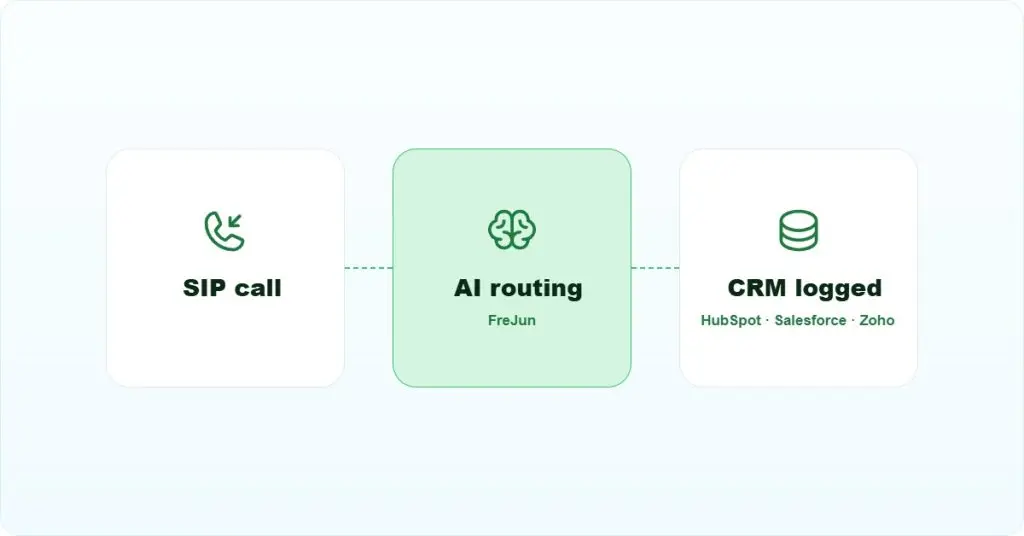
- CRM Integration: Seamlessly connect FreJun to leading CRMs like Salesforce, Zoho, and HubSpot. This integration ensures every call, contact, and note is automatically logged, eliminating manual entry and enabling sales and support teams to maintain continuity in every conversation.
- Real-Time Analytics: Monitor key performance indicators such as call duration, volume, response times, and outcomes. Managers can use these insights to identify top-performing agents, optimize call handling processes, and make data-driven decisions for improving customer experience.
- Call Recording: Record and securely store all business calls with full compliance to GDPR and industry standards. These recordings are invaluable for training, resolving disputes, auditing interactions, and ensuring consistent service quality.
- Click-to-Call: Reduce time spent dialing and increase efficiency by enabling one-click calling from within CRMs, helpdesks, or email platforms. This eliminates delays and improves outbound call rates for sales, support, and operations teams.
- Smart Routing: Direct incoming calls to the right department or team member based on predefined rules such as availability, expertise, or customer type. This ensures that clients are always connected with the most qualified agent without unnecessary transfers.
By combining these powerful tools, FreJun transforms how organizations communicate, enabling smarter workflows, better client experiences, and a stronger foundation for growth in remote or hybrid business environments. This makes it a perfect fit for businesses seeking a reliable Softphone Implementation Strategy that scales with their teams.
FreJun’s Edge in a Competitive Softphone Market
FreJun stands out in the crowded VoIP and softphone market by offering a powerful blend of usability, performance, and scalability that today’s distributed teams demand. Its user-friendly dashboard and intuitive interface make it easy for employees of all technical backgrounds to adopt and use it effectively. Whether you’re onboarding new hires or training customer service teams, the simplicity of the platform dramatically reduces setup time, ensuring business continuity without communication breakdowns. For businesses operating across Belgium and beyond, incorporating FreJun into their Softphone Implementation Strategy means reducing technical friction and increasing operational readiness across all departments.
Beyond usability, FreJun places a strong emphasis on security and flexibility, two pillars essential to modern remote operations. Voice data is protected through end-to-end encryption and GDPR-compliant protocols, helping businesses maintain customer trust while meeting legal obligations. Its cross-device compatibility ensures that employees can take calls and access logs from their desktops, tablets, or mobile phones, maintaining productivity no matter where they’re located. With robust features like click-to-call, smart call routing, and advanced analytics, FreJun offers more than just a phone system; it’s a comprehensive communication platform. For any company prioritizing a secure and efficient Softphone Implementation Strategy, FreJun proves to be a future-proof and strategic choice.
Implementation Best Practices with FreJun
Rolling out a Softphone Implementation Strategy requires more than just software installation; it demands clear planning, communication alignment, and performance evaluation. For remote teams in Belgium, a smooth implementation ensures minimal disruption and faster adoption. From preparing team members to optimizing workflows post-launch, these five strategic steps form the foundation of a successful deployment. Each step plays a role in aligning technology with daily operations and long-term goals.
1. Define Roles and Call Flows
Before deploying any softphone system, businesses must clearly define internal roles and responsibilities. Establishing structured call flows, such as routing customer calls based on department or expertise, reduces confusion and improves resolution times. FreJun simplifies this with smart routing features that adapt to your custom flowcharts. This clarity is essential for team productivity and customer satisfaction.
2. Prepare Teams with Onboarding Sessions
Adoption begins with understanding. Onboarding webinars or short tutorials help staff learn the ins and outs of using FreJun efficiently. Emphasis on hands-on sessions improves confidence and reduces tech-related stress during the transition. Proper onboarding leads to faster system utilization and fewer errors. It also boosts long-term retention of communication best practices.
3. Monitor Metrics from Day One
FreJun’s real-time analytics dashboard allows managers to track performance from the first call. Metrics such as call duration, volume, and responsiveness give actionable insights into user engagement and process efficiency. Monitoring from day one ensures transparency and creates a feedback loop. With benchmarks in place early, continuous improvement becomes easier.
4. Customize Integrations
One of FreJun’s core strengths is seamless integration with tools teams already use, like CRMs, calendars, and helpdesk systems. Custom integrations reduce toggling between platforms, streamlining daily tasks, and centralizing communication data. This makes collaboration faster and more accurate across departments. Tailoring FreJun to fit existing workflows improves system value.
5. Review & Optimize
Implementation is not a one-time event; it’s an evolving strategy. Use FreJun’s call logs and performance metrics to regularly assess how the platform is being used. Spot patterns in missed calls, delays, or resolution gaps and take corrective actions. This continuous review cycle turns insights into action, driving operational excellence over time.
Key Takeaways
Softphones have become a cornerstone of efficient communication for modern businesses, especially those operating across different locations and time zones. Unlike traditional phone systems, they require no physical hardware and allow teams to stay connected through desktops, laptops, or mobile devices. Their affordability, ease of setup, and cross-device functionality make them especially appealing to small teams and growing startups, while their scalability ensures large enterprises can onboard new users without infrastructure delays. For businesses looking to stay agile, Softphones are not just a convenience; they are a strategic asset.
FreJun amplifies these inherent softphone advantages by offering a highly intuitive interface, seamless integrations with leading CRMs, and advanced call analytics. With features like smart call routing, voicemail transcription, and live monitoring, FreJun transforms everyday communication into a productivity driver. Belgium’s legal framework actively supports remote work, including formal definitions of telework and employer responsibilities as outlined by Belgium’s Official Telework Guidelines from the Federal Public Service for Employment. Teams using FreJun often experience smoother workflows, faster issue resolution, and stronger customer relationships. These performance benefits highlight FreJun’s value as more than just a calling solution; it’s a communication optimizer purpose-built for today’s dynamic work environments.
Final Thoughts

FreJun is more than just a softphone solution; it’s a complete communication partner designed for forward-thinking businesses. In an era where seamless remote collaboration is non-negotiable, FreJun empowers teams with tools that are smart, scalable, and incredibly easy to use. From real-time analytics to deep CRM integrations, every feature is engineered to enhance performance, improve responsiveness, and simplify day-to-day operations. Whether you’re a growing startup or an established enterprise, FreJun adapts to your needs without compromising on quality or compliance.
What truly sets FreJun apart is its dedication to helping teams work better, faster, and more securely. With GDPR-compliant architecture, cross-device functionality, and 24/7 customer support, it eliminates the friction that typically comes with remote communication tools. Businesses that prioritize a Softphone Implementation Strategy with FreJun aren’t just upgrading their telephony systems; they’re future-proofing their workflows. For any company serious about efficiency, clarity, and consistent connectivity, FreJun is the smart choice to lead the way.
Further Readings – Virtual Phone Solutions for Sweden-US Business Communication
FAQs
FreJun works effortlessly across desktops, laptops, tablets, and smartphones, allowing complete flexibility without hardware limitations.
FreJun offers a simple, intuitive setup that makes the transition easy for any team, even without technical experience.
FreJun follows strict GDPR compliance and uses end-to-end encryption to ensure every conversation stays confidential and protected.
FreJun comes with built-in analytics and performance tracking, helping managers make better decisions and boost overall team efficiency.
FreJun ensures consistently high call quality through advanced routing, optimized audio codecs, and reliable global infrastructure, making every conversation clear and professional.
Much of the configuration, headset setup, and CRM pairing logic carries over between Belgium and France, since both markets rely on similar SIP trunking and VoIP standards. For region-specific notes on number porting, French regulatory requirements, and rollout sequencing, see our guide on deploying softphones across French teams.
The core softphone mechanics stay the same, but connectivity resilience, PBX interoperability, and local carrier integration often need separate attention before standardising across a distributed team. Our overview of softphone adoption across South African teams walks through those deployment specifics.
Italian teams usually need extra clarity on vendor selection, adherence to local telephony regulations, and how the softphone ties into existing CRM or helpdesk tooling. See our practical walkthrough on Italian business softphone implementation tactics for the regional adjustments.
Most of the configuration principles translate directly, though UK number porting, PSTN interconnects, and Ofcom-related compliance steps often require a slightly different sequence. Our primer on UK business softphone deployment overview outlines those key adjustments.
Yes, the headline capabilities translate well across European markets, though numbering conventions, Swedish CRM integration patterns, and team-call workflows can vary. For details tailored to Nordic teams, see our notes on Sweden remote team softphone integration.