 Skip to content
Have you ever noticed how businesses handle customer calls that come in and always seem to get transferred to the right person without delay? There is technology that makes that happen without a hitch through call routing that routes calls to the appropriate destination.
With the appropriate telecom routing solution, you can manage the flow of calls automatically, assign them based on skills and even monitor the calls in real time to ensure that small or large teams can function effectively.
Table of contents
What Is Call Routing?
Have you ever noticed how businesses connect every customer call to the right person in a matter of seconds? Call routing is the technology behind everything you hear when you pick up the phone, routing customer calls to the right person or department.
With the help of call routing technology, businesses can handle large volumes of customer calls without a hitch, ensuring customers call handling is the smoothest experience for everyone.
Phone system routing can help your business do things differently with the right approach. With the help of small and large telecom routing, you can automatically manage your phone call flow, skills-based calling and more.
How Does Call Routing Work?
Telecom routing starts when an incoming call arrives at the system. Typically, the call is first answered by an IVR which prompts the caller to speak their reason for calling or provide their account information. Once the IVR has provided the system with this information, it knows what type of flow to route the call on.
After the proper flow has been determined, the call is queued to a available agent. The flow is determined by certain algorithms based on agent skills and availability, customer request, etc.
What Are the Benefits of Call Routing?
Implementing an effective call routing system offers several advantages for businesses:
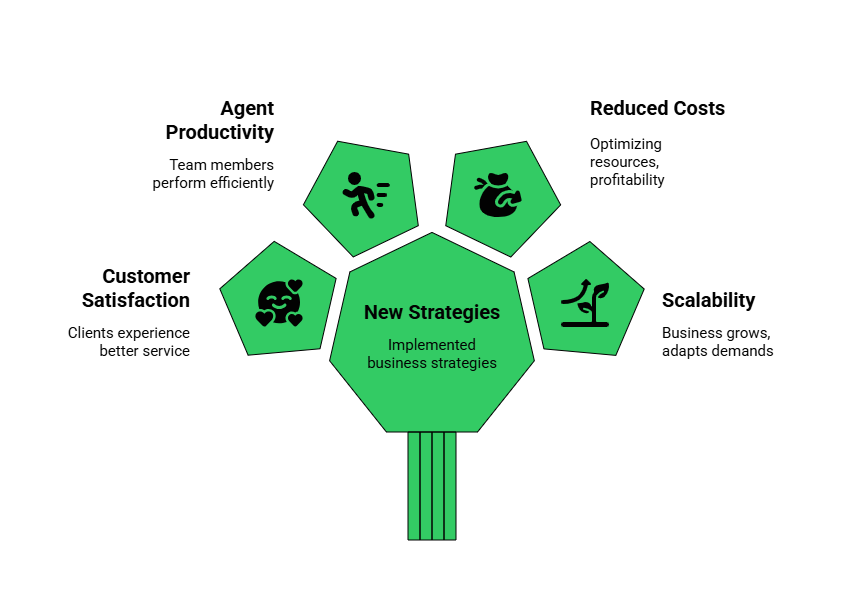
- Improved Customer Satisfaction: By connecting customers to the most suitable agent quickly, businesses can resolve issues more efficiently, leading to higher satisfaction levels.
- Enhanced Agent Productivity: Agents can focus on handling calls that match their expertise, reducing time spent on unfamiliar issues and increasing overall productivity.
- Reduced Operational Costs: Efficient call distribution minimizes idle time for agents and reduces the need for additional staffing during peak periods.
- Scalability: As businesses grow, call routing systems can be adjusted to handle increased call volumes without compromising service quality.
These benefits contribute to a more streamlined operation, allowing businesses to provide better service while optimizing resources.
What Are the Different Types of Call Routing?
There are several strategies for call routing, each designed to meet specific business needs:

- Skills-Based Routing: Directs calls to agents who possess the specific skills required to address the customer’s issue.
- Time-Based Routing: Routes calls based on the time of day or the caller’s time zone. This strategy ensures that calls are directed to agents who are available during the caller’s preferred hours.
- Geographic Routing: Directs calls to agents or departments located in specific regions. This method is particularly useful for businesses with multiple locations or international operations.
Each of these routing methods can be tailored to fit the unique requirements of a business, enhancing the efficiency and effectiveness of customer call handling.
How Can You Implement Call Routing Best Practices?
To maximize the effectiveness of your call routing system, consider the following best practices:

1. Define Clear Routing Criteria
Establishing clear routing criteria is essential for effective call management. Businesses should set specific rules for how calls are directed, considering factors like agent skills, customer priority, or time of day. This ensures callers are connected to the most appropriate agent quickly, improving satisfaction and efficiency.
2. Regularly Update Routing Rules
Routing rules should evolve as business needs change. Regular updates ensure that phone system routing aligns with new priorities, team changes, or service adjustments. Keeping these rules current prevents bottlenecks and maintains smooth customer call handling across all channels.
3. Monitor and Analyze Call Data
Using analytics to monitor call patterns is critical for optimizing telecom routing. Businesses can track metrics like call volume, wait times, and resolution rates to identify bottlenecks. Informed adjustments based on this data enhance call flow and overall operational efficiency.
4. Provide Agent Training
Proper agent training ensures that staff can handle calls effectively and confidently. Well-trained agents improve first-call resolution and contribute to better customer call handling. Continuous training also helps teams adapt to updated routing rules and new communication tools, maximizing productivity.
By adhering to these best practices, businesses can optimize their phone system routing, leading to more efficient operations and better customer experiences .
Key Takeaways
The best customer experience starts with efficient call routing. Learn how to route calls like a pro. Call routing is the process of determining which available agent should answer a customer call. Defining routing criteria, updating call rules, monitoring calls, and training agents enables businesses to route customer calls to the appropriate agent faster and more efficiently.
Optimize call flow and reduce customer wait times by setting clear routing criteria, updating rules regularly, and monitoring call data. This approach enhances customer call handling and satisfaction across all channels. Following best practices for phone system routing also boosts agent productivity and overall business efficiency. Analytics from call patterns help businesses identify trends and make informed decisions. Get started today by signing up with FreJun.
Final Thoughts
An effective call routing solution is an absolute necessity for businesses looking to streamline their call management and improve customer satisfaction. Understanding the various types of routing and routing best practices can help businesses configure a system that’s perfect for their needs, resulting in more efficient call management and better service for customers.
With customer expectations continually increasing, harnessing technology and seamlessly integrating them into your workflow, alongside a platform such as FreJun, can empower businesses to stay one step ahead of the competition.
Further Reading – Healthcare Call Center Automation: Enhancing Patient Experience
Book a FreJun Demo to see how FreJun can transform your business communication
FAQs
It is the procedure how to route incoming calls to the right person or department according to certain rules.
Now the caller gets connected to the right person fast, so both caller and callee are satisfied.
Most of the modern call routing systems work with ordinary phones, computer, or mobile phones.
Yes. Properly trained agents will answer calls efficiently and the service quality will be higher.
Certainly. You may define rules by your own priorities, agent’s skills, time of the day, etc.
Yes, certainly. Many systems offer call recording as quality or compliance feature.
Many call routing systems have analytics dashboard that show numbers of calls, wait time, queue length, agent performance, etc.
Yes, they may integrate with CRM, helpdesk, team collaboration, and other software.
Yes. Most of the providers have chat, email, and phone support to help with setup and configure the system.