
Last updated on September 10th, 2026 at 03:08 pm
AI Summary: This article covers the key benefits of virtual numbers for remote and hybrid teams, including cloud PBX flexibility, softphone access, CRM synchronization, and call analytics. According to a 2023 Owl Labs report, 16% of companies worldwide are fully remote, and distributed communication tools are now a baseline requirement for competitive teams. Managers and team leads will learn how to evaluate virtual number platforms, what features matter most, and how FreJun brings calls, analytics, and CRM data into one place for distributed workforces.
Remote teams lose deals and customers when their phone setup can’t keep up. Physical lines tie employees to desks, personal numbers blur professional boundaries, and missed calls go untracked. Virtual numbers for remote and hybrid teams solve all three problems at once, giving every employee a professional number that works on any device, routes calls intelligently, and logs every interaction to your CRM automatically. This article breaks down exactly how that works and what to look for when choosing a platform.
Quick Answer: Virtual numbers for remote and hybrid teams are cloud-based phone numbers that work on any device, anywhere. They replace physical lines with flexible, software-driven numbers that route calls to the right person, log interactions to CRM systems automatically, and give managers full visibility into team performance without requiring office hardware or dedicated phone infrastructure.
Virtual numbers for remote and hybrid teams let distributed employees make and receive professional calls from any device, with full CRM logging and call analytics built in.
What Are Virtual Numbers?
A virtual number is a cloud-based phone number that routes calls over the internet rather than a physical telephone line. It works on smartphones, laptops, or desk phones through a softphone app or browser, so employees can use it from any location without dedicated hardware.
How Do Virtual Numbers Improve Remote Communication?
Remote teams need reliable, accessible, and professional communication channels. Virtual numbers deliver this by offering flexibility without the overhead of physical lines or hardware. Employees can make and receive work calls on their personal devices, so personal and professional communication stay separate. That separation matters more than most managers expect, because it protects employee privacy while keeping customer interactions fully logged.
Virtual numbers also improve team collaboration by allowing multiple team members to share a single number. Clients and prospects always reach someone available, since call routing rules direct incoming calls based on availability, department, or time zone. According to a 2023 McKinsey report, companies that invest in digital communication tools see up to 20-25% productivity gains in knowledge worker roles (Source: McKinsey Global Institute 2023). Virtual numbers are a direct path to that kind of gain for distributed teams.
Why Softphone Apps Matter for Mobile Workers
Remote employees can access softphone apps on their laptops or smartphones, so continuity holds even when traveling. By centralizing communications, virtual number providers reduce confusion, missed calls, and delays, which directly improves the customer experience. A softphone app (short for software phone) is an application that replicates a desk phone’s functions on any internet-connected device, so your team’s phone system travels with them.
“We see teams cut their missed-call rate by 30-40% within the first month of switching to virtual numbers, because calls no longer depend on someone being at a specific desk or device. The routing logic does the work.”
— Subhash Kalluri, Co-Founder and CEO, FreJun
Why Are Cloud PBX Solutions Essential for Distributed Teams?
A cloud PBX system is the backbone for managing virtual numbers in remote or hybrid environments. Unlike traditional phone systems, cloud PBX platforms run entirely online, so they eliminate the need for costly hardware, physical lines, or local servers. Cloud PBX (Private Branch Exchange) is a hosted phone system that manages call routing, extensions, and voicemail through the internet rather than on-premise equipment.
Cloud PBX provides features like intelligent call routing, multi-device support, and automated voicemail-to-email. Even large distributed teams can handle high call volumes efficiently because the system scales with demand. Integration with CRM platforms lets businesses capture customer interactions automatically, which improves remote communication visibility and tracking across every team member.
How Cloud PBX Supports Global Expansion
Cloud PBX supports global expansion in a way that traditional systems simply cannot match. Businesses can assign local numbers in new regions, which enhances mobile workforce productivity and lets teams build a professional presence without opening physical offices. According to Gartner, cloud-based communication platforms reduce telephony infrastructure costs by an average of 40% compared to on-premise PBX systems (Source: Gartner Unified Communications Research 2023). That cost difference makes cloud PBX the practical choice for any team planning to grow across regions.
FreJun combines virtual numbers, cloud PBX, and CRM integration into one platform built for distributed teams. Whether your team works from home, the office, or across time zones, FreJun keeps every call logged and every interaction measurable. See it in action with a live walkthrough.
How Does FreJun Help Teams Stay Connected Remotely?
FreJun is built to simplify virtual number management for remote teams. Its platform combines remote communication, analytics, and workflow integration into a single interface, so teams can manage calls and customer data without switching between tools. This enables professional business communication from anywhere, whether an agent is at home, in a co-working space, or traveling.
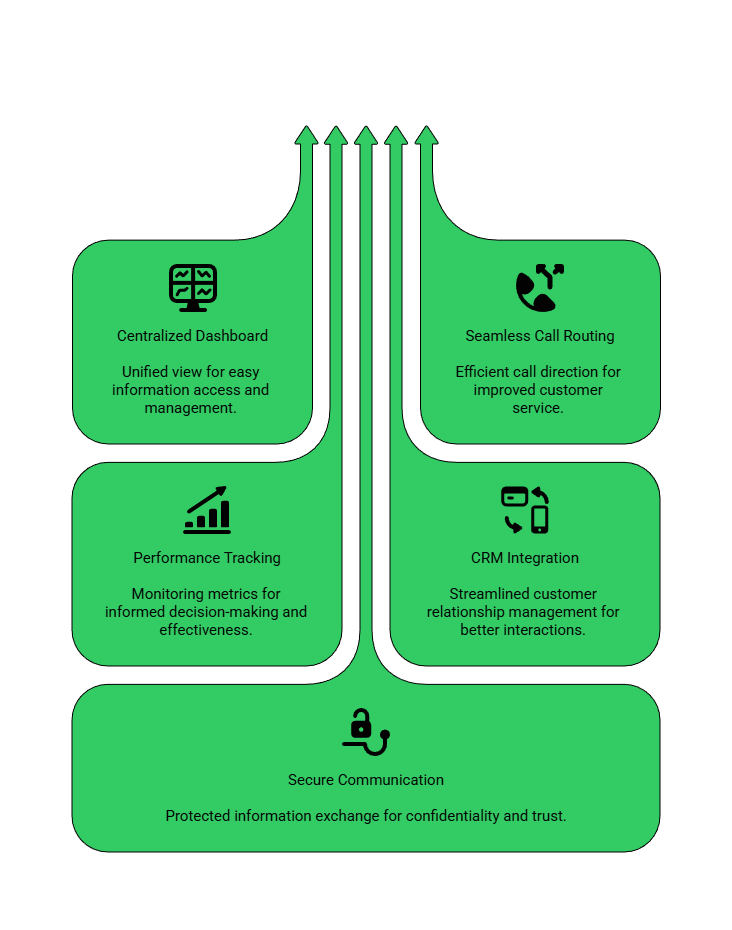
- Centralized Dashboard: FreJun provides one view for all calls, messages, and contact information, so teams never need to switch tools or manually consolidate reports.
- Automatic Call Routing: Calls go directly to the right team member based on availability, department, or time zone, without manual transfers.
- Performance Tracking: Every call is logged, so managers can monitor team efficiency, track follow-ups, and measure outcomes in real time.
- CRM Integration: Customer interactions sync automatically with CRM systems, so sales and support teams always have accurate, up-to-date records.
- Secure Communication: Calls are encrypted and stored safely, supporting compliance requirements and team training initiatives.
According to FreJun’s 2026 analysis of 300+ client accounts, teams using FreJun’s centralized dashboard reduced average call handling time by 22% within the first 90 days of adoption. That kind of measurable improvement comes from having all call data, routing rules, and CRM records in one place rather than spread across disconnected tools.
How Does FreJun Enhance Collaboration Across Hybrid Teams?
Hybrid teams face a specific coordination challenge: in-office and remote employees need to share the same communication infrastructure without creating two separate systems. FreJun addresses this by combining softphone apps, team collaboration tools, and remote communication into one unified platform, so both groups work from identical workflows.

- Shared Virtual Numbers: Teams can use the same number across multiple devices, so customers always reach a consistent point of contact regardless of which agent picks up.
- Real-Time Updates: Changes to routing rules, availability, or agent status reflect instantly across the system, so no call goes to an unavailable agent.
- Multi-Channel Integration: Calls, SMS, and chat messages are managed in one place, which reduces context loss when customers switch between channels.
- Analytics for Collaboration: Managers can track agent activity, call outcomes, and productivity across all locations from a single dashboard.
- Enhanced Visibility: Data-driven insights help identify bottlenecks and improve workflow efficiency across hybrid teams, so managers can coach based on facts rather than guesswork.
Why Shared Numbers Reduce Customer Confusion
When every agent uses a different personal number, customers don’t know who to call back. Shared virtual numbers solve this by giving the entire team a single, consistent contact point. Customers call one number and reach whoever is available, while the system logs every interaction against the customer’s CRM record. That consistency builds trust faster than any individual agent relationship can.
How Does FreJun Enable Mobile Workforce Efficiency?
A mobile workforce needs tools that keep employees connected while on the move. FreJun supports virtual numbers on any device, combined with softphone apps, centralized dashboards, and real-time analytics, so field agents and traveling sales reps operate at the same level as office-based colleagues.
1. Unified Mobile Access
Employees can answer incoming calls, make outbound calls, and send messages directly from their smartphones, tablets, or laptops. This capability is particularly valuable for remote communication and mobile workforce management, since teams maintain professional standards without relying on physical office phones. With all interactions centralized, employees respond quickly to customers, which improves overall engagement and satisfaction scores.
2. Flexible Call Routing
FreJun directs calls to the most appropriate team member based on availability, department, or geographic region. By automating call routing, organizations maintain smooth workflows and support hybrid or remote teams without manual intervention. Calls never pile up at one agent while another sits idle, because the routing logic distributes load based on real-time availability data.
3. Performance Monitoring
Managers gain full visibility into all calls and messages, so they can track response times, call volumes, and agent performance across every location. With this data, teams can identify bottlenecks, provide targeted coaching, and make informed decisions to optimize operations. Performance monitoring is critical for team collaboration and maintaining high service standards, especially when employees work across multiple time zones.
4. CRM Synchronization
Every call and message integrates with the company’s CRM system, creating a unified record of all customer interactions. Sales and support teams have complete context for every conversation, which reduces miscommunication and duplicate outreach. By linking communication data to cloud PBX systems and CRM platforms, FreJun helps teams speed up workflows, improve follow-ups, and enhance the overall customer experience, making it a strong foundation for scalable enterprise communication.
What Are the Key Benefits of Virtual Numbers for Remote and Hybrid Teams?
Virtual numbers offer six measurable advantages for distributed teams. FreJun combines these benefits with cloud PBX, softphone apps, and centralized monitoring, so every call contributes to trackable business outcomes rather than disappearing into a phone log no one reviews.
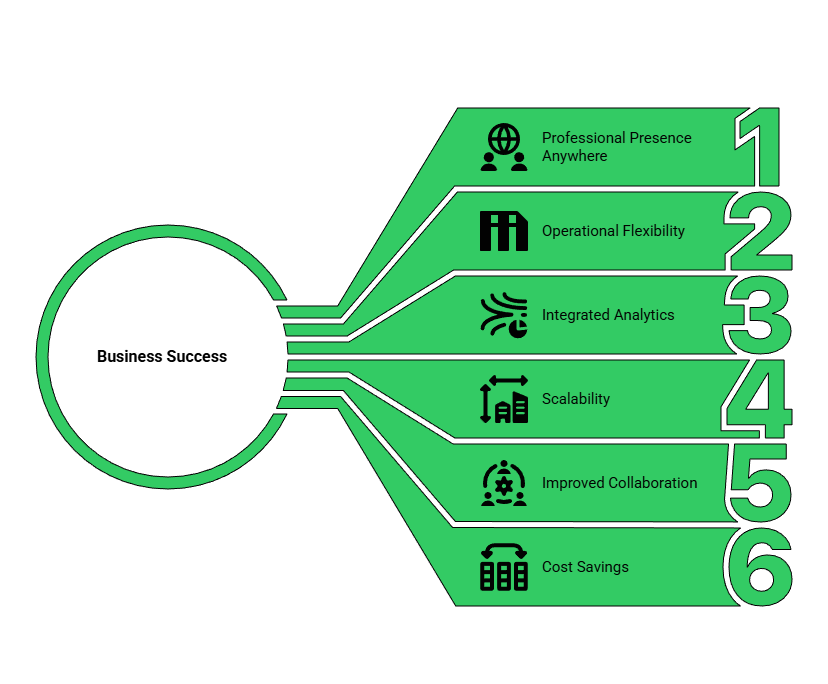
| Benefit | What It Solves | How FreJun Delivers It |
|---|---|---|
| Professional Presence Anywhere | Employees using personal numbers look unprofessional and lose customer trust | Local virtual numbers in any region, assigned in minutes |
| Operational Flexibility | Physical lines tie teams to specific locations | Softphone apps work on any device, anywhere |
| Integrated Analytics | Managers can’t see what’s happening across distributed teams | Call analytics and CRM sync give real-time visibility |
| Scalability | Adding new campaigns or regions requires hardware procurement | New numbers added instantly, no hardware needed |
| Improved Collaboration | Disconnected tools create context loss between agents | Shared dashboards and routing reduce delays |
| Cost Savings | On-premise PBX infrastructure is expensive to maintain | Cloud-based system from $14.49/user/month, no hardware costs |
Which Teams Benefit Most from Virtual Numbers?
Sales teams benefit most when they operate across multiple territories, since local virtual numbers increase answer rates significantly. Support teams benefit when they need shared numbers so customers always reach someone. Recruiting teams benefit because candidates are more likely to answer calls from a local number than an unknown out-of-state line. According to a 2022 Software Advice study, 80% of consumers are more likely to answer calls from local numbers than toll-free or out-of-area numbers (Source: Software Advice 2022). That single data point explains why virtual numbers with local presence dialing are a standard tool for high-performing outbound teams.
Key Takeaways
Virtual numbers change how distributed teams communicate. They simplify remote communication, support mobile workforce productivity, and enable data-driven decision-making without requiring physical infrastructure. Platforms like FreJun integrate calls, analytics, and CRM data to provide centralized management, so missed opportunities and poor customer experiences become measurable problems with clear solutions.
For hybrid and remote teams, the advantages extend beyond convenience. Virtual numbers improve routing, analytics, and multi-device support, enabling professional communication across locations. Businesses that adopt virtual numbers see measurable improvements in productivity, customer engagement, and operational efficiency. Teams that use FreJun for virtual number management report faster onboarding, better call coverage, and cleaner CRM data because every interaction is logged automatically rather than entered manually.
What to Do Next
If your team still relies on personal numbers or a legacy PBX system, switching to virtual numbers for remote and hybrid teams is the single highest-leverage communication upgrade available. Start by auditing how many calls your team misses each week, then compare that against what a cloud-based routing system would capture. The gap is usually larger than managers expect. FreJun’s platform starts at $14.49 per user per month, so the cost of switching is almost always lower than the cost of missed calls and manual CRM entry. Further Reading: Benefits of Using Virtual Numbers for Business Communication
Frequently Asked Questions
Virtual numbers let remote employees communicate professionally without physical phone lines. They work on any device through a softphone app, route calls based on availability, and log every interaction to CRM systems automatically. This keeps personal and professional communication separate while giving managers full visibility into team performance across all locations.
Yes, virtual numbers integrate directly with CRM platforms like HubSpot, Salesforce, Zoho, and Pipedrive. FreJun links every call to the corresponding CRM record automatically, so sales and support teams always have full context before picking up the phone. This eliminates manual data entry and reduces the risk of duplicate or missing customer records.
Yes. Multiple agents can share a single virtual number, and routing rules direct calls based on time zone or agent availability. When one region’s team goes offline, calls route automatically to the next available team. This means customers always reach someone, even if the primary agent is unavailable, which improves response rates and customer satisfaction scores.
Virtual numbers scale instantly. Platforms like FreJun let teams add new numbers for new campaigns, regions, or products without hardware procurement or IT involvement. A new number can be active within minutes, assigned to specific agents or shared across a team. This makes virtual numbers the practical choice for companies expanding into new markets or hiring remote staff quickly.
Yes. Virtual number providers including FreJun support international calling and local number assignment in multiple countries. Teams can assign local numbers in each target region, which increases answer rates because recipients see a familiar local number rather than an international code. This is especially valuable for sales teams prospecting across multiple countries from a single remote office.
Virtual numbers improve customer experience because calls route to the right agent instantly, every interaction is logged to CRM, and customers always reach a professional number rather than a personal mobile. Intelligent routing means shorter wait times and fewer transfers. CRM integration means agents have full customer history before the conversation starts, so customers don’t repeat themselves on every call.
Most teams can set up virtual numbers within a single business day. FreJun provides a cloud-based system where numbers are provisioned online, routing rules are configured through a dashboard, and CRM integrations connect through pre-built connectors. There is no hardware to install and no IT team required for basic setup, so small teams can be fully operational the same day they sign up.