AI Summary: This article compares the top 7 pipecat voice api india options for developers building real-time AI voice agents in India in 2026, evaluating each on WebSocket latency, model compatibility, INR pricing, and TRAI compliance. As of 2026, the global conversational AI market is projected to exceed $29 billion by 2028, according to MarketsandMarkets, making telephony infrastructure selection a foundational decision for any AI product team. Developers need a voice API that delivers sub-100ms latency, integrates with any STT, LLM, or TTS provider without lock-in, and handles carrier-level compliance automatically. FreJun Teler meets all three requirements, with outbound calling from ₹0.15/minute and raw WebSocket streaming that works with any AI stack the team already uses.
Key criteria in this comparison: We ranked these platforms on real-time WebSocket latency, model-agnosticism, pricing transparency in INR, TRAI compliance support, and documentation quality, since these are the factors that most affect a developer team’s build speed and total cost when choosing a pipecat voice api india solution.
Quick Answer: The best pipecat voice api india in 2026 is FreJun Teler, which delivers sub-100ms WebSocket streaming latency, a fully model-agnostic architecture compatible with 10+ STT, LLM, and TTS providers, and outbound calling from ₹0.15/minute with 3,000 free minutes on first upgrade. Teler is purpose-built for AI voice agent infrastructure, unlike general CPaaS platforms that abstract the audio layer and add latency.
The best pipecat voice api india option for developers building AI voice agents is Teler, which provides raw WebSocket audio streaming at sub-100ms latency and works with any STT, LLM, or TTS provider the team already uses.
What is Pipecat?
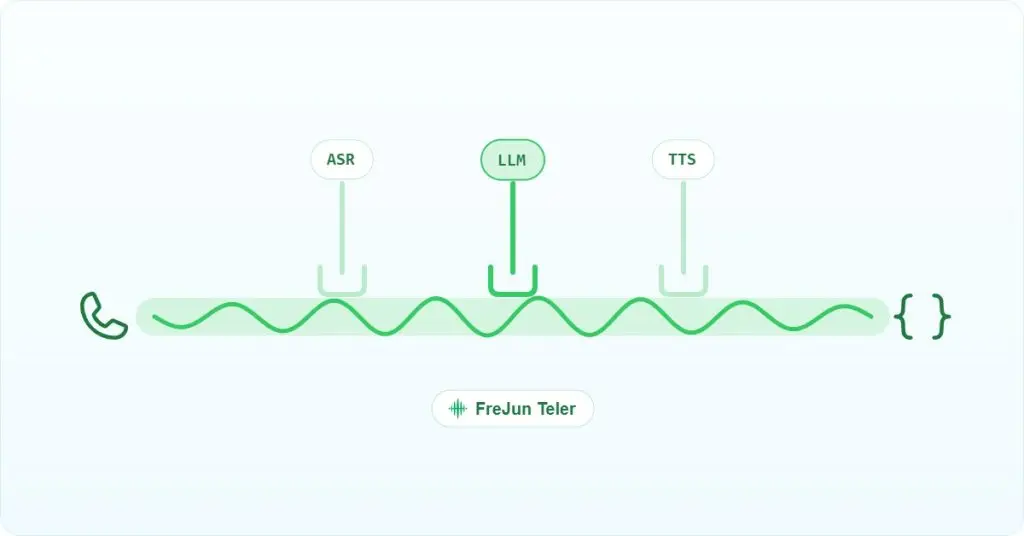
Pipecat is an open-source Python framework for building real-time AI voice and multimodal agents. Developers use it to orchestrate the full voice pipeline: capturing audio from a caller, running it through a Speech-to-Text (STT) engine that converts voice to text, passing that text to a Large Language Model (LLM) that decides the response, converting the response back to audio via a Text-to-Speech (TTS) engine, and playing it back to the caller. Because Pipecat handles the orchestration logic, developers need a separate telephony layer underneath it to connect that pipeline to real phone calls over the PSTN (Public Switched Telephone Network).
That telephony layer is what a pipecat voice api india provider supplies: carrier connectivity, virtual phone numbers, and a real-time audio transport path, either via WebSocket or SIP (Session Initiation Protocol), the standard protocol for establishing voice calls over the internet. Choosing the right voice API for Pipecat in India means finding a provider that delivers raw audio at the format and latency Pipecat expects, supports Indian virtual numbers, and meets TRAI (Telecom Regulatory Authority of India) carrier compliance requirements.
As of 2026, India’s AI voice agent market is growing rapidly, driven by demand for automated customer support, appointment scheduling, and outbound campaign automation across sectors including BFSI, e-commerce, and healthcare. According to MarketsandMarkets, the global conversational AI market is projected to exceed $29 billion by 2028, and India is one of the fastest-growing regions in that expansion. What separates the best pipecat voice api india platforms from basic CPaaS (Communications Platform as a Service) tools is the ability to stream raw, unprocessed audio directly to the developer’s server over a persistent WebSocket connection, so the AI pipeline can process it in real time without a proprietary conversion layer adding latency. Teams building similar Pipecat-based voice agents outside India can review the pipecat voice API options available in the USA for comparable latency and pricing benchmarks in that market.
Which pipecat voice api india providers rank highest in 2026?
The table below compares all seven pipecat voice api india providers on their best use case, starting price, and free trial availability so you can quickly identify the right fit before reading the full profiles.
| # | Provider | Best for | Starting price | Free trial |
|---|---|---|---|---|
| 1 | FreJun Teler | AI voice agent infrastructure | ₹600/channel/month + ₹0.15/min outbound | Yes 3,000 free minutes on first upgrade |
| 2 | Twilio | Global CPaaS | Contact sales | Check website |
| 3 | Plivo | Voice app quickstarts | Contact sales | Check website |
| 4 | Telnyx | Low-cost carrier voice | $0.002/minute | Check website |
| 5 | Exotel | India voice workflows | Contact sales | Check website |
| 6 | Vonage API | General CPaaS teams | Contact sales | Check website |
| 7 | Daily | WebRTC voice agents | Contact sales | Check website |
Scroll for the full breakdown of each pipecat voice api india tool, including features, pros, cons, pricing, and ideal use case.
How do you choose the best pipecat voice api india in 2026?
Step 1: Understand what Pipecat needs from a telephony layer
Pipecat expects raw, low-latency audio it can feed directly into an STT engine. The ideal format is L16 at 8000 Hz or 16000 Hz, delivered over a persistent WebSocket connection. A WebSocket is a persistent, full-duplex connection that keeps the audio channel continuously open between the caller and the developer’s server, unlike standard HTTP which closes after each request. If your chosen voice API abstracts the audio into a proprietary format or adds a conversion layer, Pipecat’s pipeline has to resample or transcode before the STT engine can process it. That extra step adds latency and complexity. So the first question to ask any pipecat voice api india provider is: does it stream raw audio over WebSocket, and in what format?
Step 2: Choose your integration path – WebSocket or SIP
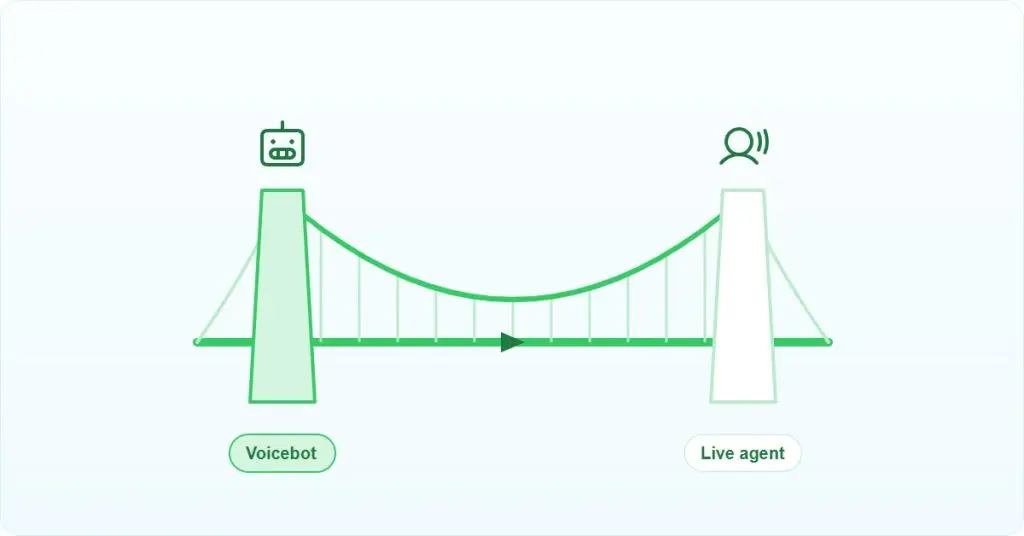
Two integration paths exist for connecting a voice API to Pipecat. WebSocket streaming is the lower-latency path: the voice API opens a persistent connection to your server and streams raw audio frames in real time. SIP trunking is the enterprise path: it uses the Session Initiation Protocol to connect existing SIP-enabled platforms or AI providers directly to the carrier network. WebSocket is better for conversational AI agents that need sub-100ms response loops. SIP is better when you are connecting an existing PBX, contact center platform, or AI provider like Vapi or Retell that already speaks SIP.
Teams that want a higher-level, agent-first alternative to a raw voice API layer can also evaluate the Vapi voice API options in India before deciding on a Pipecat-based build. Most Pipecat deployments start with WebSocket and add SIP later when scaling to enterprise telephony infrastructure. Developers evaluating alternative frameworks may also want to compare LiveKit voice API options in the USA before settling on a Pipecat-based architecture. Similarly, teams considering a managed conversational AI layer instead of raw Pipecat orchestration can compare the Retell AI voice API options in India for a similar SIP-based integration path.
Step 3: Check TRAI compliance requirements for India
TRAI (Telecom Regulatory Authority of India) governs all outbound calling in India. AI voice agents making outbound calls must comply with TRAI’s rules: no calls after 9 PM IST, mandatory NCPR (National Customer Preference Register) scrubbing to avoid calling opted-out numbers, and use of the correct number series. Promotional calls must use 140-series numbers. Transactional calls use 1600-series numbers. Any pipecat voice api india provider you choose must support these number series and handle DLT (Distributed Ledger Technology) registration, which TRAI requires for all commercial communications. Skipping this step can result in number blocks and regulatory penalties.
Step 4: Evaluate pricing in INR against your call volume
Voice API pricing has several components: channel cost (a fixed monthly fee per concurrent call slot), per-minute outbound and inbound rates, media streaming fees, and recording storage costs. Calculate your realistic monthly cost by multiplying expected call minutes by the per-minute rate, then adding channel costs. For a team running 10,000 outbound minutes per month on Teler, the cost is roughly ₹1,500 in calling fees plus ₹6,000 in channel costs for 10 channels, totalling around ₹7,500 per month before media streaming. Compare this against providers that charge in USD, since currency conversion adds unpredictability to your budget.
Step 5: Test latency on a real call before committing
Latency is the delay between when a person speaks and when they hear a response. The lower the latency, the more natural the conversation feels. For conversational AI agents, sub-100ms end-to-end latency is the target. General CPaaS platforms often add 400 to 800ms by abstracting the audio path. Test your chosen pipecat voice api india provider with a real call before committing to a plan. Teler offers 3,000 free minutes on first upgrade in India, which is enough to run a full integration test and validate the complete STT to LLM to TTS loop before paying for production volume.
Top 7 pipecat voice api india providers for 2026
1. FreJun Teler – Purpose-built AI voice agent infrastructure
FreJun Teler is a Voice API platform built specifically for developers integrating AI voice agents with real phone calls in India, making it the strongest pipecat voice api india choice for teams that need sub-100ms latency and zero AI provider lock-in.
Best for: AI voice agent infrastructure
Key features
- Raw WebSocket audio streaming at sub-100ms latency delivers L16/8000Hz audio directly to your Pipecat pipeline, so your STT engine receives it with no conversion layer required.
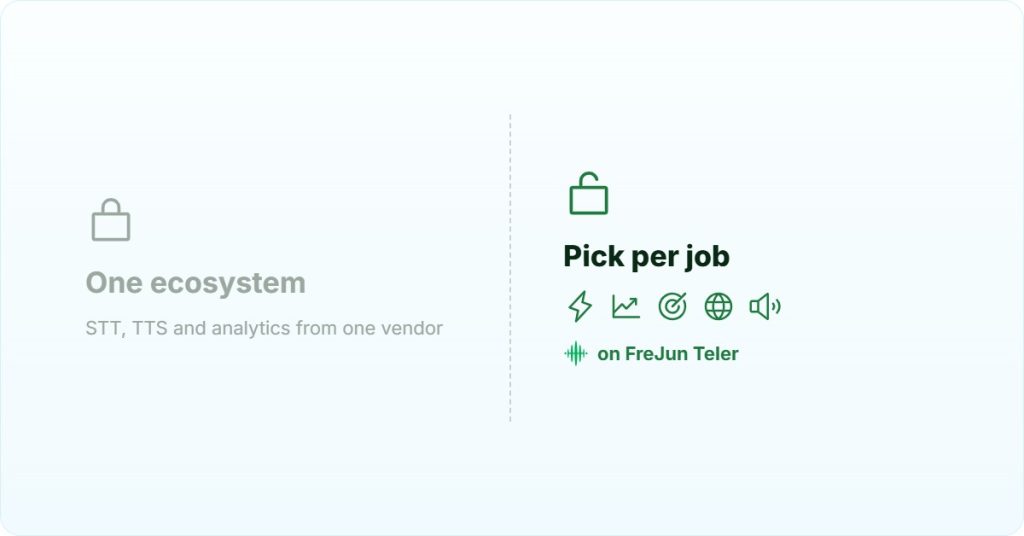
- Model-agnostic architecture means you bring your own STT (Google STT, Deepgram, Whisper, AssemblyAI), LLM (OpenAI GPT, Anthropic Claude, Google Gemini), and TTS (ElevenLabs, Google TTS, Azure TTS, Play.ht), paying those providers directly with no Teler-mandated AI stack.
- SIP trunking with TCP/TLS transport and credential-based or IP-based authentication connects existing SIP-enabled platforms directly to Teler’s carrier network for enterprise telephony deployments.
- Indian virtual numbers with TRAI-compliant outbound calling support, including 140-series promotional and 1600-series transactional number series, so your AI agent meets regulatory requirements from day one.
- Webhook callbacks fire on call start, end, and state changes, so your application logic can react to real-time call events without polling.
- REST API endpoints and auth token authentication give developers standard HTTP call control alongside the WebSocket audio stream, covering both the media path and the call control path in one platform.
- Same-day integration is achievable via the getting-started guide at Teler’s knowledge base, with no physical telecom infrastructure required.
Pros and cons
| Pros | Cons |
|---|---|
| Sub-100ms WebSocket latency is purpose-built for Pipecat’s real-time STT to LLM to TTS loop | Minimum 10 channels required to start, so very low-volume prototypes carry a fixed monthly cost |
| Fully model-agnostic: works with any STT, LLM, or TTS provider the team already uses | Elastic SIP trunking (auto-scaling without channel limits) is on the roadmap but not yet available |
| Indian virtual numbers, INR pricing, and TRAI compliance built in from the start | UAE SIP trunking requires a 6-month commitment on the pay-as-you-go plan |
Pricing
Pricing (India): ₹600/channel/month (minimum 10 channels). Outbound calling: ₹0.15/minute. Inbound calling: ₹0.10/minute. Media streaming: ₹0.15/minute. Recording and storage: ₹0.04/minute. Billing is prepaid on monthly, quarterly, half-yearly, or annual cycles. First upgrade includes 3,000 free minutes. See full pricing
Why Teler is the top recommendation
Why Teler ranks #1 for pipecat voice api india: Teler is the only provider in this list that combines sub-100ms WebSocket latency, a fully model-agnostic architecture, Indian virtual numbers with TRAI compliance, and INR pricing starting at ₹0.15/minute, making it the most complete pipecat voice api india solution for teams building production AI voice agents in India. General CPaaS platforms abstract the audio layer in ways that add 400 to 800ms of latency, which breaks the natural conversation flow that Pipecat is designed to deliver. Start building →
Teler by the numbers: Sub-100ms latency | Model-agnostic: 10+ AI providers | Virtual numbers: India and UAE | Same-day integration via WebSocket or SIP | 3,000 free minutes on first upgrade (India)
2. Twilio – Global CPaaS with WebSocket media streaming
Twilio is a global CPaaS (Communications Platform as a Service) platform for programmable voice, messaging, and telephony automation, listed as a supported pipecat voice api india provider in Pipecat’s official telephony documentation.
Best for: Global CPaaS
Key features
- WebSocket media streaming sends a persistent audio stream to your server, which Pipecat can consume as the input to its STT stage.
- REST call control lets you answer, transfer, and hang up calls programmatically via standard HTTP requests alongside the WebSocket audio path.
- SIP trunking bridges PSTN calls to your infrastructure, so you can connect existing telephony systems to your Pipecat pipeline.
- Call recording captures every conversation automatically and stores it in your dashboard for post-call analysis.
- Official SDKs in Node.js, Python, Java, PHP, Ruby, C#, and Go reduce the time to get a first call working.
Pros and cons
| Pros | Cons |
|---|---|
| Pipecat’s official telephony docs list Twilio as a supported provider with a documented entry point | Pipecat labels the Twilio telephony route as “simple” and notes it lacks advanced call-center features like transfers or reconnects |
| WebSocket transport fits Pipecat’s primary telephony pattern for basic call control | WebSocket audio is G.711 mu-law at 8 kHz, so Pipecat pipelines usually need a resample or transcode step before 16 kHz ASR models |
Pricing
Pricing: Not publicly listed for India. Contact sales for INR pricing and India virtual number availability. See full pricing
Integration with Pipecat: Twilio connects to Pipecat via the WebSocket media streaming path documented in Pipecat’s telephony overview, though the 8 kHz G.711 audio format may require resampling before your STT engine.
3. Plivo – REST and webhook voice app quickstarts
Plivo is a CPaaS for programmable voice and messaging, listed as a supported pipecat voice api india provider in Pipecat’s telephony documentation, with a REST and webhook-first integration model.
Best for: Voice app quickstarts
Key features
- Answer URL routing lets you define call logic via a webhook endpoint, so your server receives call events and responds with instructions for how the call should proceed.
- Step-by-step Voice API quickstart documentation helps developers get a first outbound or inbound call working quickly without deep telephony knowledge.
- REST number-compliance endpoint handles number registration requirements, which is relevant for India’s TRAI compliance workflow.
- Webhook-driven outbound call handling fires events to your server when call state changes, so your Pipecat pipeline can react to answered, busy, or failed call outcomes.
- Console-based Voice Application setup lets non-developer team members configure basic call routing without writing code.
Pros and cons
| Pros | Cons |
|---|---|
| Pipecat’s telephony overview lists Plivo as a supported provider with a documented integration path | The published quickstart is webhook and Answer URL first, so developers still need to build the real-time media loop themselves for a Pipecat-style agent |
| Classic REST and webhook orchestration suits quick call-control prototypes without deep infrastructure work | No India-specific pricing or TRAI compliance details were found in the available documentation |
Integration with Pipecat: Plivo connects to Pipecat via the REST and webhook telephony path, but developers need to build the real-time audio loop separately since no WebSocket streaming example is shown in the current documentation.
4. Telnyx – Carrier-network voice at low per-minute rates
Telnyx is a carrier-network voice API for programmable calling and telecom infrastructure, listed as a supported pipecat voice api india provider in Pipecat’s telephony documentation, with a starting rate of $0.002 per minute.
Best for: Low-cost carrier voice
Key features
- Carrier-network pricing at $0.002 per minute makes Telnyx one of the lowest-cost options for high-volume outbound calling when billing in USD.
- Programmable voice API with REST call control lets you manage call state, transfers, and recordings via standard HTTP requests.
- WebSocket streaming and SIP trunking both available, giving Pipecat developers a choice of integration path depending on their latency and infrastructure requirements.
- Call-control workflows let you define complex call routing logic, including branching on call outcomes and connecting multiple parties.
- Telephony number provisioning covers multiple countries, though India-specific virtual number availability was not confirmed in the available documentation.
Pros and cons
| Pros | Cons |
|---|---|
| Pipecat’s telephony overview lists Telnyx as a supported provider that fits the carrier-voice role in a vendor-flexible PSTN-bridge design | No India-specific virtual number, INR pricing, or TRAI compliance details were found in the available documentation |
| Low per-minute carrier pricing suits high-volume outbound calling use cases where cost per call matters | Audio format specification for WebSocket streaming was not confirmed in the available documentation, so format compatibility with Pipecat’s STT stage needs testing |
Pricing
Pricing: $0.002/minute for voice calls. India-specific INR pricing and virtual number costs were not publicly listed. See full pricing
Integration with Pipecat: Telnyx connects to Pipecat via the same vendor-flexible telephony path as other supported carriers, using WebSocket streaming or SIP trunking depending on the deployment architecture.
5. Exotel – India-focused cloud telephony for voice workflows
Exotel is an India-focused cloud telephony and voice CPaaS platform listed as a supported pipecat voice api india provider in Pipecat’s telephony documentation, with a Mumbai API endpoint for regional deployment.
Best for: India voice workflows
Key features
- Mumbai API endpoint provides regional deployment support for India-based teams, reducing round-trip latency for calls originating and terminating in India.
- REST API call control lets you connect a customer to an app or connect two phone numbers programmatically via a POST request.
- Webhook callbacks fire on call state changes, so your Pipecat pipeline can react to answered, ended, or failed call events without polling the API.
- API key and token authentication secures your call control requests with credential-based access rather than IP allowlisting alone.
- India-oriented number provisioning supports the local carrier requirements that matter for TRAI-compliant outbound calling campaigns.
Pros and cons
| Pros | Cons |
|---|---|
| Pipecat’s telephony overview lists Exotel as a supported provider, and the Mumbai endpoint signals genuine India regional support | The documented flow is REST and webhook based, so Pipecat builders still need to implement the media capture and transcode loop themselves since no streaming audio path is shown in the docs |
| Straightforward REST and webhook call-control pattern suits classic telephony orchestration for India-based deployments | India-specific virtual number costs, INR pricing, and TRAI DLT registration details were not found in the available documentation |
Integration with Pipecat: Exotel connects to Pipecat via REST call control and webhook callbacks, but the real-time audio streaming loop for a Pipecat-style agent needs custom implementation since no WebSocket audio path is documented.
6. Vonage API – Programmable voice with WebSocket streaming
Vonage API is a programmable communications platform for voice, messaging, and telephony workflows, suitable as a pipecat voice api india provider for teams already familiar with the Vonage ecosystem and its WebSocket audio streaming path.
Best for: General CPaaS teams
Key features
- WebSocket audio streaming sends a real-time audio feed to your server, which Pipecat can consume as the input to its STT stage without a separate media server.
- REST and NCCO (Nexmo Call Control Object) call control lets you define call flows declaratively, so complex routing logic can be expressed as a JSON instruction set rather than imperative code.
- SIP connectivity bridges PSTN calls to your infrastructure for enterprise telephony deployments that already use SIP-enabled platforms.
- Call recording and event webhooks capture every conversation and fire state-change events to your server for post-call analysis and pipeline orchestration.
- Official SDKs in Node.js, Python, Ruby, PHP, Java, .NET, and Go reduce integration time for teams working in any of these languages.
Pros and cons
| Pros | Cons |
|---|---|
| Mature WebSocket streaming and SIP support fits the kind of programmable call control and PSTN bridging that Pipecat-based AI agents need | WebSocket audio is telephony-grade, so developers commonly still need a resample or transcode step before feeding speech models |
| Broad SDK coverage across seven languages reduces time-to-first-call for most development teams | India-specific virtual numbers, INR pricing, and TRAI DLT compliance details were not found in the available documentation |
Integration with Pipecat: Vonage connects to Pipecat via WebSocket audio streaming and REST call control, though developers should confirm the exact WebSocket audio format before wiring it into their STT pipeline to avoid a resampling step.
7. Daily – WebRTC-first real-time audio for AI voice agents
Daily is a WebRTC-first real-time audio and video infrastructure platform that positions itself as a pipecat voice api india option for teams building AI voice agents over app-to-app or browser-to-agent call paths rather than traditional PSTN telephony.
Best for: WebRTC voice agents
Key features
- Low-latency media transport over WebRTC delivers real-time audio between participants without the telephony-grade audio compression that adds latency in PSTN-based stacks.
- Session and room management through a REST API lets you create, configure, and close call sessions programmatically, so your Pipecat pipeline controls the full call lifecycle.
- SIP and PSTN bridging is available when you need to connect a WebRTC session to a regular phone number, though this requires a separate PSTN provider for India carrier connectivity.
- Track and audio forwarding for agent pipelines lets Pipecat receive individual audio tracks from each participant, which is useful for multi-party agent scenarios.
- Daily’s own blog positions Pipecat as a vendor-neutral orchestration framework, signalling active investment in the Pipecat developer community.
Pros and cons
| Pros | Cons |
|---|---|
| WebRTC-first stack aligns with Pipecat’s production guidance, which recommends WebRTC over WebSockets for better low-latency audio and interruption handling | Daily is not a carrier telephony API, so India virtual numbers and TRAI carrier compliance are not built in and require a separate PSTN provider |
| Dedicated Pipecat pricing page signals a production-agent focus rather than a generic meetings product | PSTN use still requires SIP bridging or another telephony provider, so Daily does not replace a telco on its own for India outbound calling |
Integration with Pipecat: Daily connects to Pipecat via its WebRTC transport layer, which is well-suited for app-to-agent call paths. For India PSTN calling, Daily needs to be paired with a separate carrier provider that handles TRAI compliance and Indian virtual numbers. eams weighing frameworks beyond Pipecat can also review the LiveKit voice API options in India to see how that ecosystem handles WebRTC-based agent transport.
How do pipecat voice api india providers compare on key features?
| Feature | Teler | Twilio | Plivo | Telnyx | Exotel | Vonage API | Daily |
|---|---|---|---|---|---|---|---|
| Raw WebSocket audio streaming | Yes | Yes G.711 8 kHz, may need resampling | Partial not documented for real-time agents | Yes | No REST and webhook only | Yes | Yes WebRTC, not WebSocket |
| Sub-100ms latency for AI voice loops | Yes | No abstracted audio adds latency | No no streaming audio loop documented | Not confirmed | No REST-based, not streaming | No telephony-grade audio adds latency | Partial WebRTC is low-latency but PSTN bridging adds delay |
| Model-agnostic STT/LLM/TTS | Yes | Yes bring your own stack | Yes bring your own stack | Yes bring your own stack | Partial not documented | Yes bring your own stack | Yes bring your own stack |
| India virtual numbers and TRAI compliance | Yes | Not confirmed | Partial compliance docs exist, details not confirmed | No | Partial Mumbai endpoint, details not confirmed | No | No |
| INR pricing available | Yes | No | No | No | Contact sales | No | No |
| SIP trunking | Yes | Yes | No not documented | Yes | No | Yes | Partial via SIP bridge to PSTN provider |
Teler is the only pipecat voice api india provider in this comparison that combines raw WebSocket streaming, sub-100ms latency, India virtual numbers, TRAI compliance, and INR pricing in a single platform.
Which pipecat voice api india provider is right for your team in 2026?
Different teams have different priorities when choosing a pipecat voice api india provider. The right choice depends on your integration path, call volume, compliance requirements, and whether you need Indian virtual numbers or are building purely over WebRTC app-to-agent paths.
If you are building a production AI voice agent in India with TRAI compliance and INR billing: Choose Teler. It is the only provider in this list that covers all three requirements: sub-100ms WebSocket latency, Indian virtual numbers, and ₹0.15/minute outbound calling.
If you are already using Twilio for other communications and want to add Pipecat voice: Choose Twilio. The WebSocket media streaming path is documented in Pipecat’s official telephony overview, so the integration path is well-trodden, though you will need to handle the 8 kHz to 16 kHz resampling step.
If you are building a browser-to-agent or app-to-agent voice product without PSTN calling: Choose Daily. Its WebRTC-first stack aligns with Pipecat’s production guidance for low-latency audio, and its dedicated Pipecat pricing page signals genuine investment in this use case.
If you need the lowest per-minute carrier rate and are billing in USD: Choose Telnyx. At $0.002/minute, it undercuts most general CPaaS providers for high-volume outbound calling, though India-specific compliance details need to be confirmed directly with their team.
If you are an India-based team that needs a local cloud telephony provider with a Mumbai API endpoint: Consider Exotel. Its India-first positioning and regional endpoint suit teams that want a local vendor relationship, but plan for additional engineering work to build the real-time audio loop that Pipecat requires.
Which pipecat voice api india tool wins overall in 2026?
If you want the best overall pipecat voice api india provider with AI-first architecture, INR billing, and TRAI compliance: Choose Teler. No other provider in this list combines sub-100ms WebSocket latency, a fully model-agnostic stack, Indian virtual numbers, and transparent INR pricing in a single platform designed specifically for AI voice agent infrastructure.
Frequently asked questions about pipecat voice api india in 2026
What is the best pipecat voice api india option in 2026?
The best pipecat voice api india option in 2026 is FreJun Teler, for three concrete technical reasons. First, Teler streams raw L16/8000Hz audio over a persistent WebSocket connection at sub-100ms latency, which is the format and speed Pipecat’s STT stage needs to run a natural conversation loop. Second, Teler is fully model-agnostic: developers bring their own STT, LLM, and TTS providers and pay those providers directly, with no Teler-mandated AI stack. Third, Teler provides Indian virtual numbers with TRAI compliance and outbound calling from ₹0.15/minute, so the full production stack, from carrier to AI, is covered in one platform.
How much does a pipecat voice api india solution cost in India?
Pricing for a pipecat voice api india solution in India varies by provider. Teler charges ₹600/channel/month with a minimum of 10 channels, so the fixed monthly channel cost starts at ₹6,000. Outbound calling costs ₹0.15/minute, inbound costs ₹0.10/minute, media streaming costs ₹0.15/minute, and recording storage costs ₹0.04/minute. A team running 10,000 outbound minutes per month would pay roughly ₹7,500 total. Most other providers in this list, including Twilio, Plivo, Vonage, and Exotel, do not publish INR pricing publicly and require a sales conversation for India-specific rates.
What latency can developers expect from a pipecat voice api india provider?
Latency is the delay between when a person speaks and when they hear a response. For conversational AI agents, sub-100ms end-to-end latency is the target for natural, uninterrupted conversation. As of 2026, Teler’s WebSocket streaming delivers sub-100ms latency for real-time AI voice loops. General CPaaS platforms like Twilio and Vonage abstract the audio layer for human-to-human calls, and that abstraction adds 400 to 800ms of delay. Since Pipecat’s pipeline runs STT, LLM inference, and TTS in sequence, any latency added by the telephony layer compounds with the AI processing time. Raw WebSocket streaming, where the audio arrives at your server unprocessed, is the only way to keep the total loop under the 100ms threshold.
Which pipecat voice api india provider works with any STT, LLM, or TTS provider?
Teler is the pipecat voice api india provider with the most explicit model-agnostic architecture. As of 2026, Teler is compatible with 10+ STT, LLM, and TTS providers, giving developers complete freedom to choose their AI stack. Compatible STT engines include Google STT, Deepgram, Whisper, and AssemblyAI. Supported LLMs include OpenAI GPT, Anthropic Claude, and Google Gemini. For text-to-speech, the platform works with ElevenLabs, Google TTS, Azure TTS, and Play.ht. Developers pay those providers directly. Zero lock-in matters for production AI voice agents because the best STT or TTS provider for one language or use case may not be the best for another, and switching providers should not require changing your telephony layer.
What does TRAI compliance mean for AI outbound calling in India?
TRAI (Telecom Regulatory Authority of India) is the regulatory body that governs all outbound calling in India. For AI voice agents making outbound calls, TRAI compliance means several specific requirements. No calls may be made after 9 PM IST. All outbound campaigns must scrub their call lists against the NCPR (National Customer Preference Register) to avoid calling opted-out numbers. Promotional calls must use 140-series numbers, while transactional calls use 1600-series numbers. DLT (Distributed Ledger Technology) registration is mandatory for all commercial communications. Any pipecat voice api india provider used for India outbound calling must support these number series and handle DLT registration. Teler provides Indian virtual numbers with TRAI-compliant outbound calling built in, so teams do not need to manage carrier compliance separately.
What is the difference between SIP trunking and WebSocket streaming for a pipecat voice api india setup?
SIP trunking and WebSocket streaming are two different ways to connect a voice API to Pipecat. WebSocket streaming opens a persistent, full-duplex connection between the voice API and your server, streaming raw audio frames in real time. This is the lower-latency path and the primary choice for conversational AI agents that need sub-100ms response loops. SIP (Session Initiation Protocol) is the standard protocol for establishing voice calls over the internet. SIP trunking connects existing SIP-enabled platforms, PBX systems, or AI providers like Vapi or Retell directly to the carrier network. It is better suited for enterprise telephony infrastructure where the calling platform already speaks SIP. Most Pipecat deployments start with WebSocket and add SIP later when scaling to enterprise use cases.
Does Pipecat require a specific SIP trunk provider or audio format?
Pipecat does not mandate a specific SIP trunk provider. Its telephony documentation lists several supported providers, including Teler, Twilio, Plivo, Telnyx, Exotel, Vonage, and Daily, and the framework is designed to work with any provider that can deliver audio over WebSocket or SIP. For audio format, Pipecat’s STT stage works best with raw PCM audio at 16 kHz. Since some telephony providers deliver G.711 mu-law audio at 8 kHz over WebSocket, developers may need a resampling step before the STT engine. Teler streams L16/8000Hz audio directly, which is compatible with Pipecat’s pipeline without an additional transcode step for most STT engines.
How do I get started building an AI voice agent with a pipecat voice api india provider?
Getting started with a pipecat voice api india provider follows the Media Streaming Loop: a caller speaks, the voice API captures the audio and streams it to your server via WebSocket, your STT engine converts the audio to text, the text goes to your LLM which decides the response, the LLM’s response goes to your TTS engine which converts it back to audio, and that audio streams back through the voice API to the caller. The full loop completes in under 100ms on Teler. To start, sign up at platform.frejun.ai, upgrade to the first plan to unlock 3,000 free minutes, and follow the WebSocket integration guide in the Teler knowledge base. A working first call is achievable the same day using the getting-started guide, with no physical telecom infrastructure required.
Conclusion: Best pipecat voice api india providers in 2026
The top three pipecat voice api india providers for 2026 are Teler (purpose-built AI infrastructure), Twilio (broad CPaaS ecosystem), and Daily (WebRTC-first agent transport). Teler is the top recommendation for teams building production AI voice agents in India because it is the only provider that combines sub-100ms WebSocket latency, a fully model-agnostic architecture, Indian virtual numbers, TRAI compliance, and transparent INR pricing starting at ₹0.15/minute in a single platform. If you are ready to build your first AI voice agent with a pipecat voice api india provider, start with Teler’s free minutes and test the full STT to LLM to TTS loop before committing to a production plan.