AI Summary: This article compares the top ozonetel alternative options for developers building AI voice agents in India in 2026, evaluating each platform on real-time WebSocket latency, model-agnosticism, INR pricing, and TRAI compliance. As of 2026, the Indian conversational AI market is growing at a projected CAGR of over 25% through 2030, according to MarketsandMarkets, making voice API selection a foundational infrastructure decision for any product team. Developers need a platform that targets sub-100ms latency for natural conversation, integrates with any STT, LLM, and TTS provider without lock-in, and handles carrier-level compliance automatically. FreJun Teler meets all three requirements, with outbound calling from ₹0.15 per minute and raw WebSocket streaming that works with any AI stack the team already uses.
Key criteria in this comparison: We ranked these platforms on real-time WebSocket latency, model-agnosticism, pricing transparency in INR, TRAI compliance handling, and documentation quality, since these are the factors that most affect a developer team’s build speed and total cost when shipping AI voice products in India.
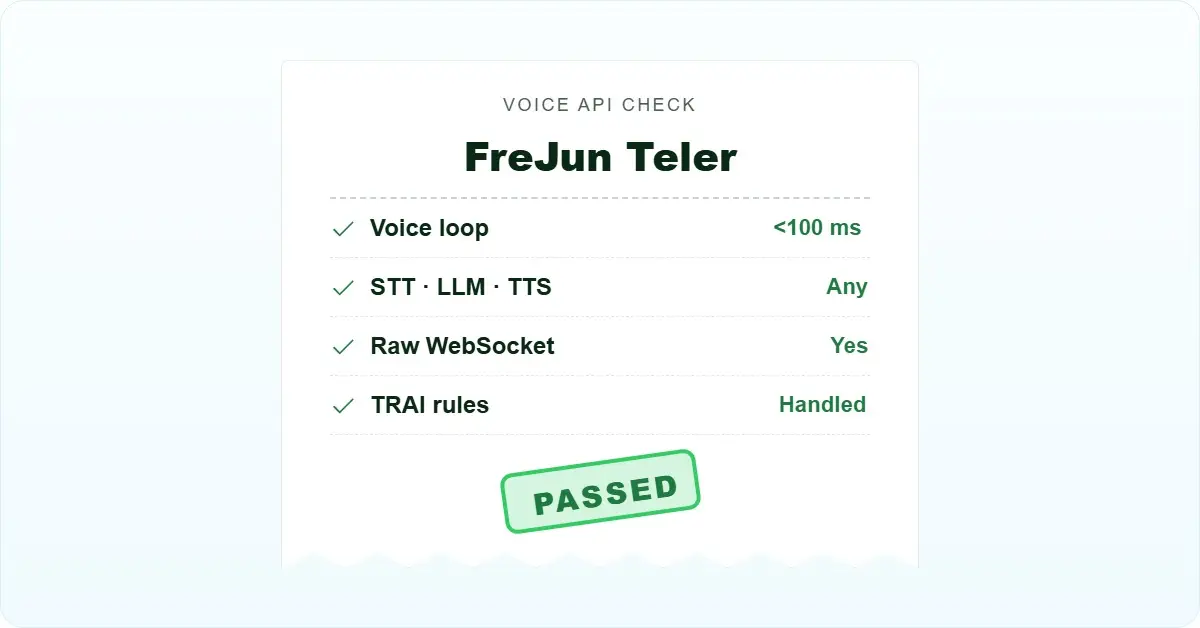
Quick Answer: The best ozonetel alternative for developers in India in 2026 is FreJun Teler, a purpose-built Voice API that streams raw audio over WebSocket with a sub-100ms latency target, works with any STT, LLM, or TTS provider, and starts at ₹0.15 per minute for outbound calls with 3,000 free minutes on first upgrade.
The best ozonetel alternative for developers in India in 2026 is FreJun Teler, which delivers raw WebSocket audio streaming at a sub-100ms latency target and integrates with any AI provider without lock-in, making it the strongest choice for teams building real-time AI voice agents on Indian carrier infrastructure.
What is an ozonetel alternative for developers in India?
An ozonetel alternative for developers in India is a programmable voice API or CPaaS (Communications Platform as a Service, a cloud platform that adds voice, SMS, and video to applications via APIs) that replaces Ozonetel’s telephony layer for teams building AI voice agents, intelligent IVR systems, or automated outbound calling products.
The best alternatives give developers direct access to raw audio streams over WebSocket (a persistent, full-duplex connection that keeps the audio channel continuously open between the caller and the developer’s server), so STT (Speech-to-Text, the component that converts the caller’s voice into text the LLM can process) engines can transcribe in real time. They also support SIP (Session Initiation Protocol, the standard protocol for establishing voice calls over the internet) trunking for enterprise-grade connectivity and handle TRAI (Telecom Regulatory Authority of India) compliance automatically. Developers in India specifically need a platform that provides virtual Indian numbers, bills in INR, respects TRAI outbound calling windows, and integrates with modern AI orchestration frameworks without requiring a proprietary SDK.
As of 2026, India’s AI voice agent market is expanding rapidly, driven by fintech, healthtech, and e-commerce teams automating customer interactions at scale. The difference between a basic CPaaS and the best ozonetel alternative in India comes down to whether the platform exposes raw audio for real-time AI inference or abstracts it away, adding latency that breaks natural conversation flow.
Which ozonetel alternatives rank highest in India in 2026?
The table below ranks every platform covered in this guide by starting price, best-fit use case, and free credit availability so you can shortlist before reading the full profiles.
| # | Provider | Best for | Starting price (India) | Free credits |
|---|---|---|---|---|
| 1 | FreJun Teler | AI voice agents, real-time WebSocket | ₹0.15/min outbound, ₹600/channel/month | Yes, 3,000 free minutes on first upgrade |
| 2 | Exotel | India voice and SMS CPaaS | Contact sales | Not confirmed |
| 3 | Knowlarity | Cloud telephony for enterprises | Contact sales | Not confirmed |
| 4 | Airtel IQ | Carrier-backed CPaaS in India | Contact sales | Not confirmed |
| 5 | Plivo | Voice AI and SIP applications | $0.0010/min outbound | Not confirmed |
| 6 | Twilio | Broad CPaaS, SMS and voice | Contact sales | Not confirmed |
| 7 | Telnyx | Voice AI and modular telephony | From $0.002/min platform fee | Not confirmed |
Teler is the only platform in this list purpose-built for AI voice agent infrastructure with transparent INR pricing and a sub-100ms WebSocket latency target. Read the full profiles below for a detailed breakdown of each tool.
How to choose the best ozonetel alternative for developers in India in 2026?
Step 1: Define your AI voice architecture
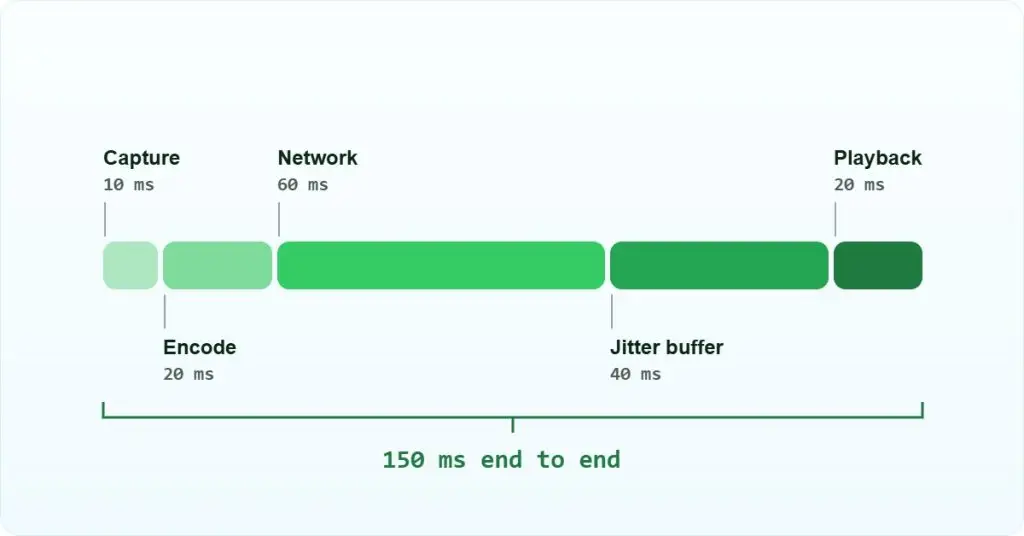
Before comparing platforms, map out the AI stack you already use or plan to use. Identify your STT engine (Google STT, Deepgram, Whisper, or AssemblyAI), your LLM (Large Language Model, the model that reads the text and decides what to respond), and your TTS (Text-to-Speech, the component that converts the response back into natural-sounding audio). Conversational agents that need to feel human require sub-100ms end-to-end latency across the full Media Streaming Loop (the full real-time cycle: voice, STT, LLM, TTS, voice playback). Form-filling bots or appointment schedulers can tolerate up to 500ms. Knowing your latency budget narrows the platform shortlist immediately, since only a few providers expose raw audio at the transport layer rather than abstracting it.
Step 2: Choose your integration path
Two integration paths exist for AI voice in India. WebSocket streaming gives your server a continuous raw audio feed in L16/8000Hz format, so your STT engine processes every audio frame as it arrives. This path targets the lowest latency and suits real-time conversational agents. SIP trunking connects existing SIP-enabled platforms or AI providers directly to a carrier network using TCP or TLS transport with credential-based or IP-based authentication. SIP suits teams migrating from a legacy PBX or connecting an existing contact centre platform. If you are building a new AI voice agent from scratch, WebSocket is almost always the right starting point because it requires no physical telecom infrastructure and a working first call is achievable the same day using the Teler getting-started guide.
Step 3: Check TRAI compliance requirements
India’s TRAI (Telecom Regulatory Authority of India) sets strict rules for outbound calling. Automated calls cannot be made after 9 PM IST. Numbers registered on the NCPR (National Customer Preference Register) must not receive promotional calls. Promotional campaigns must use the 140-series number range, while transactional calls use the 1600-series. Any ozonetel alternative you evaluate must handle these routing rules at the carrier level, not leave them to your application code. Platforms that do not surface TRAI compliance documentation should be treated with caution for Indian production deployments. The Department of Telecommunications (DoT) at dot.gov.in publishes the current licensing framework for reference.
Step 4: Evaluate pricing in INR
Compare per-minute rates, channel costs, media streaming fees, and recording fees separately. A platform with a low per-minute rate but a high channel minimum can cost more at low volume than a platform with a higher per-minute rate and no channel floor. For India, calculate a realistic monthly cost based on your expected call volume, the number of concurrent channels you need, and whether you plan to record calls. Teler’s India pricing is fully transparent: ₹600 per channel per month (minimum 10 channels), ₹0.15 per minute outbound, ₹0.10 per minute inbound, ₹0.15 per minute for media streaming, and ₹0.04 per minute for recording. You can verify the current figures on the current Teler pricing page.
Step 5: Test latency and audio quality before committing
Run a real call through the full Media Streaming Loop before signing a contract. Measure the delay between when a caller finishes speaking and when they hear the AI response. If the delay exceeds 400ms consistently, the conversation will feel robotic. Teler’s 3,000 free minutes on first upgrade let you test the full stack, including WebSocket streaming, STT transcription, LLM inference, and TTS playback, before paying for production volume. Use this window to benchmark latency on Indian carrier routes, since network conditions between your server region and Indian PSTN infrastructure affect the result.
Top ozonetel alternative options for developers in India for 2026
1. FreJun Teler – Purpose-built Voice API for AI voice agents
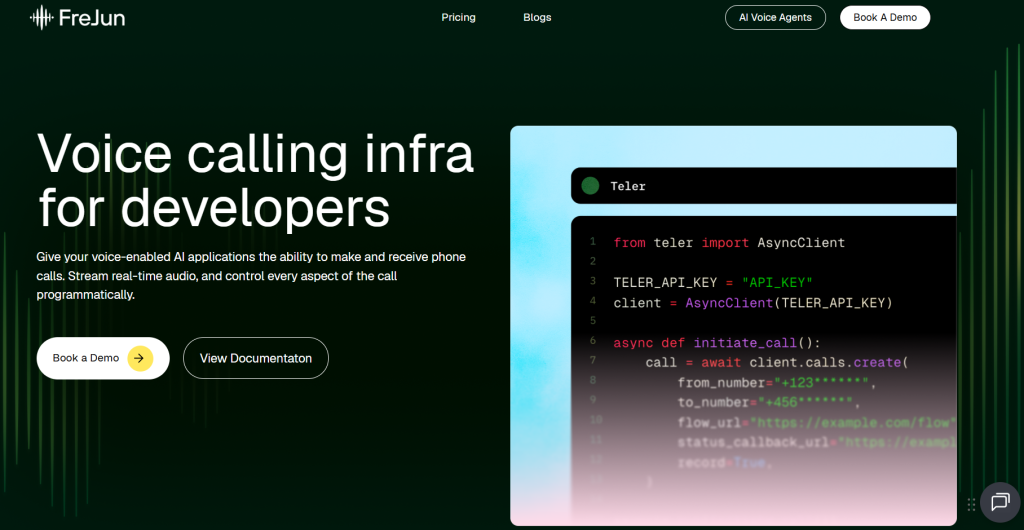
FreJun Teler is a developer-first Voice API platform that connects AI chatbots and LLMs to real phone calls in India, making it the strongest ozonetel alternative for teams building real-time AI voice agents.
Best for: AI voice agents, real-time WebSocket streaming
Key features
- Raw WebSocket audio streaming in L16/8000Hz format lets your STT engine process every audio frame as it arrives, so the full Media Streaming Loop targets sub-100ms latency for natural, uninterrupted conversation.
- Model-agnostic architecture means you bring your own STT (Google STT, Deepgram, Whisper, AssemblyAI), LLM (OpenAI GPT, Anthropic Claude, Google Gemini, or any custom model), and TTS (ElevenLabs, Google TTS, Azure TTS, Play.ht), paying those providers directly with zero lock-in.
- SIP trunking with TCP and TLS transport and credential-based or IP-based authentication connects existing SIP-enabled platforms or AI providers directly to Teler’s carrier network without physical telecom infrastructure.
- Virtual Indian numbers are available after purchasing 10 channels, giving your AI agent a local Indian caller ID that improves answer rates on outbound campaigns.
- Webhook callbacks for call lifecycle events and REST API endpoints for call control let you build full call automation pipelines using the same patterns your backend team already knows.
- TRAI-compliant routing handles the 140-series and 1600-series number rules and the 9 PM IST outbound cutoff at the carrier level, so your application code does not need to manage these constraints.
Pros and cons
| Pros | Cons |
|---|---|
| Sub-100ms latency target via raw WebSocket streaming, fast enough for natural AI conversation | Minimum 10 channels required, so very low-volume testing has an upfront channel cost |
| Fully model-agnostic: works with any STT, LLM, and TTS provider the team already uses | Elastic SIP trunking (auto-scaling without channel limits) is on the roadmap but not yet available |
| Transparent INR pricing with 3,000 free minutes on first upgrade for real-world testing | India-specific documentation depth is still growing compared to US-focused competitors |
Pricing
Pricing (India): ₹600 per channel per month (minimum 10 channels), ₹0.15 per minute outbound, ₹0.10 per minute inbound, ₹0.15 per minute media streaming, ₹0.04 per minute recording and storage. Billing is prepaid on monthly, quarterly, half-yearly, or annual cycles. See full pricing
Why FreJun Teler is the top recommendation
Why Teler ranks #1 for India: Teler is the only platform in this comparison that combines transparent INR pricing (outbound from ₹0.15 per minute), TRAI-compliant carrier routing for the Indian market, and a sub-100ms WebSocket latency target that general CPaaS platforms cannot match because they abstract the audio layer rather than exposing it directly. Its model-agnostic architecture means teams are never forced to swap their STT, LLM, or TTS provider to fit the platform’s constraints.
Teler by the numbers: Sub-100ms latency target | Model-agnostic across 10+ AI providers | Virtual numbers in India and UAE | Same-day integration via WebSocket or SIP | 3,000 free minutes on first upgrade (India)
2. Exotel – India-focused voice and SMS CPaaS

Exotel is a cloud communications platform built for the Indian market, offering voice, SMS, WhatsApp, and virtual numbers for developers who need a proven CPaaS with local carrier relationships.
Best for: India voice and SMS CPaaS
Key features
- Usage-based call-minute billing fits variable inbound and outbound voice volume without requiring a seat licence, so costs scale directly with actual usage.
- Per-SMS billing supports OTP and transactional messaging alongside voice, letting teams manage both channels from one platform.
- Bundled plans with fixed monthly fees give teams with predictable volume a way to cap spend and simplify budgeting.
- Virtual number rental is separately itemised, so teams can provision route-specific numbers without bundling them into a larger plan.
- Public GitHub organisation with code examples in cURL, Python, PHP, Go, and Java lowers the initial integration barrier for developers.
Pros and cons
| Pros | Cons |
|---|---|
| Usage-based billing fits variable inbound and outbound voice volume without seat licensing | Status callback events have been reported as not firing unless the terminal-event path is corrected |
| Public GitHub org with cURL, Python, PHP, Go, and Java examples lowers integration friction | Promotional SMS workflows can hit a 403 not-allowed error that requires backend investigation |
| Per-SMS billing supports OTP and transactional messaging without additional seat costs | Some call failures have required Exotel to fix the issue on their backend rather than the developer resolving it independently |
Pricing
Pricing (India): Pay-as-you-go per call minute and per SMS, or bundled monthly plans. Exact INR rates require a sales conversation. See full pricing
3. Knowlarity – Enterprise cloud telephony for India

Knowlarity is a cloud telephony platform serving enterprise teams in India, offering IVR, call routing, and contact centre features for businesses that need a managed telephony layer.
Best for: Managed enterprise telephony in India
Key features
- Cloud-hosted IVR lets teams build call routing trees without managing on-premise hardware, reducing infrastructure overhead for enterprise contact centres.
- Virtual numbers across Indian regions give businesses a local presence without physical offices in each city.
- Call recording and analytics provide post-call data that compliance and QA teams can review without building a separate recording pipeline.
- Multi-level IVR menus support complex routing logic for large organisations with multiple departments and escalation paths.
- CRM integration options connect call data to existing business tools, so agents have caller context before picking up.
Pros and cons
| Pros | Cons |
|---|---|
| Established enterprise telephony presence in India with local carrier relationships | No public API documentation or developer-facing WebSocket streaming found in available sources |
| Managed IVR and call routing reduce infrastructure burden for non-technical teams | Pricing and feature details require a sales conversation, making self-serve evaluation difficult |
4. Airtel IQ – Carrier-backed CPaaS from Airtel

Airtel IQ is a CPaaS offering from Bharti Airtel, giving developers access to voice and messaging APIs backed by Airtel’s Indian carrier network and existing enterprise relationships.
Best for: Carrier-native voice APIs in India
Key features
- Direct Airtel carrier integration means calls route through Airtel’s own network, which can improve call quality and answer rates on Airtel subscriber numbers.
- Voice and SMS APIs let developers add both channels to applications without managing separate carrier contracts for each.
- Virtual number provisioning supports inbound call routing to any destination, useful for building IVR or call-forwarding products.
- Enterprise SLA backing from Airtel’s existing business relationships gives large organisations a familiar vendor to negotiate with.
- Webhook-based call event notifications let developers trigger application logic on call start, answer, and end events.
Pros and cons
| Pros | Cons |
|---|---|
| Backed by Airtel’s carrier network, which provides strong coverage across Indian regions | No public developer documentation or WebSocket streaming details found in available sources |
| Familiar enterprise vendor for large organisations already using Airtel business services | Pricing and API capabilities require direct contact with Airtel sales, limiting self-serve evaluation |
5. Plivo – Voice AI and SIP applications
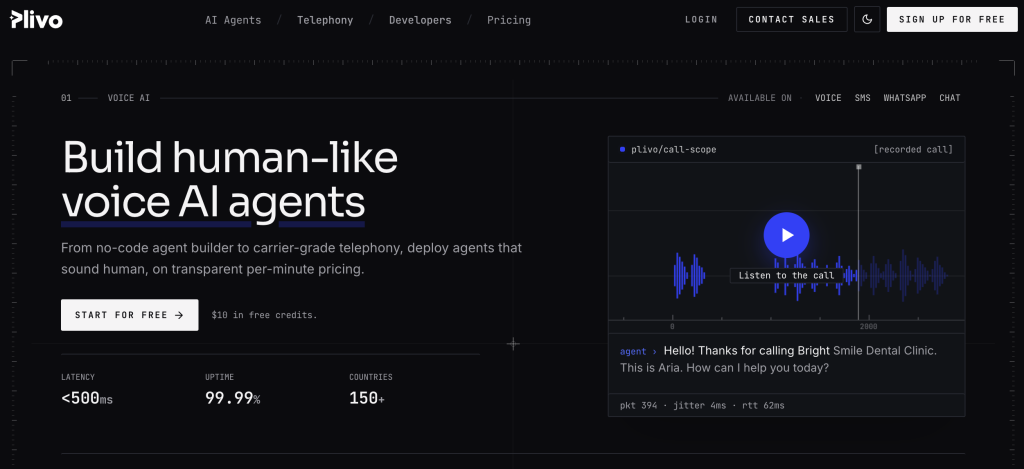
Plivo is a CPaaS platform offering voice, messaging, SIP trunking, and audio streaming for developers building voice AI agents and SIP-based applications, making it a credible ozonetel alternative for teams comfortable with US-dollar pricing.
Best for: Voice AI and SIP applications
Key features
- Outbound calls start at $0.0010 per minute, keeping low-volume testing inexpensive while the team validates the AI voice flow before scaling.
- Audio streaming and noise cancellation are included in voice pricing, so teams do not need to add a separate media processing layer to clean up audio before sending it to their STT engine.
- Voice AI agent pricing is separated from telephony at $0.03 per minute excluding telephony costs, making it straightforward to split carrier spend from AI model spend in your budget.
- Browser SDK and SIP Calls are first-class voice paths, which fits both browser-to-PSTN flows and SIP-based agent architectures.
- Call recording, AMD (Answering Machine Detection), transcription, and secure trunking are available as production-ready add-ons.
Pros and cons
| Pros | Cons |
|---|---|
| Outbound calls from $0.0010/min keeps low-volume testing affordable | Inbound audio streaming has been reported as not working in the Python SDK issue tracker |
| Audio streaming and noise cancellation included, reducing extra media-processing glue | Inconsistent media type handling: .wav rejected while .mpeg accepted in client.media.upload() |
| Voice AI agent pricing separated from telephony for clean cost attribution | Missing streaming code examples, with developers asking how to create a call and add stream audio programmatically |
Pricing
Pricing (India): Outbound from $0.0010/min, inbound from $0.0028/min. Voice AI agent layer at $0.03/min excluding telephony. INR pricing and India-specific virtual number rates require a sales conversation. See full pricing
6. Twilio – Broad CPaaS for voice and messaging
Twilio is a widely used CPaaS platform that covers voice, SMS, and messaging for developers, but its general-purpose audio abstraction layer adds latency that makes it a less direct fit for real-time AI voice agent workloads compared to purpose-built ozonetel alternative platforms.
Best for: Broad CPaaS, SMS and voice
Key features
- Extensive global carrier coverage means teams can reach phone numbers in most countries from a single API, useful for products that need to call both Indian and international numbers.
- Programmable Voice API with TwiML (Twilio Markup Language) lets developers define call flows declaratively, which suits teams building structured IVR without a real-time AI layer.
- Media Streams feature exposes audio over WebSocket, though the abstraction layer adds latency compared to platforms that stream raw L16/8000Hz audio directly.
- Large ecosystem of community libraries, tutorials, and third-party integrations reduces the time to find answers when debugging.
- Twilio Flex contact centre platform gives enterprise teams a managed agent desktop on top of the same telephony infrastructure.
Pros and cons
| Pros | Cons |
|---|---|
| Extensive global carrier coverage and a large developer community with mature documentation | Audio abstraction layer adds latency that makes sub-100ms AI voice loops difficult to achieve |
| Broad channel support (voice, SMS, WhatsApp) from one vendor simplifies multi-channel products | India-specific pricing and TRAI compliance details require direct engagement with Twilio sales |
7. Telnyx – Modular voice AI and telephony

Telnyx is a communications platform offering SIP trunking, Voice API, messaging, and modular AI building blocks for developers who want to mix STT, TTS, and inference components without committing to a single vendor stack.
Best for: Voice AI and modular telephony
Key features
- SIP trunking rates are published separately for inbound and outbound traffic, so teams can see exactly what carrier spend looks like before signing up.
- Voice API pricing is separated from trunking, which helps teams isolate application-layer costs from carrier costs in their monthly invoices.
- STT, TTS, and AI inference are sold as modular building blocks, so teams can mix Telnyx’s native components with third-party providers without a full-stack commitment.
- Voice AI agents have a single all-in per-minute price, which simplifies budgeting for teams that want one line item for the AI voice layer.
- Phone numbers and lookup are priced as standalone products, supporting multi-region telephony provisioning without bundling.
Pros and cons
| Pros | Cons |
|---|---|
| SIP trunking, Voice API, and AI components billed separately for transparent cost attribution | Intermittent one-way silent audio has been reported in Telnyx voice flows by developers on Reddit |
| Modular STT, TTS, and inference let teams mix components without full-stack lock-in | India-specific virtual numbers, INR pricing, and TRAI compliance details were not surfaced in public documentation |
Pricing
Pricing (India): Voice API from $0.002/min platform fee. SIP trunking billed separately. INR pricing and India-specific rates require a sales conversation. See full pricing
Ozonetel alternative feature comparison for India 2026
| Feature | Teler | Exotel | Knowlarity | Airtel IQ | Plivo | Twilio | Telnyx |
|---|---|---|---|---|---|---|---|
| Raw WebSocket audio streaming | Yes | Partial, via voice-streaming repo | No | No | Yes, via audio streaming | Partial, abstracted layer | No confirmed public docs |
| Sub-100ms latency target | Yes | No | No | No | No | No | No |
| Model-agnostic (BYO STT/LLM/TTS) | Yes | No | No | No | Partial, own AI layer | Partial, own AI layer | Partial, modular components |
| Transparent INR pricing | Yes | Partial, contact sales | No | No | No, USD only | No, USD only | No, USD only |
| TRAI compliance at carrier level | Yes | Yes | Yes | Yes | No confirmed | No confirmed | No confirmed |
| SIP trunking | Yes | No confirmed | No confirmed | No confirmed | Yes | Yes | Yes |
Teler is the only platform in this comparison that combines raw WebSocket streaming, a sub-100ms latency target, transparent INR pricing, and TRAI-compliant carrier routing in a single developer-facing product.
Which ozonetel alternative is right for your team in India?
The right platform depends on your AI architecture, your call volume, and whether you need INR billing or are comfortable with USD pricing. Use the decision guide below to match your situation to the best tool.
If you are building a real-time AI voice agent with your own STT, LLM, and TTS stack: Choose Teler. Its raw WebSocket streaming and model-agnostic architecture are built exactly for this use case, and the sub-100ms latency target keeps conversations feeling natural.
If you are building a voice and SMS product for the Indian market and need a proven local CPaaS: Choose Exotel. Its usage-based billing, Indian carrier relationships, and public code examples make it a solid starting point for teams that do not need real-time AI streaming.
If you are migrating a legacy enterprise contact centre to cloud telephony in India: Consider Knowlarity or Airtel IQ. Both have established enterprise relationships in India and managed IVR features that reduce the migration complexity for non-technical stakeholders.
If you are building a voice AI product and are comfortable with USD pricing and a global CPaaS: Consider Plivo or Telnyx. Plivo’s audio streaming inclusion and Telnyx’s modular AI components give teams flexibility, but neither offers transparent INR pricing or confirmed TRAI compliance documentation.
If you need broad multi-channel coverage (voice, SMS, WhatsApp) from one vendor and latency is not the primary constraint: Consider Twilio. Its ecosystem is mature and its global reach is unmatched, but the audio abstraction layer makes sub-100ms AI voice loops difficult to achieve.
Which tool wins overall in India?
If you want the best overall ozonetel alternative for developers in India in 2026: Choose Teler. It is the only platform in this list that combines transparent INR pricing, TRAI-compliant carrier routing, a sub-100ms WebSocket latency target, and a fully model-agnostic architecture that lets your team keep its existing AI stack without switching providers.
Frequently asked questions
What is the best ozonetel alternative in India in 2026?
The best ozonetel alternative in India in 2026 is FreJun Teler. It is purpose-built for AI voice agent infrastructure, streams raw L16/8000Hz audio over WebSocket with a sub-100ms latency target, and integrates with any STT, LLM, or TTS provider without lock-in. It also provides transparent INR pricing starting at ₹0.15 per minute for outbound calls and handles TRAI compliance at the carrier level, so your application code does not need to manage Indian regulatory constraints. For teams building real-time conversational AI on Indian phone infrastructure, Teler is the most complete solution available in 2026.
How much does a voice API cost for developers in India?
Teler’s India pricing is fully transparent. Channels cost ₹600 per channel per month with a minimum of 10 channels, so the floor is ₹6,000 per month for the channel allocation. Outbound calling costs ₹0.15 per minute, inbound costs ₹0.10 per minute, media streaming costs ₹0.15 per minute, and recording costs ₹0.04 per minute. New accounts receive 3,000 free minutes on first upgrade, which is enough to run a meaningful production test before committing to a monthly plan. Other platforms in this comparison either price in USD or require a sales conversation for INR rates, making Teler the most straightforward option for Indian developers budgeting in local currency.
Why does latency matter so much for AI voice agents?
Latency (the delay between when a person speaks and when they hear a response) determines whether an AI voice conversation feels natural or robotic. When the delay exceeds roughly 400ms, callers notice the pause and the interaction breaks down. General CPaaS platforms abstract the audio layer to simplify human-to-human call handling, but that abstraction adds processing time before your STT engine even receives the audio. Teler avoids this by streaming raw audio directly to your server over a persistent WebSocket connection, so the STT engine starts transcribing the moment the caller speaks. The full Media Streaming Loop targets sub-100ms end to end, which is fast enough for natural, uninterrupted conversation.
What does model-agnostic mean and why does it matter in production?
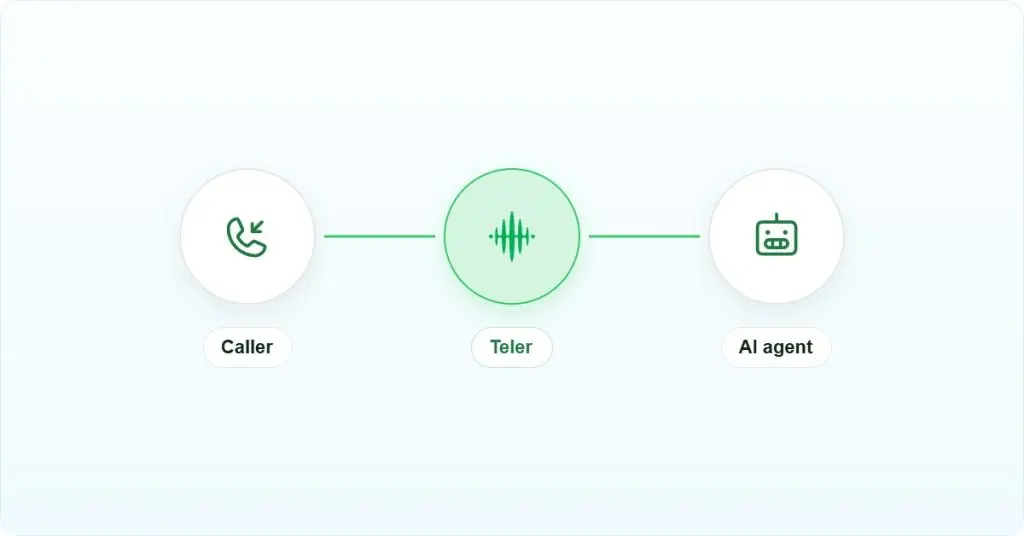
Model-agnostic means the voice API does not require you to use a specific STT, LLM, or TTS provider. Teler handles only the voice transport layer: capturing audio from the caller, streaming it to your server, and playing back the response. Your team chooses the STT engine (Google STT, Deepgram, Whisper, or AssemblyAI), the LLM (OpenAI GPT, Anthropic Claude, Google Gemini, or a custom model), and the TTS engine (ElevenLabs, Google TTS, Azure TTS, or Play.ht), and pays those providers directly. In production, this matters because AI models improve rapidly. A model-agnostic platform lets you swap to a better model without changing your telephony infrastructure, while a platform with a built-in AI layer locks you into its model choices and pricing.
What TRAI rules apply to AI outbound calling in India?
TRAI (Telecom Regulatory Authority of India) sets several rules that directly affect AI outbound calling. Automated calls cannot be made after 9 PM IST. Numbers registered on the NCPR (National Customer Preference Register) must not receive promotional calls. Promotional campaigns must use the 140-series number range, while transactional calls use the 1600-series. These rules apply regardless of whether the caller is a human agent or an AI voice bot. Platforms that handle these constraints at the carrier level, as Teler does, reduce the compliance burden on your application code. Teams using platforms without confirmed TRAI compliance documentation need to implement these checks themselves, which adds engineering overhead and compliance risk.
What does Teler offer that Ozonetel does not for AI voice agents?
Teler is designed from the ground up for AI voice agent infrastructure, while Ozonetel is primarily a contact centre and CPaaS platform built for human agent workflows. The key technical difference is that Teler exposes raw WebSocket audio streaming in L16/8000Hz format, so your STT engine receives unprocessed audio frames in real time. This is what makes sub-100ms latency achievable. Ozonetel’s architecture is optimised for human-to-human call handling, which adds processing layers that increase latency for AI inference workloads. Teler is also fully model-agnostic, meaning your team keeps its existing STT, LLM, and TTS providers, while Ozonetel’s AI features are tied to its own platform stack. You can read more about how Indian developers are using voice APIs for AI agents in the Top 11 Best Voice API Providers in India guide.
How do I get started with a voice API for AI agents in India?
Start by signing up for a Teler account at platform.frejun.ai and upgrading to your first plan to unlock 3,000 free minutes. Then follow the Teler getting-started documentation to set up a WebSocket endpoint on your server. When a call arrives, Teler opens a persistent WebSocket connection and streams raw L16/8000Hz audio to your endpoint. Your STT engine transcribes the audio, your LLM generates a response, your TTS engine converts the response to audio, and you stream that audio back through Teler to the caller. The full Media Streaming Loop targets sub-100ms. A working first call is achievable the same day using the getting-started guide, with no physical telecom infrastructure required.
Can I use Teler with Vapi, Retell AI, or Pipecat for AI voice agents in India?
Yes. Vapi, Retell AI, and Pipecat are AI orchestration layers that sit above the telephony layer. Teler provides the carrier connectivity, real-time audio streaming, and SIP trunking that those platforms need underneath them. Developers building on Vapi or Retell can connect Teler as their telephony provider to get Indian carrier access, TRAI-compliant routing, and INR billing. For more on how these integrations work, see the Top 9 Best Voice API Providers for AI Agents in India guide, which covers the full stack in detail.
Conclusion: Best ozonetel alternative in India for 2026
For developers in India choosing an ozonetel alternative in 2026, three platforms stand out for different reasons. Teler leads for AI voice agent infrastructure because it combines raw WebSocket streaming, a sub-100ms latency target, transparent INR pricing, and TRAI-compliant carrier routing in a single developer-facing product. Exotel is the strongest choice for teams that need a proven Indian CPaaS for voice and SMS without a real-time AI streaming requirement. Plivo suits teams comfortable with USD pricing who want audio streaming included and a clean separation between carrier and AI model costs. If your team is building a real-time AI voice agent on Indian phone infrastructure and needs a platform that works with your existing STT, LLM, and TTS stack without lock-in, Teler is the clear recommendation for 2026.