
Bring your agent. We'll put it on a call.
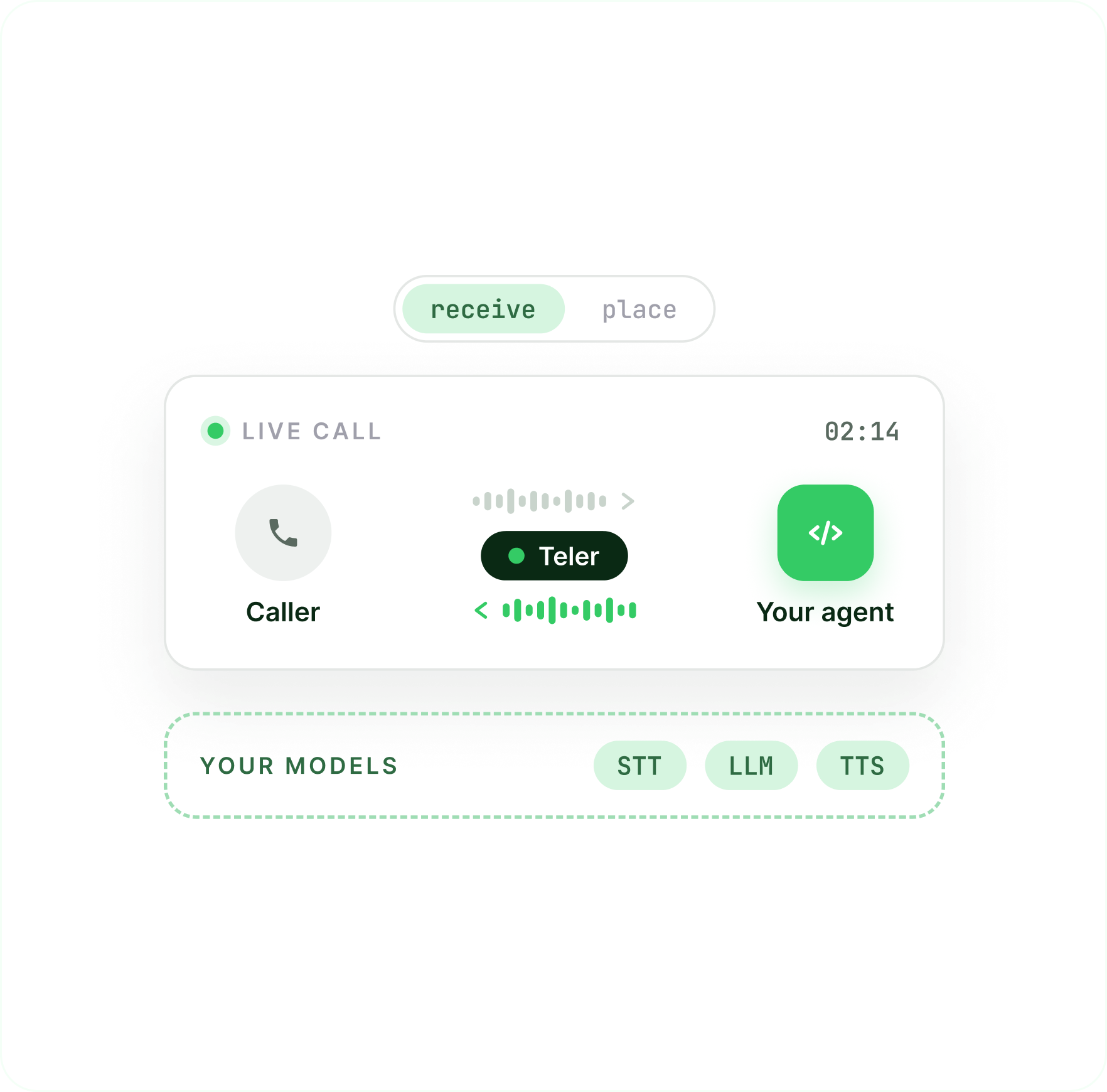
Teler gives your code a phone line - place and receive calls, stream audio both ways while the call is live, and keep your own speech and language models. Numbers in 50+ countries.






How it works
The call connects
The audio opens up
Your agent works out what to say
You keep control until the call ends
Built for AI voice agents
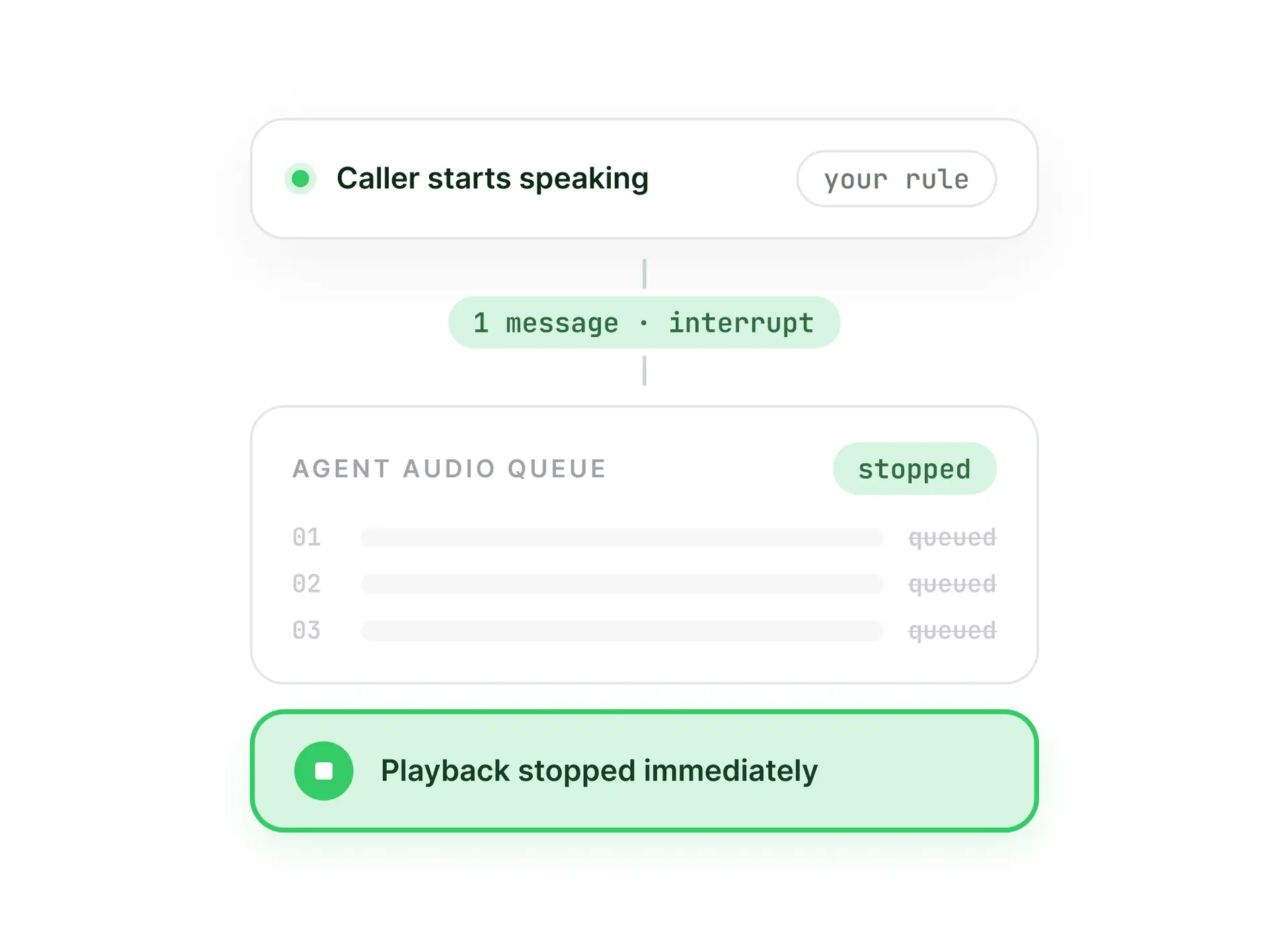
Someone will talk over your agent
Send one message and everything your agent had queued stops playing immediately. You decide what counts as an interruption - Teler doesn't guess for you.
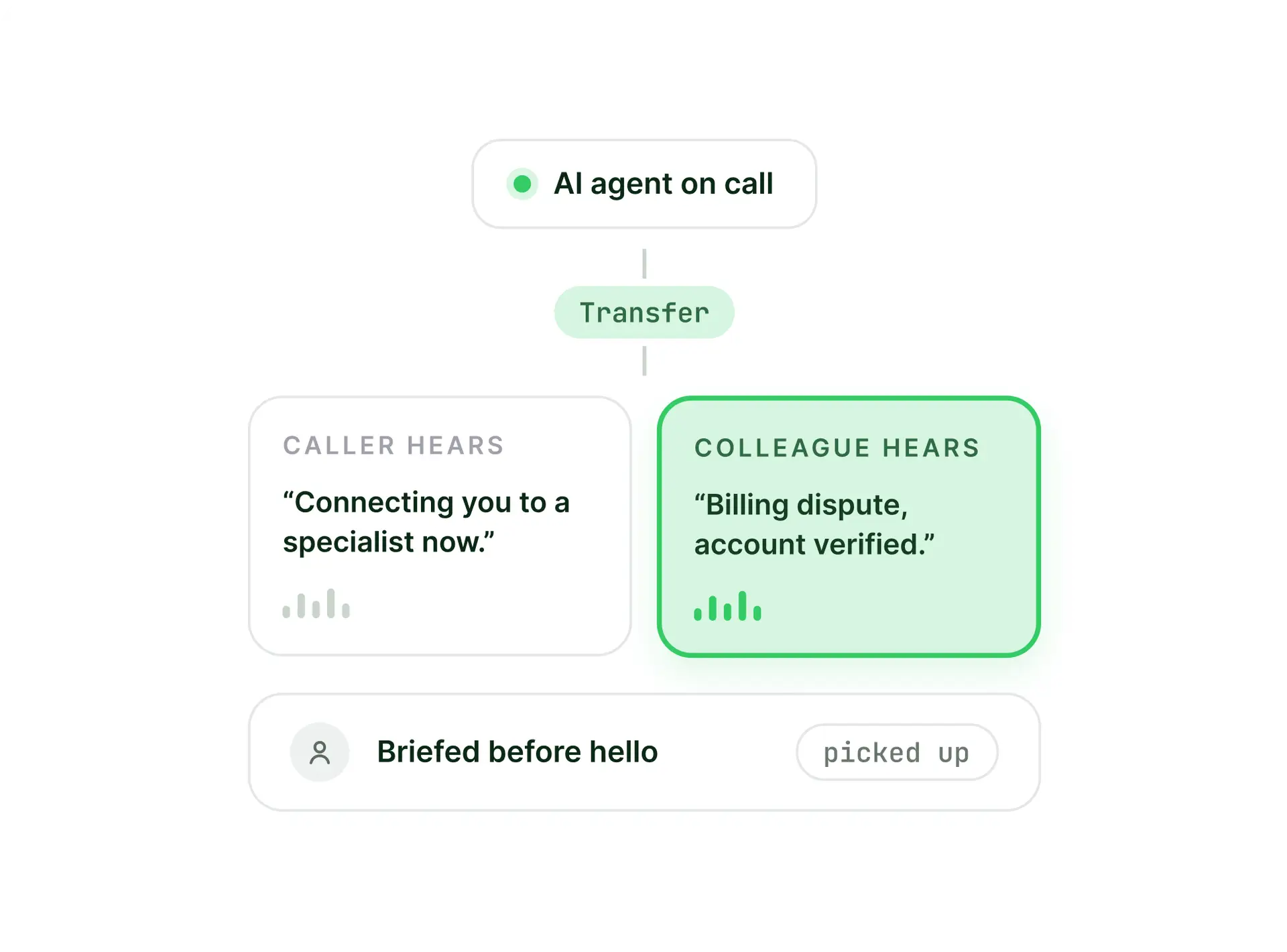
Sometimes a person has to take over
Hand the call across to a colleague, cold. You control what the caller hears while it happens, and what your colleague hears when they pick up, so they know the situation before they say hello.
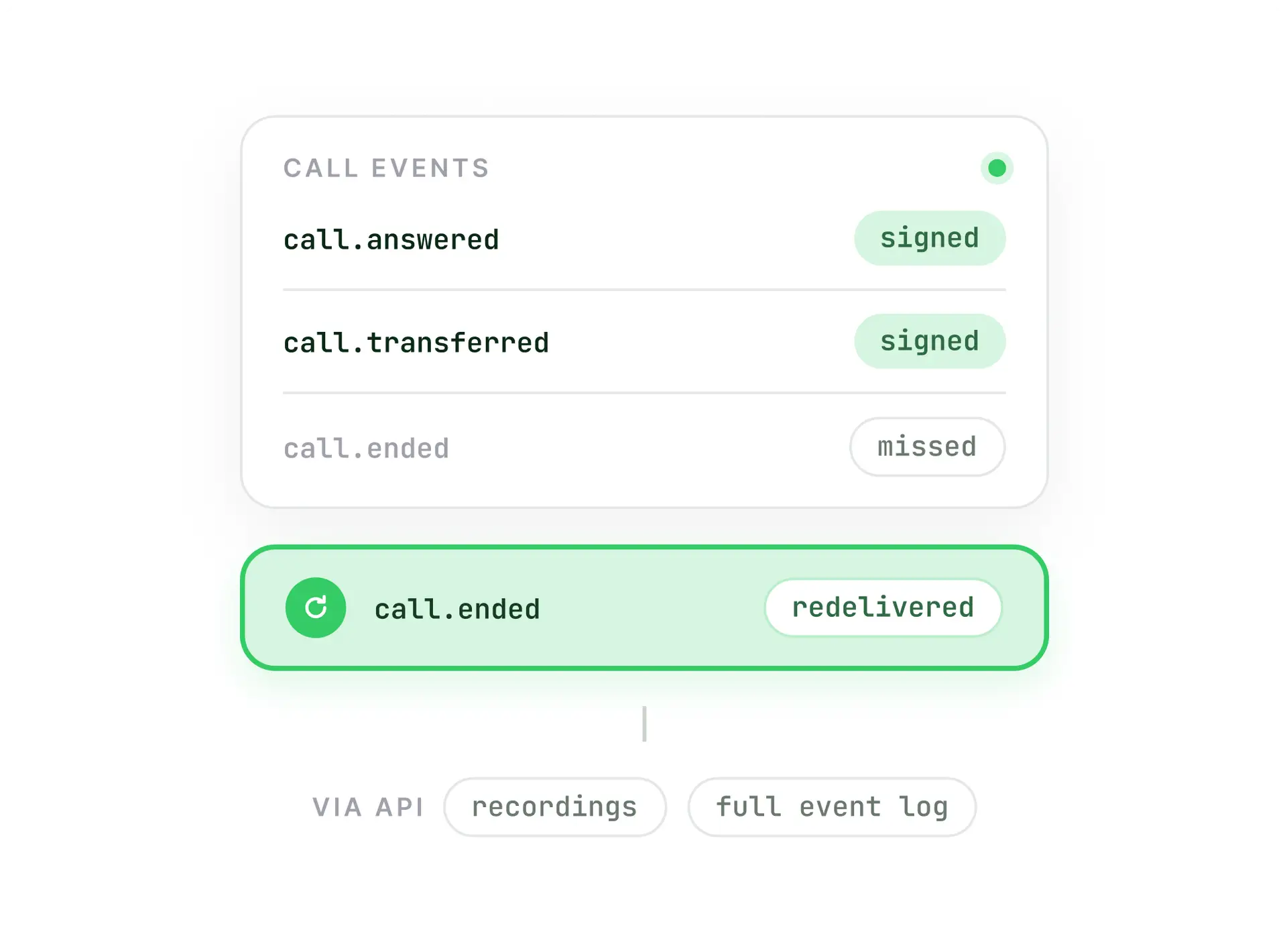
You need a record you can trust
Teler sends a signed message for everything that happens on a call, and you can ask for it again later if your service missed it. Recordings and the full event log come back through the API.
What you can build
AI voice agent that answers and dials
Inbound and outbound, on the same number, with the same code.
IVR where the caller just talks
No menu tree, no keypad instructions.
Set different recording rules for different teams
Your users press call in your app, and the call goes out under your number.
Escalation that doesn't drop the call
Your agent takes the first two minutes and a person takes the rest.
Appointment reminders that can reschedule
Confirm the time, or offer three others, without a human on the line.
Verification calls for one-time codes
Read back a code, confirm identity, and hang up.
Works with your favorite tools
Teler connects natively with OpenAI Realtime, Gemini Live, ElevenLabs, VAPI, Deepgram, Ultravox, or any custom model - no lock-in, and you pay your provider directly.
Teams already running on this
Frequently Asked Questions
Have more questions?
Reach out to us at support@frejun.com.
Your first call is a
quickstart away