Voice API and SDK

Generated Image February 20 2026 12 10AM

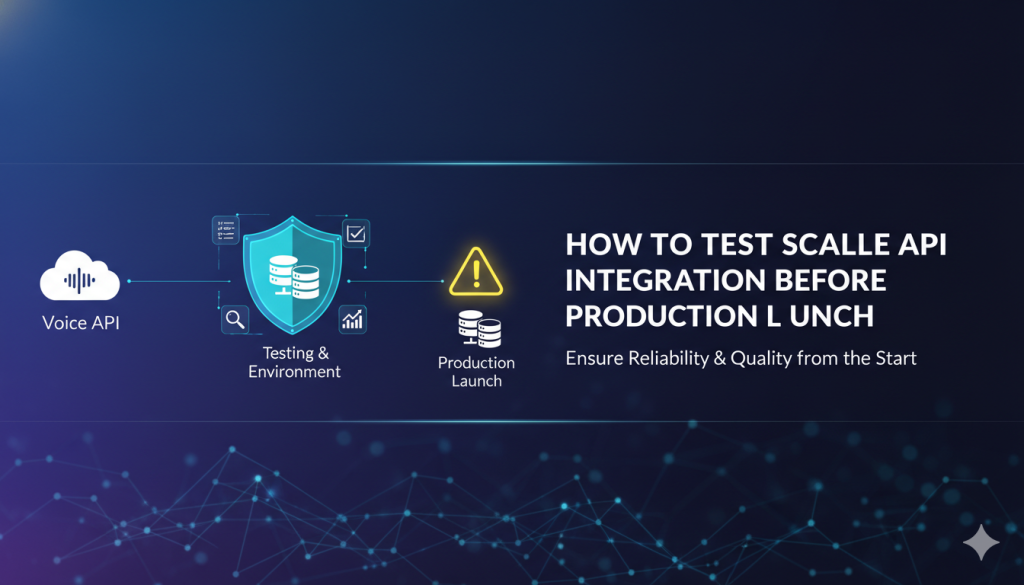
How To Test Voice API Integration Before Production Launch

Testing voice API integration before production is not a checklist exercise – it is a system-level validation of real-time conversations. Unlike traditional APIs, voice systems operate continuously, across networks, audio streams, and AI components that must stay in sync under unpredictable conditions. A small delay, a dropped audio packet, or an incorrect transcription can break

How To Test Voice API Integration Before Production Launch Read More »

Generated Image February 20 2026 12 03AM

How To Build Scalable Webhooks For Voice API Integration

Voice API integration is no longer just about placing and receiving calls. Today, it requires handling thousands of real-time events – speech, intent, silence, and call state – without breaking conversational flow. As AI voice agents become more common across support, sales, and operations, teams must design systems that react instantly and scale reliably. This

How To Build Scalable Webhooks For Voice API Integration Read More »

How To Enable Global Routing With Voice API Integration

Building AI voice agents is no longer about models alone. As teams move from prototypes to production, global voice routing becomes the real challenge. Voice conversations must remain fast, stable, and natural, regardless of where callers are located. However, traditional telephony systems were not designed for real-time AI workloads. This is where voice API integration

How To Enable Global Routing With Voice API Integration Read More »

Generated Image February 18 2026 11 27PM

How to Debug Failures in Voice API Integration Pipelines

Real-time voice systems behave differently from text-based applications. While chat APIs tolerate delays and retries, voice APIs operate under strict timing, streaming, and reliability constraints. A small delay, missing audio frame, or broken state can silently degrade the entire conversation. This is why many voice agents fail in production, even when individual components appear to

How to Debug Failures in Voice API Integration Pipelines Read More »

How To Handle Real-Time Audio Streams With Voice API Integration

Real-time voice AI is no longer experimental. It is becoming a core interface for customer support, sales, and internal automation. However, building reliable voice agents is not just about choosing a speech model or an LLM. It requires understanding how real-time audio streams move through voice APIs, how media pipelines behave under latency, and how

How To Handle Real-Time Audio Streams With Voice API Integration Read More »

Generated Image February 18 2026 8 19PM

How To Migrate Legacy IVR Using Voice API Integration

Legacy IVR systems were built for predictable call flows, not modern conversations. However, customer expectations, AI capabilities, and real-time voice technologies have evolved rapidly. As a result, enterprises are now rethinking how voice interactions are designed, deployed, and scaled. This guide explains how to migrate legacy IVR using voice API integration in a structured, engineering-friendly

How To Migrate Legacy IVR Using Voice API Integration Read More »

How Can a Voice API for Developers Support Multilingual Voice Experiences

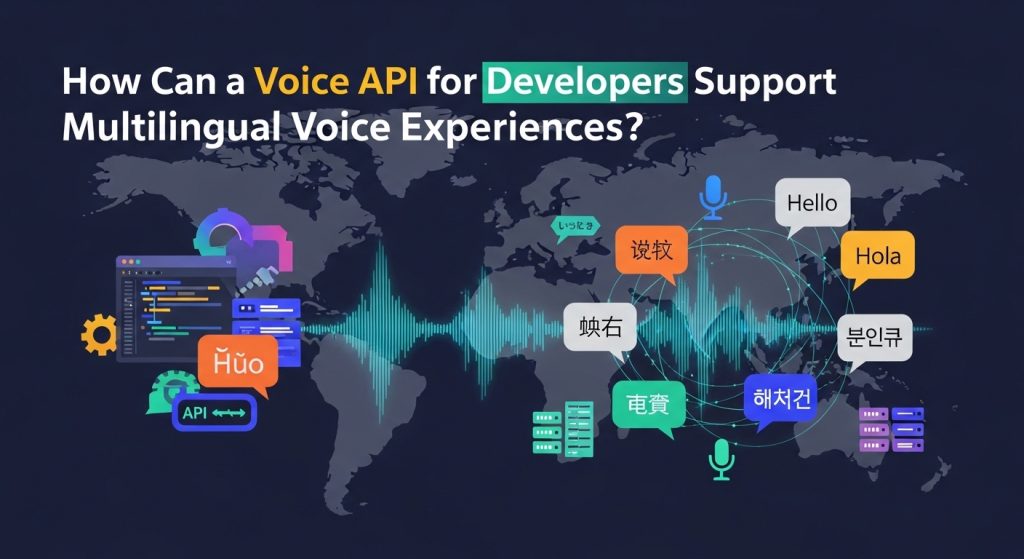
How Can a Voice API for Developers Support Multilingual Voice Experiences?

In the modern, interconnected global economy, your customers are not in one city or one country; they are everywhere. And they speak hundreds of different languages. For a business looking to provide a truly global and inclusive customer experience, the ability to communicate with customers in their native language is no longer a “nice-to-have” feature;

How Can a Voice API for Developers Support Multilingual Voice Experiences? Read More »