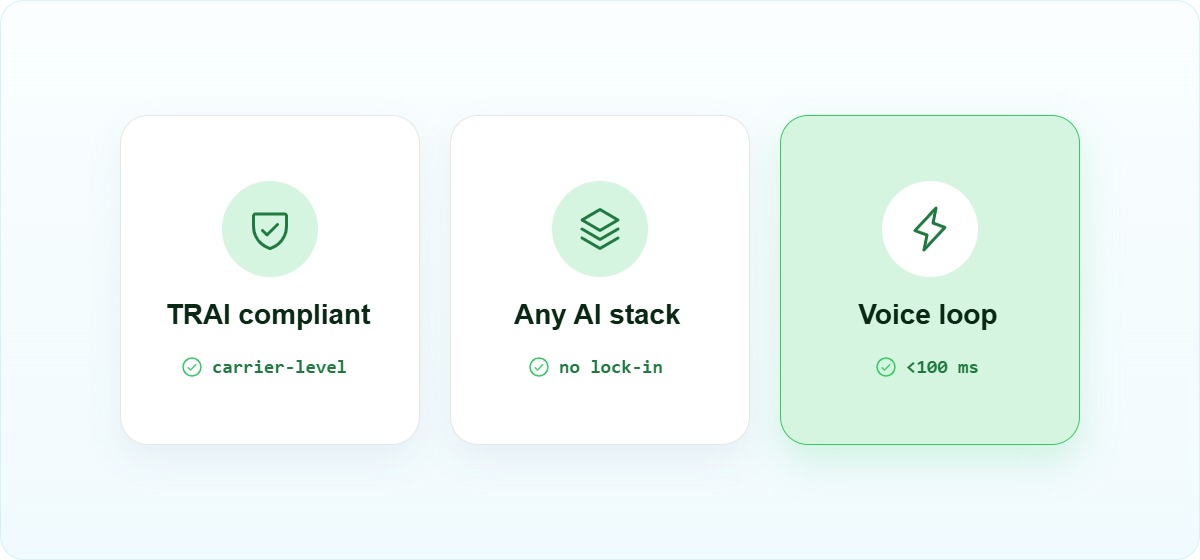
AI Summary: This article compares the top 7 kaleyra alternatives India developers and businesses can evaluate in 2026, covering real-time latency, TRAI compliance, INR pricing, and AI voice readiness. As of 2026, the Indian cloud telephony market is projected to grow at a CAGR of over 14% through 2030, according to IMARC Group, making Voice API selection a foundational infrastructure decision for any product or operations team. Teams need a provider that delivers sub-100ms latency for natural AI conversation, integrates with any STT, LLM, or TTS provider without lock-in, and handles Indian carrier compliance automatically. FreJun Teler meets all three requirements, with outbound calling from ₹0.15 per minute and raw WebSocket streaming that works with any AI stack the team already uses.
Key criteria in this comparison: We ranked these platforms on pricing transparency in INR, real-time WebSocket latency for AI voice agents, TRAI compliance support, model-agnosticism, and documentation quality, since these are the factors that most affect a developer team’s build speed and total cost in India.
Quick Answer: The best kaleyra alternatives India developers can use in 2026 is FreJun Teler, a purpose-built Voice API platform that delivers sub-100ms WebSocket latency for real-time AI voice agents, starts at ₹600 per channel per month, and works with any STT, LLM, or TTS provider without lock-in. Teler also includes 3,000 free minutes on first upgrade, making it the most cost-effective starting point for Indian teams.
The best kaleyra alternatives India teams should consider in 2026 include Teler, Twilio, Plivo, Exotel, Knowlarity, Sinch, and Telnyx, each offering different strengths across AI readiness, pricing, and compliance support.
What is Kaleyra and why do teams look for alternatives?
Kaleyra is a cloud communications platform offering SMS, voice, and messaging APIs primarily for enterprise teams. While it covers standard CPaaS (Communications Platform as a Service, meaning a cloud-based platform that adds voice, SMS, and video capabilities to applications via APIs) use cases, many Indian development teams look for kaleyra alternatives India because Kaleyra’s pricing model lacks transparency, its WebSocket audio streaming support for real-time AI voice agents is limited, and its documentation depth does not match what developer-first platforms provide. Teams building AI voice agents, intelligent IVR systems, or automated outbound calling workflows often find that Kaleyra’s architecture was designed for human-to-human messaging rather than AI-to-human real-time voice.
As of 2026, the Indian cloud telephony market is growing at over 14% CAGR, according to IMARC Group. Indian businesses need providers that offer INR billing, TRAI (Telecom Regulatory Authority of India) compliance built in, and low-latency audio infrastructure that supports modern AI stacks. The gap between basic CPaaS tools and the best kaleyra alternatives India has to offer comes down to one thing: whether the platform gives developers raw audio access over WebSocket, or abstracts it away and adds latency in the process. Teams evaluating providers outside India may find it useful to compare the top kaleyra alternative USA options, since global platforms weigh latency and pricing differently than Indian carriers do.
Which kaleyra alternatives India rank highest in 2026?
The table below compares the top kaleyra alternatives India developers and operations teams are evaluating in 2026, ranked by AI voice readiness, pricing, and compliance support.
| # | Provider | Best for | Starting price (India) | Free trial |
|---|---|---|---|---|
| 1 | FreJun Teler | AI voice agent infrastructure | ₹600/channel/month + ₹0.15/min outbound | Yes 3,000 free minutes on first upgrade |
| 2 | Twilio | Global programmable voice | From $0.0085/min inbound | Yes free credits available |
| 3 | Plivo | Cost-sensitive voice APIs | From $0.0050/min | No public free tier |
| 4 | Exotel | India contact-center telephony | From ₹9,999/plan | Yes 7-day trial |
| 5 | Knowlarity | Enterprise IVR telephony | Contact sales | Not found |
| 6 | Sinch | Enterprise omnichannel comms | From ~$0.01/min | Yes free trial available |
| 7 | Telnyx | Low-cost SIP control | From $0.0020/min inbound | No public free tier |
Teler leads on AI voice readiness and INR pricing. Scroll for the full breakdown of each tool, including features, pros, cons, pricing, and ideal use case.
How to choose the best kaleyra alternatives India in 2026?
Choosing among kaleyra alternatives India requires more than comparing per-minute rates. The right platform depends on your AI architecture, integration path, compliance obligations, and expected call volume. These five steps will help you make the right call.
Step 1: Define your AI voice architecture
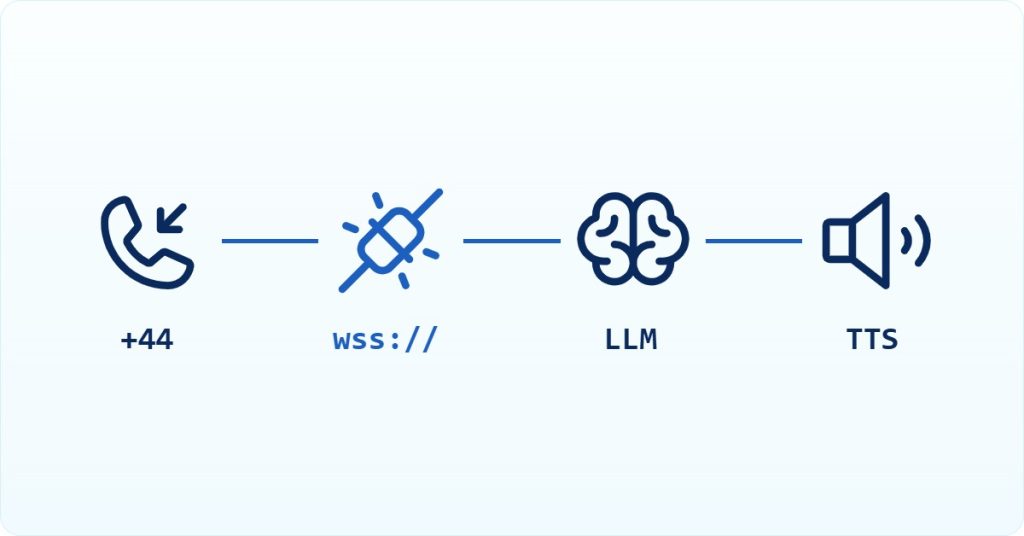
Start by mapping the STT (Speech-to-Text, the component that converts the caller’s voice into text the LLM can process), LLM (Large Language Model, the AI brain that reads the text and decides what to respond), and TTS (Text-to-Speech, the component that converts the AI’s text response back into natural-sounding audio) providers you plan to use. If you need sub-100ms latency for a conversational agent, you need a platform that streams raw audio over WebSocket. If your use case is a form-filling bot where up to 500ms is acceptable, a REST-based platform may work. Teler supports both paths, but its WebSocket streaming is the differentiator for real-time AI voice.
Step 2: Choose your integration path
There are two main paths: WebSocket streaming and SIP trunking. WebSocket is a persistent, full-duplex connection that keeps the audio channel continuously open between the caller and the developer’s server, making it ideal for real-time AI voice loops. SIP (Session Initiation Protocol, the standard protocol for establishing voice calls over the internet) trunking is better for connecting existing SIP-enabled platforms or enterprise telephony infrastructure. Teler supports both. If you are building a new AI voice agent from scratch, start with WebSocket. If you are integrating with an existing PBX or contact center, SIP trunking is the right path.
Step 3: Check India-specific carrier and compliance requirements
TRAI (Telecom Regulatory Authority of India) governs all outbound calling in India. AI outbound calling carries additional requirements beyond standard voice: no calls after 9 PM IST, NCPR (National Customer Preference Register) avoidance, and the use of 140-series numbers for promotional calls and 1600-series for transactional calls. Any platform you choose must support these routing rules natively or give you the control to implement them. Teler’s India virtual numbers are DoT-registered and support TRAI-compliant number series.
Step 4: Evaluate pricing in INR
Compare per-minute rates, channel costs, media streaming costs, and recording fees. A realistic monthly cost for an Indian team running 10,000 outbound minutes on Teler would be: 10 channels at ₹600 each (₹6,000) plus 10,000 minutes at ₹0.15 (₹1,500) plus media streaming at ₹0.15/min (₹1,500), totalling roughly ₹9,000 per month before recording. Platforms that only publish USD pricing add currency risk and unpredictable billing for Indian finance teams. Prioritise providers with INR billing and transparent per-minute breakdowns.
Step 5: Test latency and audio quality before committing
Latency is the delay between when a person speaks and when they hear a response. The lower the latency, the more natural the conversation feels. Test the full Media Streaming Loop (Voice to STT to LLM to TTS to Voice playback) on a real call before signing any contract. Teler gives new accounts 3,000 free minutes on first upgrade in India, so you can run a full end-to-end test without paying first. Use those minutes to benchmark your actual STT and TTS providers in the loop, not just the telephony layer in isolation.
Top 7 kaleyra alternatives India developers are using in 2026
1. FreJun Teler – Purpose-built Voice API for AI voice agents

FreJun Teler is a Voice API platform built for developers who need to connect AI chatbots and LLMs to real phone calls in India, delivering sub-100ms real-time audio streaming without any proprietary lock-in.
Best for: AI voice agent infrastructure in India
Key features
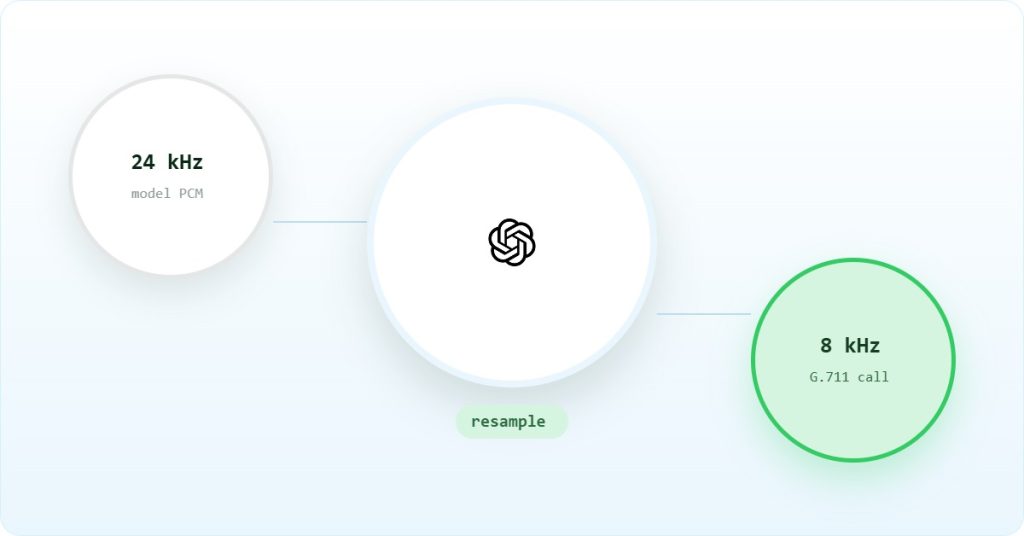
- Raw WebSocket audio streaming in L16/8000Hz format delivers the caller’s voice directly to your server in real time, so your STT engine receives it with no conversion layer adding delay.
- The Media Streaming Loop (Voice to STT to LLM to TTS to Voice playback) completes in under 100ms end-to-end, fast enough for natural, uninterrupted conversation with a live caller.
- Model-agnostic architecture means you bring your own STT (Google STT, Deepgram, Whisper, AssemblyAI), LLM (OpenAI GPT, Anthropic Claude, Google Gemini), and TTS (ElevenLabs, Google TTS, Azure TTS, Play.ht) and pay those providers directly.
- SIP trunking with TCP/TLS transport and credential-based or IP-based authentication connects existing SIP-enabled platforms directly to Teler’s carrier network.
- India virtual numbers are DoT-registered and TRAI-compliant, supporting 140-series promotional and 1600-series transactional number routing out of the box.
- REST API endpoints, webhook callbacks, and auth token authentication give developers standard, familiar tooling so a working first call is achievable the same day.
- 3,000 free minutes on first plan upgrade let teams run a full end-to-end AI voice test in India before committing to a paid plan.
Pros and cons
| Pros | Cons |
|---|---|
| Sub-100ms WebSocket latency purpose-built for AI voice agents | Minimum 10 channels required to start, so very low-volume pilots carry a fixed monthly cost |
| Fully model-agnostic: works with any STT, LLM, or TTS provider | Elastic SIP trunking (auto-scaling without channel limits) is on the roadmap but not yet available |
| INR billing with transparent per-minute pricing and 3,000 free minutes on first upgrade | UAE number rental at $100/month/number is a significant cost for teams needing multi-country coverage |
Pricing
Pricing (India): ₹600/channel/month (minimum 10 channels), outbound calling at ₹0.15/min, inbound at ₹0.10/min, media streaming at ₹0.15/min, and recording plus storage at ₹0.04/min. Billing is prepaid and available monthly, quarterly, half-yearly, or annually. New accounts receive 3,000 free minutes on first upgrade. See full pricing
Why Teler is the top recommendation
Why Teler ranks #1 for India: Teler is the only platform in this list that combines sub-100ms WebSocket latency, full model-agnosticism, and transparent INR billing with TRAI-compliant DoT-registered virtual numbers. General CPaaS platforms abstract the audio layer for human-to-human calls, which adds 400 to 800ms of latency that makes real-time AI inference impractical. Teler gives developers the raw audio stream directly, so the AI stack can process it in under 100ms with no proprietary conversion layer in the way. Start building →
Teler by the numbers: Sub-100ms latency | Model-agnostic: 10+ AI providers | Virtual numbers: India and UAE | Same-day integration via WebSocket or SIP | 3,000 free minutes on first upgrade (India)
2. Twilio – Global programmable voice and CPaaS
Twilio is a global CPaaS platform for voice, SMS, video, and verification workflows, built for general developer teams and enterprise communications, and one of the most widely evaluated kaleyra alternatives India teams consider. For a deeper look specifically at how Twilio stacks up for Indian developer teams, see this dedicated Twilio alternative India comparison.
Best for: Global programmable voice at scale
Key features
- Media Streams push live call audio to your server over a persistent WebSocket, giving developers access to the raw audio stream for AI processing, though the abstraction layer adds latency compared to Teler’s direct streaming.
- Elastic SIP trunking handles PSTN-to-SIP routing at scale, so enterprise teams can connect existing telephony infrastructure without rebuilding call flows from scratch.
- Programmable voice APIs let you control call flows entirely in code, using REST calls to trigger actions like recording, conferencing, or transferring mid-call.
- Free credits on signup lower the barrier to testing, so developers can validate a proof of concept before committing to a paid plan.
- Official SDKs in Node.js, Python, Java, PHP, Ruby, C#, and Go mean most teams can integrate without learning a new language or toolchain.
Pros and cons
| Pros | Cons |
|---|---|
| Large developer ecosystem with extensive documentation and community examples | Audio abstraction layer adds 400 to 800ms latency, making real-time AI voice loops harder to achieve |
| Free credits available for initial testing across voice and SMS | Pricing complexity increases significantly at scale, with separate rates for inbound, outbound, and media streaming |
| Broad channel coverage including voice, SMS, video, and verification in one platform | India-specific virtual number availability and TRAI compliance details are not clearly documented |
Pricing
Pricing: Voice APIs from $0.0085/min inbound and $0.014/min outbound; Elastic SIP trunking origination from $0.0045/min. Usage is billed per minute with no monthly minimum. INR billing availability is not confirmed. See full pricing. US-based teams researching similar options can also review this comparison of the best Twilio alternative USA providers to see how global pricing and latency benchmarks differ from India.
3. Plivo – API-first voice and SMS for cost-sensitive teams

Plivo is an API-first CPaaS for developers building voice and SMS workflows, offering SIP trunking and low per-minute rates that make it a practical kaleyra alternatives India option for budget-conscious teams.
Best for: Cost-sensitive voice APIs
Key features
- Low per-minute voice pricing from $0.0050/min means teams running high call volumes can keep telephony costs predictable without negotiating an enterprise contract.
- SIP trunking for direct telephony handoff lets teams connect existing SIP-enabled PBX systems or contact center platforms without rebuilding their call infrastructure.
- No monthly minimum to start means developers can test the API and validate their use case before scaling up to a paid plan.
- India-focused guidance covers DLT handling and offers USD or INR billing options, reducing friction for Indian finance teams managing vendor payments.
- API-first model gives developers full control over call orchestration, so they can build their own AI stack on top without being locked into Plivo’s native features.
Pros and cons
| Pros | Cons |
|---|---|
| Among the lowest per-minute voice rates of any CPaaS platform | Raw WebSocket audio streaming for AI voice loops is not confirmed, limiting real-time AI use cases |
| No monthly minimum makes it accessible for early-stage teams and prototypes | India virtual-number pricing and full TRAI compliance workflows are not fully documented publicly |
Pricing
Pricing: Voice from $0.0050/min, billed per minute. Some plans start from $25/month. INR billing options are available for Indian teams. No monthly minimum to start. See full pricing
4. Exotel – India-native cloud telephony for contact centers

Exotel is an India-native cloud telephony and CPaaS platform built for contact centers and enterprise telephony teams that need Indian calling, IVR, and call handling rather than a full AI voice stack.
Best for: India contact-center telephony
Key features
- India cloud telephony pricing from ₹9,999/plan gives Indian businesses a locally-priced option without currency conversion risk on monthly invoices.
- ULVNO-licensed India operations mean Exotel operates under a DoT-recognised virtual network operator licence, which matters for teams that need a locally-compliant carrier partner.
- A 7-day trial lets teams test call quality and IVR flows on real Indian numbers before committing to a subscription plan.
- Voice-OTP and contact-center orientation makes Exotel a strong fit for support teams running high inbound call volumes with standard IVR routing.
- India-focused support and compliance positioning reduces the onboarding friction that global CPaaS platforms often create for Indian enterprise procurement teams.
Pros and cons
| Pros | Cons |
|---|---|
| India-native with ULVNO licensing and INR pricing from ₹9,999/plan | Raw WebSocket audio streaming for real-time AI voice agents is not confirmed in documentation |
| 7-day trial available for testing on real Indian numbers | AI voice agent architecture requires an external AI layer, adding integration complexity |
Pricing
Pricing (India): Plans from ₹9,999/plan. Contact Exotel’s sales team for per-minute breakdown and virtual number costs. A 7-day trial is available.
5. Knowlarity – Enterprise IVR and cloud telephony

Knowlarity is a cloud telephony and IVR platform for enterprise voice operations, call routing, and support teams in India, making it one of the longer-standing kaleyra alternatives India enterprises have used for standard telephony.
Best for: Enterprise IVR telephony in India
Key features
- Virtual numbers for India give enterprise teams a local presence without physical infrastructure, so support and sales teams can operate from any location.
- IVR menus with multi-level call routing let enterprises direct callers to the right team or agent automatically, reducing manual transfer handling.
- Call recording is built into the platform, so every customer interaction is stored and accessible for quality review without a separate recording integration.
- Enterprise call handling features like call queuing and overflow routing keep contact centers running during peak periods without dropped calls.
- REST API integrations allow enterprise teams to connect Knowlarity to CRMs like Salesforce, HubSpot, or Zoho for basic call logging and contact management.
Pros and cons
| Pros | Cons |
|---|---|
| Established India-first cloud telephony with virtual numbers and IVR built in | No public pricing; contact sales required before evaluating cost |
| Call recording and routing features suit standard enterprise contact center workflows | WebSocket audio streaming for AI voice agents is not documented, limiting AI readiness |
6. Sinch – Enterprise omnichannel communications

Sinch is a global CPaaS for messaging, voice, verification, and enterprise communications, built for omnichannel developers and enterprise teams that need a single platform across multiple channels.
Best for: Enterprise omnichannel comms
Key features
- Direct carrier connections reduce the number of intermediary hops between your application and the end caller, which helps keep call quality consistent across Indian networks.
- App-to-app and app-to-phone calling with free usage for the first 25,000 minutes (then $0.005/min) makes Sinch cost-effective for teams with high internal or customer-facing call volumes.
- Number masking lets businesses connect callers and agents without either party seeing the other’s real number, which is useful for marketplace and logistics platforms.
- Omnichannel messaging across SMS, WhatsApp, and voice in one platform reduces the number of vendor integrations a team needs to manage.
- Enterprise verification workflows for OTP and two-factor authentication are built into the same API surface, so teams do not need a separate verification provider.
Pros and cons
| Pros | Cons |
|---|---|
| Broad omnichannel coverage across voice, SMS, WhatsApp, and verification in one platform | Raw WebSocket audio streaming for AI voice agents is not confirmed, requiring a media bridge for real-time AI |
| Free trial available and generous free app-to-app calling tier for initial testing | India-specific virtual numbers, INR pricing, and TRAI compliance details are not clearly documented |
Pricing
Pricing: Voice from approximately $0.01/min; app-to-app calling free for the first 25,000 minutes, then $0.005/min. INR billing availability is not confirmed. A free trial is available. See full pricing
7. Telnyx – Developer-first CPaaS with carrier-owned network

Telnyx is a developer-first CPaaS and carrier-owned network for voice, SMS, and SIP trunking, built for developers who want low-cost programmable telephony and granular network control as a kaleyra alternatives India option. Teams weighing Telnyx specifically against India-first providers can read this detailed Telnyx alternative India breakdown for a closer comparison.
Best for: Low-cost SIP control
Key features
- Carrier-owned network means Telnyx controls its own infrastructure rather than reselling another carrier’s capacity, which gives developers more consistent pricing and fewer intermediary failure points.
- Lower voice rates from $0.0020/min inbound and $0.0070/min outbound make Telnyx one of the most cost-competitive options for teams running large outbound call volumes.
- Elastic SIP trunking with no monthly minimum lets teams scale channel capacity up or down without committing to a fixed seat count in advance.
- REST API call control with official SDKs in multiple languages gives developers a familiar integration surface for building call flows without proprietary tooling.
- API-first setup fits both UCaaS-style deployments and custom AI voice agent builds, since the platform does not impose a specific call flow architecture.
Pros and cons
| Pros | Cons |
|---|---|
| Among the lowest per-minute voice rates due to carrier-owned network infrastructure | India-specific virtual numbers, INR pricing, and TRAI compliance details are not documented publicly |
| No monthly minimum and elastic SIP trunking suit teams that need flexible capacity | WebSocket audio streaming for real-time AI voice loops is not confirmed in available documentation |
Pricing
Pricing: Inbound voice from $0.0020/min, outbound from $0.0070/min, US SMS from $0.004/SMS. Usage-based with no monthly minimum. INR billing is not confirmed. See full pricing. Teams also comparing carrier-owned network providers may want to explore these bandwidth alternatives India options alongside Telnyx before making a final decision.
Kaleyra alternatives India feature comparison: 2026
The table below compares all seven kaleyra alternatives India on the six features that most separate them for AI voice agent builds and enterprise telephony in 2026.
| Feature | Teler | Twilio | Plivo | Exotel | Knowlarity | Sinch | Telnyx |
|---|---|---|---|---|---|---|---|
| Real-time WebSocket audio streaming | Yes raw L16/8000Hz, sub-100ms | Partial via Media Streams, adds latency | No not confirmed | No not confirmed | No not confirmed | Partial REST call control, media bridge needed | No not confirmed |
| Model-agnostic AI stack | Yes any STT, LLM, TTS provider | Yes bring your own stack | Yes bring your own stack | Partial external AI layer required | No no documented AI integration path | Yes bring your own stack | Yes bring your own stack |
| INR billing for India | Yes transparent per-minute INR rates | No USD only | Partial USD or INR options available | Yes plans from ₹9,999 | No contact sales | No USD only | No USD only |
| TRAI compliance support | Yes DoT-registered, 140/1600-series numbers | Partial not clearly documented for India | Partial DLT handling mentioned | Yes ULVNO-licensed India operations | Partial India-first but details not public | No not documented for India | No not documented for India |
| Free trial or free credits | Yes 3,000 free minutes on first upgrade | Yes free credits on signup | No no public free tier | Yes 7-day trial | No not found | Yes free trial available | No no public free tier |
| SIP trunking | Yes TCP/TLS, credential or IP-based auth | Yes Elastic SIP trunking | Yes SIP trunking available | No not confirmed | No not confirmed | No not confirmed | Yes Elastic SIP trunking |
Teler is the only platform in this comparison that combines confirmed real-time WebSocket streaming, full model-agnosticism, INR billing, and TRAI compliance in a single product.
Which kaleyra alternatives India is right for your team in 2026?
Different teams have different priorities. The right choice among kaleyra alternatives India depends on whether you are building AI voice agents, running a contact center, or managing enterprise telephony at scale. Here is a quick guide to matching the right tool to the right team.
If you are building a real-time AI voice agent in India: Choose Teler. It is the only platform in this list with confirmed sub-100ms WebSocket streaming, model-agnostic architecture, and INR billing with TRAI-compliant virtual numbers.
If you are a global team that needs broad CPaaS coverage across voice, SMS, and video: Choose Twilio. Its ecosystem is the largest, its documentation is strong, and free credits make initial testing straightforward, even if latency is higher for AI voice loops.
If you are an Indian contact center team running standard IVR and inbound call handling: Choose Exotel. Its ULVNO-licensed India operations, INR pricing from ₹9,999/plan, and 7-day trial make it a practical fit for teams that do not need real-time AI streaming.
If you are a cost-sensitive team that needs low per-minute voice rates and no monthly minimum: Choose Plivo or Telnyx. Both offer some of the lowest per-minute rates in the market, with no commitment required to start testing.
If you are an enterprise team that needs omnichannel messaging, voice, and verification in one platform: Choose Sinch. Its direct carrier connections and broad channel coverage suit large teams managing multiple communication channels from a single vendor.
Which tool wins overall in India?
If you want the best overall kaleyra alternatives India option with AI features, INR billing, and TRAI compliance: Choose Teler. No other platform in this list delivers raw WebSocket audio streaming at sub-100ms latency, works with any STT, LLM, or TTS provider without lock-in, and provides DoT-registered Indian virtual numbers with transparent per-minute INR pricing in a single product.
Frequently asked questions about kaleyra alternatives India in 2026
What is the best kaleyra alternatives India option in 2026?
The best kaleyra alternatives India option in 2026 is FreJun Teler. It delivers sub-100ms WebSocket latency for real-time AI voice agents, works with any STT, LLM, or TTS provider without lock-in, and provides TRAI-compliant DoT-registered virtual numbers with transparent INR billing. Since Teler streams raw L16/8000Hz audio directly to the developer’s server, the AI stack can process it in under 100ms with no proprietary conversion layer adding delay. No other platform in this comparison combines all three of those properties for Indian teams.
How much do kaleyra alternatives India cost in 2026?
Pricing varies widely across kaleyra alternatives India. Teler starts at ₹600 per channel per month (minimum 10 channels), with outbound calling at ₹0.15/min, inbound at ₹0.10/min, media streaming at ₹0.15/min, and recording at ₹0.04/min. New accounts receive 3,000 free minutes on first upgrade. Exotel starts from ₹9,999/plan. Twilio, Plivo, Sinch, and Telnyx publish USD rates only, which adds currency risk for Indian teams. Knowlarity requires a sales call for pricing. For teams that need INR billing with a transparent per-minute breakdown, Teler is the clearest option.
What latency can developers expect from kaleyra alternatives India?
Latency is the delay between when a person speaks and when they hear a response. For natural AI conversation, sub-100ms end-to-end is the target. Teler achieves this because it streams raw audio directly to the developer’s server over WebSocket, a persistent full-duplex connection that keeps the audio channel continuously open. General CPaaS platforms like Twilio and Sinch abstract the audio layer for human-to-human calls, which adds 400 to 800ms of processing delay. That extra latency makes real-time AI inference impractical for conversational agents. If your use case requires natural, uninterrupted conversation, choose a platform with confirmed WebSocket streaming rather than REST-based call control.
Which kaleyra alternatives India work with any STT, LLM, or TTS provider?
Teler is fully model-agnostic, meaning developers bring their own STT (such as Google STT, Deepgram, Whisper, or AssemblyAI), LLM (such as OpenAI GPT, Anthropic Claude, or Google Gemini), and TTS (such as ElevenLabs, Google TTS, Azure TTS, or Play.ht) and pay those providers directly. Teler handles only the voice transport layer. Twilio and Plivo also allow bring-your-own AI stacks, but their audio abstraction adds latency that limits real-time performance. Zero lock-in matters for production AI voice agents because AI providers change rapidly, and teams need the freedom to swap components without rebuilding their telephony layer.
What does TRAI compliance mean for AI outbound calling in India?
TRAI, the Telecom Regulatory Authority of India, governs all outbound calling in India. For AI outbound calling specifically, TRAI compliance means more than just registering a sender ID. Teams must use 140-series numbers for promotional calls and 1600-series numbers for transactional calls. No outbound calls are permitted after 9 PM IST. Numbers must be checked against the NCPR (National Customer Preference Register) before dialling. Teler’s India virtual numbers are DoT-registered and support these number series natively. Teams using global CPaaS platforms that do not document India-specific compliance workflows risk regulatory action from TRAI, which can include number blocking or service suspension.
What does Teler offer that Kaleyra does not for AI voice agents?
Kaleyra is designed for human-to-human messaging and standard CPaaS use cases. Teler is purpose-built for AI voice agents. The key difference is the audio path: Teler streams raw L16/8000Hz audio directly to the developer’s server over WebSocket, completing the full Media Streaming Loop (Voice to STT to LLM to TTS to Voice playback) in under 100ms. Kaleyra does not offer this raw streaming path. Teler is also fully model-agnostic, while Kaleyra’s architecture does not document compatibility with external STT, LLM, or TTS providers. For teams building AI voice agents, appointment schedulers, or intelligent IVR in India, Teler is the more appropriate infrastructure choice.
What is the difference between SIP trunking and WebSocket streaming for AI voice?
SIP trunking uses SIP (Session Initiation Protocol), the standard protocol for establishing voice calls over the internet, to connect existing telephony infrastructure to a carrier network. It is best for teams integrating with an existing PBX, contact center platform, or enterprise telephony system. WebSocket streaming keeps a persistent, full-duplex connection open between the caller and the developer’s server, so raw audio flows continuously in both directions without the overhead of opening a new connection for each request. For AI voice agents that need to process audio in real time and respond in under 100ms, WebSocket is the right path. SIP trunking adds connection setup latency that makes sub-100ms loops difficult to achieve consistently.
How do I get started building an AI voice agent with kaleyra alternatives India?
Start by choosing a platform that supports raw WebSocket audio streaming, since that is the foundation of the Media Streaming Loop: the caller speaks, Teler captures the audio and streams it to your server, your STT engine converts it to text, your LLM decides what to respond, your TTS engine converts the response back to audio, and Teler plays it back to the caller, all in under 100ms. With Teler, you can complete this integration the same day using the getting-started guide at knowledge.frejun.com. New accounts in India receive 3,000 free minutes on first upgrade, so you can run a full end-to-end test before paying. Sign up at platform.frejun.ai and use the free minutes to benchmark your STT and TTS providers in a real call loop.
Conclusion: Best kaleyra alternatives India in 2026
The top kaleyra alternatives India teams should evaluate in 2026 are Teler (best for AI voice agents), Exotel (best for India contact-center telephony), and Twilio (best for global CPaaS coverage). Teler is the top recommendation for any team building real-time AI voice agents in India because it is the only platform in this list that combines sub-100ms WebSocket streaming, full model-agnosticism, TRAI-compliant DoT-registered virtual numbers, and transparent INR billing in a single product. If your team is ready to build, start with Teler’s 3,000 free minutes on first upgrade and have a working AI voice call running the same day.