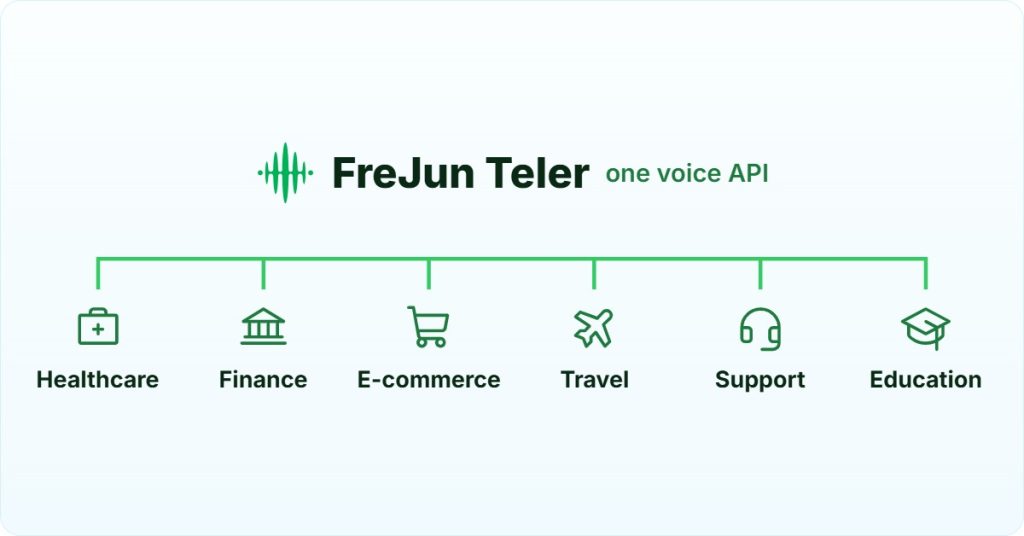
AI Summary: This article compares the top 7 cequens alternatives India teams can deploy in 2026, evaluating each platform on real-time latency, model-agnostic architecture, INR pricing, and TRAI compliance. As of 2026, the Indian cloud communications market is projected to grow at a CAGR of over 17% through 2028, according to IMARC Group, making Voice API selection a foundational infrastructure decision for any AI product team. Developers need a platform that delivers sub-100ms latency, integrates with any STT, LLM, or TTS provider without lock-in, and handles carrier-level TRAI compliance automatically. FreJun Teler meets all three requirements, with outbound calling from ₹0.15 per minute and raw WebSocket streaming that works with any AI stack the team already uses.
Key criteria in this comparison: We ranked these platforms on pricing transparency in INR, real-time WebSocket latency for AI voice loops, TRAI compliance support, model-agnostic architecture, and documentation quality, since these are the factors that most affect a developer team’s build speed and total cost in India.
Quick Answer: The best cequens alternatives India developers can use in 2026 is FreJun Teler, a purpose-built Voice API platform that streams raw audio over WebSocket with sub-100ms latency and works with any STT, LLM, or TTS provider. Teler starts at ₹600 per channel per month with outbound calling from ₹0.15 per minute, making it the most cost-transparent and AI-ready option for teams building voice agents in India.
The best cequens alternatives India teams should evaluate in 2026 include platforms built specifically for real-time AI voice, not just general CPaaS tools that add latency by abstracting the audio layer.
What is Cequens and why do businesses look for cequens alternatives India?
Cequens is a Middle East and Africa-focused CPaaS (Communications Platform as a Service, meaning a cloud-based platform that adds voice, SMS, and video capabilities to applications via APIs) that provides messaging, voice, and OTP services primarily for enterprise teams in the MENA region. While Cequens serves its core markets well, Indian developers and businesses often find that its coverage, INR billing, and TRAI compliance support are limited compared to platforms built specifically for the Indian market. Teams building AI voice agents in India need a platform that delivers raw audio streaming, sub-100ms latency, and carrier-level compliance with TRAI (Telecom Regulatory Authority of India) regulations out of the box. As AI voice adoption accelerates across Indian BFSI, e-commerce, and SaaS sectors, the gap between a general CPaaS and a purpose-built AI voice infrastructure platform becomes a real build-time and cost problem. For teams outside India, the best cequens alternative USA based platforms offer serves as a useful comparison point when evaluating global versus India-specific infrastructure needs.
As of 2026, the Indian cloud communications market is growing at over 17% CAGR, according to IMARC Group, driven by demand for AI-powered customer engagement across banking, retail, and healthcare. The platforms that separate themselves from basic telephony tools offer raw WebSocket audio streaming, model-agnostic AI integration, and transparent per-minute pricing in INR rather than USD-only billing. For Indian teams, these three factors determine whether a platform accelerates or slows down their AI voice product.
Which cequens alternatives India rank highest in 2026?
The table below compares all seven cequens alternatives India developers and businesses should consider, ranked by AI voice readiness, pricing transparency, and India-specific compliance support.
| # | Provider | Best for | Starting price (India) | Free trial |
|---|---|---|---|---|
| 1 | FreJun Teler | AI voice agent infrastructure | ₹600/channel/month + ₹0.15/min outbound | Yes, 3,000 free minutes on first upgrade |
| 2 | Twilio | General CPaaS developers | $0.0085/min inbound, $0.014/min outbound | Yes, $10 free credits |
| 3 | Plivo | Cost-sensitive voice builders | From $25/month + usage | Yes, $10 free credits |
| 4 | Exotel | India enterprise telephony | From ₹9,999/starter package | Yes, 7-day trial |
| 5 | Kaleyra | Compliance-heavy enterprise comms | Contact sales | Not listed |
| 6 | Knowlarity | India cloud telephony teams | Contact sales | Not listed |
| 7 | Sinch | Carrier-grade global comms | From $0.01/min (comparison source) | Yes, 25,000 free app-to-app minutes |
Teler leads this list because it is the only platform here purpose-built for real-time AI voice, with raw WebSocket streaming and TRAI-compliant Indian virtual numbers included from day one. Developers who also want to evaluate carrier-owned network platforms can compare Teler against the Telnyx alternative India options for another perspective on low-latency voice infrastructure.
↓ Scroll for full breakdown of each tool, including features, pros, cons, pricing, and ideal use case.
How to choose the best cequens alternatives India in 2026?
Choosing the right platform from the available cequens alternatives India market offers depends on your AI architecture, call volume, and compliance requirements. These five steps will help you narrow the field quickly. Teams that also rely on carrier-grade network providers may find it useful to review the top Bandwidth alternatives India teams are adopting alongside these Voice API platforms.
Step 1: Define your AI voice architecture
Before evaluating any platform, map out the AI stack you plan to use or already have. Identify your STT (Speech-to-Text, the component that converts the caller’s voice into text the LLM can process), your LLM (Large Language Model, the AI brain that reads the text and decides what to respond), and your TTS (Text-to-Speech, the component that converts the AI’s text response back into natural-sounding audio). If you need sub-100ms latency for a conversational agent, you need a platform that exposes raw audio over WebSocket. If your use case is a form-filling bot where 400-500ms is acceptable, a REST-based platform may work. Most Indian AI voice teams building real-time agents need the lower-latency path.
Step 2: Choose your integration path
Two integration paths exist for AI voice: WebSocket streaming and SIP trunking. WebSocket (a persistent, full-duplex connection that keeps the audio channel continuously open between the caller and the developer’s server) is the right choice for real-time AI voice agents because it eliminates the round-trip overhead of HTTP. SIP (Session Initiation Protocol, the standard protocol for establishing voice calls over the internet) trunking is better for connecting existing SIP-enabled enterprise platforms or PBX systems to a carrier network. Teler supports both paths. If you are building a new AI voice agent from scratch, start with WebSocket. If you are integrating with an existing telephony stack, SIP trunking is the faster route.
Step 3: Check India-specific carrier and compliance requirements
TRAI (Telecom Regulatory Authority of India) and DoT (Department of Telecommunications) set strict rules for outbound calling in India. AI outbound calling must use 140-series numbers for promotional calls and 1600-series for transactional calls. No outbound calls are permitted after 9 PM IST. NCPR (National Customer Preference Register) scrubbing is mandatory before any campaign. Platforms that handle these requirements at the carrier level save your team significant compliance engineering time. Confirm that any platform you shortlist has UL-VNO licensing or a DoT-registered carrier partnership before going live.
Step 4: Evaluate pricing in INR
Calculate a realistic monthly cost based on your expected call volume. For a team running 10,000 outbound minutes per month, the difference between ₹0.15/min and ₹0.25/min is ₹10,000 per month, or ₹1.2 lakh per year. Factor in channel costs, media streaming fees, recording storage, and virtual number rental. Platforms that bill in USD add currency risk for Indian teams. Teler bills in INR with transparent per-minute rates published on its pricing page, so budgeting is straightforward from day one.
Step 5: Test latency and audio quality on a real call before committing
Latency (the delay between when a person speaks and when they hear a response, where lower means more natural conversation) is the single most important technical metric for AI voice agents. A platform that claims low latency in documentation may behave differently under real Indian carrier conditions. Teler gives developers 3,000 free minutes on their first plan upgrade, which is enough to run a full end-to-end test of the Media Streaming Loop (the full real-time cycle: Voice to STT to LLM to TTS to Voice playback, completing in under 100ms on Teler) before committing to a paid plan. Use those free minutes to test your actual STT and LLM stack, not just a synthetic ping.
Top 7 cequens alternatives India developers should evaluate in 2026
1. FreJun Teler – Purpose-built Voice API for AI voice agents in India

FreJun Teler is a Voice API platform built specifically for developers constructing AI voice agents in India, connecting LLMs and AI chatbots to real phone calls over raw WebSocket audio with sub-100ms latency and full TRAI compliance.
Best for: AI voice agent infrastructure in India
Key features
- Raw WebSocket audio streaming in L16/8000Hz format delivers the caller’s voice directly to your server, so your STT engine receives it with no conversion layer adding latency between the caller and your AI model.
- Model-agnostic architecture means you bring your own STT (Google STT, Deepgram, Whisper, AssemblyAI), LLM (OpenAI GPT, Anthropic Claude, Google Gemini), and TTS (ElevenLabs, Google TTS, Azure TTS, Play.ht), paying those providers directly with zero Teler-mandated lock-in.
- SIP trunking with TCP/TLS transport and credential-based or IP-based authentication connects existing SIP-enabled enterprise platforms directly to Teler’s carrier network, so teams migrating from legacy PBX systems do not need to rebuild their telephony stack from scratch.
- Virtual numbers for India and UAE are available from day one, with TRAI-compliant 140-series and 1600-series number support for promotional and transactional outbound campaigns respectively.
- REST API endpoints, webhook callbacks, and SDK support across multiple languages mean a working first call is achievable the same day using the getting-started guide at Teler’s knowledge base.
- Prepaid billing in INR with monthly, quarterly, half-yearly, or annual options removes currency risk and makes budget forecasting straightforward for Indian finance teams.
Pros and cons
| Pros | Cons |
|---|---|
| Sub-100ms WebSocket latency purpose-built for real-time AI voice loops | Minimum 10 channels required to start, so very low-volume experiments carry a fixed monthly floor cost |
| Fully model-agnostic: works with any STT, LLM, or TTS provider the team already uses | Elastic SIP trunking (auto-scaling without channel limits) is on the roadmap but not yet available |
| Transparent INR pricing with 3,000 free minutes on first upgrade for real-world testing | India virtual numbers require purchasing a minimum of 10 channels before additional numbers can be added |
Pricing
Pricing (India): ₹600 per channel per month (minimum 10 channels). Outbound calling at ₹0.15/min, inbound at ₹0.10/min, media streaming at ₹0.15/min, and recording plus storage at ₹0.04/min. Prepaid billing in INR. 3,000 free minutes on first plan upgrade. See full pricing
Why Teler is the top recommendation
Why Teler ranks #1 for India: Teler is the only platform in this list purpose-built for AI voice agent infrastructure in India, with outbound calling from ₹0.15/min in INR, TRAI-compliant virtual numbers, and raw WebSocket streaming that completes the full STT-LLM-TTS loop in under 100ms. Unlike general CPaaS platforms that abstract the audio layer and add 400-800ms of latency, Teler gives developers direct access to the raw audio stream so their AI model can respond at conversation speed. Start building →
Teler by the numbers: Sub-100ms latency | Model-agnostic: 10+ AI providers | Virtual numbers: India and UAE | Same-day integration via WebSocket or SIP | 3,000 free minutes on first upgrade (India)
2. Twilio – Broad CPaaS for engineering-led teams
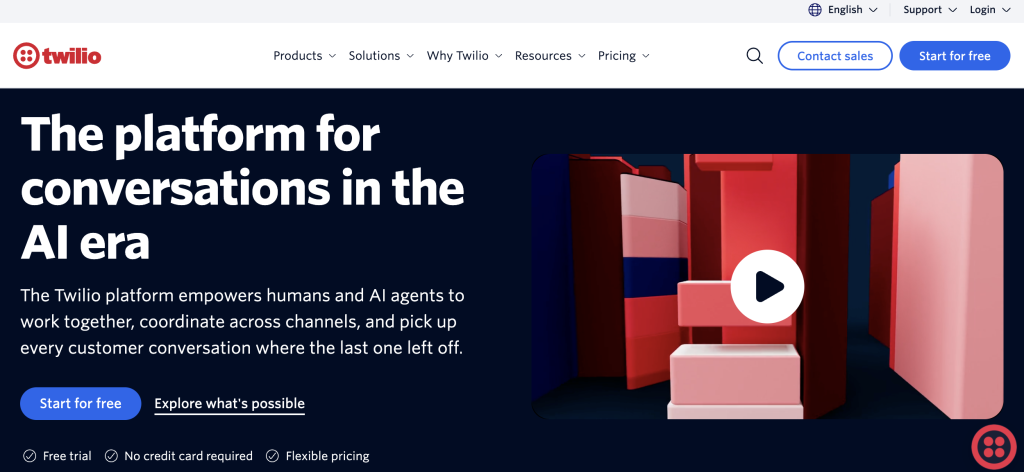
Twilio is a global programmable communications platform for voice, SMS, and other channels, built for engineering-led teams that want to assemble their own telecom workflows rather than use a turnkey AI voice product, making it one of the most widely evaluated cequens alternatives India developers encounter.
Best for: General CPaaS developers.
Teams specifically weighing Twilio against India-first platforms can also read our dedicated comparison of the Twilio alternative India options for a deeper feature-by-feature breakdown.
Key features
- Persistent WebSocket media streams deliver base64-encoded 8 kHz mu-law audio frames to your server, so your team can build a custom AI audio pipeline, though the encoding format adds a conversion step that Teler’s raw L16 stream avoids.
- REST call control lets developers start, stop, redirect, and modify live calls via standard HTTP requests, giving fine-grained programmatic control over call flow without needing a SIP stack.
- SIP trunking and global number coverage across 180+ countries means teams building multi-region products can consolidate their telephony under one provider.
- SDKs in Python, Node.js, Go, Java, C#, PHP, and Ruby reduce integration time for teams already working in those languages.
- A large documentation ecosystem with quickstart guides, code examples, and an active developer community means most integration questions have a public answer already.
Pros and cons
| Pros | Cons |
|---|---|
| Large SDK ecosystem and strong documentation make initial integration fast for experienced developers | Per-minute pricing is among the highest in this comparison, which adds up quickly at Indian call volumes |
| Global number coverage and SIP trunking suit multi-region product teams | Audio is abstracted as base64-encoded 8 kHz mu-law frames, adding a conversion step that increases latency for AI voice loops |
| $10 free credits let teams test basic call flows before committing to a paid plan | No turnkey AI voice runtime: developers own the full application logic, STT, LLM, and TTS integration themselves |
Pricing
Pricing (India): Voice API starts at $0.0085/min inbound and $0.014/min outbound. Billed in USD. India-specific INR billing was not confirmed in public documentation. $10 free credits on signup. US-based teams evaluating similar tradeoffs can review our breakdown of the best Twilio alternative USA options for further context on global CPaaS pricing and latency differences. See full pricing
3. Plivo – Cost-sensitive programmable voice for developer teams
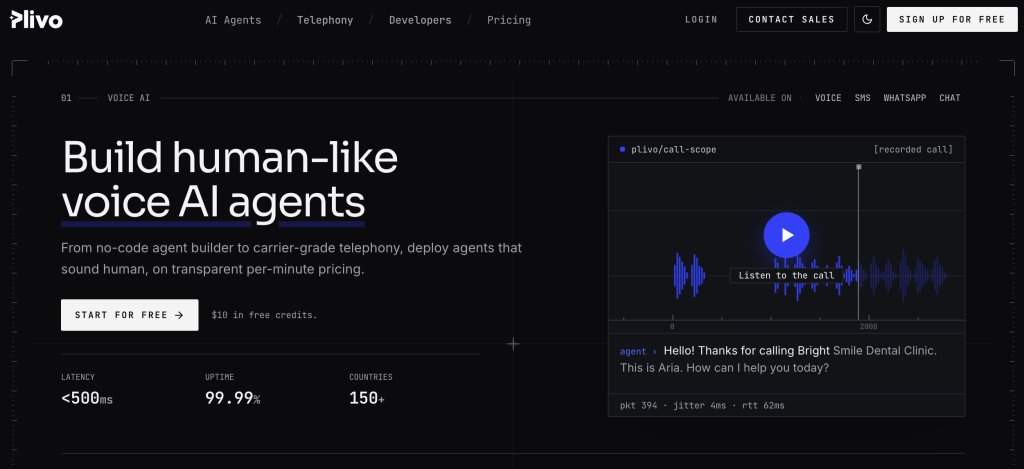
Plivo is a developer-focused CPaaS for programmable voice and messaging, built for cost-conscious teams that want Twilio-like APIs with lower per-minute spend, and it appears frequently when Indian teams search for cequens alternatives India with tighter budgets.
Best for: Cost-sensitive voice builders
Key features
- Lower public voice rates than Twilio, with outbound rates as low as $0.003/min in some comparison sources, so teams running high call volumes can reduce their per-minute spend without switching to a completely different integration model.
- REST call control and SIP trunking give developers the same programmatic call management they expect from a modern CPaaS, without needing to manage physical telephony hardware.
- 190+ country reach means teams building products for Indian users who also call internationally can stay on one provider rather than managing multiple carrier relationships.
- SDKs in Python, Node.js, Go, Java, C#, PHP, and Ruby match the language coverage of larger platforms, so switching from Twilio to Plivo typically requires minimal code changes.
- $10 free credits on signup let developers test basic voice flows before committing to a monthly plan.
Pros and cons
| Pros | Cons |
|---|---|
| Lower per-minute rates than Twilio make it attractive for high-volume Indian call operations | Smaller developer ecosystem than Twilio means fewer community answers for edge-case integration problems |
| Familiar REST and SIP integration model reduces switching cost for teams already on Twilio | WebSocket raw audio streaming was not confirmed in public documentation, so AI voice builders may need to use SIP or REST rather than a direct audio loop |
Pricing
Pricing (India): From $25/month plus usage. Outbound voice rates as low as $0.003/min in comparison sources. INR billing options mentioned in coverage but not confirmed in public documentation. $10 free credits on signup. See full pricing
4. Exotel – India enterprise cloud telephony platform
Exotel is an India-focused cloud telephony platform built for enterprise voice, IVR, call-routing, and voice-OTP teams that need India-compliant telephony, and it is one of the most established cequens alternatives India enterprises consider for domestic deployments.
Best for: India enterprise telephony
Key features
- INR billing and UL-VNO licensing mean Indian enterprise teams can deploy without managing USD currency conversion or worrying about whether the carrier is DoT-registered.
- AgentStream AI adds an AI layer on top of Exotel’s telephony infrastructure, so teams that want a managed AI voice product rather than a raw API have a path forward without switching providers entirely.
- Enterprise telephony workflows including IVR, call routing, and voice-OTP are production-ready out of the box, which reduces the engineering effort for teams building customer support or authentication flows.
- A 7-day free trial gives enterprise teams enough time to validate call quality and routing logic before signing a contract.
- BFSI-ready compliance posture makes Exotel a practical choice for banking, insurance, and fintech teams that face stricter internal procurement requirements around carrier licensing.
Pros and cons
| Pros | Cons |
|---|---|
| India-first with INR billing and UL-VNO licensing, reducing compliance overhead for domestic teams | Not a turnkey AI voice agent platform: a separate AI layer is still required for STT, LLM, and TTS integration |
| AgentStream AI and enterprise telephony workflows are production-ready for support and authentication use cases | WebSocket raw audio streaming was not documented publicly, so real-time AI voice loops require additional engineering work |
Pricing
Pricing (India): From ₹9,999 per starter package (flat package pricing). INR billing available. 7-day free trial. See full pricing
5. Kaleyra – Enterprise CPaaS for compliance-heavy Indian businesses

Kaleyra is an enterprise CPaaS for messaging and voice built for compliance-heavy enterprise and BFSI communication teams, and it surfaces regularly as one of the cequens alternatives India banking and insurance teams evaluate for high-volume regulated deployments.
Best for: Compliance-heavy enterprise comms
Key features
- Tata Communications ownership gives Kaleyra direct carrier relationships in India, which can translate to better call quality and faster resolution of carrier-level issues for enterprise accounts.
- India and global reach under one contract suits large enterprises that need to run domestic Indian campaigns alongside international messaging without managing separate provider relationships.
- Banking-vertical fit means Kaleyra’s onboarding and compliance documentation is already aligned with the procurement requirements most BFSI teams face internally.
- Custom pricing for high-volume deployments means enterprise teams running millions of messages or calls per month can negotiate rates that reflect their actual volume rather than paying public list prices.
Pros and cons
| Pros | Cons |
|---|---|
| Tata Communications carrier relationships and BFSI-aligned compliance posture suit regulated Indian enterprises | Longer onboarding and enterprise-first custom pricing make it slow to evaluate for developer teams that want to test quickly |
| India and global reach under one contract reduces vendor management overhead for large teams | Public AI voice streaming documentation was not found, so real-time AI voice agent builds require significant additional engineering |
Pricing (India): Contact sales. No public pricing listed.
6. Knowlarity – India cloud telephony for virtual-number and IVR teams

Knowlarity is an India cloud telephony provider built for virtual-number, IVR, and call-routing teams that need a telephony backend under a voice workflow, and it is one of the longer-established cequens alternatives India telephony teams consider for domestic IVR deployments.
Best for: India cloud telephony teams
Key features
- India cloud telephony backend with virtual-number workflows means teams can deploy local Indian numbers for inbound call routing without managing physical SIM infrastructure.
- IVR and call routing capabilities let businesses build menu-driven call flows for customer support, appointment booking, and lead qualification without writing custom telephony code.
- SIP, WebRTC, and API integration layer means Knowlarity can sit underneath an existing AI voice platform if the team already has an orchestration layer and just needs a carrier connection.
Pros and cons
| Pros | Cons |
|---|---|
| India-first telephony presence with virtual numbers and IVR ready for domestic deployments | Public developer documentation for streaming audio and AI call control was sparse in available sources |
| SIP and WebRTC integration layer can sit underneath an existing AI orchestration platform | No clearly documented raw audio loop, so real-time AI voice agent builds require reverse-engineering the telephony layer |
Pricing (India): Contact sales. No public pricing listed.
7. Sinch – Carrier-grade global CPaaS with India reach

Sinch is a global CPaaS for carrier-direct messaging and voice built for developers and telecom teams that need direct carrier reach, and it rounds out the list of cequens alternatives India teams evaluate when global carrier coverage is a primary requirement alongside domestic Indian calling.
Best for: Carrier-grade global comms
Key features
- Carrier-direct connections give Sinch better call completion rates on certain routes compared to over-the-top providers, which matters for teams running high-volume outbound campaigns where answer rates directly affect ROI.
- Global reach across enterprise messaging, voice, and verification workflows means teams building multi-channel customer engagement products can consolidate SMS, voice, and OTP under one provider.
- App-to-app calling with 25,000 free minutes (per comparison sources) lets teams test internal communication features before moving to app-to-phone calling at scale.
- REST API and SIP trunking integration paths are available, so teams with existing SIP infrastructure can connect Sinch without rebuilding their call control layer.
Pros and cons
| Pros | Cons |
|---|---|
| Carrier-direct connections and global reach suit teams that need reliable call completion across multiple countries including India | Complex onboarding and enterprise-first positioning make it slow to evaluate for smaller developer teams |
| Multi-channel coverage (voice, SMS, verification) under one contract reduces vendor management for large product teams | Custom pricing and no confirmed public India-specific virtual-number rates make cost forecasting difficult before a sales conversation |
Pricing
Pricing (India): From $0.01/min app-to-phone per comparison sources. Official pricing is custom. India-specific virtual-number pricing was not confirmed in public documentation. See full pricing
Cequens alternatives India feature comparison: 2026
The table below compares all seven cequens alternatives India platforms on the six features that most directly affect AI voice agent build quality and production reliability.
| Feature | Teler | Twilio | Plivo | Exotel | Kaleyra | Knowlarity | Sinch |
|---|---|---|---|---|---|---|---|
| Raw WebSocket audio streaming | Yes, L16/8000Hz, sub-100ms | Partial, base64 mu-law 8kHz | No, not confirmed publicly | No, not documented | No, not documented | No, not documented | No, not documented |
| Model-agnostic AI integration | Yes, any STT/LLM/TTS | Yes, bring your own stack | Yes, bring your own stack | Partial, AgentStream AI layer available | Yes, third-party stack can be layered | Yes, third-party stack can be layered | Yes, third-party stack can be layered |
| INR billing | Yes, prepaid INR | No, USD only | Partial, mentioned in coverage but not confirmed | Yes, INR packages | No, contact sales | No, contact sales | No, USD custom pricing |
| TRAI-compliant India virtual numbers | Yes, India and UAE | Partial, India numbers available but local compliance details not confirmed | Partial, India numbers available | Yes, UL-VNO licensed | Yes, India-first | Yes, India-first | Partial, India reach but compliance details not confirmed |
| Free trial or free credits | Yes, 3,000 free minutes on first upgrade | Yes, $10 free credits | Yes, $10 free credits | Yes, 7-day trial | No, not listed | No, not listed | Yes, 25,000 free app-to-app minutes |
| Public developer documentation quality | Yes, WebSocket quickstart and API reference available | Yes, strong docs ecosystem | Yes, solid REST and SIP docs | Partial, telephony docs good but AI streaming guide missing | Partial, API reference incomplete | No, public docs sparse | Partial, telecom primitives covered but AI audio path not documented |
Teler is the only platform in this comparison that combines raw WebSocket audio streaming, INR billing, TRAI-compliant Indian virtual numbers, and a public developer documentation set covering the full AI voice loop.
Which cequens alternatives India is right for your team in 2026?
Different teams have different constraints. The right platform depends on whether you are building a real-time AI voice agent, a traditional IVR, or a high-volume outbound campaign. Use the profiles below to match your situation to the best fit.
If you are building a real-time AI voice agent in India: Choose Teler. It is the only platform here with raw WebSocket audio streaming, sub-100ms latency, and a model-agnostic architecture that works with any STT, LLM, or TTS provider your team already uses.
If you are an engineering-led team that wants maximum flexibility and a large SDK ecosystem: Choose Twilio. Its broad CPaaS coverage, strong documentation, and global number inventory suit teams that want to assemble their own telecom stack rather than use a turnkey product.
If you are a cost-sensitive developer team running high call volumes: Choose Plivo. Its lower per-minute rates and familiar REST and SIP integration model make it a practical Twilio alternative when budget is the primary constraint.
If you are an Indian enterprise team that needs UL-VNO licensed telephony with INR billing: Choose Exotel. Its India-first compliance posture, INR packages, and AgentStream AI layer suit BFSI and enterprise support teams that need a managed telephony product rather than a raw developer API.
If you are a regulated BFSI enterprise that needs carrier-direct India and global reach under one contract: Consider Kaleyra. Its Tata Communications ownership and banking-vertical compliance alignment suit procurement-heavy enterprise teams, though expect a longer onboarding process.
Which tool wins overall in India?
If you want the best overall cequens alternatives India platform for 2026 with AI features, INR billing, and TRAI compliance: Choose Teler. It is the only platform in this list that delivers sub-100ms WebSocket latency, a fully model-agnostic architecture, transparent INR pricing, and TRAI-compliant Indian virtual numbers in a single developer-first product.
Frequently asked questions about cequens alternatives India in 2026
What is the best cequens alternatives India option in 2026?
The best cequens alternatives India platform in 2026 is FreJun Teler. It is purpose-built for AI voice agent infrastructure, delivering raw WebSocket audio streaming with sub100ms latency so the full STT-LLM-TTS loop completes fast enough for natural conversation. Teler is fully model-agnostic, meaning developers bring their own STT, LLM, and TTS providers with zero lock-in. It bills in INR from ₹600 per channel per month, includes TRAI-compliant Indian virtual numbers, and gives developers 3,000 free minutes on their first upgrade to test the full stack before committing.
How much do cequens alternatives India platforms cost in 2026?
Costs vary significantly across the cequens alternatives India market. Teler charges ₹600 per channel per month (minimum 10 channels), with outbound calling at ₹0.15/min, inbound at ₹0.10/min, media streaming at ₹0.15/min, and recording at ₹0.04/min, all billed in INR. Twilio starts at $0.0085/min inbound and $0.014/min outbound in USD. Plivo starts from $25/month plus usage. Exotel starts from ₹9,999 per starter package. Kaleyra and Knowlarity require a sales conversation for pricing. For Indian teams, Teler’s INR billing and transparent per-minute rates make it the easiest to budget accurately.
What latency can developers expect from cequens alternatives India platforms?
Latency varies significantly depending on how each platform handles audio. Teler’s WebSocket streaming delivers sub-100ms end-to-end latency for the full Media Streaming Loop, because it streams raw L16/8000Hz audio directly to the developer’s server with no conversion layer in the path. General CPaaS platforms like Twilio abstract the audio layer, encoding it as base64 mu-law before delivery, which adds 400-800ms of processing overhead. That difference is the gap between a conversation that feels natural and one where the caller notices a delay after every sentence. For real-time AI voice agents, sub-100ms is the practical threshold for natural conversation.
Which cequens alternatives India platform works with any STT, LLM, or TTS provider?
Teler is fully model-agnostic across the entire AI stack. Developers bring their own STT engine (Google STT, Deepgram, Whisper, or AssemblyAI), their own LLM (OpenAI GPT, Anthropic Claude, Google Gemini, or any custom model), and their own TTS engine (ElevenLabs, Google TTS, Azure TTS, or Play.ht). Teler handles only the voice transport layer, so developers pay their AI providers directly and can swap any component without changing their telephony integration. Zero lock-in matters in production because AI model performance and pricing change frequently, and teams that are locked into a provider’s native AI stack cannot respond to those changes without rebuilding their telephony layer.
What does TRAI compliance mean for AI outbound calling in India?
TRAI (Telecom Regulatory Authority of India) sets the rules for all outbound calling in India, and AI voice agents must follow the same rules as human agents. Promotional outbound calls must use 140-series numbers. Transactional calls must use 1600-series numbers. No outbound calls are permitted after 9 PM IST. Before any campaign, numbers must be scrubbed against the NCPR (National Customer Preference Register) to avoid calling opted-out consumers. Platforms with DoT-registered carrier partnerships handle some of these requirements at the infrastructure level, but the campaign-level NCPR scrubbing and number-series selection remain the deploying team’s responsibility. Confirm TRAI compliance support with any provider before going live with AI outbound calling in India.
What does Teler offer that Cequens does not for AI voice agents?
Cequens is designed primarily for MENA enterprise messaging and voice, with limited India-specific carrier coverage, no confirmed INR billing, and no documented raw WebSocket audio streaming for AI voice loops. Teler, by contrast, is purpose-built for AI voice agent infrastructure in India. It provides raw L16/8000Hz WebSocket audio streaming with sub-100ms latency, TRAI-compliant Indian virtual numbers, INR billing from ₹600 per channel per month, and a model-agnostic architecture that works with any STT, LLM, or TTS provider. For Indian teams building real-time AI voice agents, Teler solves the specific infrastructure problems that a MENA-focused CPaaS like Cequens was not designed to address.
What is the difference between SIP trunking and WebSocket streaming for AI voice?
SIP trunking uses the Session Initiation Protocol to establish voice calls over the internet, connecting existing SIP-enabled platforms like PBX systems or enterprise telephony stacks to a carrier network. It is the right choice when integrating with legacy infrastructure. WebSocket streaming keeps a persistent, full-duplex connection open between the caller and the developer’s server, delivering raw audio frames in real time without the overhead of opening and closing HTTP connections for each exchange. For AI voice agents that need to process audio continuously and respond within 100ms, WebSocket is the correct path. SIP trunking adds more latency because it was designed for human-to-human calls, not for the tight STT-LLM-TTS loop that AI voice agents require.
How do I get started building an AI voice agent with cequens alternatives India platforms?
Start by signing up for Teler at platform.frejun.ai and upgrading to your first plan to unlock 3,000 free minutes. Then connect your STT engine to receive the raw audio stream from Teler’s WebSocket connection. Your STT converts the caller’s voice to text, which your LLM reads and responds to. Your TTS converts the LLM’s text response back to audio, which Teler plays back to the caller. That full Media Streaming Loop completes in under 100ms on Teler. The WebSocket integration guide at Teler’s knowledge base walks through the first call step by step, and most developers have a working test call running the same day they start. Use the 3,000 free minutes to test your full AI stack under real Indian carrier conditions before committing to a paid plan.
Conclusion: Best cequens alternatives India in 2026
The top three cequens alternatives India teams should shortlist are Teler (AI-first), Twilio (ecosystem), and Exotel (India enterprise). Teler is the top recommendation for any team building real-time AI voice agents in India because it is the only platform in this comparison that combines sub-100ms WebSocket latency, a fully model-agnostic architecture, transparent INR pricing, and TRAI-compliant Indian virtual numbers in a single developer-first product. If your team is ready to build, start with Teler’s 3,000 free minutes and have a working AI voice agent running the same day.