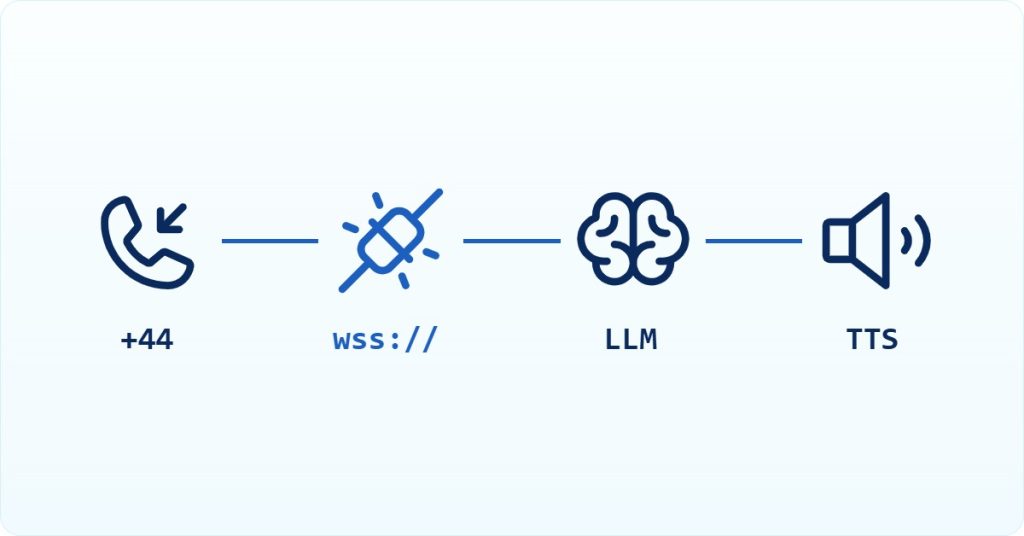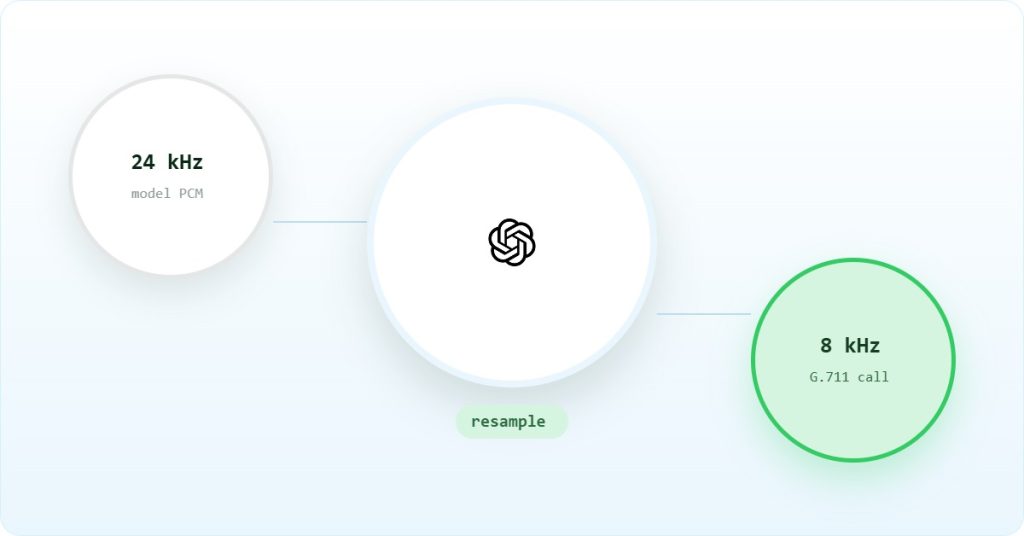

AI Summary: This article compares the 9 best AI voice agent platforms available to US developers in 2026, evaluating each on real-time latency, model compatibility, pricing in USD, and FCC and TCPA compliance. As of 2026, the global conversational AI market is projected to exceed $29 billion by 2028, according to MarketsandMarkets, making voice infrastructure selection a foundational decision for any AI product team. Developers building production voice agents need a platform that targets sub-100ms latency, integrates with any STT, LLM, or TTS provider without lock-in, and handles carrier-level compliance automatically. FreJun Teler meets all three requirements, with outbound calling from $0.20 per minute and raw WebSocket streaming that works with any AI stack the team already uses.
Key criteria in this comparison: We ranked these platforms on pricing transparency, real-time WebSocket latency, model-agnosticism, US carrier compliance, and documentation quality, since these are the factors that most affect a developer team’s build speed and total cost of ownership.
Quick Answer: The best AI voice agent platform for US developers in 2026 is FreJun Teler, which targets sub-100ms WebSocket latency, works with any STT, LLM, or TTS provider without lock-in, and starts at $0.20 per minute for outbound calling with $5 in free calling credits on first upgrade.
The best AI voice agent platform in 2026 is FreJun Teler, a purpose-built voice infrastructure layer that streams raw audio over WebSocket so developers can wire any AI stack directly to live phone calls without building telecom infrastructure from scratch.
What is a best AI voice agent platform?
A best AI voice agent platform is a developer infrastructure layer that connects large language models and AI chatbots to real phone calls, handling the full real-time audio transport so engineers can focus on their AI product rather than telecom plumbing. The best platforms stream raw audio over WebSocket, a persistent, full-duplex connection that keeps the audio channel continuously open between the caller and the developer’s server, rather than abstracting it behind proprietary APIs that add latency.
They are model-agnostic, meaning developers bring their own STT (Speech-to-Text), the component that converts the caller’s voice into text the LLM can process, their own LLM (Large Language Model), the model that reads the text and decides what to respond, and their own TTS (Text-to-Speech), the component that converts the response back into natural-sounding audio. For US developers specifically, the best platforms also handle STIR/SHAKEN caller ID attestation, FCC Robocall Mitigation Database registration, and TCPA (Telephone Consumer Protection Act) consent requirements automatically, so teams do not need to build compliance tooling on top of their voice stack.
As of 2026, demand for AI voice agent infrastructure in the US is accelerating rapidly, driven by enterprises replacing legacy IVR systems with conversational AI that can handle natural language without keypress menus. What separates basic tools from the best platforms in 2026 is the combination of sub-100ms latency for natural conversation, genuine model-agnosticism with zero provider lock-in, and carrier-grade compliance built into the platform rather than bolted on afterward.
Which best AI voice agent platforms rank highest in US in 2026?
The table below ranks all nine platforms on starting price, best-fit use case, and free credit availability for US developers.
| # | Provider | Best for | Starting price (USD) | Free credits |
|---|---|---|---|---|
| 1 | FreJun Teler | AI voice agent infrastructure | $0.20/min outbound | Yes, on first upgrade |
| 2 | Vapi | API-first custom voice agents | $0.05/min platform fee | Yes, $10 free credits |
| 3 | Retell AI | Fast deployment, low-code | Usage-based | Check website |
| 4 | Bland | Outbound call automation | Contact sales | Check website |
| 5 | LiveKit Agents | Open-source real-time agents | Open source, hosting varies | Check website |
| 6 | Synthflow | No-code voice agent builder | Contact sales | Check website |
| 7 | ElevenLabs Agents | High-fidelity TTS voice agents | Usage-based | Check website |
| 8 | Telnyx AI Assistants | Carrier-native AI assistants | Contact sales | Check website |
| 9 | SignalWire AI Agents | Programmable SIP AI agents | Contact sales | Check website |
Teler leads on pricing transparency and latency architecture, while Vapi is the closest alternative for developers who want an orchestration layer with bring-your-own-key flexibility. Read the full profiles below for a complete breakdown of each platform.
How to choose the best AI voice agent platform in US?
Step 1: Define your AI voice architecture
Before evaluating any platform, map the STT, LLM, and TTS providers you already use or plan to use. If you are building a conversational agent that must respond within a natural turn-taking window, you need a platform that targets sub-100ms latency end to end. If your use case is a form-filling bot or an appointment scheduler where a 400-500ms pause is acceptable, a slightly higher latency target is workable. Knowing your latency budget upfront eliminates half the options immediately, since general CPaaS (Communications Platform as a Service), a cloud platform that adds voice, SMS, and video to applications via APIs, abstracts the audio layer in ways that add 200-400ms before your AI stack even sees the audio.
Step 2: Choose your integration path
Two integration paths dominate AI voice agent infrastructure in 2026. WebSocket streaming gives your server a persistent, full-duplex audio channel so raw L16/8000Hz audio arrives at your STT engine with minimal buffering delay, making it the right choice for conversational agents where latency is critical. SIP (Session Initiation Protocol), the standard protocol for establishing voice calls over the internet, trunking connects existing SIP-enabled platforms or AI providers directly to a carrier network, which suits teams migrating from legacy PBX systems or connecting an existing contact center platform. Teler supports both paths, so you can start with WebSocket and add SIP trunking as your infrastructure matures.
Step 3: Check US carrier and compliance requirements
US voice traffic carries three compliance obligations that international-only routing does not. STIR/SHAKEN caller ID attestation is mandated by the FCC Robocall Mitigation Database and digitally signs outbound calls to prove the number has not been spoofed. The FCC’s February 2024 declaratory ruling classified AI-generated voices as artificial or prerecorded, bringing them under TCPA consent requirements. The FTC Telemarketing Sales Rule also requires specific disclosures before payment and prohibits calls to numbers on the Do Not Call Registry. Ask any US-facing platform whether it handles STIR/SHAKEN attestation natively before you send a single outbound call.
Step 4: Evaluate pricing in USD
Compare per-minute rates, channel costs, media streaming fees, and recording fees separately, since platforms that advertise a low headline rate often bill the AI stack components separately. Teler’s pricing is transparent: $15 per channel per month (minimum 10 channels), $0.20 per minute outbound, $0.10 per minute inbound, and $0.0017 per minute for media streaming. That means a team running 10,000 outbound minutes per month can calculate a realistic monthly cost before signing up. Platforms that require a sales call just to get a number make budgeting impossible at the evaluation stage.
Step 5: Test latency and audio quality on a real call
Benchmark numbers in documentation do not always match production performance. Use free credits to run a real call through your full STT to LLM to TTS pipeline before committing to a platform. Teler provides $5 in free calling credits on first upgrade, which is enough to validate the full Media Streaming Loop, the real-time cycle of voice capture, STT transcription, LLM inference, TTS synthesis, and audio playback, under realistic network conditions. If the round-trip feels natural in testing, it will hold in production.
Top best AI voice agent platforms in US for 2026
1. FreJun Teler – Purpose-built voice infrastructure for AI agents

FreJun Teler is a Voice API platform for developers building AI voice agents, connecting LLMs and AI chatbots to real phone calls via raw WebSocket audio streaming so teams can focus on their AI product rather than telecom infrastructure.
Best for: AI voice agent infrastructure in US
Key features
- Raw WebSocket audio streaming delivers L16/8000Hz audio directly to your server, so your STT engine receives the caller’s voice with no proprietary conversion layer adding latency between capture and transcription.
- Model-agnostic architecture means you bring your own STT (Google STT, Deepgram, Whisper, AssemblyAI), LLM (OpenAI GPT, Anthropic Claude, Google Gemini, or any custom model), and TTS (ElevenLabs, Google TTS, Azure TTS, Play.ht), paying those providers directly with zero lock-in.
- SIP trunking with TCP/TLS transport and credential-based or IP-based authentication connects existing SIP-enabled platforms or AI providers directly to Teler’s carrier network, making it straightforward to migrate from a legacy PBX.
- Webhook callbacks for call lifecycle events and REST API endpoints for call control give developers full programmatic access to every stage of a call without needing a proprietary SDK to get started.
- Virtual numbers available for India and UAE, with same-day integration via WebSocket or SIP, so a working first call is achievable on the day of signup using the Teler documentation.
- Compatible with AWS, Google Cloud, Azure, Vercel, LangChain, Vapi, Voiceflow, and Retell, so teams building on any of those platforms can add Teler as the telephony layer without rearchitecting their stack.
Pros and cons
| Pros | Cons |
|---|---|
| Sub-100ms latency target for real-time AI voice loops, fast enough for natural, uninterrupted conversation | Virtual numbers currently available for India and UAE only, not yet for US local numbers directly |
| Fully model-agnostic: compatible with 10+ STT, LLM, and TTS providers with zero lock-in | Elastic SIP trunking is on the roadmap but not yet available; capacity is managed through channels |
| Transparent per-minute pricing in USD with $5 in free calling credits on first upgrade | Minimum channel commitment of 10 channels per month required to get started |
Pricing
Pricing (US): $15 per channel per month (minimum 10 channels), $0.20 per minute outbound, $0.10 per minute inbound, $0.0017 per minute media streaming, $0.00046 per minute recording and storage. $5 in free calling credits on first upgrade. See full pricing
Why FreJun Teler is the top recommendation
Why Teler ranks #1 for US: Teler is the only platform in this comparison purpose-built for AI voice agent infrastructure rather than general CPaaS, which means it streams raw audio over WebSocket at a sub-100ms latency target instead of abstracting the audio layer in ways that make real-time LLM inference impractical. At $0.20 per minute outbound with fully transparent per-minute pricing, it is also the most predictable option for US teams budgeting at scale, and its model-agnostic architecture means TCPA and STIR/SHAKEN compliance tooling can be layered on top without being locked into a single AI provider’s ecosystem.
Teler by the numbers: Sub-100ms latency target | Model-agnostic across 10+ AI providers | Virtual numbers in India and UAE | Same-day integration via WebSocket or SIP | $5 in free calling credits on first upgrade
2. Vapi – Developer-first voice agent orchestration
Vapi is a voice agent platform for developers that combines telephony, SIP, WebSockets, and browser WebRTC for building call workflows, making it a strong choice for teams that want an orchestration layer above the telephony infrastructure.
Best for: API-first custom voice agent orchestration
Key features
- WebSocket support lets a developer connect a custom real-time audio loop directly to their own server, giving full control over the STT to LLM to TTS pipeline without Vapi intercepting the audio.
- Telephony and SIP support means calls can land on PSTN infrastructure without the developer building a separate carrier bridge from scratch.
- Daily WebRTC support gives browser-based call flows a native transport option alongside PSTN, so the same platform handles both web and phone channels.
- Bring-your-own API keys with at-cost provider pass-through keeps STT, LLM, and TTS vendors swappable, since Vapi adds no markup on Deepgram, OpenAI, or ElevenLabs costs.
- New accounts receive $10 in free credits, which is enough to validate a full call pipeline before committing to a paid plan.
Pros and cons
| Pros | Cons |
|---|---|
| WebSocket streaming lets developers wire a custom real-time audio loop directly to their own server | The published $0.05/min fee is only the platform layer; STT, model, voice, and telephony are billed separately on top |
| Bring-your-own API keys with at-cost pass-through keeps AI providers swappable | Real all-in cost can reach $0.15 to $0.30 per minute once the full stack is added, according to developer reports on Reddit |
| $10 in free credits lowers the cost of first-call validation | Headline pricing understates total spend, making accurate budget forecasting difficult before production |
Pricing
Pricing (US): $0.05 per minute platform fee, prorated to the second. STT, LLM, TTS, and telephony billed separately at cost. $10 in free credits on signup. See full pricing
3. Retell AI – Low-code voice agent deployment

Retell AI is a voice agent platform focused on fast deployment for teams that want phone features included without building a custom telephony stack, making it a practical choice for non-technical builders and early-stage products.
Best for: Fast deployment, low-code voice agents
Key features
- Phone features are included in the platform, so teams do not need to source a separate telephony provider to make their first call.
- Warm transfer support with full context handoff means a live agent receiving a transferred call sees the conversation history, reducing repeat questioning for callers.
- Usage-based pricing with a default of 20 concurrent calls, raiseable on request, gives growing teams a clear path to scale without renegotiating a contract.
- Third-party benchmarks report approximately 600 to 800ms latency, which is acceptable for structured workflows but higher than WebSocket-native platforms for conversational agents.
- Low-code configuration means product managers can adjust agent scripts without engineering involvement, shortening iteration cycles on voice workflows.
Pros and cons
| Pros | Cons |
|---|---|
| Phone features included, so no separate telephony provider is needed to get started | Third-party benchmarks report 600 to 800ms latency, which is higher than WebSocket-native platforms |
| Best-in-class warm transfer with full context handoff reduces caller friction on escalations | Burst pricing adds $0.10 per minute above the default concurrency limit, which can spike costs unexpectedly |
4. Bland – Outbound call automation at scale
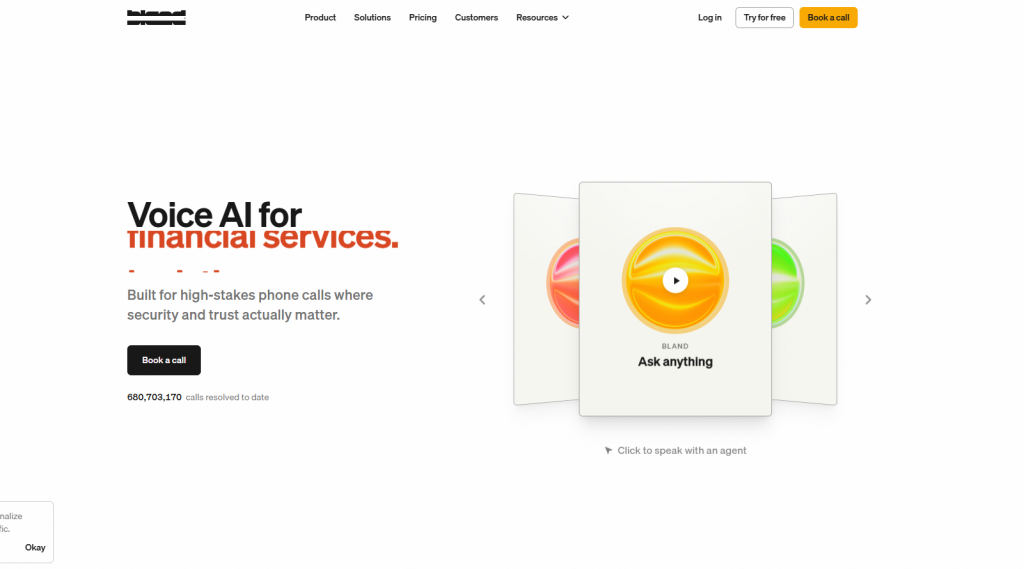
Bland is a voice AI platform focused on outbound call automation, built for teams that need to run high-volume campaigns such as appointment reminders, lead qualification, and payment alerts without managing telephony infrastructure manually.
Best for: High-volume outbound call automation
Key features
- Outbound campaign tooling lets teams schedule and dispatch large call volumes programmatically, so a single API call can trigger thousands of outbound calls with dynamic, personalized scripts.
- Pathway-based conversation design gives developers a structured way to define branching call flows, which reduces the risk of an agent going off-script in production.
- Built-in call analytics surface completion rates, transfer rates, and sentiment signals, so teams can iterate on scripts using real call data rather than guesswork.
- Webhook callbacks on call events integrate with CRM and ticketing systems, so call outcomes update downstream records automatically without manual data entry.
- US phone number provisioning is included, which removes the need to source numbers from a separate carrier before launching a campaign.
Pros and cons
| Pros | Cons |
|---|---|
| Pathway-based conversation design reduces off-script risk in production outbound campaigns | Pricing is not publicly listed, requiring a sales conversation before teams can evaluate total cost |
| Built-in analytics surface completion and sentiment data without a separate analytics integration | Less suited to inbound conversational agents where sub-100ms latency is critical for natural turn-taking |
5. LiveKit Agents – Open-source real-time voice agent framework

LiveKit Agents is an open-source framework for building real-time voice and multimodal agents, giving developers full control over the agent pipeline by running it on their own infrastructure rather than a managed cloud service.
Best for: Open-source, self-hosted real-time agents
Key features
- Open-source codebase means teams can inspect, fork, and modify the entire agent pipeline, which is valuable for regulated industries where third-party data processing is restricted.
- WebRTC-native transport gives browser and mobile clients a low-latency audio path without requiring a SIP trunk or PSTN carrier for web-based deployments.
- Plugin architecture supports swappable STT, LLM, and TTS providers, so teams are not locked into a single AI vendor even when self-hosting.
- Active GitHub community and regular releases mean the framework stays current with new model releases and real-time audio improvements.
- Works alongside Teler as a telephony layer, since developers building on LiveKit Agents can connect Teler’s SIP trunking to bring PSTN calling into their self-hosted pipeline. See the Top 7 Best Voice APIs for LiveKit in the US for integration details.
Pros and cons
| Pros | Cons |
|---|---|
| Full open-source control over the agent pipeline, suitable for regulated or data-sensitive deployments | Self-hosting requires DevOps investment that managed platforms eliminate, raising the operational burden for small teams |
| WebRTC-native transport supports browser and mobile clients without a PSTN carrier | PSTN calling requires a separate telephony provider such as Teler, adding an integration step before phone calls work |
6. Synthflow – No-code voice agent builder

Synthflow AI is a no-code AI voice agent builder designed for business teams that want to deploy voice agents for customer support, lead qualification, and appointment booking without writing backend code.
Best for: No-code voice agent deployment
Key features
- Visual agent builder lets non-technical users configure conversation flows, voice personas, and escalation rules through a drag-and-drop interface rather than writing webhook handlers.
- Pre-built integrations with CRM platforms mean call outcomes sync to contact records automatically, reducing manual data entry after each call.
- Inbound and outbound calling support in one platform means teams do not need separate tools for handling incoming support calls and running outbound reminder campaigns.
- White-label options allow agencies and SaaS builders to deploy Synthflow-powered voice agents under their own brand without exposing the underlying platform.
- Template library of pre-built agent scripts for common use cases such as appointment reminders and lead qualification shortens time to first deployment for standard workflows.
Pros and cons
| Pros | Cons |
|---|---|
| No-code visual builder makes voice agent deployment accessible to non-technical business teams | Limited low-level API access makes it difficult for developers who need custom audio processing or model routing logic |
| Pre-built CRM integrations reduce post-call data entry overhead | Pricing is not publicly listed, so cost comparison requires a sales conversation |
7. ElevenLabs Agents – High-fidelity TTS-native voice agents
ElevenLabs Agents is a conversational AI agent platform built on top of ElevenLabs’ industry-leading text-to-speech technology, making it the strongest choice for teams where voice quality and naturalness are the primary differentiator.
Best for: High-fidelity, natural-sounding voice agents
Key features
- ElevenLabs’ proprietary TTS engine produces some of the most natural-sounding AI voices available in 2026, which directly improves caller experience in customer-facing deployments.
- Voice cloning capability lets teams create a custom voice persona that matches their brand identity, rather than choosing from a generic voice library.
- Multilingual support across dozens of languages means a single agent deployment can handle callers in different languages without switching platforms.
- Conversational agent framework handles turn-taking, interruption detection, and context management, so developers do not need to build those components from scratch.
- SDK availability for web and mobile lets product teams embed voice agent capabilities directly into their application rather than routing all calls through a phone number.
Pros and cons
| Pros | Cons |
|---|---|
| Industry-leading TTS voice quality produces the most natural-sounding AI voices in the comparison | Platform is optimized around ElevenLabs TTS, so teams wanting a different TTS provider face friction |
| Voice cloning and multilingual support in one platform reduces the need for multiple vendors | PSTN telephony integration requires a separate carrier layer, adding complexity for phone-based deployments |
8. Telnyx AI Assistants – Carrier-native AI voice assistants

Telnyx AI Assistants is an AI voice assistant product built on Telnyx’s own carrier infrastructure, giving teams a single vendor for both the telephony layer and the AI orchestration layer without needing to connect separate providers.
Best for: Carrier-native AI assistant deployments
Key features
- Carrier-native infrastructure means Telnyx owns the network layer, which can reduce latency between the telephony and AI processing layers compared to platforms that rely on third-party carriers.
- STIR/SHAKEN attestation is handled natively by Telnyx’s carrier infrastructure, so US outbound calls carry proper caller ID authentication without additional configuration.
- Global number inventory across 140+ countries means teams running international deployments can source numbers and AI assistants from one vendor.
- Elastic SIP trunking on the Telnyx network allows call volume to scale without pre-purchasing channel blocks, which suits teams with unpredictable traffic patterns.
- Developer-friendly REST API and webhook architecture make it straightforward to integrate Telnyx AI Assistants into an existing backend without a proprietary SDK.
Pros and cons
| Pros | Cons |
|---|---|
| Carrier-native infrastructure handles STIR/SHAKEN natively, simplifying US compliance | AI assistant features are tightly coupled to Telnyx’s own stack, limiting model-agnosticism compared to pure infrastructure platforms |
| Global number inventory from one vendor reduces supplier management overhead | Pricing requires a sales conversation, making upfront cost comparison difficult |
9. SignalWire AI Agents – Programmable SIP AI agent platform

SignalWire AI Agents is a programmable SIP-based AI agent platform built on SignalWire’s open-source FreeSWITCH heritage, giving developers deep control over call routing, media handling, and AI integration at the SIP layer.
Best for: Programmable SIP AI agent deployments
Key features
- Programmable SIP infrastructure gives developers direct control over call routing logic at the protocol level, which is valuable for complex multi-leg call flows that managed platforms cannot express through a visual builder.
- SWML (SignalWire Markup Language) lets developers define AI agent behavior in a declarative markup format, reducing the amount of custom code needed to build a production voice agent.
- Built on FreeSWITCH, a proven open-source telephony engine, which means the underlying media handling is battle-tested at carrier scale rather than built on a newer, less proven stack.
- Real-time AI integration hooks allow LLM responses to be injected into live calls, supporting use cases like live agent coaching and dynamic IVR that adapts to caller intent.
- US carrier compliance including STIR/SHAKEN is handled at the platform level, so developers do not need to implement attestation logic separately.
Pros and cons
| Pros | Cons |
|---|---|
| Deep SIP programmability suits complex multi-leg call flows that managed platforms cannot handle | Higher learning curve than managed platforms, since SIP expertise is required to get the most out of the programmable layer |
| FreeSWITCH-based media handling is proven at carrier scale | Pricing is not publicly listed, requiring a sales conversation before cost evaluation |
Best AI voice agent platform feature comparison: 2026
| Feature | FreJun Teler | Vapi | Retell AI | Bland | LiveKit Agents | Synthflow | ElevenLabs Agents | Telnyx AI Assistants | SignalWire AI Agents |
|---|---|---|---|---|---|---|---|---|---|
| Raw WebSocket audio streaming | Yes | Yes | Partial, via API | No | Yes, WebRTC | No | Partial, SDK only | Partial, via SIP | Partial, via SIP |
| Model-agnostic (bring your own STT/LLM/TTS) | Yes | Yes | Partial | Partial | Yes | No | No, TTS locked to ElevenLabs | Partial | Partial |
| Transparent public pricing in USD | Yes | Yes, platform fee only | No | No | Yes, open source | No | Partial | No | No |
| STIR/SHAKEN and TCPA compliance support | Yes | Partial, via carrier | Partial | Partial | No, requires carrier | Partial | No, requires carrier | Yes, carrier-native | Yes |
| SIP trunking support | Yes | Yes | No | No | No, WebRTC only | No | No | Yes | Yes |
| Free credits or trial on signup | Yes, $5 on first upgrade | Yes, $10 free credits | Check website | Check website | Yes, open source | Check website | Check website | Check website | Check website |
Teler and Vapi are the only two platforms in this comparison that combine raw WebSocket audio streaming, genuine model-agnosticism, and transparent public pricing, but Teler’s all-in per-minute rate is more predictable than Vapi’s multi-vendor billing model.
Which best AI voice agent platform is right for your team in US?
The right platform depends on your team’s technical depth, latency requirements, and whether you need a managed service or infrastructure-level control. Here is a practical breakdown by team type.
If you are a backend developer building a conversational AI agent from scratch: Choose FreJun Teler. Raw WebSocket streaming, model-agnostic architecture, and transparent per-minute pricing give you the infrastructure control you need without building a carrier stack.
If you are a developer who wants an orchestration layer with bring-your-own-key flexibility: Choose Vapi. Its WebSocket support and at-cost provider pass-through work well for teams that want to manage their own STT, LLM, and TTS vendors through a single orchestration API, but budget for the full stack cost rather than the headline $0.05/min rate.
If you are a non-technical team that needs a voice agent deployed this week: Choose Synthflow. Its no-code visual builder and pre-built CRM integrations let business teams configure and launch agents without engineering involvement.
If you are a team that prioritizes voice quality above all else: Choose ElevenLabs Agents. Its TTS engine produces the most natural-sounding AI voices in this comparison, which matters most in customer-facing deployments where caller experience is the primary metric.
If you are a developer who needs deep SIP programmability for complex call routing: Choose SignalWire AI Agents. Its FreeSWITCH-based infrastructure and SWML declarative markup give you protocol-level control that managed platforms cannot match.
Which tool wins overall in US?
If you want the best overall best AI voice agent platform for US: Choose FreJun Teler. It is the only platform in this comparison that combines sub-100ms WebSocket latency, genuine model-agnosticism across 10+ AI providers, transparent per-minute pricing in USD, and same-day integration without requiring a proprietary SDK or a sales call to get started.
Frequently asked questions
What is the best AI voice agent platform in US in 2026?
The best AI voice agent platform in US in 2026 is FreJun Teler. It targets sub-100ms latency for real-time AI voice loops using raw WebSocket audio streaming, which means the full Media Streaming Loop, voice capture, STT transcription, LLM inference, TTS synthesis, and audio playback, completes fast enough for natural, uninterrupted conversation. It is also fully model-agnostic, so teams bring their own STT, LLM, and TTS providers and pay those vendors directly, with zero lock-in. Transparent per-minute pricing in USD, starting at $0.20 per minute outbound, makes cost forecasting straightforward before a team commits to production scale.
How much does an AI voice agent platform cost in the US?
Pricing varies significantly across platforms. Teler charges $15 per channel per month (minimum 10 channels), $0.20 per minute outbound, $0.10 per minute inbound, and $0.0017 per minute for media streaming, with $5 in free calling credits on first upgrade. Vapi charges $0.05 per minute as a platform fee, but STT, LLM, TTS, and telephony are billed separately, so the real all-in cost typically lands between $0.15 and $0.30 per minute according to developer reports. Several platforms in this comparison, including Bland, Synthflow, Telnyx AI Assistants, and SignalWire AI Agents, do not publish pricing publicly and require a sales conversation. See current Teler pricing for the full breakdown.
Why does latency matter so much for AI voice agents?
Latency, the delay between when a person speaks and when they hear a response, is the single most important factor in whether a voice agent feels natural or robotic. Human conversation operates on turn-taking windows of roughly 200 to 300ms. When a voice agent takes 600ms or more to respond, callers perceive it as slow and unnatural, which increases hang-up rates. General CPaaS platforms abstract the audio layer for human-to-human calls, and that abstraction adds 200 to 400ms before the AI stack even sees the audio. Teler targets sub-100ms latency by streaming raw L16/8000Hz audio directly to the developer’s server over a persistent WebSocket connection, so the STT engine receives audio with no proprietary conversion layer in the way.
What does model-agnostic mean for a voice agent platform?
A model-agnostic voice agent platform handles only the voice transport layer and lets developers bring their own STT, LLM, and TTS providers. In practice, this means a team can use Deepgram for STT, Anthropic Claude as the LLM, and ElevenLabs for TTS, paying each provider directly at their published rates, while the voice platform handles only the carrier connectivity and audio streaming. This matters in production because AI model performance improves rapidly, and teams locked into a platform’s bundled models cannot switch to a better model without migrating their entire voice stack. Teler is fully model-agnostic, compatible with Google STT, Deepgram, Whisper, AssemblyAI, OpenAI GPT, Anthropic Claude, Google Gemini, ElevenLabs, Google TTS, Azure TTS, and Play.ht. See the Top 9 Best Voice API Providers for AI Agents in the US for a broader comparison of model-agnostic options.
What US compliance requirements apply to AI voice agents?
US voice traffic carries three compliance obligations that developers must address before going to production. STIR/SHAKEN caller ID attestation, mandated by the FCC, digitally signs outbound calls to prove the number has not been spoofed. Without it, answer rates drop 30 to 60 percent on mobile numbers. The FCC’s February 2024 declaratory ruling classified AI-generated voices as artificial or prerecorded under the TCPA (Telephone Consumer Protection Act), which requires prior express written consent before calling a mobile number with an automated AI voice. The FTC Telemarketing Sales Rule requires specific disclosures before payment and prohibits calls to numbers registered on the Do Not Call Registry. Ask any platform whether it handles STIR/SHAKEN natively and whether its outbound calling infrastructure is registered in the FCC Robocall Mitigation Database before sending a single production call.
What is the difference between SIP trunking and WebSocket streaming for AI voice agents?
SIP trunking and WebSocket streaming serve different parts of the voice agent stack. SIP, the standard protocol for establishing voice calls over the internet, trunking connects a developer’s platform to the PSTN carrier network, handling call setup, teardown, and routing. It is the right choice for teams migrating from a legacy PBX or connecting an existing SIP-enabled contact center platform to an AI layer. WebSocket streaming is a persistent, full-duplex connection that keeps the audio channel continuously open between the caller and the developer’s server, delivering raw audio in real time for STT processing. It is the right choice for conversational AI agents where sub-100ms latency is required. Teler supports both paths, so teams can start with WebSocket for lowest latency and add SIP trunking as their infrastructure matures. The Teler documentation covers both integration paths with working examples.
How do I get started with an AI voice agent platform in the US?
Getting started with a best AI voice agent platform follows the same pattern regardless of which platform you choose. First, sign up and provision a phone number or configure your SIP trunk. Second, connect your WebSocket endpoint so the platform can stream raw audio to your server. Third, wire your STT engine to transcribe the incoming audio, pass the transcript to your LLM, and send the LLM’s response to your TTS engine. Fourth, stream the TTS audio back through the platform so the caller hears the response. This is the Media Streaming Loop, and the full cycle targets under 100ms on Teler. Teler provides $5 in free calling credits on first upgrade, which is enough to run the full loop on real calls before committing to a paid plan. Because Teler uses standard WebSocket, a working first call is achievable the same day using the getting-started guide at frejun.ai/docs.
Conclusion: Best AI voice agent platform in US for 2026
For US developers choosing a best AI voice agent platform in 2026, three options stand out for different reasons. FreJun Teler leads the list because it combines sub-100ms WebSocket latency, genuine model-agnosticism across 10+ AI providers, and transparent per-minute pricing in USD, making it the most complete infrastructure choice for teams building production conversational agents. Vapi is the strongest alternative for teams that want an orchestration layer with bring-your-own-key flexibility, but the real all-in cost is materially higher than the headline rate. LiveKit Agents suits teams that need full open-source control and are willing to manage their own hosting and add a separate telephony provider for PSTN calling. If your team is building a real-time AI voice agent for the US market and needs a platform that handles carrier compliance, streams raw audio at sub-100ms, and works with any AI stack you already use, Teler is the clear starting point.