Tour operators lose real revenue every time a potential customer calls after hours and hits voicemail. Automating tour bookings with voice AI solves this directly: a well-built AI voicebot answers every call, guides travelers through a natural discovery conversation, checks live availability, and completes the booking, including payment, without a human agent in the loop. This guide walks through the specific workflows that make this possible and the infrastructure decisions that determine whether they work reliably at scale.
Voice AI for tour bookings handles the full reservation cycle, from discovery to payment confirmation, without a human agent.
What is an AI Voicebot for Tour Bookings?
An AI voicebot for tour bookings is a conversational AI system that handles inbound phone calls for travel operators, answering tour questions, checking availability via API, and completing reservations including payment, 24 hours a day without human agents.
Why is the Manual Booking Process a Bottleneck to Growth?
The traditional, human-powered model for booking tours limits a travel firm’s growth in two concrete ways: it misses the hours when travelers actually research trips, and it burns your best agents on repetitive informational calls.
“We see tour operators lose 30 to 40 percent of their bookable inquiries simply because the call came in at 9 PM on a Sunday. The traveler had the intent and the credit card. The phone just rang out. A voice AI layer fixes that without adding headcount.”
— Subhash Kalluri, CEO, FreJun
How Does the “9-to-5” Model Miss Peak Booking Times?
Travel inspiration does not keep business hours. Travelers browse itineraries and make booking decisions in the evening and on weekends, when your phone lines are closed. Research from SaleCycle shows that a significant share of travel-related web traffic occurs outside of standard business hours, and phone intent follows the same pattern. Every call that goes to voicemail during these peak windows is a lost sale, not a deferred one.
A Phocuswright study found that over 60% of travel inquiries originate outside the 9-to-5 window (Source: Phocuswright Consumer Trends 2024). That figure alone makes the case for 24/7 voice coverage. When your AI voicebot answers at 10 PM, it captures intent that would otherwise evaporate by morning.
What is the High Cost of a Human-Powered “Information Desk”?
A large share of inbound calls to tour operators are not from people ready to book. They are from travelers in the research phase, asking the same questions your website already answers:
- “What is the itinerary for the 10-day Italy tour?”
- “What is the activity level for the hiking trip in Peru?”
- “What is your cancellation policy?”
When your most experienced travel consultants spend their day acting as a human FAQ page, you pay senior-level salaries for junior-level work. According to Deloitte’s 2024 Contact Center Report, repetitive informational queries account for up to 45% of inbound call volume in travel and hospitality (Source: Deloitte Contact Center Trends 2024). An AI voicebot handles this entire category, freeing your consultants for the complex, high-value sales that actually need a human.
Also Read: How To Add Chatbot Voice Assistant Capabilities in Your Backend?
How Can an AI Voicebot Act as a 24/7 “AI Travel Consultant”?
An AI voicebot combines the round-the-clock availability of a website with the consultative depth of an expert agent. It handles an unlimited number of simultaneous inquiries and knows every detail of every tour you offer, because it retrieves that knowledge in real time from your own content via RAG (Retrieval-Augmented Generation).
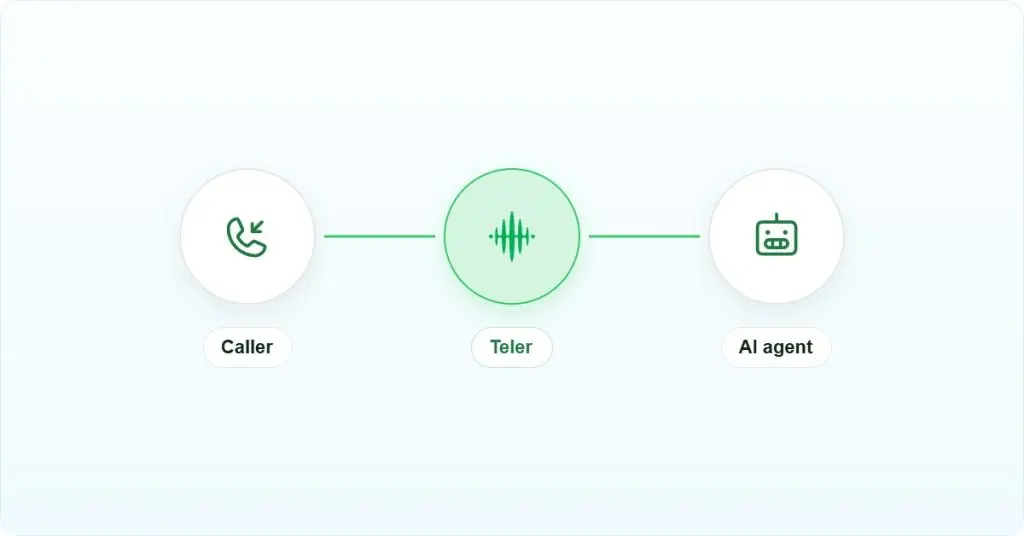
This capability sits on top of a programmable voice infrastructure layer. FreJun Teler provides the telephony foundation: real-time audio streaming via WebSocket, SIP (Session Initiation Protocol) trunking for reliable call delivery, and global number provisioning across 50+ countries. The infrastructure handles the call transport so your application logic handles the conversation.
The architecture is model-agnostic by design. You choose the LLM (Large Language Model) that best fits your use case and the TTS (Text-to-Speech) voice that matches your brand. Teler connects them to the phone network without locking you into a specific AI vendor. For teams building on top of existing AI frameworks, see how voice AI handles upselling during live calls as a practical extension of this pattern.
What are the Core Workflows for a Tour Booking Voicebot?
Let’s move beyond theory and look at the specific, practical workflows delivering measurable returns for tour operators today.
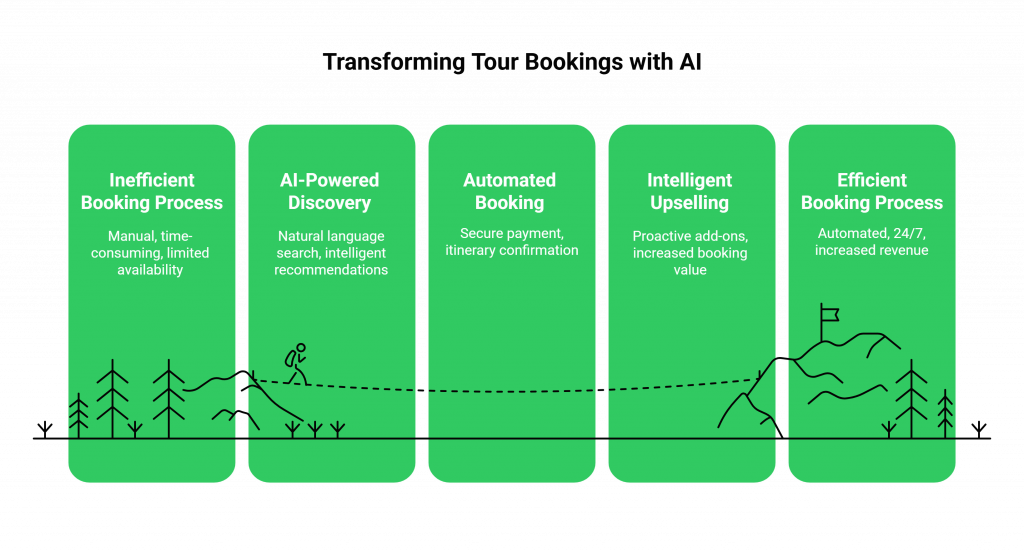
How Can You Create a Conversational Discovery and Booking Engine?
The Goal: Let a traveler find and book the right tour through a natural spoken conversation, at any hour.
The Workflow:
- A potential customer calls your main line. The AI voicebot answers instantly. “Thank you for calling Adventure Travels. I’m an AI travel consultant. I can help you find the perfect tour, answer questions about our trips, or help you with an existing booking. What kind of adventure are you dreaming of today?”
- The traveler describes their needs in natural language. “I’m looking for a cultural tour in Southeast Asia for this fall, something that’s not too physically demanding.”
- The AI uses this input to make an intelligent recommendation. “That sounds wonderful! Based on what you’ve said, I think our ‘Temples of Thailand’ tour would be a perfect fit. It’s a 12-day trip with a focus on culture and cuisine, and it has a ‘relaxed’ activity rating. Would you like to hear more about the day-by-day itinerary?”
- The AI answers specific questions by retrieving information from its knowledge base, powered by RAG.
- When the traveler is ready, the AI proceeds to complete the full booking, including securely collecting payment information via DTMF (Dual-Tone Multi-Frequency) keypad capture.
The Business Impact: This workflow turns your phone line into an interactive sales channel. It provides a guided, consultative experience that is far more engaging than a static website and captures high-value bookings that would otherwise be lost after hours. For teams thinking about the broader architecture, the guide on integrating RAG for knowledge-aware voice bots covers the knowledge retrieval layer in detail.
Also Read: Voice Assistant Bot Platforms for SMBs
How Can You Automate the Soft Sell with Intelligent Upselling?
The Goal: Not just take the booking, but actively increase the value of every reservation through conversational upselling.
The Workflow: The AI is configured as a consultative salesperson, not just an order-taker.
- The Pre-Booking Upsell: “I see you’re interested in the Standard room package for the ‘Wonders of Italy’ tour. Just so you know, for only $500 more, the ‘Deluxe’ package includes rooms with a guaranteed view and a private wine-tasting experience in Tuscany. Many of our guests find it to be a highlight of their trip. Would you be interested in that?”
- The Post-Booking Cross-Sell: After the main tour is booked, the AI makes intelligent add-on suggestions. “Your trip is confirmed! I also see that you have a free day in Rome at the end of your tour. We offer a popular ‘Ancient Rome’ walking tour that day. It’s an additional $75 per person. Can I add that to your itinerary?”
The Business Impact: This turns your AI voicebot from a simple order-taker into a proactive revenue generator. Conversational, consultative upsells are measurably more effective than a checkbox on a website. McKinsey research on personalization in travel found that contextual upselling during the booking conversation can increase average order value by 10 to 30 percent (Source: McKinsey, The Value of Getting Personalization Right, 2021).
What is the Technology Stack that Powers These Workflows?
These integrated workflows require a modern, API-driven architecture with four distinct layers working together.
- The AI Brain (LLM): The core intelligence that conducts the conversation and makes recommendations.
- The Knowledge Base (RAG): Where the AI retrieves expert knowledge about your specific tours, itineraries, and policies in real time.
- The Booking Engine Integration: The API connection to your reservation system that lets the AI check real-time availability and create new bookings.
- The Voice Infrastructure: The foundational layer. FreJun Teler’s Voice Apps and Media Streaming capabilities handle real-time audio transport via WebSocket, so your application receives a clean audio stream to pass to your STT (Speech-to-Text) engine and LLM. Because Teler is model-agnostic, you choose the LLM and TTS voice that best represents your brand.
Manual vs. Automated: A Side-by-Side Comparison
| Component of Booking | Manual Process by Human Agent | Automated Process by AI Voicebot |
|---|---|---|
| Initial Inquiry | Wait in queue, speak to agent. | Instant answer from AI, 24/7. |
| Information Gathering | Agent manually looks up itinerary and pricing. | AI instantly retrieves all info via RAG and API calls. |
| Booking Creation | Agent manually enters data into the booking system. | AI makes a direct API call to create the booking. |
| Payment | Agent manually takes card info over the phone. | AI securely captures card info via DTMF in a PCI-compliant flow. |
| Confirmation | Agent manually sends a confirmation email. | AI automatically triggers the confirmation email. |
Why Does Voice Infrastructure Quality Determine Booking Conversion?
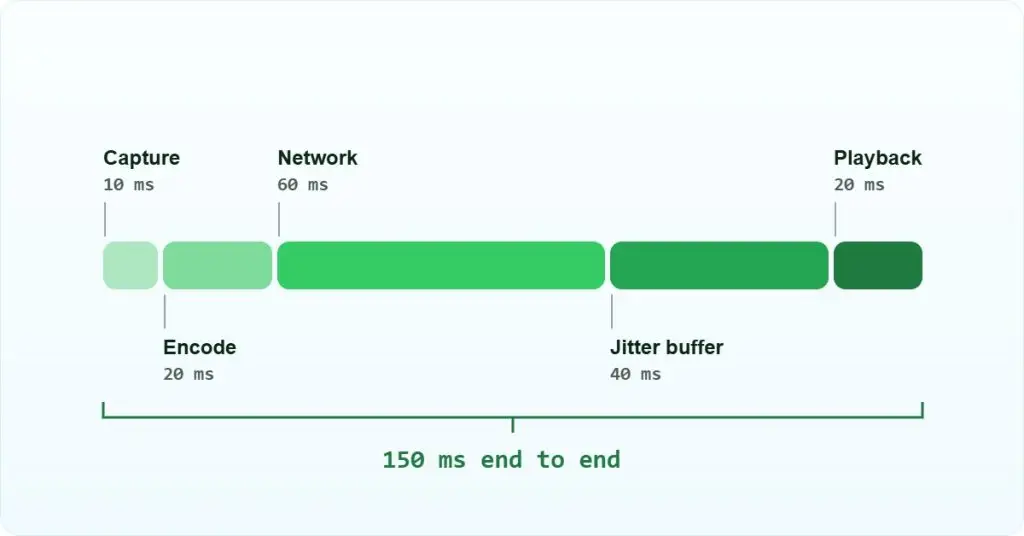
The AI brain gets the attention, but the voice infrastructure determines whether the conversation actually works. Sub-100ms audio latency is the threshold below which conversations feel natural rather than robotic. Above that threshold, travelers notice the delay and trust drops. Teler’s WebSocket-based media streaming delivers audio to your AI engine with the low latency that real-time booking conversations require. For teams evaluating infrastructure options, the post on handling last-minute bookings via AI calls covers the reliability requirements in a travel context.
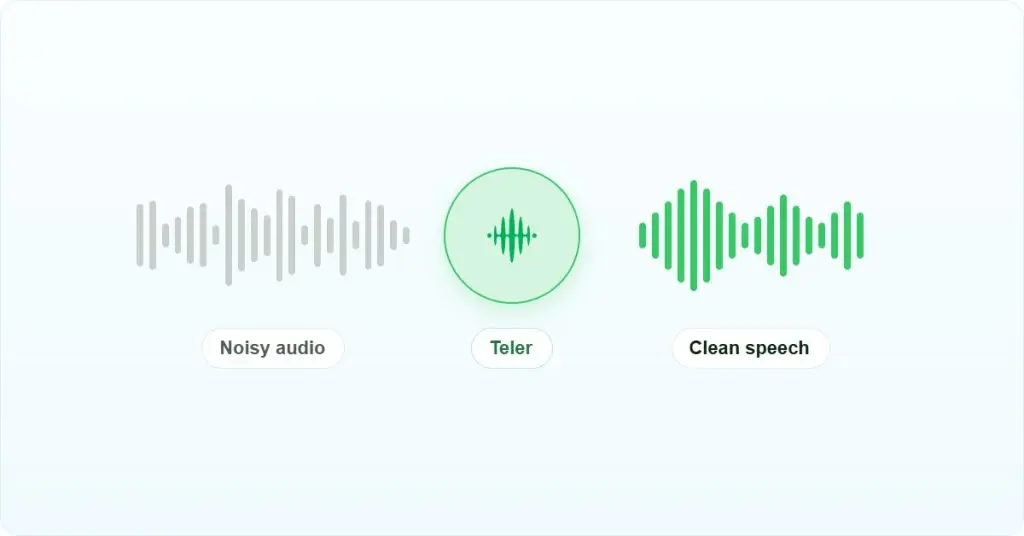
We recommend pairing Teler’s infrastructure with a battle-tested STT provider like Deepgram or AssemblyAI for transcription, since accuracy in noisy environments, such as a traveler calling from a busy airport, directly affects booking completion rates. The model-agnostic design means you can swap components without rebuilding the telephony layer.
How Does Automating Tour Bookings with Voice AI Affect Revenue?
The revenue impact of automating tour bookings with voice AI shows up in three measurable places: after-hours capture, reduced cost per booking, and higher average booking value from automated upselling.
After-Hours Capture
If 60% of your inquiries arrive outside business hours and your current answer rate during those hours is zero, a 24/7 voicebot directly converts that lost traffic. Even a 20% conversion rate on after-hours calls, which is conservative for a well-designed conversational flow, represents a significant revenue addition for most tour operators.
Cost Per Booking Reduction
Human agents handling informational calls cost roughly $8 to $15 per call when you factor in salary, benefits, and overhead, based on industry benchmarks from Gartner’s 2024 Customer Service Technology Report (Source: Gartner Customer Service Technology 2024). An AI voicebot handling the same call costs a fraction of that. Since the informational query category accounts for up to 45% of call volume, the cost reduction compounds quickly at scale.
Average Booking Value Increase
Automated upselling during the booking conversation, when the traveler is already engaged and has their payment details ready, is the highest-conversion moment for add-on sales. Unlike a post-booking email, the voicebot presents the upsell while the traveler is still on the call and in a buying mindset. This is why the conversational upsell workflow described above consistently outperforms static website checkboxes for tour add-ons.