Last updated on November 16th, 2026 at 11:29 am
Quick Answer: Conversive phone integration connects a voice calling system directly to the Conversive ATS and CRM platform, so recruiters can dial candidates, log calls and trigger follow-up workflows without leaving their recruitment dashboard. A native integration syncs call data in real time, while API-based alternatives require manual configuration and often introduce logging delays. For Indian calling conditions, verify that your chosen phone system supports local Indian virtual numbers before committing.
AI Summary: Conversive phone integration is the connection between a voice calling system and the Conversive ATS and CRM platform. This article explains how native and API-based integrations differ, what automatic call logging actually does inside a recruitment workflow, how to set up the integration for Indian calling conditions including TRAI compliance, and what to verify before choosing a phone system for your team.
Why Does Voice Integration Matter for Recruitment Teams in India?
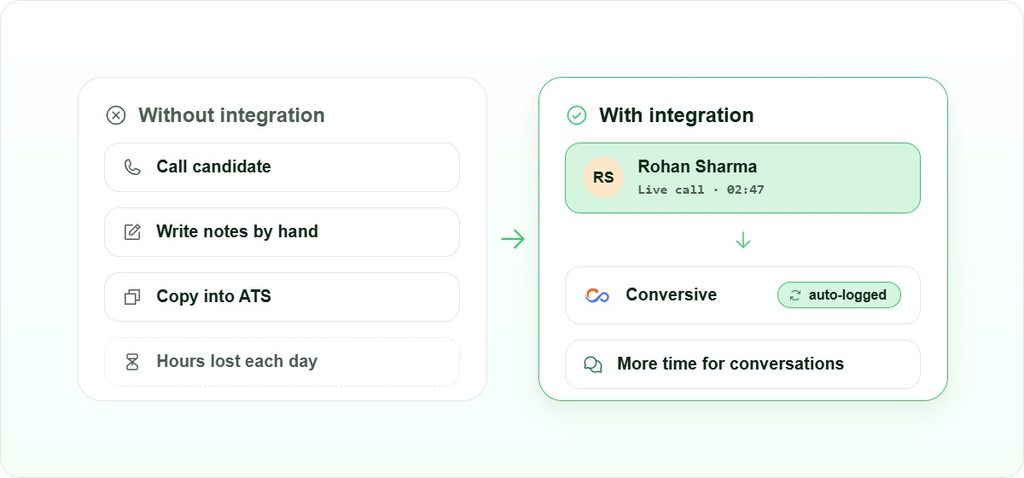
Phone calls remain the fastest way to build trust with candidates in India. A recruiter who calls within minutes of a candidate applying converts significantly more hires than one who relies on email alone. Voice communication drives over 60% of first-contact candidate engagements in high-volume hiring, according to the NASSCOM Knowledge Centre (Source: NASSCOM Knowledge Centre). Without a proper integration, recruiters spend significant time each day manually copying call notes into their ATS, time that should go toward actual conversations.
Even with sophisticated automation tools like Conversive, voice communication stays central to hiring success. Conversations are where trust builds, questions get answered and job offers land. That’s why integrating voice solutions into your recruitment platform is a necessity, not a convenience.
Three Things Voice Integration Does for Recruiters
An effective phone integration helps recruiters do three things well. First, it lets them communicate without switching tabs, as calls happen inside Conversive and keep all interactions in one place. Additionally, it improves data accuracy because call notes, transcripts, and follow-up actions automatically appear in candidate profiles. Finally, it helps teams respond to candidates faster, which reduces drop-offs and measurably improves the candidate experience.
In 2026, voice integration gives recruitment teams a concrete speed advantage. Teams that close this gap hire faster and lose fewer candidates to competitors who move quicker. For a broader look at how calling software for recruitment agencies in India compares across platforms, the options vary considerably on Indian number support and CRM depth.
Why Is FreJun the Right Fit for Conversive Integration?
FreJun was built for recruitment and sales teams that handle high call volumes every day. Moreover, its integration with Conversive goes beyond a basic click-to-call button. As a result, Indian recruitment operations heads choose it over API-based alternatives when they need real-time data syncing without developer involvement.
That said, FreJun is not the right choice for every team. If your recruiters make fewer than ten calls per day and your primary need is basic call logging, a lighter API-based solution may suit your workflow better. FreJun’s value is most visible at higher call volumes, where the predictive dialer and automatic logging remove the most friction. See how AI call intelligence features translate into practical workflow gains for teams at different call volumes.
Key Features That Make FreJun Stand Out
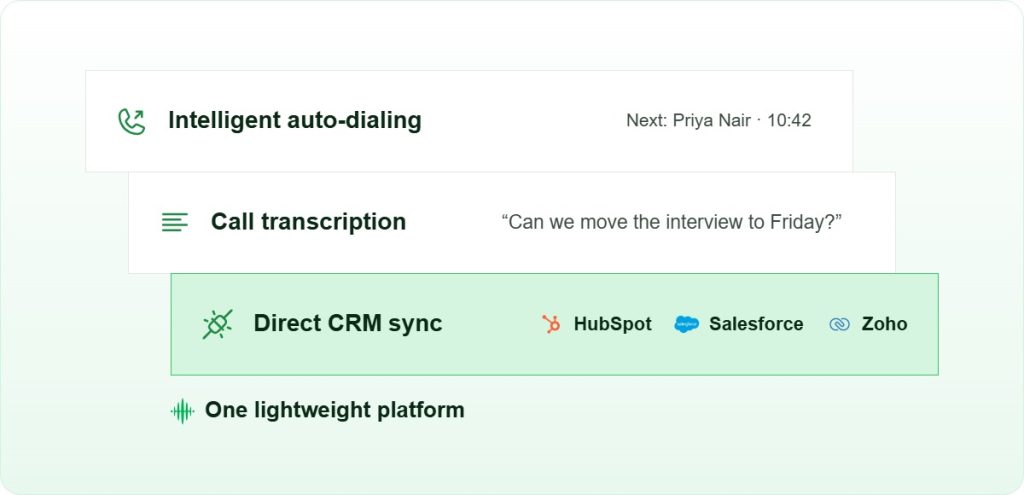
- Direct Conversive ATS and CRM sync: FreJun connects to Conversive’s ATS and CRM modules so every call, note and action lands in the right candidate profile automatically.
- AI transcription and call summaries: FreJun captures every conversation in real time, then generates summaries and sentiment signals that help recruiters prioritise follow-ups.
- Click-to-call from Conversive: Recruiters dial candidates directly from their Conversive dashboard. No tab switching, no manual dialling.
- Predictive dialer for high-volume outreach: FreJun’s predictive dialer skips unanswered calls and connects recruiters only to live candidates, which increases talk time per hour.
- Multi-channel outreach: Beyond voice, FreJun supports WhatsApp and SMS so recruiters reach candidates through whichever channel they actually respond to.
- Real-time analytics for managers: Operations heads and founders get live visibility into call volumes, talk times and outcomes across the whole team.
How Does FreJun Compare to Other Phone Solutions for Conversive?
When choosing a phone integration, comparing tools side by side saves time. The key factors for Indian recruitment teams are native Conversive compatibility, AI features, Indian number support and dialer type. Here is how the main options compare.
| Provider | Best For | Key Features | Setup Effort | Pricing & Free Trial |
|---|---|---|---|---|
| FreJun | India recruitment teams using Conversive | AI transcription, predictive dialer, WhatsApp, real-time analytics | Native CRM connector, no code | Check pricing & trial |
| JustCall | General sales teams | SMS, basic call logging, IVR | Via Zapier or API | Check pricing & trial |
| Exotel | India-focused cloud telephony | IVR, call masking, SMS | API-based, developer required | Check pricing & trial |
| Knowlarity | Large enterprise call centres | IVR, call recording, basic analytics | API-based, developer required | Check pricing & trial |
The key difference is depth of integration. JustCall, Exotel and Knowlarity all require API configuration or third-party connectors to work with Conversive. A native integration syncs data in real time without manual intervention. However, if your team makes fewer than ten calls per day and only needs basic call logging, an API-based solution may cost less to set up and maintain. We’d choose a native integration when call volume is high enough that logging delays would visibly hurt pipeline accuracy. For a detailed look at how these tools compare on specific features, see our breakdown of 11 Best Alternatives to JustCall for Business Communication.
What Integration Capabilities Does FreJun Offer for CRM Sync?
Integration quality determines whether your call data actually helps your hiring pipeline or just sits in a separate silo. A well-built Conversive phone integration covers four practical areas that matter to recruitment operations heads, and each one removes a specific manual step from your team’s daily workflow.
How Does Automatic Call Logging Work in Practice?
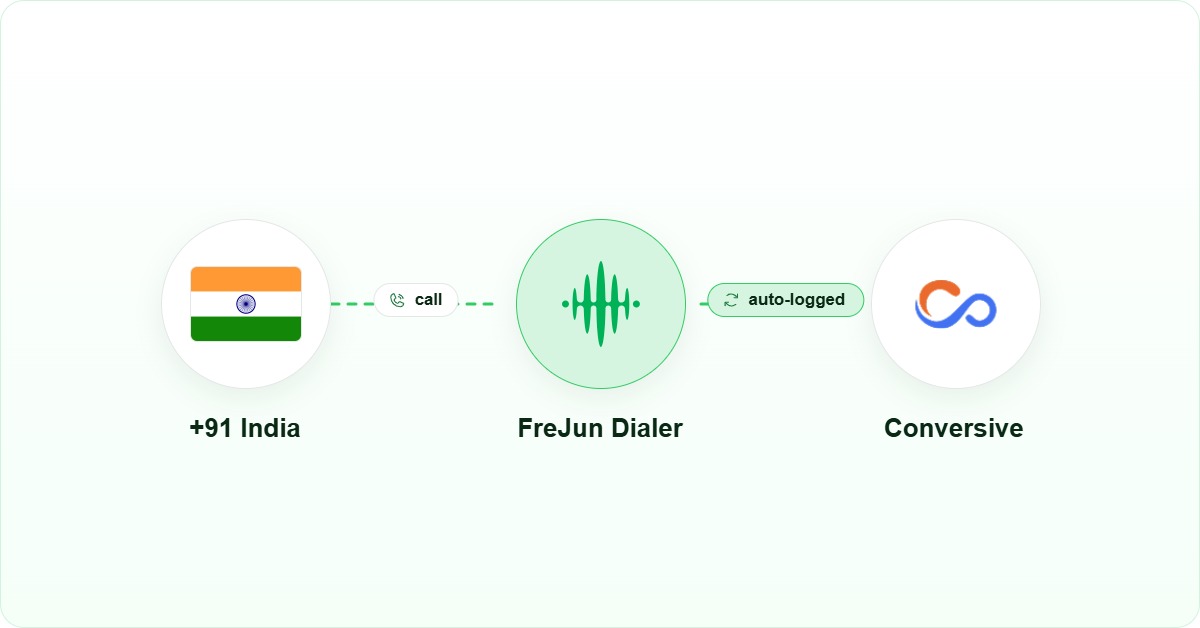
Automatic call logging works by capturing the call outcome, duration and AI-generated transcript the moment a call ends, then writing that data directly to the matching candidate record in Conversive. No manual entry is required. The recruiter sees the summary appear in the candidate profile within seconds of hanging up.
Consider a recruiter at a mid-sized staffing firm in Bengaluru who was manually copying call notes into Conversive after every call. That process took several minutes per call. With 40 calls a day, the admin burden was substantial. After connecting a native phone integration, the notes, transcript and call outcome appeared in Conversive automatically within seconds of each call ending. The recruiter reclaimed that time for actual candidate conversations. That’s the practical value of a well-built integration, not just a feature on a spec sheet.
The biggest mistake most teams make is treating call logging as a nice-to-have. When it’s missing, your pipeline data is always incomplete, and your managers are making coaching decisions based on guesswork rather than actual call activity. See all FreJun CRM integrations to understand which platforms support native sync versus API-based connections.
Four CRM Sync Capabilities That Remove Manual Steps
Each of these capabilities targets a specific point where recruiters typically lose time or data accuracy.
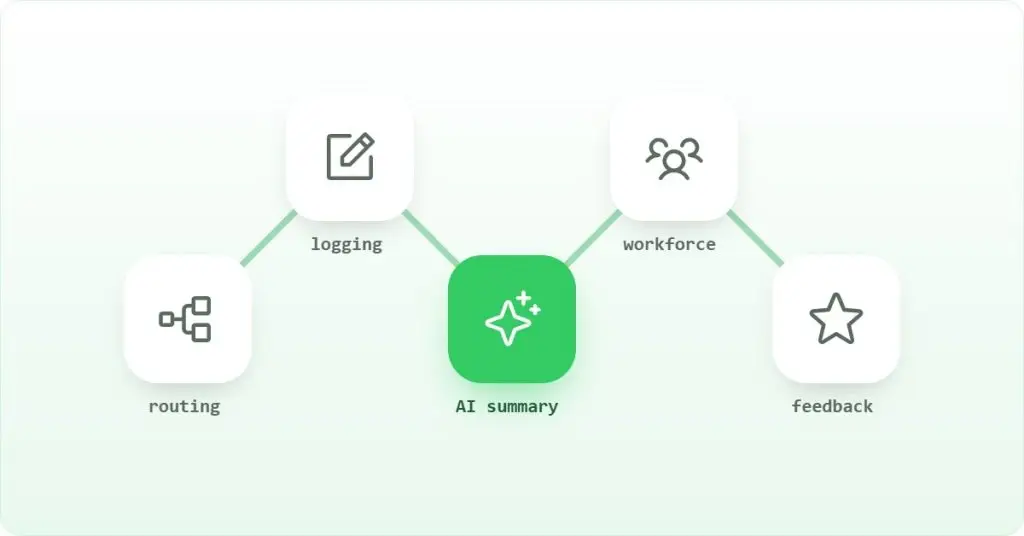
- Calls inside Conversive: Recruiters make and receive calls without leaving their dashboard. This keeps focus high and removes the context-switching that kills productivity.
- Automatic logging: Every call, note and AI-generated summary syncs instantly to the candidate profile. Nothing needs manual entry.
- Customisable workflows: A phone integration can trigger follow-up reminders, status updates and next-step tasks based on call outcomes. For example, a call marked “interested” can automatically schedule a follow-up for the next morning.
- Team visibility: Call insights share across team communication tools so hiring managers always know where each candidate stands.
How Should You Set Up Conversive Phone Integration for Your Team?
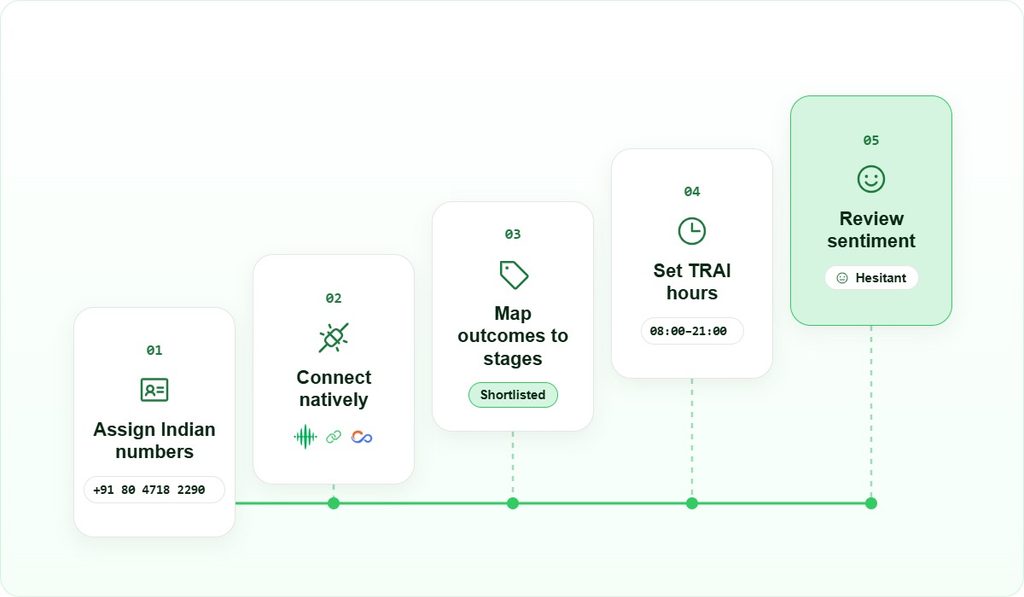
Setting up a phone integration with Conversive takes less than a day for most teams when they follow the steps in order. To ensure a smooth setup, the sequence below reflects proven practices across deployments with Indian recruitment firms. Therefore, follow each step in order instead of jumping straight to dialer configuration.
- Create your account and assign Indian virtual numbers. Indian virtual numbers display local caller IDs on candidate phones, which improves answer rates. Assign one number per recruiter or use a shared team number depending on your workflow.
- Connect your phone system to Conversive via the native integration. Use the integrations dashboard to link the two platforms. No API keys or developer help are needed for standard native setups.
- Configure call outcomes and tags to match your Conversive pipeline stages. This ensures every logged call maps to the right hiring stage automatically, so your pipeline data stays accurate without manual updates.
- Enable the predictive dialer for outbound campaigns. Set your calling hours to comply with TRAI regulations: 8 am to 9 pm for commercial calls in India, per TRAI’s Telecom Commercial Communications Customer Preference Regulations (Source: TRAI TCCCPR).
- Train your team on AI summaries and sentiment signals. Show recruiters how to review the sentiment signal from the previous call before dialling a candidate back. A candidate flagged as hesitant needs a different opening than one who was enthusiastic.
Setting up the integration correctly from day one removes the biggest blocker to tool adoption. Research from Salesforce’s State of Sales shows that 42% of sales reps feel overwhelmed by too many tools, and overwhelmed sellers are 45% less likely to hit quota (Source: Salesforce State of Sales). The same dynamic applies to recruiters: a phone system that adds steps rather than removing them will be abandoned within weeks.
Key Takeaways: What Makes Conversive Phone Integration Work in India?
Technology and human connection need to work together in modern recruitment. Conversive handles the automation side well. But the phone call is still where a candidate decides whether they trust your company enough to accept an offer. That’s why the integration between your phone system and Conversive matters so much.
Three factors consistently separate integrations that improve recruiter output from those that get abandoned: real-time data sync, Indian number support and AI features that go beyond basic recording. When all three are present, recruiters spend more time in conversations and less time in admin. When any one is missing, the pipeline data degrades and managers lose visibility.
Three Things to Verify Before Choosing a Phone Integration
We recommend every recruitment operations head verify these three things before committing to a phone integration for Conversive.
- Native vs API integration: Native integrations sync data in real time. API-based setups often have delays or require manual triggers, which means your pipeline data is always slightly behind.
- Indian number support: Candidates in India answer local numbers far more reliably than international ones. Confirm your integration provider offers Indian virtual numbers before signing up.
- AI features that save time, not just record calls: Transcription is table stakes. Sentiment analysis and automatic summaries are what actually reduce admin time and help recruiters personalise follow-ups.
Most teams miss the sentiment analysis piece entirely when evaluating phone integrations. They focus on call quality, while the feature that actually changes recruiter behaviour, which is knowing how a candidate felt during the last call, gets overlooked until they’ve already signed a contract. Learn more about FreJun’s Conversive calling integration to see how sentiment signals surface inside the Conversive dashboard.
Should You Choose FreJun for Conversive India Calling in 2026?
The answer ultimately depends on your team’s call volume and workflow. For instance, if your recruiters make more than 20 calls per day and want that activity to flow directly into Conversive without manual work, a native integration with AI transcription and a predictive dialer is the right fit. Additionally, Indian number support, real-time CRM sync, and sentiment analysis address the specific friction points that slow down high-volume recruitment in India.
On the other hand, if your team makes fewer than ten calls per day and mainly needs basic call logging, a simpler API-based solution may better suit your current scale. However, API-based setups require more maintenance and often introduce logging delays that affect pipeline accuracy as call volume grows. For this reason, we recommend evaluating a native integration first. The time saved on administrative work can offset the additional setup complexity, even at lower call volumes.
Meanwhile, recruitment in India continues to move fast in 2026. Every conversation can determine whether you secure a top candidate or lose them to a competitor who calls first. In this context, Conversive phone integration gives teams the tools to respond faster and make better decisions. Ultimately, the right integration is the one that removes the most manual steps between a candidate applying and a recruiter making the first call.
Discover how FreJun’s call recording and transcription works to understand what the AI layer captures and how it displays call data inside Conversive.
Further Reading: 11 Best Alternatives to JustCall for Business Communication
Frequently Asked Questions About Conversive Phone Integration India
Setup, Features and Workflow
Conversive phone integration connects a voice calling system directly to the Conversive ATS and CRM platform. When a recruiter dials a candidate from inside Conversive, the call routes through the phone system’s cloud infrastructure. Once the call ends, the outcome, duration, notes and AI-generated transcript write automatically to the candidate’s profile in Conversive. No manual data entry is required.
Yes. A native Conversive phone integration includes a click-to-call feature that lets recruiters dial candidates directly from their Conversive dashboard. No separate dialer app is needed. The call connects through the phone system’s cloud infrastructure, and the outcome, notes and AI summary sync back to the candidate profile in Conversive automatically once the call ends.
Most recruitment teams complete the full setup in under a day. The process covers creating your phone system account, assigning Indian virtual numbers, connecting to Conversive via the native integration dashboard, configuring call outcomes to match your pipeline stages and enabling the predictive dialer. No developer help is needed for standard native setups, since the integration connects without API keys or custom code.
Indian Numbers, Compliance and Call Volume
Yes. Phone systems that offer Indian virtual numbers display local Indian caller IDs on candidate phones. Candidates in India answer local numbers at significantly higher rates than international or unrecognised numbers. You can assign individual virtual numbers to each recruiter or use a shared team number, depending on how your Conversive workflows are structured. Confirm Indian number availability with your chosen provider before signing up.
TRAI’s Telecom Commercial Communications Customer Preference Regulations set permitted calling hours for commercial calls in India at 8 am to 9 pm. Recruitment teams running outbound campaigns through a predictive dialer must configure their calling windows to stay within these hours. Calls outside this window risk regulatory complaints and potential blacklisting. Always verify the current TRAI rules directly, since the regulations have been amended over time.
Yes. A predictive dialer handles high outbound volumes without degrading call quality. It skips unanswered calls automatically and connects recruiters only to live candidates, which increases productive talk time per hour. For large hiring campaigns, most phone systems also support contact list uploads and automated redial sequences for candidates who did not answer on the first attempt. Confirm your provider’s concurrent call capacity before a major campaign.
A predictive dialer uses algorithms to dial multiple numbers simultaneously. It connects recruiters only when someone answers, skipping voicemails and busy signals. In contrast, a standard auto-dialer calls numbers one at a time from a list. As a result, recruitment teams handling high-volume outreach in India can spend more time in live conversations with a predictive dialer. This is because it reduces idle time between calls compared to manual or standard auto-dialling.