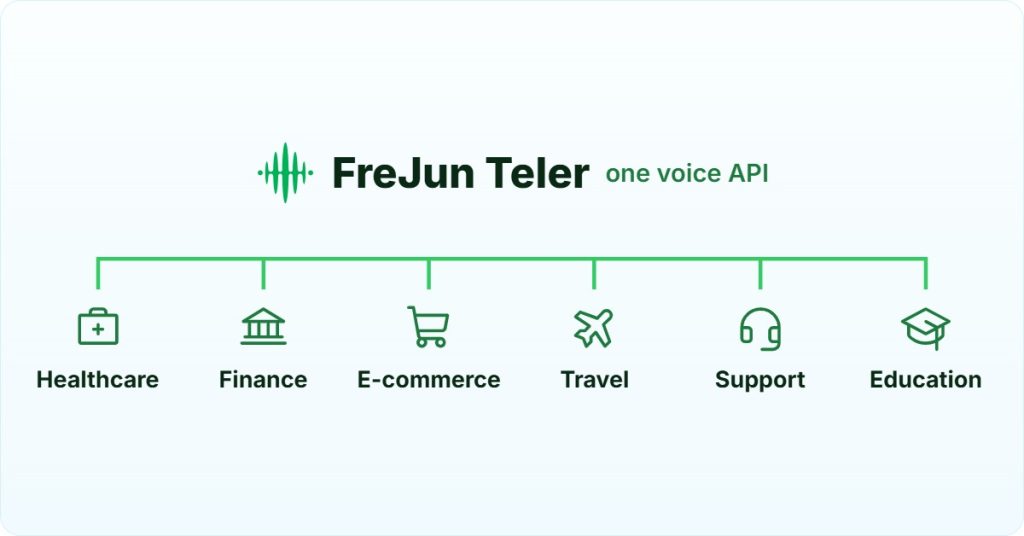
AI Summary: This article explains what an AI customer service agent is, how it handles inbound phone support calls in the US, and what businesses must know before deploying one in 2026. The FCC ruled on February 8, 2024, that AI-generated voices are treated as artificial voices under the Telephone Consumer Protection Act, meaning outbound calls using this technology require prior express consent. Readers will find a step-by-step call flow, a cost structure breakdown, a compliance table, and clear guidance on when not to automate. FreJun Teler is the layer that connects an AI system to real phone calls without requiring teams to build phone infrastructure.
Scope: This article covers AI customer service agents used for phone support in the United States. Regulatory claims reflect US federal rules and were checked against primary sources as of September 2026.
Quick Answer: An AI customer service agent is software that answers phone calls, understands what callers say, resolves routine requests, and transfers complex cases to a person. In 2026, US businesses using AI-generated voices on outbound calls must obtain prior express consent under the Telephone Consumer Protection Act. Cost runs on two separate lines: phone capacity and per-minute charges, plus AI model fees paid directly to the provider.
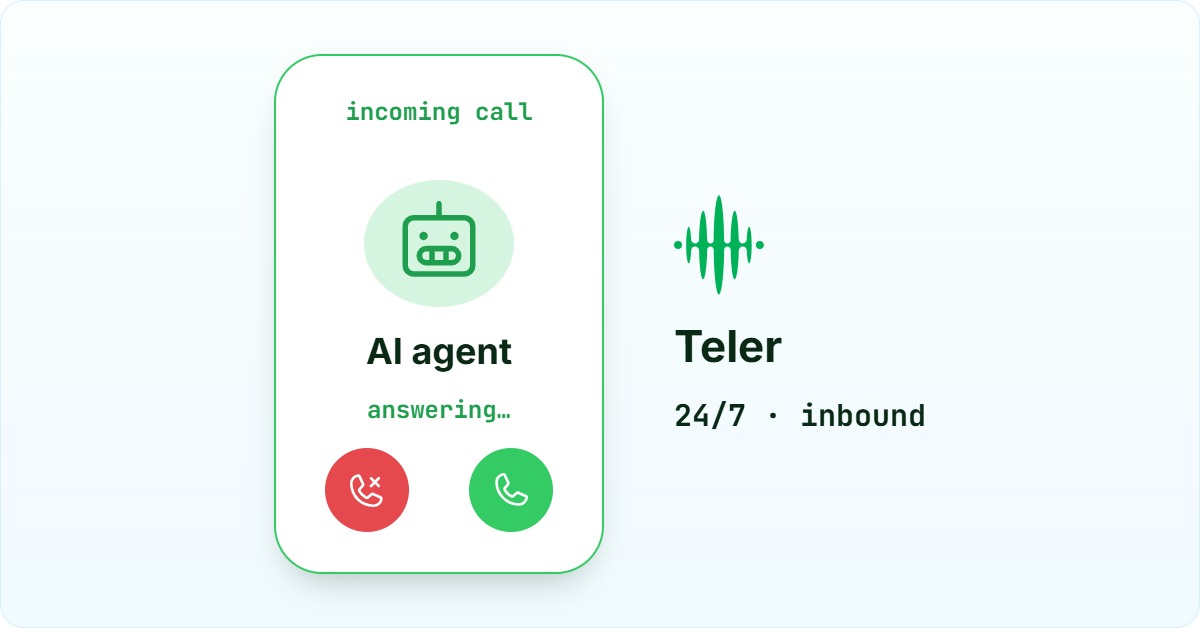
An AI customer service agent is software that answers inbound phone calls, holds a natural back-and-forth conversation with the caller, completes routine tasks, and hands off to a human when the situation requires it.
What is an AI customer service agent?
An AI customer service agent is a software system that answers phone calls, understands spoken requests through speech recognition (the process of converting spoken words into text), generates a spoken reply through text-to-speech (the process of converting text back into spoken audio), and completes or routes the caller’s request using a large language model (an LLM, which is the AI that understands and generates language) connected to the business’s own systems.A working setup combines a phone number, a carrier connection, speech recognition, a language model, text-to-speech, and connectors to the calendar, order system, or customer record system (CRM, meaning the database where customer information is stored). US businesses specifically need a setup that can handle inbound call volume without hold queues, transfer calls to a live person cleanly, and comply with federal rules on automated calling.
Buyers often confuse an AI customer service agent with an interactive voice response system, or IVR. An IVR is the older technology that plays a menu and asks callers to press a number or say a keyword to be routed. The key difference is that an AI customer service agent holds a real conversation and can finish the request, while an IVR mainly routes callers to the right queue. An answering service, by contrast, records a message or connects to a live operator. The AI agent sits between those two: more capable than an IVR, less expensive than a staffed answering service for routine calls.
Why are businesses deploying AI customer service agents now?
The shift is happening because the underlying technology has reached a quality threshold where callers can complete routine requests without frustration, and because the cost of staffing inbound phone lines has risen faster than the cost of running AI. Businesses that once needed a full team to cover after-hours calls can now answer every call automatically and route only the complex ones to a person the next morning.
Practitioners building these systems in 2025 and 2026 report that the strongest use cases are appointment scheduling, payment and account questions, order status, and after-hours answering. One builder described deploying a voice agent for a local clinic that answers calls after two rings, schedules appointments against the clinic’s calendar, responds to common questions, and flags urgent situations for a callback. The same builder noted that a system handling only call answering, without connecting to a calendar or CRM, leaves most of the automation value unused.
How does an AI customer service agent call actually go?
The call flow for inbound phone support follows a consistent pattern. The table below shows each step, who or what handles it, and where things can go wrong.
| Step | Who or what handles it | What can go wrong |
|---|---|---|
| Phone rings and is answered | Telephony layer, such as FreJun Teler | Delay before answer makes callers hang up; one clinic builder noted that pauses above roughly 1.2 seconds caused abandonment |
| Greeting plays and caller states their reason for calling | AI agent | Greeting too long; caller interrupts before it finishes |
| Agent asks follow-up questions if needed | AI agent | Agent loses context from earlier in the call and asks a question already answered |
| Agent checks connected systems (calendar, CRM, order system) | Integration layer | System is slow to respond, creating a noticeable pause; system returns no result |
| Agent completes the routine task or confirms it cannot | AI agent | Agent misunderstands a name, address, or account number and acts on wrong data |
| Agent transfers to a human with full context | Telephony layer and agent | Transfer drops the call; human receives no summary of what was already discussed |
| Call ends and record is written to CRM or ticketing system | Integration layer | Record is incomplete or not written at all |
The table shows that most failures happen at the edges: the first second of the call and the handover to a human.
Callers notice two things most. The first is the pause before the system responds, especially after they finish speaking. The second is what happens when they speak over the agent mid-sentence. A well-built system can be interrupted mid-sentence, the way a person can, so the caller does not have to wait for the agent to finish before they can correct or redirect the conversation.
Underneath the conversation, a platform like FreJun Teler carries the audio between the phone network (the PSTN, meaning the public switched telephone network, the traditional phone infrastructure) and the AI. The platform handles the carrier connection, the phone numbers, and the audio routing. The business or its developers choose which speech recognition, language model, and text-to-speech services to use. The two layers are separate, which matters for cost and for flexibility.
What does it cost to run an AI customer service agent?
Cost runs on two separate tracks that most teams do not model together until the first billing cycle. The table below shows each cost line, who charges it, and what drives it up.
| Cost line | Who charges it | What makes it go up |
|---|---|---|
| Phone capacity (concurrent call channels) | Telephony provider | More calls happening at the same time |
| Inbound call minutes | Telephony provider | More calls and longer conversations |
| Outbound call minutes (callbacks, proactive outreach) | Telephony provider | More outbound calls and longer conversations |
| Phone number rental | Telephony provider | More active numbers or lines |
| Call recording and storage | Telephony provider or cloud storage | Call volume, retention period, and how much audio is saved |
| Speech recognition (converting speech to text) | AI provider | Total audio length processed |
| Language model (the AI that understands and responds) | AI provider | Number of conversation turns and total call count |
| Text-to-speech (converting text back to spoken audio) | AI provider | Total characters or audio length generated |
| Setup and ongoing maintenance labor | Internal team or implementation partner | Script changes, workflow tuning, integration work |
The distinction that surprises most teams is that phone capacity is charged by how many calls run at the same time, while AI model costs are charged by how much is said across all calls. A business with 50 short calls per day pays very differently from one with 5 long calls running simultaneously, even if the total minutes are similar.
Hidden costs after launch include script and prompt rework when the agent mishandles a category of calls, human review of transcripts to catch errors, handling of calls the agent could not complete, and the time spent on number provisioning and compliance registration. These are real costs that rarely appear in a vendor’s pricing page.
For current telephony rates, check current Teler pricing. For AI model costs, check the pricing pages of the speech and language model providers you plan to use, since those are charged separately and vary by provider.
Teams budget for the AI and forget that phone capacity is charged by how many calls run at once, so the first busy Monday doubles a line they never modelled. The fix is to separate the telephony cost from the AI cost before you sign anything.
– Subhash Kalluri, Founder & CEO, FreJun
What does it take to set up an AI customer service agent?
Setup involves two distinct tracks running in parallel: what the platform provides and what the business must supply. Mixing these up is the most common reason projects stall.
The platform supplies the phone infrastructure, the carrier connections, the audio routing, and the call controls. FreJun Teler, for example, provides phone numbers in over 50 countries, call transfer to a human, hold, hang up, recording, and the ability to be interrupted mid-sentence. The technical documentation at frejun.ai/docs covers how to connect a chosen AI model to live calls. For a deeper look at what “enterprise-grade” actually means at the infrastructure layer — carrier redundancy, uptime guarantees, and scaling concurrent calls — see our explainer on enterprise-grade voice infrastructure.
The business must supply the phone number it wants callers to reach, the script or conversation design, access credentials for the calendar or CRM the agent will check, a person or team to review transcripts and catch errors in the first weeks, and a clear escalation path so callers who ask for a human reach one quickly.
Systems the agent must connect to for phone support
A phone support agent that cannot check anything is not much more useful than a voicemail. The systems it typically needs to reach are a calendar or scheduling tool (for appointment booking and availability), a CRM (for account lookup and call logging), an order or ticketing system (for order status and support history), and sometimes a knowledge base (for product or policy questions). The agent does not need to write to all of these, but it needs to read from them in real time during the call.
On the build-versus-buy question, the evidence from practitioners is clear. Building in-house gives full control over the conversation design and the integration logic, and it is the right choice for teams with a developer who can maintain it and a call flow that is genuinely unusual. Buying or using a platform is faster and lower-risk for most businesses, especially for standard use cases like appointment scheduling or account questions. One practitioner who trialed platforms including Bland, Vapi, Synthflow, PolyAI, Parloa, and Retell found that the setup speed was real, but that multi-turn conversation quality varied enough to matter. The honest answer is that a platform gets you to a working agent faster, but the integration work connecting it to your own systems takes roughly the same time either way.
What rules apply to AI customer service agents in the US?
US businesses using AI-generated voices on phone calls face federal obligations from two regulators. The table below covers the confirmed rules as of September 2026. This is descriptive information, not legal advice.
| Rule | What it requires | Who it applies to | Who carries the obligation | Primary source |
|---|---|---|---|---|
| TCPA (Telephone Consumer Protection Act) on AI-generated voices | AI-generated voices are treated as artificial voices under the TCPA. Outbound calls using AI-generated speech to cell phones require prior express consent. Outbound marketing calls require prior express written consent. | Any US business making outbound calls with AI-generated voices | The business placing the call | FCC Declaratory Ruling, February 8, 2024 |
| FCC confirmation that TCPA covers current AI voice technology | Confirms that current AI technologies generating human voices fall under TCPA consent rules, with no exemption for newer AI methods | Any US business using AI voice technology on outbound calls | The business placing the call | FCC confirmation, November 7, 2024 |
| FTC Telemarketing Sales Rule (16 CFR Part 310) | Covers telemarketing robocalls; the FTC’s March 2024 update explicitly addressed AI-enabled scam calls and voice cloning protections | US businesses making telemarketing calls, including those using AI voice | The business making the call | FTC Telemarketing Sales Rule, updated March 7, 2024 |
The table makes the direction-of-call distinction clear: inbound calls, where the customer calls the business, carry far lighter obligations than outbound calls, where the business calls the customer. Most phone support use cases are inbound, which is why phone support is the lower-risk starting point.
For outbound calls, including callbacks and proactive service reminders, the business must classify the traffic, collect the required consent before the first call, build opt-out handling into the call flow, and check do-not-call obligations. A telephony platform handles the audio and the routing, but consent collection and do-not-call compliance sit with the business, not the platform. State attorneys general gained new enforcement tools under the FCC’s February 2024 ruling, so the risk of non-compliance is not theoretical. For a broader look at what AI voice applications need to track beyond phone support specifically — recording consent, data residency, and industry-specific rules — see our overview of compliance basics for AI voice applications.
What goes wrong with AI customer service agents?
The problems practitioners report fall into a consistent set. The table below covers the most common ones, why they happen, and what to do about them.
| Problem | Why it happens | What to do |
|---|---|---|
| Callers hang up before the agent responds | The pause between the caller finishing a sentence and the agent replying is too long; one clinic builder reported abandonment above roughly 1.2 seconds | Choose a telephony and AI stack with low end-to-end response time; test with real callers before launch |
| Agent loses context mid-call and asks a question already answered | The conversation model does not carry earlier turns forward correctly | Test multi-turn scenarios specifically; integrate with CRM so context is written and read, not just held in memory |
| Multi-turn conversations feel limited compared to a demo | Easy-to-set-up tools sometimes trade depth for speed of setup | Run realistic test calls covering your actual call types, not just the simple ones |
| Name, address, or account number is misheard and acted on | Speech recognition errors on proper nouns and numbers | Build a confirmation step for any data the agent will act on; route to a human if confidence is low |
| Transfer to a human drops context | The handover does not pass the transcript or the reason for the call | Configure the transfer to include the call summary, the caller’s stated reason, and any verification already completed |
For a detailed walkthrough of building this handoff correctly, see our guide on how to enable contextual handoff from AI to agents.
The honest limitation that applies to every platform, including Teler, is that response time depends on the full chain: the telephony layer, the speech recognition service, the language model, and the text-to-speech service. A slow link anywhere in that chain creates a pause the caller feels.
When should you not automate phone support with an AI customer service agent?
Automation is the wrong choice in several specific situations, and being clear about them saves time and protects customer relationships.
Do not automate calls that require deep empathy or highly complex problem solving. Crisis lines, mental health support, and bereavement services are the clearest examples. Practitioners who have tested AI voice agents directly say these calls do not work well, and the risk of a poor interaction is too high to accept.
Do not automate if your call volume is too low to justify the setup and maintenance effort. A business that takes 10 calls a week will spend more time configuring and tuning the agent than it saves. The break-even point depends on your own labor cost, but the setup work is real regardless of the platform.
Do not automate if your customer base actively rejects it. Some industries and demographics have strong preferences for speaking to a person, and a forced automation layer damages trust faster than it saves cost.
Do not automate regulated interactions that require a licensed person on the call. Legal advice, certain financial transactions, and some healthcare interactions have rules about who can conduct them. Check with a qualified advisor before automating any call type in a regulated industry. For teams that do need to deploy in a regulated environment despite these constraints, our guide on how to deploy AI voicebots in regulated industries covers the additional safeguards required.
Finally, do not automate until you are prepared to connect the agent to your actual systems. An AI customer service agent that can only answer calls but cannot check a calendar, look up an order, or log a ticket delivers a fraction of the value and may frustrate callers more than a simple voicemail would.
Frequently asked questions
What is the best way to handle inbound phone support with an AI customer service agent?
Start with your highest-volume, most routine call type, such as appointment scheduling or order status. Connect the agent to the one system it needs to check for that call type, test it with real callers before going live, and build a clean transfer path to a human for anything it cannot handle. Expand to other call types only after the first one is working reliably.
How much does an AI customer service agent cost to run?
Cost runs on two separate tracks. The telephony provider charges for phone capacity (how many calls run at once) and per-minute usage. The AI providers charge separately for speech recognition, the language model, and text-to-speech. You pay for these separately, and their costs scale differently. For current rates, check current Teler pricing and the pricing pages of the AI providers you plan to use.
What US regulations apply to AI voice calls in 2026?
The FCC ruled on February 8, 2024, that AI-generated voices are artificial voices under the TCPA (Telephone Consumer Protection Act), so outbound calls using AI voice require prior express consent. The FTC’s Telemarketing Sales Rule, updated March 7, 2024, also covers telemarketing calls using AI voice. Inbound calls carry lighter obligations, but outbound calls, including callbacks, require consent and do-not-call compliance. See the FCC’s ruling and the FTC Telemarketing Sales Rule for the primary sources.
Will callers know they are talking to an AI, and does that matter?
Many callers will not know unless the agent tells them or the conversation breaks down. Whether that matters depends on your industry, your customer base, and your legal obligations. Some states and industries require disclosure that a caller is speaking to an automated system. Even when the law does not require transparency, it can build more trust than concealment, especially when the agent needs to transfer the call to a human.
Should we build our own AI customer service agent or buy a platform?
Building in-house is right when your call flow is genuinely unusual and you have a developer who can maintain it. Buying a platform is faster and lower-risk for standard use cases. The integration work connecting the agent to your own systems takes roughly the same time either way. Teler helps teams choose their own AI models and connect them to live calls without building phone infrastructure from scratch.. The Teler documentation covers the integration path in detail.
What happens when the agent does not understand a caller?
A well-designed agent asks a clarifying question once, then transfers to a human if it still cannot understand. The transfer should pass the transcript and the caller’s stated reason to the human so the caller does not have to repeat themselves. If the agent simply loops or goes silent, callers hang up. Design the fallback path before you design the main conversation flow.
How long does it take to set up an AI customer service agent for phone support?
A basic setup covering one call type, one connected system, and a clean transfer path can be working in days using a platform like FreJun Teler. The time that actually varies is the integration work connecting the agent to your calendar, CRM, or order system, and the script tuning after the first real calls. Budget for at least two to four weeks of testing and adjustment before treating it as production-ready.
How will AI customer service agents for phone support change over the next few years?
The direction that has already shipped is toward agents that carry context across multiple turns and across multiple calls from the same customer, rather than treating each call as a fresh start. The regulatory environment is also moving: the FCC proposed broader rules on AI-generated calls in July 2024, and further changes are likely. Businesses that choose a platform with model flexibility, rather than one locked to a single AI provider, can adapt more easily as the technology and rules continue to change.
Is an AI customer service agent right for your phone support operation?
An AI customer service agent handles routine inbound calls reliably in 2026, and the cost structure is predictable once you separate the telephony line from the AI model line. The decision should depend on whether your most common call types are routine enough to script and whether you can connect the agent to the systems it needs to check. If the answer to both is yes, the setup is straightforward. If your calls require deep judgment, emotional sensitivity, or a licensed person, keep a human on the line. FreJun Teler connects AI systems to live phone calls without requiring teams to build carrier infrastructure, and it works with whichever speech and language models the team chooses.