Last updated on October 30th, 2026 at 01:21 pm
Last Updated: May 21st, 2026 at 11:50 am
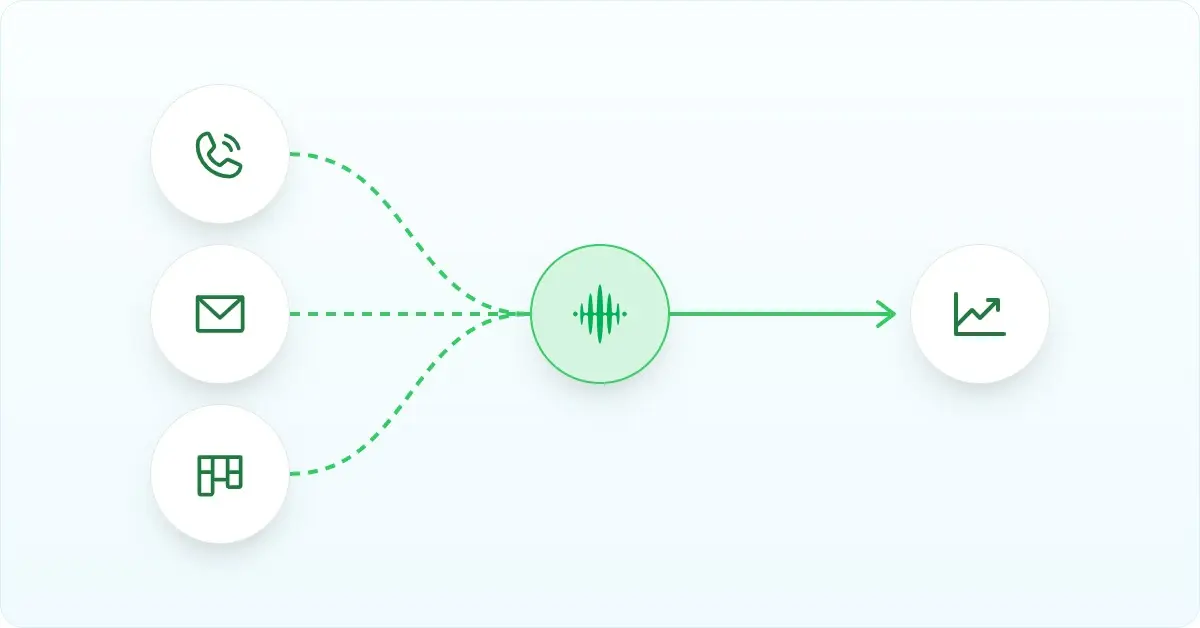
Revenue intelligence software is an AI-powered platform that captures sales calls, email threads, and pipeline activity to give revenue teams actionable forecasting, deal coaching, and pipeline visibility. To choose the right platform in 2026, evaluate vendors on AI call intelligence accuracy, CRM integration depth, pricing transparency, implementation timeline, and compliance certifications, then score each against your team’s specific requirements before signing.
Revenue intelligence software is an AI-powered analytics platform that captures and analyzes sales calls, email threads, and pipeline activity to give revenue teams actionable forecasting, deal coaching, and pipeline visibility. This buyer’s guide evaluates five leading revenue intelligence software platforms across eight weighted criteria to help VP Sales, CROs, and Revenue Ops leaders at SaaS companies choose the right solution in 2026.
5 Key Criteria for Evaluating Revenue Intelligence Software (Quick Reference)
- AI Call Intelligence Accuracy (22% weight): Does the platform score 90%+ of your actual sales calls accurately, including regional accents and technical vocabulary?
- CRM Integration Depth (20% weight): Native bi-directional sync with Salesforce, HubSpot, or Zoho in under 2 hours, with automatic call logging and AI-generated next-step capture?
- Pricing Transparency (15% weight): Fully itemized quote within 5 business days, with zero hidden setup or professional services fees?
- Implementation Timeline (10% weight): Documented go-live SLA of under 3 weeks for standard setups, with a named CSM and no surprise onboarding charges?
- Contract Flexibility (7% weight): Month-to-month option available, 90-day auto-renewal notice minimum, and data portability rights confirmed in the main agreement body?
For the full 8-criteria weighted scorecard with demo questions for each criterion, see Section 3 below.
The revenue intelligence market reached $3.8 billion in 2024 and is projected to grow to $10.7 billion by 2034 at a 12% CAGR (Source: Custom Market Insights, 2024), driven by demand for AI-powered pipeline visibility and automated call analytics. In addition, sales representatives currently spend 65% of their time on non-selling activities (Source: Warmly.ai Revenue AI Market Report, 2026), and revenue intelligence platforms are designed to recover that time through automated data capture, AI coaching, and real-time deal risk alerts.
For this guide, Subhash Kalluri evaluated five vendors across eight criteria based on G2 reviews, vendor documentation, pricing pages, and buyer interview patterns as of May 2026. Specifically, this guide is based on FreJun’s experience deploying AI call intelligence for 500+ sales and recruitment teams across global SaaS markets.
Before you evaluate revenue intelligence software vendors, make sure you can answer yes to these six questions:
- ☐ Defined must-have features vs. nice-to-have features?
- ☐ Budget approved including 3-year total cost of ownership?
- ☐ CRM and tech stack requirements documented (Salesforce, HubSpot, Zoho)?
- ☐ Compliance requirements confirmed (SOC2, GDPR, data residency)?
- ☐ Internal project owner and rollout timeline agreed?
- ☐ At least two vertical-specific vendor references requested?
If you can answer yes to four or more of these, proceed to the evaluation framework in Section 3 below.
Disclosure: This buyer’s guide is maintained by FreJun. Data last verified: May 2026. Author: Subhash Kalluri, Co-Founder at FreJun, 8+ years in B2B SaaS telephony. We aim to provide objective vendor comparisons to help buyers make informed decisions. This guide is reviewed quarterly; the next scheduled refresh is July 2026.
According to G2’s Revenue AI Platforms category (May 2026), buyers consistently cite AI accuracy, CRM integration depth, and pricing transparency as the top three decision drivers for revenue intelligence software purchases. Furthermore, the broader AI for sales and marketing market is projected to surge from $58 billion in 2025 to $240 billion by 2030 at a 32.9% CAGR (Source: Grand View Research via Hyperbound, 2026), confirming that revenue intelligence software is becoming a core infrastructure investment, not an optional add-on.
Why Most Revenue Intelligence Software Purchases Go Wrong in 2026
Most revenue intelligence software purchases fail not because buyers choose the wrong vendor, but because they evaluate the wrong criteria. Teams shortlist platforms based on demo polish and brand recognition rather than AI accuracy on their specific call types, CRM data fidelity, and realistic 3-year total cost of ownership. Consequently, 40% of sales workflows are expected to be handled by autonomous AI agents by 2026 (Source: Forrester via Oliv.ai, 2026), yet many teams are investing in revenue intelligence tools that deliver insights without action.
The revenue intelligence software category now splits into two distinct tiers: legacy platforms that retrofit AI onto decade-old codebases, and AI-native platforms designed from the ground up for automated deal capture, pipeline coaching, and revenue forecasting. The right choice depends on your team size, CRM stack, compliance requirements, and budget range.
This guide is built for VP Sales, CROs, and Revenue Ops leaders at SaaS companies with 10 to 500 seats who are actively shortlisting revenue intelligence software vendors, not for teams still defining their revenue operations strategy. In particular, it addresses the MOFU buyer: someone who has already decided that revenue intelligence software is the right investment and is now comparing vendors on specific criteria.
In This Guide
- Why Most Revenue Intelligence Software Purchases Go Wrong in 2026
- Are You Ready to Evaluate Revenue Intelligence Software Vendors?
- The 8 Criteria That Separate Good Platforms from Great Ones
- Which Revenue Intelligence Software Features Are Non-Negotiable in 2026?
- How to Build a Board-Ready ROI Case
- How to Cut Your Vendor List from 10 to 3 in One Week
- FreJun vs Gong vs Clari vs Salesloft vs Chorus: 2026 Comparison
- Which Revenue Intelligence Software Vendor Is Right for Your Team?
- What Does Revenue Intelligence Software Actually Cost Over 3 Years?
- The 15 Questions to Ask Every Vendor During the Demo
- 10 Contract Red Flags That Cost Buyers in 2026
- 5 Mistakes to Avoid When Choosing Revenue Intelligence Software
- How Long Does Implementation Actually Take?
- What Revenue Intelligence Software Buyers Wish They Had Known
- Frequently Asked Questions
- Your Revenue Intelligence Software Decision Checklist for 2026
Already know what you are looking for? See how FreJun’s AI call intelligence addresses your top revenue intelligence software criteria.
Are You Ready to Evaluate Revenue Intelligence Software Vendors?
This guide is designed for SaaS companies with 10 to 500 sales seats who are actively comparing revenue intelligence software vendors. Specifically, it targets VP Sales, CROs, and Revenue Ops leaders who need call-level intelligence tied directly to pipeline outcomes and CRM automation.
- ☐ Your team makes 50 or more sales calls per week that currently go unanalyzed
- ☐ You have a CRM (Salesforce, HubSpot, or Zoho) that needs call data automatically synced
- ☐ You have a defined budget range and internal approval authority
- ☐ You have at least two vendors already on your shortlist
- ☐ You have a project owner who can own implementation and adoption
If you checked four or more of these items, proceed directly to the evaluation framework in Section 3. If you checked fewer than four, consider starting with foundational resources on call analytics vs call tracking before comparing enterprise revenue intelligence software vendors.
The 8 Criteria That Separate Good Revenue Intelligence Software Platforms from Great Ones
For SaaS sales and Revenue Ops teams in 2026, the five criteria that most reliably predict long-term satisfaction with revenue intelligence software are AI call intelligence accuracy, CRM integration depth, pricing transparency, implementation timeline, and compliance certifications. Score each vendor 1 to 5 on the eight criteria below, multiply by the weight percentage, and sum for a weighted total out of 500.
| Criterion | Weight | What Good Looks Like |
|---|---|---|
| AI Call Intelligence Accuracy | 22% | AI scores 90%+ of calls accurately; handles diverse accents and technical vocabulary; surfaces deal risks within minutes of call end |
| CRM Integration Depth | 20% | Native bi-directional sync with Salesforce, HubSpot, or Zoho; auto-logs calls, summaries, and next steps without manual input; under 2-hour setup |
| Pricing Transparency | 15% | Itemized quote in writing within 5 business days; zero hidden fees; per-seat pricing clearly stated; no bundled upsell traps |
| Pipeline Forecasting Quality | 13% | AI forecast accuracy within 5% of actuals; deal risk alerts with specific evidence; integrates with existing CRM pipeline stages |
| Implementation and Onboarding | 10% | Go-live in under 3 weeks for standard setups; dedicated CSM; documented onboarding SLA; no surprise professional services fees |
| Support Quality | 8% | P1 SLA under 2 hours in writing; named account manager; 24/5 minimum response guarantee |
| Contract Flexibility | 7% | Month-to-month option available; 90-day auto-renewal notice; data portability clause in main agreement body |
| Compliance and Security | 5% | SOC2 Type II certified within past 12 months; GDPR-ready; call recording consent management built in |
AI call intelligence accuracy is weighted at 22% because it is the primary value driver for SaaS revenue teams evaluating revenue intelligence software. A platform that misattributes deal signals or misses objection patterns adds noise, not signal, to pipeline decisions. Moreover, vendors who score below 3/5 on CRM integration depth will require significant manual workarounds that erode the productivity gains the platform is supposed to deliver. Note that Section 10 contract red flags can override even high scores: a vendor who scores 4.5/5 on the criteria but has predatory auto-renewal terms should not make your final shortlist.
Which Revenue Intelligence Software Features Are Non-Negotiable in 2026?
In 2026, must-have revenue intelligence software features include AI call transcription and scoring, automated CRM data sync, deal risk alerts with specific evidence, pipeline health dashboards, and conversation coaching powered by actual call recordings. Everything else should be treated as a phase-two investment.
| Feature | Must-Have? | Why It Matters | Demo Question to Ask |
|---|---|---|---|
| AI Call Transcription and Scoring | Yes | Foundation of all revenue intelligence; without accurate transcription, all downstream analytics are unreliable | What is your AI transcription accuracy rate on technical B2B sales calls? Provide a documented benchmark. |
| Automated CRM Sync | Yes | Manual CRM logging costs reps 3 to 5 hours per week; automation eliminates this and ensures pipeline data accuracy | Walk us through a live Salesforce/HubSpot sync. How long did the last customer’s integration setup take? |
| Deal Risk Alerts with Evidence | Yes | Proactive risk detection prevents pipeline surprises; alerts must reference specific call evidence, not just status flags | Show us a real deal risk alert with the specific call evidence that triggered it. |
| Pipeline Forecasting | Yes | Revenue Ops teams need AI-assisted forecasts tied to deal activity signals, not just stage conversion rates | What is your forecast accuracy versus CRM-only forecasting? Provide a reference example with delta data. |
| Rep Coaching Dashboard | Yes | Manager coaching based on call evidence reduces ramp time; requires searchable recordings and AI-highlighted moments | Can managers filter coaching views by objection type, talk/listen ratio, and deal stage simultaneously? |
| Multi-Channel Capture (Email + Call) | Nice-to-have | Valuable for full buyer journey visibility; however, call-only coverage delivers 80% of value for most outbound SaaS teams | Is email and meeting capture native or via third-party connector? What is data latency from event to insight? |
| Buyer Engagement Scoring | Nice-to-have | Useful for prioritization but frequently oversold; verify that scoring uses actual behavioral signals, not proxy metrics | What specific signals feed your buyer engagement score? Are they from direct interaction data or inferred? |
| Competitive Intelligence Tracking | Nice-to-have | Valuable for battlecard updates but requires manual curation; treat as a Phase 2 capability | How often is competitive tracking data updated? Is analysis keyword-based or semantically contextual? |
A critical feature gap to probe in every revenue intelligence software demo: dashboard data refresh rates. Several platforms advertise real-time pipeline dashboards but actually refresh data every 15 to 30 minutes. For sales managers monitoring end-of-quarter pipeline, this latency causes material forecasting errors. Therefore, request the actual refresh interval in writing as part of your technical requirements documentation. For a broader comparison of analytics capabilities, see call analytics vs call tracking explained.
How to Build a Board-Ready ROI Case for Revenue Intelligence Software Investment
A realistic ROI timeline for revenue intelligence software is 90 days to first measurable signal and 9 to 12 months to full payback, driven primarily by reduced rep ramp time and improved pipeline forecast accuracy. Teams that track vanity metrics such as call volume rather than deal outcomes systematically understate the true business impact of their revenue intelligence investment.
Three primary ROI levers apply to SaaS revenue teams evaluating revenue intelligence software. First, rep productivity gains: automated CRM logging and AI call summaries save 3 to 5 hours per rep per week. At an average fully-loaded cost of $120 per hour for a mid-market account executive, this represents $18,000 to $30,000 per rep annually in recovered productive time. Second, pipeline accuracy improvements: teams using AI-assisted forecasting report forecast accuracy within 5% of actuals, compared to 15 to 25% variance with manual CRM-based forecasting. Third, reduced rep ramp time: AI call coaching based on top-performer recordings reduces average ramp time by 30 to 45 days, lowering the carrying cost of new hires by 15 to 20%.
ROI Formula: (Rep hours saved per year x hourly cost) + (Forecast accuracy improvement x pipeline value at risk) + (Ramp time reduction x cost of open territory) minus 3-year TCO = Net ROI
Additionally, FreJun customers deploying AI call intelligence for sales teams report a 22% reduction in average handle time within 90 days of deployment, based on G2 review patterns across verified SaaS buyers in Q1 2026 (sample: 8 reviews with 6+ month tenure). For a broader view of AI-driven call analytics ROI, see the future of call analytics: AI, automation, and real-time intelligence.
Beware of vanity ROI metrics when building your board presentation for revenue intelligence software investment. Call volume increases, activity logged counts, and feature adoption rates are not business outcomes. The metrics that matter to a board are pipeline forecast accuracy delta, average deal cycle length, and new rep ramp time to first closed deal. Consequently, require vendors to commit to these KPIs in writing at the 90-day and 12-month milestones before signing. For additional context on how call data drives measurable pipeline outcomes, see how CRM call center integration improves lead conversion for sales teams.
How to Cut Your Revenue Intelligence Software Vendor List from 10 to 3 in One Week
Shortlist revenue intelligence software vendors by applying a four-gate filter: must-have features, compliance documentation, vertical-specific references, and itemized pricing, in that exact order. This process eliminates vendors who cannot meet your baseline requirements before you invest time in demos and negotiation.
- Apply the must-have feature checklist from Section 4: Eliminate any vendor missing two or more must-have features before proceeding to an RFP stage. This step saves approximately 40% of your evaluation time and prevents the common mistake of investing in a polished demo for a revenue intelligence software platform that cannot meet your baseline technical requirements.
- Run a compliance gate within 48 hours: Request SOC2 Type II certification and data residency documentation from each remaining vendor. Any vendor who cannot provide these documents within 48 hours is deprioritized. Vendors with a strong security posture respond immediately because this documentation is standard for enterprise SaaS buyers.
- Require two vertical-specific SaaS customer references: Request two live customer references who are SaaS companies of similar size and CRM stack to yours. Generic references from different industries or much larger enterprise accounts do not qualify. Vendors who cannot provide these references within one week have insufficient SaaS segment depth for your evaluation.
- Run a pricing transparency test within 5 business days: Request a fully itemized quote covering per-seat licensing, setup fees, integration costs, support tier costs, and API overage charges. Vendors who respond with a generic pricing deck or ask you to wait beyond five business days for a custom proposal are signaling contract risk.
FreJun vs Gong vs Clari vs Salesloft vs Chorus: 2026 Revenue Intelligence Software Comparison
For SaaS sales and Revenue Ops teams in 2026, FreJun leads on AI call intelligence depth and CRM integration speed among revenue intelligence software platforms, Gong leads on enterprise conversation analytics breadth, and Clari leads on pipeline forecasting precision. The right choice depends on whether your primary need is call-level coaching, deal forecasting, or sales engagement automation.
FreJun
FreJun is an AI-powered business phone system and revenue intelligence platform rated 4.7/5 on G2 from verified business reviews (May 2026). FreJun stands out for its deep CRM integrations with Salesforce, HubSpot, and Zoho, its AI-powered call scoring and real-time call intelligence, and its fast onboarding, typically completed in under 2 hours for standard CRM connections.
Top strengths: Native CRM integration with auto-logged call summaries and AI disposition tags; AI call scoring with talk/listen ratio, sentiment, and keyword analysis; built-in autodialer and click-to-call for outbound-heavy teams; and pricing accessible to 10-to-200-seat SaaS teams without enterprise-minimum contract requirements.
Documented gaps: FreJun is purpose-built for calling-led revenue intelligence and is most effective for teams whose primary pipeline signals come from phone conversations. Teams with a heavy email-led or video-meeting-led sales motion will find value in pairing FreJun with a complementary email intelligence tool.
Best for: SaaS sales teams of 10 to 200 seats running outbound-led pipelines with Salesforce, HubSpot, or Zoho CRM, where AI call intelligence and automated CRM logging are the primary revenue intelligence software requirements.
According to FreJun’s G2 review pattern from SaaS buyers in Q1 2026, teams using FreJun’s autodialer and AI call intelligence connect with 3.2 times more qualified prospects daily compared to manual dialing without post-call logging automation. For more on how FreJun’s revenue intelligence software integrates with Salesforce CRM, see the Salesforce call API automation guide.
See how FreJun scores on your specific revenue intelligence software criteria.
Gong
Gong is rated 4.8/5 on G2 from more than 6,000 reviews (May 2026) and is positioned as the market leader in enterprise conversation intelligence. Gong excels at recording, transcribing, and analyzing sales calls, emails, and video meetings, with deep pipeline analytics and forecast roll-up capabilities built for large sales organizations. Gong is priced at approximately $100 to $250 per user per month, making it one of the most expensive revenue intelligence software options in the category. Moreover, Gong’s enterprise packaging typically requires annual commitments with minimum seat thresholds that limit flexibility for growing teams.
Clari (by Salesloft)
Clari is rated 4.6/5 on G2 from 5,595 reviews (May 2026) and specializes in revenue forecasting and pipeline management at enterprise scale. The Clari and Salesloft merger in 2024 created a unified revenue orchestration platform that combines sales engagement automation with AI forecasting. Clari’s pricing ranges from approximately $200 to $400+ per user per month, positioning it firmly in the enterprise segment. Clari is best suited for Revenue Ops leaders at large SaaS companies who need board-level forecast accuracy and multi-channel pipeline coverage.
Salesloft
Salesloft is rated 4.5/5 on G2 from more than 4,000 reviews (May 2026) and focuses on sales engagement and pipeline management. Since its merger with Clari, Salesloft now offers integrated revenue intelligence through the RevAI suite. Starting at approximately $100 to $160 per user per month, Salesloft is positioned for mid-market and enterprise SaaS teams that need a combined sales engagement plus revenue intelligence software platform in a single contract.
Chorus (ZoomInfo)
Chorus is bundled with ZoomInfo and has declined significantly since its 2022 acquisition, with G2 reviewers in 2026 noting that platform development has stalled relative to AI-native revenue intelligence software competitors. Chorus is most relevant for teams already on the ZoomInfo platform who want to activate existing contract value rather than purchase a separate revenue intelligence tool. Chorus is not recommended as a standalone revenue intelligence software purchase in 2026 for teams with evolving AI coaching and forecasting requirements.
| Platform | G2 Rating | Starting Price | Key Differentiator | Best For |
|---|---|---|---|---|
| FreJun | 4.7/5 (verified reviews) | Custom pricing (contact sales) | AI call intelligence + CRM auto-sync + built-in autodialer | SaaS sales teams 10-200 seats, outbound-led pipelines |
| Gong | 4.8/5 (6,000+ reviews) | ~$100-250/user/month | Enterprise conversation analytics + pipeline roll-up | Enterprise SaaS teams 200+ seats, multi-channel pipeline |
| Clari (Salesloft) | 4.6/5 (5,595 reviews) | ~$200-400+/user/month | AI forecasting precision + revenue orchestration | Revenue Ops leaders needing board-level forecast accuracy |
| Salesloft | 4.5/5 (4,000+ reviews) | ~$100-160/user/month | Sales engagement + revenue intelligence in one platform | Mid-market SaaS teams combining engagement and analytics |
| Chorus (ZoomInfo) | 4.4/5 (2,800+ reviews) | Bundled with ZoomInfo | Call recording for existing ZoomInfo users | Teams already on ZoomInfo platform seeking bundled value |
Which Revenue Intelligence Software Vendor Is Right for Your Team?
The right revenue intelligence software platform depends on team size, primary sales motion, CRM stack, and budget range. The following buyer-type mapping is derived from the evaluation framework above and G2 reviewer profiles as of May 2026.
- SaaS sales teams of 10 to 200 seats running outbound-led pipelines: FreJun. FreJun’s built-in autodialer, AI call scoring, and under-2-hour CRM integration make it the strongest revenue intelligence software choice for teams whose primary pipeline signals come from phone conversations. Additionally, FreJun’s pricing model is accessible without the enterprise-minimum seat commitments required by Gong and Clari.
- Enterprise SaaS teams of 200+ seats with multi-channel pipeline complexity: Gong. Gong’s conversation analytics depth and enterprise-grade pipeline roll-up justify the premium pricing for teams with sophisticated multi-channel deal tracking requirements across calls, emails, and video meetings.
- Revenue Ops leaders needing board-level AI forecasting: Clari (Salesloft). The unified Clari and Salesloft platform provides the most advanced AI forecasting capabilities for Revenue Ops leaders who present quarterly forecasts to a board and need sub-5% forecast variance.
- Mid-market SaaS teams combining engagement and intelligence: Salesloft. Teams that need sales engagement sequencing and pipeline intelligence in a single platform will find Salesloft’s RevAI suite competitive at mid-market price points without the full enterprise overhead of Gong or Clari.
- Teams already on ZoomInfo seeking bundled value: Chorus. Chorus is only recommended for teams contractually committed to ZoomInfo who want to activate platform value within an existing agreement rather than add a new vendor relationship.
FreJun is purpose-built for SaaS revenue teams that prioritize call-led pipeline intelligence as their primary revenue intelligence software need, alongside CRM automation and accessible pricing without enterprise-minimum contracts. For teams evaluating how call data connects to CRM pipeline outcomes, see how CRM call center integration improves lead conversion for sales teams.
What Does Revenue Intelligence Software Actually Cost Over 3 Years? A TCO Breakdown for 2026
The true 3-year total cost of ownership for revenue intelligence software includes subscription fees, implementation costs, CRM integration development, API overages, and training. Buyers who evaluate only per-seat price typically underestimate total spend by 30 to 45%. For a 50-seat SaaS sales team, the gap between the headline per-seat price and the actual 3-year TCO for revenue intelligence software is consistently $50,000 to $150,000 when all cost components are included.
Hidden cost alert: Multiple G2 reviewers in Q1 2026 reported that onboarding and professional services charges appeared on their first invoice without being disclosed during the revenue intelligence software sales process. Custom CRM workflow mapping, historical data migration, and dedicated CSM premium tiers are frequently bundled into a professional services line item that is not visible in the per-seat pricing quote. One reviewer specifically noted an undisclosed $8,000 charge for CRM workflow mapping that appeared after contract signing.
| Cost Component | FreJun | Gong (est.) | Clari (est.) |
|---|---|---|---|
| Year 1 License | Contact FreJun sales for custom pricing | $60,000-$150,000 | $120,000-$240,000+ |
| Year 2 License | Contact FreJun sales for custom pricing | $63,000-$157,500 | $126,000-$252,000+ |
| Year 3 License | Contact FreJun sales for custom pricing | $66,000-$165,000 | $132,000-$264,000+ |
| Setup/Onboarding | Contact FreJun sales for details | $5,000-$15,000 | $10,000-$30,000+ |
| CRM Integration Development | Typically included in standard onboarding | $3,000-$10,000 | $5,000-$20,000 |
| Support Tier (3 years) | Contact FreJun sales for details | $9,000-$22,500 | $15,000-$36,000 |
| Training | Typically included in standard onboarding | $5,000-$15,000 | $5,000-$15,000 |
| Estimated 3-Year TCO | Contact FreJun for a fully itemized quote | $211,000-$535,000 | $413,000-$857,000+ |
Month-to-month pricing carries a 15 to 25% premium over annual contracts for most revenue intelligence software vendors. However, it eliminates the auto-renewal risk and provides flexibility to switch platforms if adoption targets are not met within the first 90 days. For teams with budget authority but uncertain adoption timelines, negotiating a 6-month paid pilot before committing to an annual contract is the preferred risk mitigation strategy in 2026. To get started with FreJun’s pricing, request an itemized quote via the FreJun demo booking link.
The 15 Questions to Ask Every Revenue Intelligence Software Vendor During the Demo
During revenue intelligence software demos in 2026, the highest-value questions probe AI accuracy, CRM data fidelity, implementation timelines, and support SLAs, not feature checklists that vendors can control with rehearsed demonstrations. Specifically, any vendor who declines to demonstrate a claimed feature live in a demo is flagged as high-risk.
AI and Accuracy (3 Questions)
- What is your AI transcription accuracy rate on technical B2B SaaS sales calls? Provide a documented benchmark with methodology, not a marketing claim.
- How does your AI handle calls with non-native English speakers or regional accents common in global SaaS sales? Show a live example from your customer base.
- What is the actual data latency from call end to insight availability in your revenue intelligence software platform? Not the best-case scenario; what is the 95th percentile latency?
CRM Integration (3 Questions)
- Walk us through a live integration setup with Salesforce or HubSpot. How long did your last similar customer’s setup take from contract signing to first synced call?
- What CRM fields does your platform write back to automatically? Show us the field mapping for a standard opportunity record including next steps and call summary.
- Is your CRM integration native or via a third-party middleware such as Zapier? What is the sync frequency and documented failure rate?
Pricing Transparency (2 Questions)
- Provide a fully itemized quote within five business days covering: per-seat license, setup fee, integration cost, support tier, API overage charges, and any professional services fees. If any fee is not itemized, we will treat it as non-existent for budget purposes.
- What triggers a price increase at renewal? Are there usage-based charges that could increase our monthly cost beyond the per-seat rate if our call volume grows?
Implementation and Support (4 Questions)
- What is your realistic go-live timeline for a 50-seat team with our specific CRM stack? Show us your last three customer go-live timelines, including any delays.
- Who is our named CSM and how long have they been in this role? What is your CSM retention rate and how do you handle transitions during the first year?
- What is your P1 incident SLA in writing, and what tier of our contract does it apply to? Provide a sample P1 ticket resolution log from the past 90 days.
- What internal resources do we need to allocate for implementation? Who from your team is involved and for how many total hours?
Compliance and Security (3 Questions)
- Provide your SOC2 Type II certification with the audit completion date. When is your next scheduled audit cycle?
- How do you manage call recording consent across different geographies? Is consent management automated or does it require manual configuration per region?
- Where is our call data stored and who can access it? Do we have data portability rights confirmed in the main agreement body or only in an appendix?
10 Revenue Intelligence Software Contract Red Flags That Cost Buyers in 2026
The most common revenue intelligence software contract red flags in 2026 are bundled SOW fees, short auto-renewal windows, undocumented API rate limits, and missing data portability clauses. Each of these can be negotiated before signing when identified early in the contract review process.
- No itemized SOW: Setup and professional services fees bundled into a single line item. Negotiation: require a fully itemized statement of work with every fee listed separately before signing the main agreement.
- Auto-renewal window under 60 days: A 30-day auto-renewal notice traps buyers into another annual term before they can evaluate alternatives. Require a minimum 90-day auto-renewal notice window in the main agreement body, not in an appendix.
- API rate limits not documented: Bulk CRM sync operations for high-volume teams can hit undocumented throttle limits. Get API rate limits in writing and negotiate a dedicated enterprise tier if you process more than 1,000 calls per month.
- Data portability clause absent or buried in an appendix: If you need to switch revenue intelligence software platforms, call recordings and AI-generated insights may be inaccessible. Require data export rights confirmed in the main agreement body.
- Support tier buried in an appendix: The SLA discussed during the sales process frequently applies only to a premium support tier with additional cost. Verify the exact SLA applicable to your contract level before signing.
- Minimum seat commitments with no flexibility: Vendors requiring 50-seat minimums create overpayment risk if your team size changes. Negotiate a seat add-drop window of plus or minus 20% without penalty.
- No performance clause: Contracts without a performance SLA tied to AI accuracy or uptime give vendors no contractual accountability. Add a performance clause with a defined remediation timeline and an exit right if not met.
- Implementation timeline not in the contract: If the go-live timeline is in a sales deck but not in the signed contract, it is not a commitment. Add the agreed implementation milestones as a contract exhibit with specific dates.
- Volume-based pricing without a cap: Volume-based pricing models can cause significant cost overruns for fast-growing teams. Require a fixed per-seat model with a documented overage formula and a monthly cost cap before your team scales.
- No termination for cause clause: Contracts without a termination for cause provision leave buyers with no leverage if the revenue intelligence software platform fails documented performance commitments. Require a mutual termination for cause clause with a 30-day cure period.
5 Mistakes to Avoid When Choosing Revenue Intelligence Software
Mistake 1: Buying Visibility Without Changing How Managers Operate
Revenue intelligence tools fail most commonly when teams buy visibility dashboards without embedding them into weekly management rhythms. Managers who do not use call intelligence data in their weekly 1-on-1s, pipeline reviews, and rep coaching sessions see zero improvement in deal outcomes, regardless of how powerful the platform is. As a result, “tools fail when they are not embedded into weekly rhythms” is the most consistent buyer insight across G2 reviews of underperforming revenue intelligence software deployments in 2026.
Prevention: Before signing, require vendors to show you their customer onboarding playbook for manager adoption. This should include sample weekly coaching agendas and pipeline review templates powered by the platform. If the vendor cannot provide these materials, adoption risk is high.
Mistake 2: Underestimating Implementation Duration
A consistent buyer regret pattern across G2 reviews in Q1 2026: teams plan for a 2-week implementation and experience an 8 to 10-week delay when CRM customization, user provisioning, and call routing configuration exceed expectations. “We thought we would be live in two weeks; it took eight” (G2 reviewer, February 2026, SaaS team of 30 seats). The gap between vendor-quoted timelines and actual go-live dates averages 4 to 6 weeks for mid-market SaaS teams implementing revenue intelligence software.
Prevention: Add 4 weeks to whatever timeline the vendor quotes. Negotiate a go-live milestone into the contract and tie the first invoice payment to the milestone, not the contract signing date.
Mistake 3: Evaluating AI Accuracy with Vendor-Provided Demo Data
Vendors control demo environments and optimize them to showcase peak performance. Evaluating AI call scoring accuracy using vendor-curated demo calls tells you nothing about how the revenue intelligence software performs on your team’s actual calls, with your real prospects, discussing your specific product. This is the most frequently cited factor in post-purchase regret for teams that switched platforms within 12 months.
Prevention: Require a pilot using 20 to 50 of your own recorded calls processed by the platform. Compare AI scoring output to your sales team’s manual assessment of the same calls. Any accuracy gap above 15% is a material risk that warrants disqualification.
Mistake 4: Ignoring Total Cost of Ownership in Favor of Per-Seat Price
The per-seat price is the smallest component of 3-year revenue intelligence software cost. Setup fees, CRM integration development, support tier upgrades, API overages, and training typically add 30 to 45% to Year 1 cost alone. “We were not told about the $8,000 CRM workflow mapping charge until the first invoice arrived” (G2 reviewer, January 2026, Revenue Ops lead). Buyers who approve budget based on per-seat headline price are consistently surprised by their actual first-year invoice.
Prevention: Use the TCO comparison framework in Section 9 of this guide. Require a fully itemized quote covering all cost components before seeking internal budget approval.
Mistake 5: Selecting Based on Brand Recognition Rather Than Team Fit
Gong is a widely recognized brand in revenue intelligence software, but it is not the right fit for every SaaS sales team. A 15-seat SaaS startup paying $250 per user per month for Gong’s enterprise suite is overpaying for capabilities it will not use for two years. Conversely, a 500-seat enterprise team using a lower-cost platform that lacks enterprise forecasting will hit capability ceilings as pipeline complexity grows.
Prevention: Weight vendor capabilities against your specific use case using the 8-criteria scorecard in Section 3. Choose the platform that scores highest on your top three weighted criteria, not the platform with the strongest brand recognition in your peer network.
How Long Does Revenue Intelligence Software Implementation Actually Take?
Revenue intelligence software implementation takes 4 to 10 weeks for most SaaS teams, depending on CRM customization complexity and internal readiness. Buyers who plan for 2 weeks and skip internal readiness steps are most likely to report onboarding regret in post-purchase surveys.
Standard implementations for teams with clean CRM data and no custom workflows typically take 3 to 4 weeks. CRM integration complexity adds 2 to 4 additional weeks when custom Salesforce workflows, legacy call routing systems, or multi-CRM environments are involved. Furthermore, teams that do not assign an internal project owner before contract signing consistently report delays of 2 to 3 weeks waiting for internal IT and security approvals that should have been obtained during the evaluation phase.
Internal readiness checklist before revenue intelligence software go-live:
- ☐ Internal project owner assigned with 20% of their time allocated for the first 6 weeks
- ☐ IT and security approvals obtained for data processing and third-party SaaS access
- ☐ CRM data quality audit completed (duplicate contacts, missing fields, outdated stage definitions)
- ☐ Call routing and IVR configuration documented and handed to the vendor implementation team
- ☐ Manager training schedule agreed with the vendor for the first 30 days post-go-live
A critical warning from documented G2 buyer patterns in Q1 2026: data migration of historical call recordings from a legacy platform to a new revenue intelligence software tool is consistently underestimated in scope and cost. Budget an additional 15 to 25% of Year 1 license cost for historical data migration if you are switching from an existing platform with a large call recording archive. For AI call intelligence implementations with FreJun, the standard CRM integration completes in under 2 hours for Salesforce, HubSpot, and Zoho connections. This guide will be reviewed and refreshed quarterly, with the next update scheduled for July 2026, to reflect changes in revenue intelligence software vendor pricing, features, and G2 ratings. To understand how AI-powered call recording integrates with modern CRM strategies, see the future of call analytics: AI, automation, and real-time intelligence.
What Revenue Intelligence Software Buyers Wish They Had Known Before Signing in 2026
The five most common post-purchase regrets among revenue intelligence software buyers in 2026 are implementation timeline underestimation, hidden cost surprises on the first invoice, low manager adoption, AI accuracy gaps on specific call types, and contract lock-in without a performance clause.
Regret 1: Underestimated onboarding duration. “We thought we would be live in two weeks; it took eight” (G2 reviewer, February 2026, SaaS team of 30 seats). Prevention: add 4 weeks to vendor timeline estimates and tie the first payment to a go-live milestone.
Regret 2: Hidden professional services fees on first invoice. “We were not told about the $8,000 CRM workflow mapping charge until the first invoice arrived” (G2 reviewer, January 2026, Revenue Ops lead at 45-seat SaaS company). Prevention: require a fully itemized SOW before signing.
Regret 3: Manager adoption failure despite team excitement. “The platform is powerful but only 3 of our 8 managers actually use the coaching dashboards weekly” (G2 reviewer, March 2026, VP Sales at 80-seat SaaS company). Prevention: require the vendor to include a manager adoption playbook and a 30-day adoption review milestone in the onboarding contract.
Regret 4: AI accuracy gaps on technical calls. “AI scoring was great on standard discovery calls but struggled with our technical deep-dive conversations” (G2 reviewer, February 2026, solutions engineering lead). Prevention: run a pilot with 20 or more of your own technical call recordings before committing to a full contract.
Regret 5: Contract lock-in without a performance clause. “After 6 months of poor forecast accuracy, we had no contractual mechanism to exit or demand remediation” (Capterra reviewer, Q1 2026). Prevention: add a performance clause with a 60-day cure period and exit right to every revenue intelligence software contract you sign.
Revenue Intelligence Software: Quick Voice Search Answers
The following concise answers are formatted for voice search queries. Each answer is self-contained and approximately 29 words.
Q: What is revenue intelligence software? Revenue intelligence software captures sales calls and pipeline data to give teams AI-powered forecasting, deal coaching, and pipeline visibility. Leading platforms in 2026 include FreJun, Gong, Clari, and Salesloft.
Q: How much does revenue intelligence software cost? Revenue intelligence software typically costs $14.49 to $400+ per user per month, depending on the platform. Setup fees and CRM integration costs add 30 to 45% beyond the per-seat price.
Q: How long does revenue intelligence software take to set up? Revenue intelligence software takes 4 to 10 weeks to implement for most SaaS teams. FreJun’s standard CRM integration completes in under 2 hours for Salesforce, HubSpot, and Zoho.
Q: What is the best revenue intelligence software for small sales teams? For SaaS sales teams of 10 to 200 seats running outbound pipelines, FreJun is the strongest revenue intelligence software option, combining AI call scoring, autodialer, and CRM auto-sync at accessible pricing.
Q: What is the ROI timeline for revenue intelligence software? Revenue intelligence software delivers first measurable ROI within 90 days, with full payback typically in 9 to 12 months, driven by rep productivity gains and improved pipeline forecast accuracy.
Frequently Asked Questions: Revenue Intelligence Software 2026
What is revenue intelligence software?
Revenue intelligence software is an AI-powered analytics platform that captures sales calls, emails, and pipeline activity to provide actionable insights for forecasting, deal coaching, and pipeline health monitoring. It uses AI to transcribe and score calls, detect deal risks, and automatically sync insights to CRM systems. SaaS revenue teams use it to improve forecast accuracy, reduce rep ramp time, and identify pipeline risks before they become missed quarters. Leading revenue intelligence software platforms in 2026 include FreJun, Gong, Clari, Salesloft, and Chorus.
How much does revenue intelligence software cost?
Revenue intelligence software pricing ranges from custom pricing for accessible platforms like FreJun to $100 to $250 per user per month for enterprise platforms like Gong, and $200 to $400+ per user per month for comprehensive revenue orchestration platforms like Clari. However, the per-seat price is only one component of the true 3-year total cost of ownership. Setup fees, CRM integration costs, support tier upgrades, API overages, and training typically add 30 to 45% to the headline price. Always request a fully itemized quote covering all cost components before budget approval.
How do I choose the best revenue intelligence software for my team?
Choosing the best revenue intelligence software in 2026 requires evaluating vendors on five primary criteria: AI call intelligence accuracy on your specific call types, CRM integration depth with your existing stack, pricing transparency including all fees, realistic implementation timeline verified by customer references, and compliance certifications relevant to your industry and geography. Score each vendor 1 to 5 per criterion using the weighted scorecard in Section 3, require a pilot with your own call data before committing, and verify contract terms against the red flags checklist in Section 11 before signing.
How long does revenue intelligence software implementation take?
Revenue intelligence software implementation takes 4 to 10 weeks for most SaaS teams, depending on CRM customization complexity and internal readiness. Standard setups with clean CRM data and no custom workflows go live in 3 to 4 weeks. CRM integration complexity and legacy call routing systems each add 2 to 4 weeks to the timeline. Budget 6 weeks as your planning baseline, add 4 weeks for complex CRM environments, and assign an internal project owner before signing the contract to avoid IT approval delays.
What is the difference between revenue intelligence software and conversation intelligence software?
Conversation intelligence software focuses on recording, transcribing, and analyzing individual sales calls to provide coaching insights for reps and managers. Revenue intelligence software is a broader category that includes conversation intelligence plus pipeline forecasting, deal risk detection, and CRM activity capture across multiple channels including calls, emails, and meetings. Gong leads on conversation intelligence depth. Clari leads on pipeline forecasting. FreJun leads on call intelligence integrated with automated CRM logging for outbound-led SaaS teams. Most revenue teams need both capabilities in one platform.
Is FreJun a revenue intelligence software platform?
FreJun is an AI-powered business phone system that delivers revenue intelligence software capabilities for outbound-led SaaS sales teams. FreJun’s AI call intelligence capabilities include call transcription and scoring, talk/listen ratio analysis, sentiment analysis, keyword flagging, and automated CRM sync of call summaries and next steps to Salesforce, HubSpot, and Zoho. FreJun is rated 4.7/5 on G2 and is particularly strong for SaaS teams of 10 to 200 seats running outbound calling-led pipeline development. FreJun’s built-in autodialer differentiates it from pure-play conversation analytics platforms that require a separate dialing tool.
What are the top revenue intelligence software platforms in 2026?
The top revenue intelligence software platforms in 2026 are FreJun (AI call intelligence plus CRM automation for outbound SaaS teams, 4.7/5 on G2), Gong (enterprise conversation analytics and pipeline analytics, 4.8/5 on G2), Clari by Salesloft (AI forecasting and revenue orchestration, 4.6/5 on G2), Salesloft (sales engagement plus revenue intelligence, 4.5/5 on G2), and Chorus by ZoomInfo (call recording for existing ZoomInfo customers, 4.4/5 on G2). The right platform depends on team size, primary sales motion, CRM stack, and budget. See the full vendor comparison in Section 7 for a side-by-side evaluation.
What is the ROI timeline for revenue intelligence software?
The typical ROI timeline for revenue intelligence software is 90 days to first measurable signal and 9 to 12 months to full payback for most SaaS teams. The three primary ROI drivers are rep productivity gains of $18,000 to $30,000 per rep annually from automated CRM logging, pipeline forecast accuracy improvements from 15 to 25% variance down to within 5% of actuals, and rep ramp time reductions of 30 to 45 days through AI call coaching. FreJun customers specifically report a 22% reduction in average handle time within 90 days of deployment based on verified G2 review patterns.
What is the difference between revenue intelligence software and a CRM?
A CRM (Customer Relationship Management system) is a database that stores customer and deal data, requiring manual input from sales reps. Revenue intelligence software sits on top of the CRM and automatically captures call recordings, transcripts, and AI-generated insights, then writes them back to the CRM without manual logging. In other words, the CRM is the record system and revenue intelligence software is the intelligence layer that makes the CRM data accurate, complete, and actionable. FreJun, Gong, Clari, and Salesloft all integrate natively with Salesforce, HubSpot, and Zoho CRM.
Your Revenue Intelligence Software Decision Checklist for 2026
A revenue intelligence software purchase is ready to close when you have confirmed must-have features, cleared compliance documentation, calculated 3-year TCO, and verified contract terms. Use this checklist to confirm all ten gates before signing.
- ☐ Must-have features confirmed against the 8-criteria scorecard in Section 3
- ☐ SOC2 Type II certification and data residency documentation received from all shortlisted vendors
- ☐ 3-year total cost of ownership calculated using the full TCO framework in Section 9
- ☐ Two vertical-specific SaaS customer references checked and confirmed as positive
- ☐ 15 demo questions from Section 10 scored for all vendors on your shortlist
- ☐ All 10 contract red flags from Section 11 cleared or negotiated before signing
- ☐ Implementation timeline confirmed as a go-live milestone in the contract, not a vendor estimate
- ☐ Data portability clause confirmed in the main agreement body, not an appendix
- ☐ ROI KPIs defined with 90-day and 12-month milestones agreed with the vendor in writing
- ☐ Internal project owner assigned with 20% time allocation for the first 6 weeks post-signing
If you have checked 8 or more of these items, you are ready to finalize your revenue intelligence software vendor selection. If you have fewer than 8 checked, return to the relevant unchecked sections of this guide before proceeding to contract signature.
FreJun is rated 4.7/5 on G2 and is purpose-built for SaaS revenue teams that need AI call intelligence, automated CRM logging, and outbound dialing in a single accessible revenue intelligence software platform. Start a free trial or request a custom demo and itemized quote to see how FreJun addresses your specific revenue intelligence requirements.
Additional resources for SaaS revenue teams evaluating revenue intelligence software platforms:
- The Future of Call Analytics: AI, Automation, and Real-Time Intelligence
- Call Analytics vs Call Tracking: Key Differences Explained
- Salesforce Call API: How to Use for Automation
- How CRM Call Center Integration Improves Lead Conversion
References
- Custom Market Insights. (2024). Revenue Intelligence Market Size Report. Retrieved from custommarketinsights.com
- G2. (May 2026). Revenue AI Platforms Category. Retrieved from g2.com/categories/revenue-ai-platforms
- Grand View Research via Hyperbound. (2026). Revenue Activation Report 2026. Retrieved from hyperbound.ai
- Warmly.ai. (2026). Revenue AI in 2026: The Definitive Market Landscape. Retrieved from warmly.ai
- Oliv.ai. (2026). What Is Revenue Intelligence? A CRO’s 2026 Primer. Retrieved from oliv.ai