Last updated on August 4th, 2026 at 12:56 pm
Oman is experiencing a gradual digital transformation across sectors such as banking, retail, healthcare, tourism, and logistics. Rising smartphone adoption, improved internet connectivity, and a growing tech-savvy population are reshaping how businesses interact with their customers. As customer expectations evolve toward instant and reliable engagement, many organizations are exploring centralized communication platforms like FreJun to streamline WhatsApp interactions and deliver consistent customer experiences at scale.
Omani consumers now expect fast, personalized, and secure communication. Long email wait times or delayed phone responses are no longer acceptable in a market driven by convenience and efficiency. WhatsApp, once primarily a personal messaging tool, has become a critical business channel for real-time customer support. However, many companies in Oman still rely on personal WhatsApp accounts or uncoordinated systems, resulting in missed messages, inconsistent replies, and reduced accountability as customer volumes increase.
can Sign up here or Schedule a Demo here
Table of contents
- Why Has WhatsApp Become a Key Business Channel in Oman?
- Why Do Oman Customers Prefer Using WhatsApp for Communication?
- What Challenges Do Oman Businesses Face with Traditional WhatsApp Usage?
- What Is a Centralized WhatsApp Business Interface?
- Key Functionalities of a Centralized WhatsApp Interface
- How Can Oman Businesses Benefit from a Centralized WhatsApp System?
- Which Industries in Oman Use Centralized WhatsApp Solutions?
- How Can Oman Enterprises Implement a Centralized WhatsApp Interface Successfully?
- Key Takeaway
- Final Thoughts
- FAQs
Why Has WhatsApp Become a Key Business Channel in Oman?
Oman has one of the fastest-growing smartphone markets in the Gulf region, with WhatsApp widely used across demographics. Its simplicity, reliability, and instant messaging features make it ideal for both personal and professional communication.
For businesses, WhatsApp provides a direct and instant connection with customers who increasingly prefer messaging over traditional communication channels like email or phone calls. Notifications, updates, confirmations, and support can all occur in real-time, enhancing convenience and trust.
Omani companies are realizing that WhatsApp is more than a casual messaging app—it is a strategic tool for customer engagement. Banks send account alerts, retail stores confirm orders, and healthcare providers share appointment information through WhatsApp. Integrating WhatsApp into business operations enables Omani companies to respond faster, build trust, and improve customer loyalty, giving them a competitive edge in a digital-first market.
Why Do Oman Customers Prefer Using WhatsApp for Communication?
Understanding customer expectations is critical for providing efficient and effective support. WhatsApp offers multiple advantages that align with Oman consumer preferences:

- Widespread Adoption: WhatsApp is popular among all age groups, providing a widely accessible communication channel.
- Multilingual Communication: Arabic is the official language, while English is commonly used in business. WhatsApp supports multilingual messaging, allowing companies to serve diverse audiences.
- Reliable Messaging: Even in areas with intermittent internet, messages are delivered promptly.
- Rich Media Sharing: Customers can send images, videos, documents, and voice messages, improving engagement and clarity.
- Instant Engagement: Real-time communication allows businesses to provide immediate confirmations, updates, and support, boosting convenience and trust.
These features make WhatsApp a critical business communication tool in Oman, enabling companies to engage effectively and professionally.
What Challenges Do Oman Businesses Face with Traditional WhatsApp Usage?
Relying on personal WhatsApp accounts or disconnected systems creates challenges for Omani businesses:
- Missed Conversations: Important customer queries may go unanswered, affecting satisfaction and loyalty.
- Security Risks: Sensitive information on personal devices may not comply with data protection regulations.
- Inconsistent Customer Experience: Different agents providing conflicting information can harm brand credibility.
- Limited Oversight: Managers may struggle to monitor agent performance and track customer satisfaction.
- Inefficient Workflows: Uneven workloads can slow response times and reduce productivity.
These challenges highlight the need for a centralized WhatsApp solution to streamline communication, enhance accountability, and provide a consistent customer experience.
Many enterprises struggle with scattered customer messages. A quick way to experience a unified workflow is by booking a Demo
What Is a Centralized WhatsApp Business Interface?
A Centralized WhatsApp Business Interface is a unified communication platform powered by the WhatsApp Business API. It allows multiple agents to manage and respond to messages using one verified business number.
This system transforms WhatsApp into a professional customer support hub, offering organization, scalability, and accountability. Businesses can handle large volumes of conversations efficiently, maintain brand consistency, and deliver high-quality service.
Centralized platforms also support automation, multilingual communication, and analytics, helping businesses scale operations while ensuring a positive customer experience.
Key Functionalities of a Centralized WhatsApp Interface
Centralized WhatsApp platforms provide several important features for businesses in Oman:
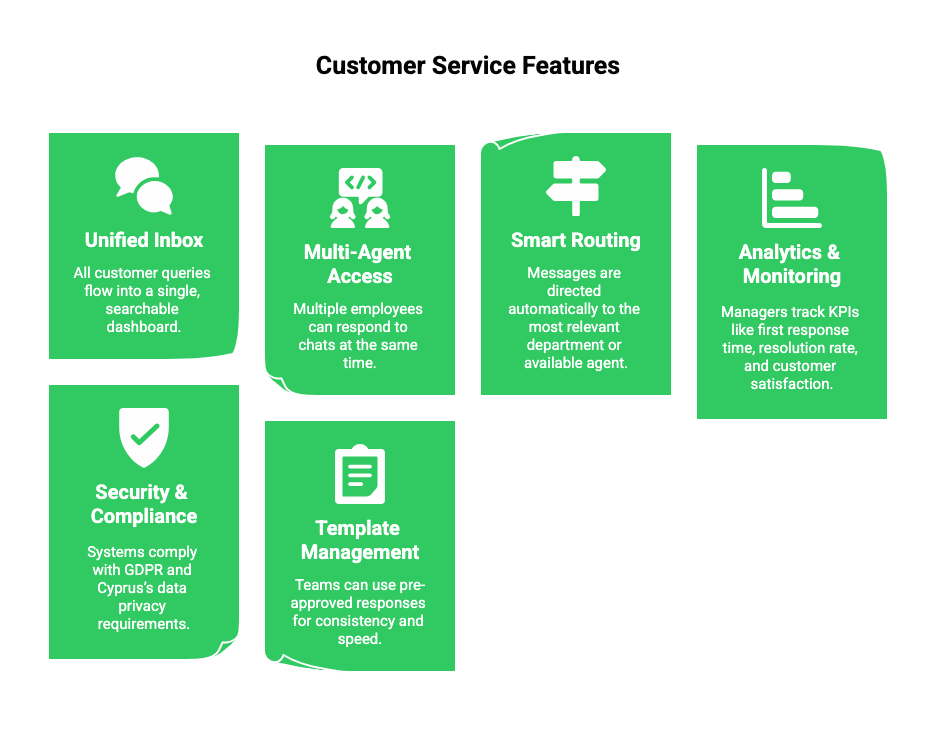
- Unified Inbox: Combines all customer messages into a single dashboard for better visibility and management.
- Multi-Agent Access: Allows multiple agents to respond simultaneously, reducing wait times.
- Automated Chat Routing: Messages are sent to the appropriate department, such as sales, support, or logistics.
- Analytics & Reporting: Managers can track response times, agent performance, and customer satisfaction.
- Security & Compliance: End-to-end encryption protects sensitive data and ensures regulatory compliance.
- Template Messaging: Pre-approved messages maintain professionalism, consistency, and efficiency.
These functions help businesses improve operations and deliver a smooth, professional customer experience.
How Can Oman Businesses Benefit from a Centralized WhatsApp System?
Adopting a centralized WhatsApp system offers numerous advantages:
- Faster Response Times: Quick replies improve customer satisfaction and loyalty.
- Better Team Collaboration: Sales, support, and operations teams can work together more efficiently.
- Consistent Messaging: Templates ensure professional and uniform communication across all agents.
- Scalable Support: Platforms handle high message volumes during holidays, events, or promotions.
- Actionable Insights: Analytics reveal recurring issues, optimize workflows, and improve service quality.
- Multilingual Support: Agents can communicate in Arabic, English, and other languages to serve diverse audiences.
These benefits make centralized WhatsApp systems essential for enhancing customer support and operational efficiency.
If you want to see how centralized chat routing works in real-time, try the Free Trial
Read this and others
- How to Deploy a Voice Bot AI Using Simple APIs
- API Guide: Build a Vocal Chatbot with Real-Time Audio
- Implementing a Voice Assistant Bot for SaaS Tools
- API-First Guide to Voice-Based Conversational AI
- From Calls to Conversations: Voice-Based Conversational AI
Which Industries in Oman Use Centralized WhatsApp Solutions?
Different industries in Oman can take advantage of centralized WhatsApp platforms to improve their operations.
1. Banking & Finance
Banks use WhatsApp for account alerts, loan updates, transaction notifications, and fraud warnings. Verified numbers guarantee secure and reliable communication.
2. Healthcare
Hospitals and clinics schedule appointments, share lab results, and provide follow-ups via WhatsApp, improving patient engagement and operational efficiency.
3. Retail & E-Commerce
Retailers confirm orders, send delivery updates, and run promotions via WhatsApp, enhancing customer satisfaction and encouraging repeat business.
4. Tourism & Hospitality
Hotels, travel agencies, and restaurants use WhatsApp for bookings, multilingual support, and event notifications, improving convenience for both locals and tourists.
5. Education
Schools, universities, and training institutions share admissions updates, exam schedules, and announcements through WhatsApp to ensure timely communication with students and parents.
6. Logistics
Courier and delivery services provide real-time shipment updates, improving transparency and reducing customer inquiries.
How Can Oman Enterprises Implement a Centralized WhatsApp Interface Successfully?
Steps for successful adoption of a centralized WhatsApp system:
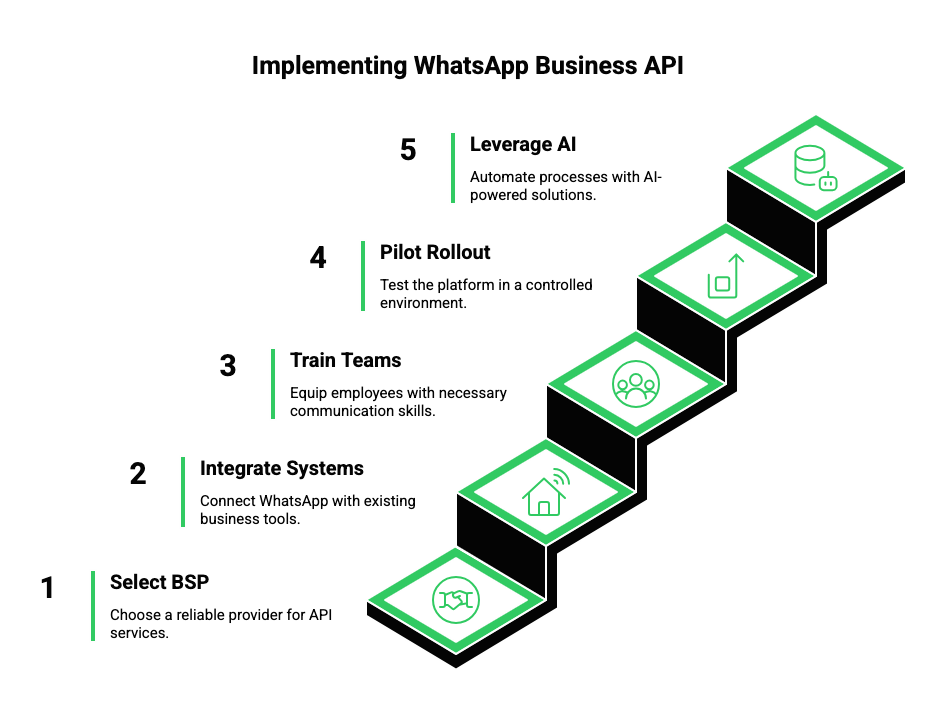
Step 1: Choose a Reliable BSP
Partner with a Business Solution Provider that offers WhatsApp Business API access, compliance support, and scalability options.
Step 2: Integrate with CRM and Support Systems
Integration ensures smooth data transfer, enabling personalized experiences and efficient case management.
Step 3: Train Teams Effectively
Workshops, training sessions, and pre-approved templates ensure smooth adoption and professional service delivery.
Step 4: Scale with Automation and AI
After stabilization, enterprises can add automation tools like smart routing, AI chatbots, and predictive analytics to manage higher volumes effectively.
Following this roadmap ensures successful implementation and scalable customer support.
Key Takeaway
Problem:
Businesses in Oman using personal or fragmented WhatsApp accounts struggle with missed customer messages, inconsistent service quality, and limited visibility into team performance, especially during peak operational periods.
Solution:
FreJun offers a centralized WhatsApp Business interface that brings all customer conversations into a single, secure platform. By enabling multi-agent collaboration, multilingual support, and scalable workflows under one verified WhatsApp number, FreJun helps Omani enterprises deliver faster, more reliable, and more accountable customer communication without compromising service quality.
Final Thoughts
In Oman’s competitive market, businesses must combine speed, personalization, and reliability to meet rising customer expectations. A centralized WhatsApp platform allows organizations to:
- Consolidate fragmented communication channels.
- Offer real-time multilingual support.
- Maintain a consistent brand voice.
- Protect sensitive customer data.
- Scale operations efficiently.
Investing in a centralized WhatsApp system is an effective way to enhance customer trust, loyalty, and long-term growth.
Start your journey with FreJun today — Sign up here
Further Reading: Smart WhatsApp Team Communication for Customer Support Teams in Saudi Arabia
FAQs
It means bringing all customer conversations into one shared inbox so teams can collaborate, assign chats properly, and respond faster.
Because WhatsApp is widely used in Oman, managing chats helps businesses deliver quick, reliable, and personalized support.
Shared inboxes, CRM integrations, chatbots, and analytics dashboards make it easier to centralize and manage all WhatsApp communication.
They let multiple agents work from one inbox, automate replies, and track full chat histories, improving speed and efficiency.
Yes. It cuts manual workload, boosts team productivity, and improves service quality, making it a cost-effective solution.
Yes. Centralized platforms let multiple agents handle chats from a single WhatsApp number without duplication or confusion.
Absolutely. Centralized tools send alerts, track unread messages, and ensure every customer query is handled.
Yes. Automated greetings, quick replies, and chatbots help reduce response times and improve consistency.
Teams can share notes, assign chats, tag colleagues, and transfer conversations, improving clarity and coordination.
Yes. Analytics provide insights into response times, agent performance, and customer trends, helping businesses improve operations.